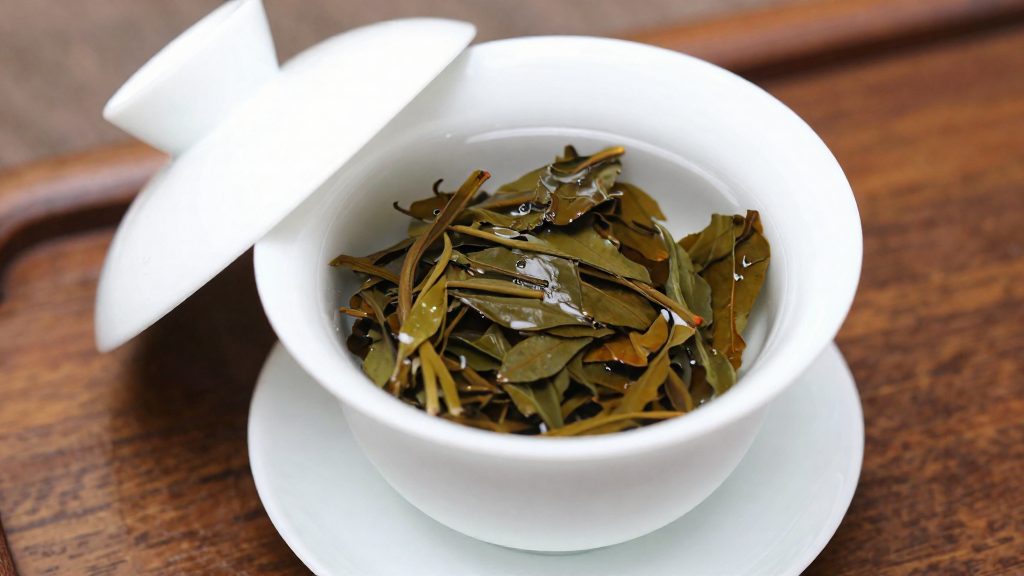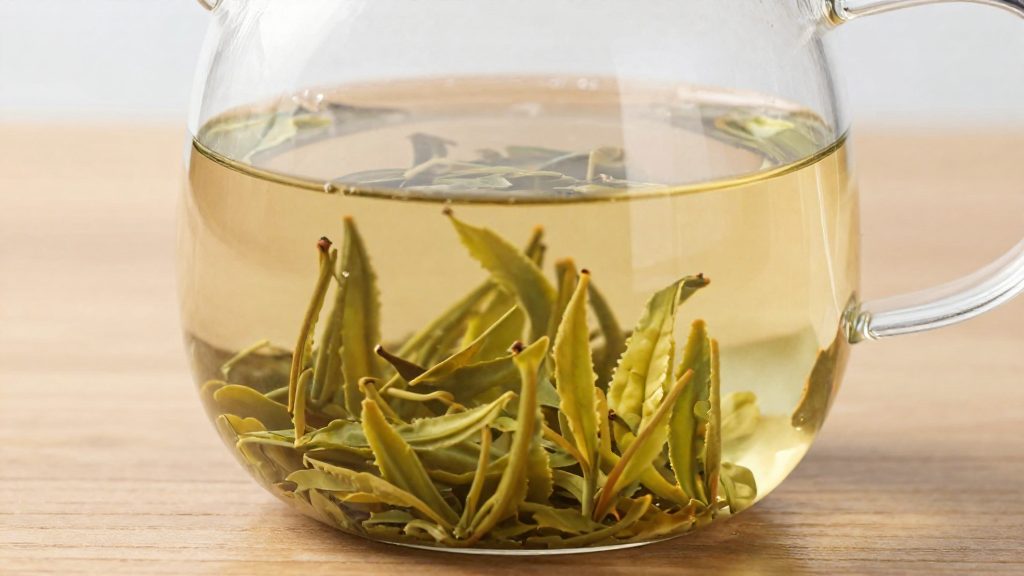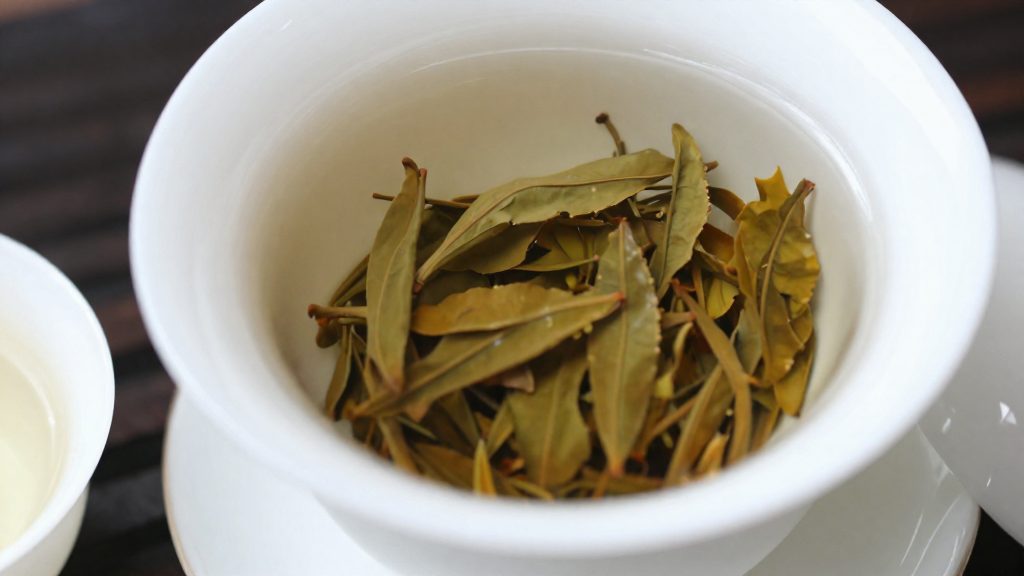
Lightly oxidized, aromatic oolongs are the best fit for a gaiwan, according to Orientaleaf (2026), which names Tie Guan Yin and Taiwanese High Mountain oolong as examples. The gaiwan can also brew oolongs across the full range from light to dark. No single oolong is the best choice for a gaiwan. The right pick depends on how far the leaf has been oxidized and how intense its aroma is.
What makes an oolong good for a gaiwan?
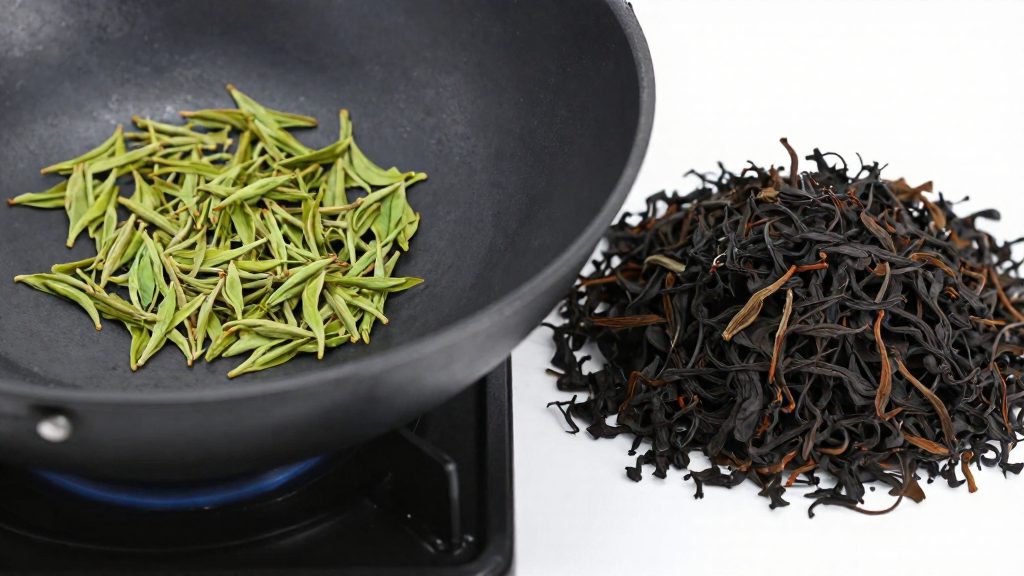
Oolong covers a wide range of oxidation, from nearly unoxidized, green-like teas to nearly fully oxidized, black-like teas (White2Tea, 2026). Where a tea sits on that range determines its aroma profile and how it responds to a lidded bowl brew. The table shows where the styles named in common guides fall:
| Style | Oxidation level as reported | Source |
|---|---|---|
| Tieguanyin | Light to medium | White2Tea (2026) |
| Taiwanese High Mountain oolong | Lightly oxidized | Orientaleaf (2026) |
| Wuyi rock oolong (Wuyi Yancha) | Medium for most rock teas | White2Tea (2026) |
| Mid-range Dancong (Phoenix) | Medium for most mid-range teas | White2Tea (2026) |
Lighter oolongs carry the floral and fruity notes that aroma intensity brings out, while medium-oxidized rock and Dancong teas show a deeper, roastier character. Choose by the flavour you want, not by a ranking. The brewing figures here are vendor guidance, not a Canadian standard.
Thin porcelain and fast heat loss
A thin-walled gaiwan loses heat quickly. Orientaleaf (2026) notes that this makes it possible to use boiling water on delicate leaves, provided you pour quickly so the leaves do not overcook.
Tieguanyin: a lightly oxidized, aromatic option
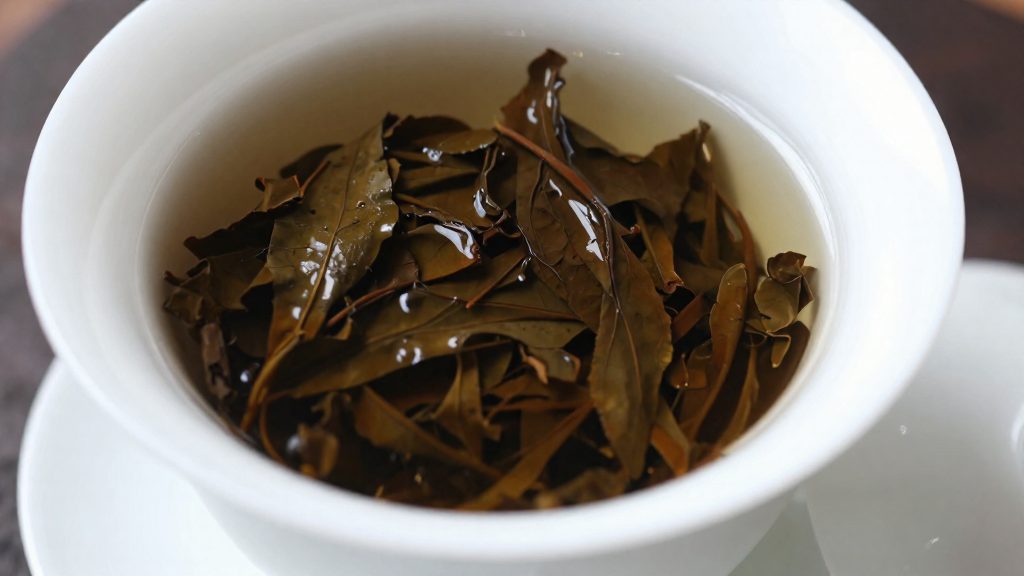
Tieguanyin is a lightly oxidized, strongly aromatic style that Orientaleaf (2026) names among the oolongs suited to a gaiwan. It is one option, not a ranked best. It is a hand-rolled oolong from Anxi, Fujian, with a strongly fragrant character.
Origin and leaf form
- Anxi, Fujian: the production region named by White2Tea (2026).
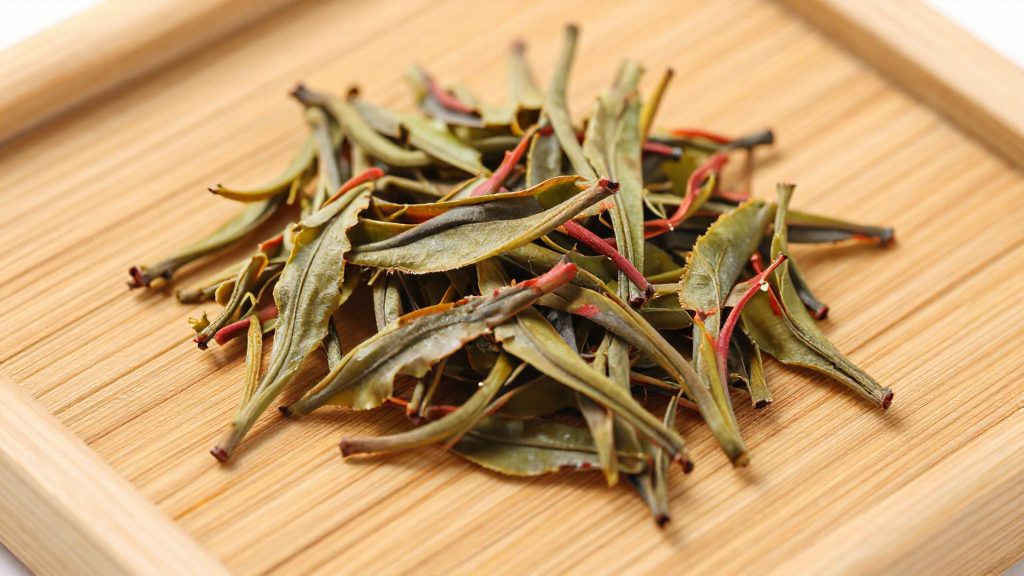
- Hand-rolled balled leaves: the leaves are shaped into tight balls, which open up as they absorb water. This is why the leaf form matters for the first infusions.
- Lightly oxidized: the leaf sits in the lighter part of the oolong range.
Temperature for a gentler cup
White2Tea (2026) gives 90–95°C for Tieguanyin to reduce astringency or roast. Compare this with other styles from the same source:
| Oolong style | Water temperature (White2Tea, 2026) |
|---|---|
| Tieguanyin | 90–95°C |
| Wuyi rock oolong, lighter roast | about 95°C |
| Wuyi rock oolong, medium to high roast | boiling water |
| Phoenix Dancong | boiling water, or about 95°C if too intense |
White2Tea (2026) gives this range to reduce astringency or roast.
Aroma profile for first-time users
Orientaleaf (2026) describes Tie Guan Yin as one of the highly aromatic oolongs that suit a gaiwan. Because the fragrance is pronounced, you can judge the brew by smell before tasting it, which helps you adjust leaf quantity and temperature on the next infusion.
Wuyi rock oolong for roasted depth
Wuyi Yancha, the rock oolong from the Wuyi Mountains, is the style where roast level most directly sets the water temperature. White2Tea (2026) recommends boiling water for medium to high roasts and about 95°C for lighter roasts. Roast level is a guide, not a fixed rule, so the same tea can call for a different temperature depending on how it was finished.
| Roast level on the label | Water temperature | Source |
|---|---|---|
| Medium to high | Boiling | White2Tea (2026) |
| Lighter | About 95°C | White2Tea (2026) |
White2Tea places most rock oolongs at medium oxidation. Oxidation and roast are separate properties, so an oxidation level does not tell you the roast. Check the vendor’s product description for the roast level before choosing a temperature.
Phoenix Dancong: aroma in a small bowl
Phoenix Dancong is a medium-oxidation oolong that suits a gaiwan when aroma is the goal. According to White2Tea (2026), it is brewed with boiling water, or with water at about 95°C if the brew tastes too intense. Temperature is the main control you have over how much aroma and bitterness reach the cup.
Single-tree Phoenix Dancong compared with blended oolongs
To judge a single-tree Phoenix Dancong against a blended oolong, brew both at the same water temperature and in the same gaiwan. Compare three points:
- Dry leaf smell: Open the leaf and smell it before brewing.
- Lid aroma: Smell the lid right after the first pour.
- Cup aroma: Smell the empty cup after you pour the infusion out.
Record which tea gives the more distinct character at each step. Brewing side by side with identical conditions makes the difference come from the leaf, not the method.
Lowering the temperature when the brew is too intense
Start with boiling water for Phoenix Dancong. If the infusion tastes too intense, switch to about 95°C (White2Tea, 2026).
| Water temperature | When to use | Source |
|---|---|---|
| Boiling water | Starting point for Phoenix Dancong | White2Tea (2026) |
| About 95°C | When the brew tastes too intense | White2Tea (2026) |
Floral and fruity notes in Dancong oolong
Taste each infusion for floral and fruity notes, and track them across the session. Note whether the aroma shifts as the infusions progress.
How much leaf and what water temperature?
Sources use different bases. Rare Tea Company (2026) recommends 4–6 g of oolong per gaiwan, without stating a capacity, while White2Tea (2026) gives amounts per 100 ml gaiwan by style. White2Tea (2026) gives more specific amounts by style, as shown below. Ratios vary between sources, so treat these figures as starting points and adjust to taste.
| Oolong style | Leaf per 100 ml gaiwan | Source |
|---|---|---|
| Wuyi Yancha (rock oolong) | 5–6 g | White2Tea (2026) |
| Phoenix Dancong | 4–5 g | White2Tea (2026) |
| General oolong, per gaiwan | 4–6 g | Rare Tea Company (2026) |
Scaling leaf to gaiwan volume
White2Tea’s figures are stated for a 100 ml gaiwan, so they can be scaled to a larger or smaller vessel by proportion:
- Leaf (g) = figure per 100 ml × (gaiwan capacity in ml ÷ 100)
- Example: a 150 ml gaiwan with a 4–5 g per 100 ml figure becomes 6–7.5 g.
This scaling is a straightforward calculation, not a figure from the sources. Gaiwan sizes are often given by the manufacturer, so check the stated capacity or measure it with water before weighing leaf.
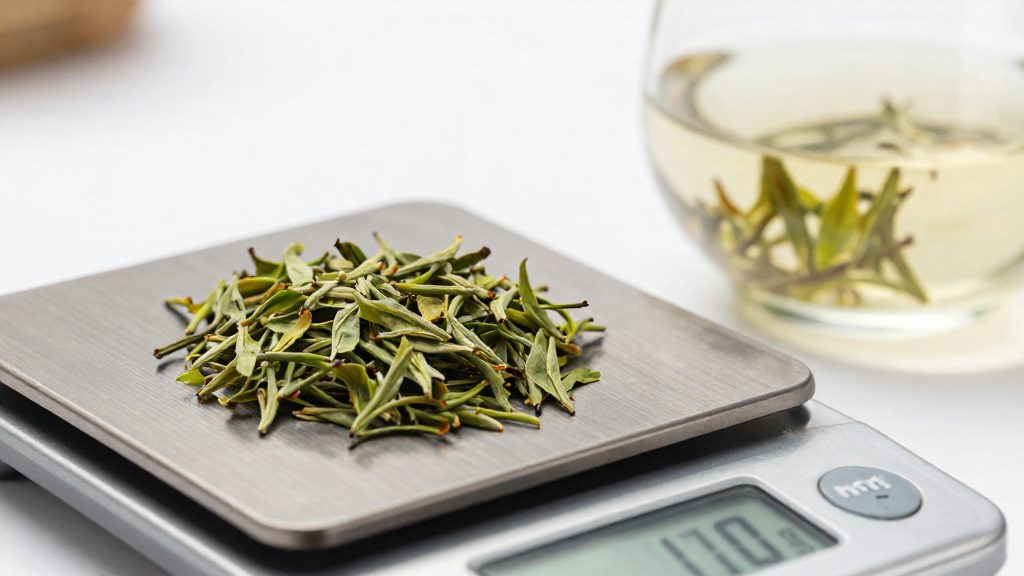
Weigh the leaf on a gram scale rather than measuring by spoon. Weighing is generally more consistent than spoon measures, because leaf shapes differ.
Kettle temperature control
The sources name two temperature set points for oolong: boiling water, and about 95°C for lighter or gentler brews (White2Tea, 2026). Because a kettle display can be off, verify it:
- Place a separate probe or instant-read thermometer in the water at the set point and compare the readings.
- If the kettle has no variable-temperature mode, boil and let the water rest briefly before pouring, then check the temperature with the thermometer.
- Consult the manufacturer’s instructions for the kettle’s stated temperature accuracy. Sources here did not provide a figure for kettle accuracy.
How long should each gongfu steep be?
For oolong in a gaiwan, Rare Tea Company (2026) recommends a first infusion of 5–10 seconds and later infusions of 10–20 seconds, with at least six infusions in total. White2Tea (2026) gives 6–10 infusions for Wuyi Yancha.
| Stage | Steep time | Source |
|---|---|---|
| First infusion | 5–10 seconds | Rare Tea Company (2026) |
| Later infusions | 10–20 seconds | Rare Tea Company (2026) |
| Minimum infusion count | Six or more | Rare Tea Company (2026) |
| Wuyi Yancha infusion count | 6–10 | White2Tea (2026) |
Adjusting steep length to the leaf
White2Tea (2026) notes that shorter steeps soften an intense Phoenix Dancong brew. If a Dancong tastes too intense, White2Tea (2026) suggests shorter steeps, less leaf, or water at about 95°C. For Tieguanyin, White2Tea (2026) describes short steeps as the core method.
Pour speed
Pour off each infusion as soon as its timer ends, so that extraction stops at the planned point.
Do rolled oolongs need a rinse?
Rolled oolongs are usually given a brief rinse before the first infusion, though sources differ on whether to rinse and how many times. Unrolled oolongs can skip it. The rinse opens leaves that have been tightly rolled or balled, so water can reach the leaf. Rolled oolongs such as Tieguanyin are the main case: White2Tea (2026) recommends one or two short rinses to open the balled leaves before the steeps begin.
Unrolled oolongs are brewed without a wash. White2Tea (2026) gives no rinse for Wuyi Yancha and Phoenix Dancong, and Rare Tea Company (2026) says unrolled oolongs such as Da Hong Pao can skip it.
| Style | Leaf form | Rinse guidance |
|---|---|---|
| Tieguanyin | Rolled (hand-rolled, balled) | One or two short rinses (White2Tea, 2026) |
| Da Hong Pao | Unrolled | Can skip the rinse (Rare Tea Company, 2026) |
| Wuyi Yancha | Unrolled | No rinse (White2Tea, 2026) |
| Phoenix Dancong | Unrolled | No rinse (White2Tea, 2026) |