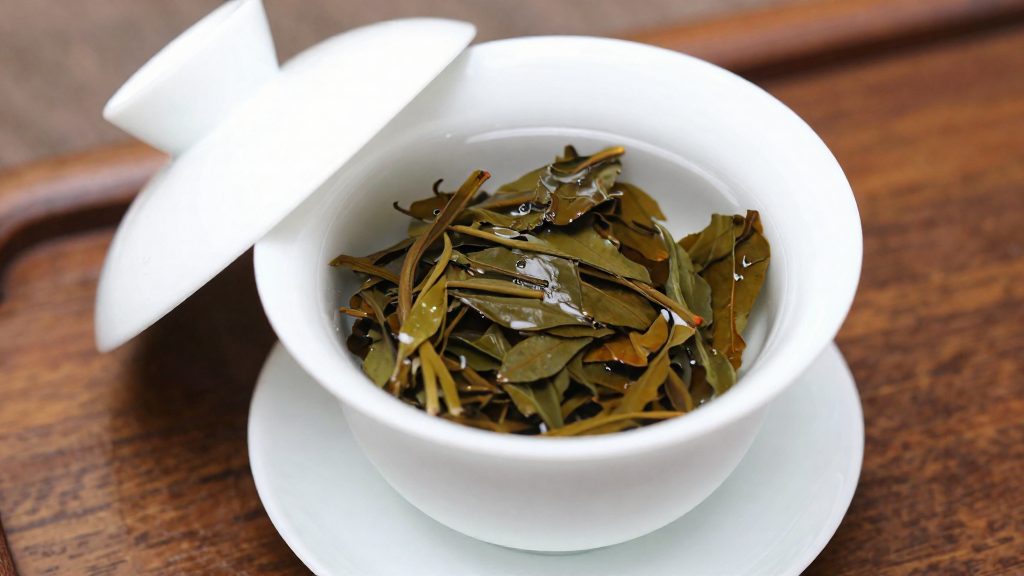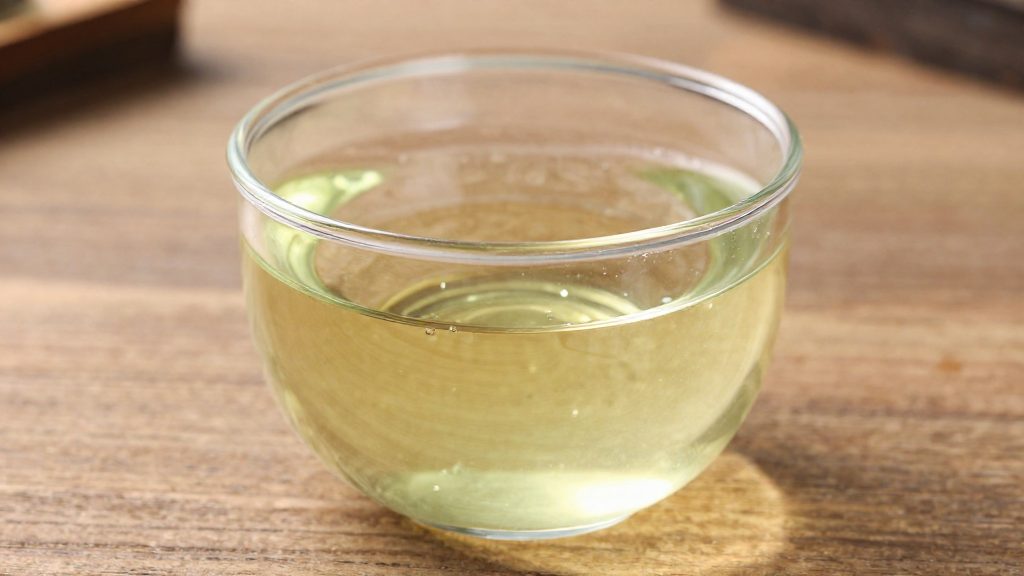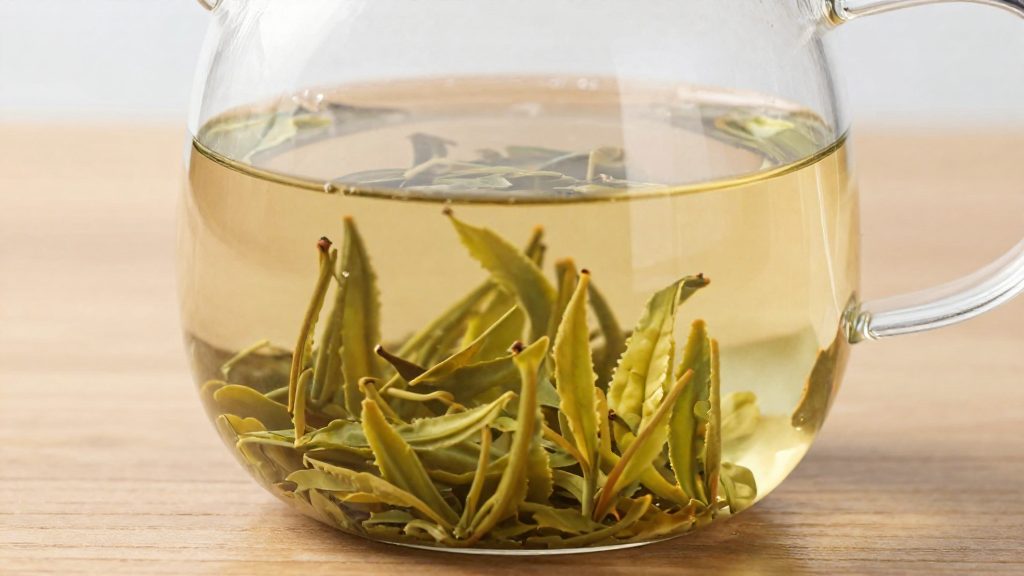
In the cup, the wall material of a green tea pot changes both aroma and how fast the water cools. Unglazed clay is porous, so it can absorb and hold traces of earlier brews, and sources report that it may mute the fresh, delicate notes of green tea. Porcelain adds no character of its own, which is why Path of Cha (Misha Gulko, 2023-09-10) calls it the gold standard for tasting green tea. The main carryover risk comes from using one pot for strongly flavoured teas and then switching to green tea.
Clay vs glass teapot: what actually changes in the cup?
How clay porosity affects aroma
Porosity is the main reason clay behaves differently from non-porous materials. Path of Cha (Misha Gulko, 2023-09-10) advises against Yixing clay for green tea because its porosity may muffle fresh, sharp notes. In Pursuit of Tea (2018-11-09) makes a related point: unglazed pots can mute delicate, aromatic teas.
| Material | Reported effect on aroma | Source |
|---|---|---|
| Unglazed Yixing clay | May muffle fresh, sharp notes in green tea | Path of Cha (Misha Gulko, 2023-09-10) |
| Unglazed clay (general) | Can mute delicate, aromatic teas | In Pursuit of Tea (2018-11-09) |
| Japanese clay kyusu | Have long been used for green tea in Japan, according to a Yixing enthusiast | Tea Guardian (Leo Kwan, Dialogues forum, 2013-10-29) |
| Porcelain | Described as the gold standard for tasting green tea because it adds no character of its own | Path of Cha (Misha Gulko, 2023-09-10) |
Yixing and Japanese kyusu are different clays, so advice about one does not automatically apply to the other.
How flavour carries over between tea types
A porous pot can keep traces of the brews it has held. In Pursuit of Tea (2018-11-09) notes that a pot used mainly for Wuyi oolong probably won’t suit green tea. A practical rule follows: dedicate each clay pot to one tea family, and keep a separate pot for green tea.
Conflicting claims about clay and green tea
The sources disagree. The Tea Guardian dialogue argues that many green teas don’t show their true character unless brewed in a well-seasoned Yixing pot. A Sugimoto Tea blog post cites a Tokoname tasting study that reports clay-brewed tea as sweeter and more umami-rich. The study is not named or dated, and the post is a retailer’s page, so its findings are unverified. Check the teapot maker’s own material description before you buy, and taste the same green tea in two pots to judge the difference for yourself.
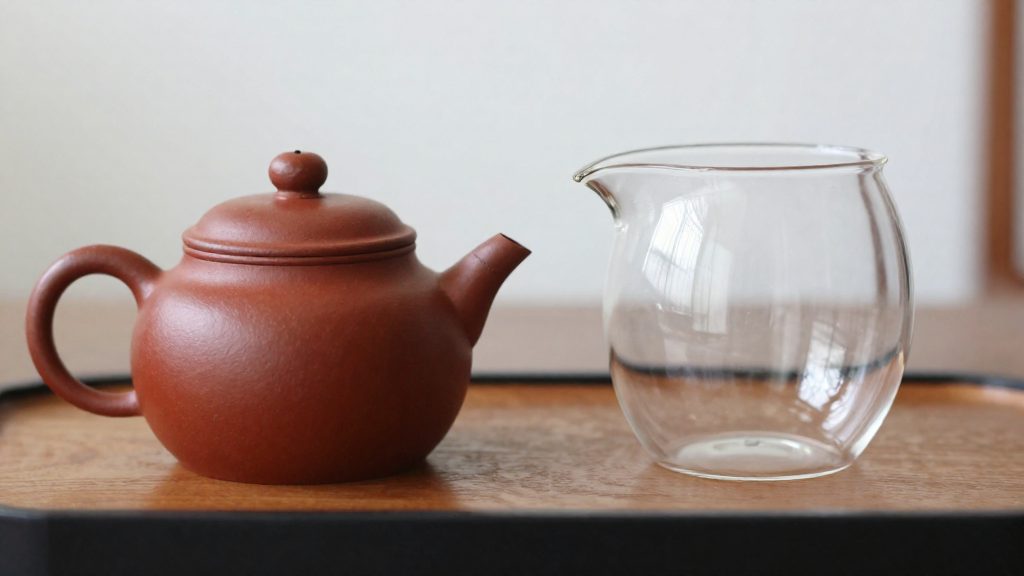
Why does glass suit delicate green tea?
Glass is flavour-neutral and lets you watch the leaves unfurl, according to Path of Cha (Misha Gulko, 2023-09-10). Porcelain remains the reference point for judging what a green tea tastes like.
Neutral flavour and visible leaf movement
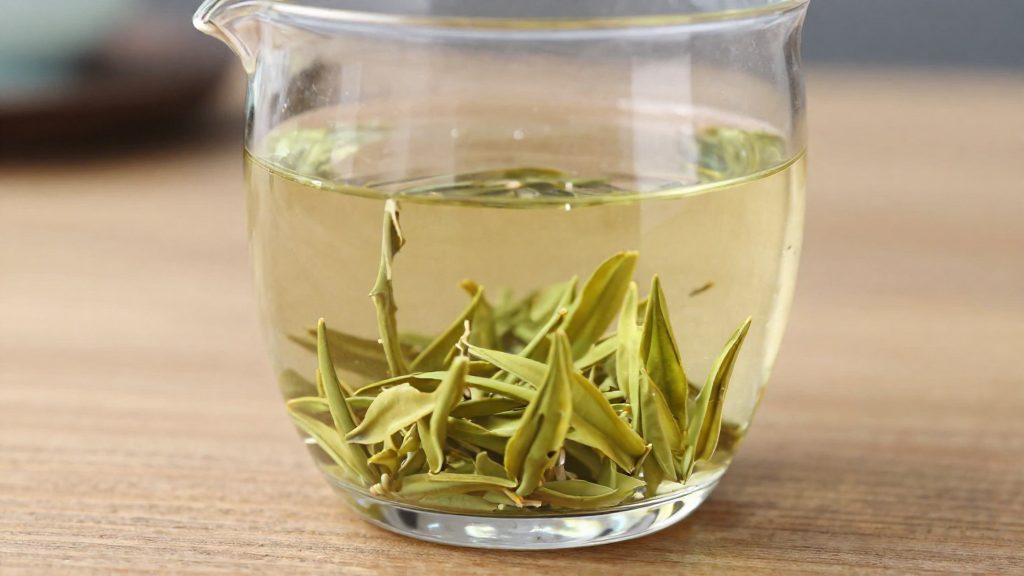
Glass does not absorb or release aromatic compounds. According to Path of Cha (Misha Gulko, 2023), glass is flavour-neutral, so the taste in your cup comes from the leaf and the water rather than from the vessel. For green tea, where fresh, grassy and sharp notes are the point, this matters.
The clear walls also let you watch the leaves unfurl. Watching the leaves expand and turn over gives a direct visual cue for how far the infusion has progressed, and it lets you see whether the leaves are fully submerged during the steep.
Heat-resistant glass at lower temperatures
Heat-resistant glass is a good choice for green tea brewed at lower water temperatures, as noted by In Pursuit of Tea (2018-11-09) in its discussion of gaiwans.
Glass has a trade-off. Its thin walls lose heat quickly, so it suits delicate teas that need a quick, cooler steep. It may not hold the steady, higher temperature that sturdier leaves need (Path of Cha, 2023). Choose glass for delicate teas that need a quick, cooler steep, and avoid it for sturdier leaves that need a steady, higher temperature (Path of Cha, 2023-09-10).
Porcelain as the neutral benchmark
Porcelain is described as the “gold standard” for tasting green tea because it adds no character of its own (Path of Cha, 2023). It serves as the reference: if you brew the same leaf in porcelain and glass, any difference in the cup points to the vessel’s effect rather than the tea.
Is a clay teapot good for green tea?
Clay is not a clear yes or no for green tea. Path of Cha (Misha Gulko, 2023-09-10) calls porcelain the ‘gold standard’ for tasting green tea because it adds no character of its own. Glass is also flavour-neutral. Unglazed clay is different: it can change how a green tea tastes, so the answer depends on the clay, the pot, and what you want to taste.
The case against unglazed clay
Path of Cha (2023-09-10) advises against Yixing clay for green tea, saying its porosity may muffle fresh, sharp notes. In Pursuit of Tea (2018-11-09) makes a similar point: unglazed pots can mute delicate, aromatic teas. For green tea, the practical risk is losing the fresh, sharp character that makes these teas distinct.
The case for clay
Tea Guardian (Leo Kwan, Dialogues forum, 2013-10-29) reports a Yixing enthusiast’s view that many green teas don’t show their true character unless brewed in a well-seasoned Yixing pot. The same source notes that clay kyusu have long been used for green tea in Japan.
A tasting claim on the Sugimoto Tea blog goes further, reporting a Tokoname study that found clay-brewed tea sweeter and more umami-rich. Treat this as unverified: it comes from a tea seller’s blog, the study is not named or dated, and it cannot be checked independently. Yixing and Tokoname clays are also different materials, so a result for one doesn’t transfer to the other.
When clay still makes sense
| Situation | What the sources say |
|---|---|
| Japanese clay kyusu used for green tea | Long used for green tea in Japan (Tea Guardian, 2013-10-29) |
| Well-seasoned Yixing pot | Enthusiasts say it can reveal green tea character (Tea Guardian, 2013-10-29) |
| Pot used mainly for Wuyi oolong | Probably won’t suit green tea (In Pursuit of Tea, 2018-11-09) |
Kyusu vs Yixing: not the same clay
A kyusu is a Japanese clay teapot; the Tea Guardian source notes that clay kyusu have long been used for green tea in Japan. A Yixing pot is made from clay from the Yixing area of China. Both are often called clay teapots, but their clay body and tea tradition differ, so they are not interchangeable for green tea.
| Feature | Kyusu (Japanese) | Yixing (zisha) |
|---|---|---|
| Clay body | Japanese clay | Zisha (‘purple sand’) clay from Yixing, China |
| Green tea tradition | Clay kyusu have long been used for green tea in Japan (Tea Guardian, Leo Kwan, 2013) | A Yixing enthusiast argues many green teas show their true character only in a well-seasoned Yixing pot (Tea Guardian, 2013) |
Confirm the clay type on the product label or the seller’s listing, since the name alone does not always say which clay was used.
The sources disagree on which clay suits green tea. Path of Cha (Misha Gulko, 2023) advises against Yixing for green tea and favours porcelain, which it calls the ‘gold standard’ for tasting green tea because it adds no character of its own. Tea Guardian (Leo Kwan, 2013) takes the opposite view for well-seasoned Yixing. Because these sources favour different clays, treat Yixing and Japanese kyusu as separate choices rather than one ‘clay’ category.
Sugimoto Tea’s blog reports a Tokoname tasting study favouring clay for sweetness and umami. The post is a retailer’s blog with no date, and the study’s organiser is not named, so treat the result as an unverified claim.
Heat retention and brewing temperature
Glass and clay differ mainly in how fast their walls gain and release heat, and that difference sets how much the water temperature moves from the first steep to the last. According to Path of Cha, thin glass walls lose heat quickly, while Yixing clay’s heat retention may overcook delicate flavours. Both behaviours affect green tea, which is brewed at lower temperatures than most teas and is sensitive to overcooking.
Thin glass walls and fast heat loss
Glass has little wall mass, so the water inside sheds heat quickly once the kettle water is poured in. According to Path of Cha (Misha Gulko, 2023), this suits delicate teas that need a quick, cooler steep. The same source notes that glass may not hold the steady, higher temperature that sturdier leaves need, so a long first infusion can lose warmth faster than the leaves expect.
In practice, this means:
- Pour water at the target temperature and steep for the planned time without delay.
- Avoid leaving the pot standing between pours, because the walls keep dropping the temperature.
-
- Treat any preheating as a personal choice, since the sources give no preheating guidance.
Clay wall mass and slower cooling
Path of Cha says Yixing clay’s heat retention may overcook delicate flavours, which implies slower cooling than thin glass. Path of Cha advises against Yixing clay for green tea, noting that its porosity may muffle fresh, sharp notes and that its heat retention may overcook delicate flavours. The following comparison of wall mass is general reasoning, not a sourced measurement. Tea Guardian (Leo Kwan, Dialogues forum, 2013) takes the opposite view for well-seasoned Yixing pots and notes that clay kyusu have long been used for green tea in Japan. The two sources refer to different clays, so their advice does not transfer directly.
| Factor | Thin glass | Thick clay |
|---|---|---|
| Heat loss after pouring | Fast | Slow |
| Temperature hold across a session | Drops quickly | Stays higher for longer |
| Risk with green tea | Cooling may be too fast for sturdier leaves; suits delicate teas | Heat retention may overcook delicate flavours (Path of Cha) |
Temperature drift across multiple steeps
Each infusion changes the pot’s temperature, so the pot material matters most in later steeps. Each infusion changes the pot’s temperature, so note how the flavour changes from one steep to the next and adjust the next pour and steep time accordingly. These adjustments are suggestions, not sourced figures.
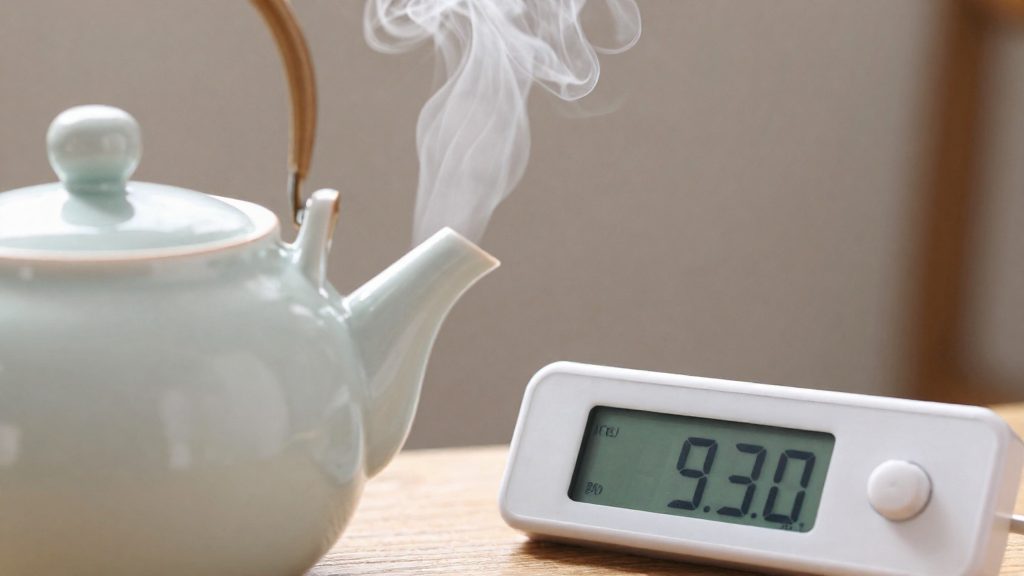
Which teapot should you choose for green tea at home?
For green tea, choose the pot by leaf grade, the amount you brew per session, and how often you brew, before considering material alone. Heat-resistant glass suits green teas brewed at lower water temperatures, according to In Pursuit of Tea (2018). Porcelain is called the ‘gold standard’ for tasting green tea because it adds no character of its own, according to Path of Cha (Misha Gulko, 2023). Opinions on clay are divided, so check the pot’s history before using it for green tea.
| Pot type | What published sources say about green tea |
|---|---|
| Heat-resistant glass gaiwan | Suits green teas brewed at lower water temperatures (In Pursuit of Tea, 2018) |
| Single-body glass teapot | Flavor-neutral and shows the leaves unfurling. Thin walls lose heat quickly (Path of Cha, 2023) |
| Porcelain | Adds no character of its own; called the ‘gold standard’ for tasting green tea (Path of Cha, 2023) |
| Yixing clay | Path of Cha (2023) advises against it for green tea, citing porosity that may muffle fresh, sharp notes. A Yixing enthusiast on the Tea Guardian forum (Leo Kwan, 2013) argues many green teas only show their true character in a well-seasoned Yixing pot |
| Clay kyusu (Japanese) | Clay kyusu have long been used for green tea in Japan (Tea Guardian forum, Leo Kwan, 2013) |
| Unglazed pot used mainly for Wuyi oolong | Probably unsuitable for green tea, since unglazed pots can mute delicate, aromatic teas (In Pursuit of Tea, 2018) |
Yixing and Japanese kyusu are different clay traditions and should not be treated as interchangeable.
Canadian buyers: glaze and lead-release rules for ceramic teaware under Health Canada were not checked for this article. Before using a glazed ceramic pot brewed in Canada, check the product label for glaze information and consult Health Canada’s current guidance on ceramicware.
Matching pot size to daily green tea volume
Size the pot to one session, not to the whole day. If you usually drink one or two cups at a time, a small pot keeps each brew at a consistent strength. A larger pot suits a shared session, but a single-body teapot holds more water, so it takes longer to pour and serve. Brew in batches if you refill often, rather than letting a large volume sit.
Glass gaiwan versus single-body teapot
- Gaiwan: A lidded bowl that lets you control the steep by hand and watch the leaves open. It works well for green tea brewed at lower temperatures in heat-resistant glass.
- Single-body teapot: Pours through a spout and suits serving several cups. Glass versions are neutral and show the leaves, but their thin walls cool the water quickly, so they may not hold the steady, higher temperature that sturdier green teas need.
Choosing by leaf grade and leaf size
Delicate green teas need a quick, cooler steep, so thin, neutral walls such as glass or porcelain fit them. Sturdier leaves need a steadier, higher temperature, which makes glass a weaker choice. Check the seller’s description or the product label to see whether the leaves are whole or broken, and choose a pot that matches the delicacy of that leaf.
Care and seasoning of clay teapots
Clay teapots need a short break-in and a consistent routine. Seasoning here means brewing the same kind of tea in a new pot over several sessions. This routine is general practice rather than sourced guidance, so follow the maker’s care instructions first. Keep the routine simple: rinse with plain water, avoid detergent and abrasives, and let the pot dry completely before storing it.
First-use seasoning
Seasoning here means using one pot consistently rather than rotating it through different teas.
- Rinse the new pot with hot water before the first brew.
- Use the same tea family for the first sessions.
- Avoid switching between tea types until the pot has been used for several sessions.
Cleaning without detergent or abrasives
- Empty the leaves completely after each session.
- Rinse the pot with hot water only.
- If residue remains, check the manufacturer’s care instructions for product-specific guidance.
Drying after each session
- Leave the lid off and the pot open so air can reach the interior.
- Let the pot air-dry fully before closing or storing it.
- Do not put a damp pot away with its lid on.
Dedicating each clay pot to one tea family
A dedicated pot avoids carrying flavors from one tea into another. In Pursuit of Tea (2018-11-09) notes that a pot used mainly for Wuyi oolong probably won’t suit green tea, and that unglazed pots can mute delicate, aromatic teas. Keeping separate pots for green tea and oolong follows from that advice.
Sources disagree on clay for green tea. Path of Cha (Misha Gulko, 2023-09-10) advises against Yixing clay for green tea. A Yixing enthusiast quoted in a Tea Guardian forum discussion (Leo Kwan, 2013-10-29) says many green teas only show their character in a well-seasoned Yixing pot. If you use clay for green tea, reserve one pot for green tea only and compare results against a glass or porcelain brew.