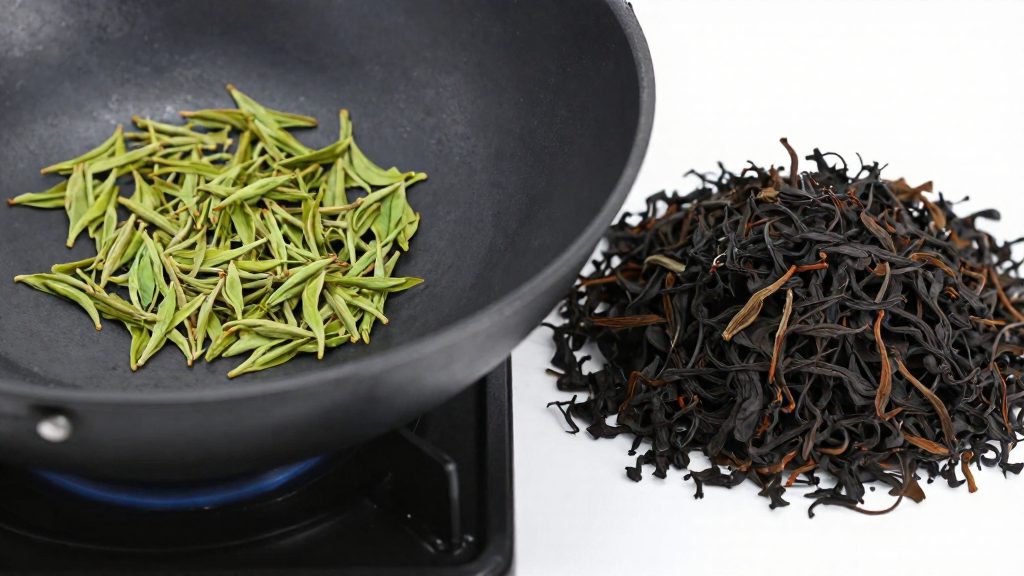
Green and black tea come from the same shrub, Camellia sinensis. According to Bigelow Tea (2026), the two teas differ in how their leaves are handled after picking, not in the plant they come from. Black tea is made from oxidized leaves, and green tea leaves are not oxidized. Both teas therefore begin with the same raw material and follow the same first step, plucking. Their handling paths split in the hours and days that follow.
Same plant, different processing
One plant, one raw material
Both teas are made from Camellia sinensis. The species does not decide whether a leaf becomes green or black. What matters is the sequence of steps applied to the leaf once it is off the bush.
Where the paths split
Plucking is the shared starting point. The first clear difference appears at withering, the step where fresh leaves lose moisture and become pliable.
| Stage after plucking | Green tea | Black tea |
|---|---|---|
| Withering | Light | About one day |
| Shaping | Not covered by the sources used here | Leaves are cut or rolled |
| Oxidation | Not oxidized | Oxidized |
Withering times are from Teamatica (2026). Teamatica reports the black tea withering time of about one day, and the green tea entry describes only light withering.
Each row in the table is a choice in handling, and those choices are what separate the two teas.
What does oxidation do to tea leaves?
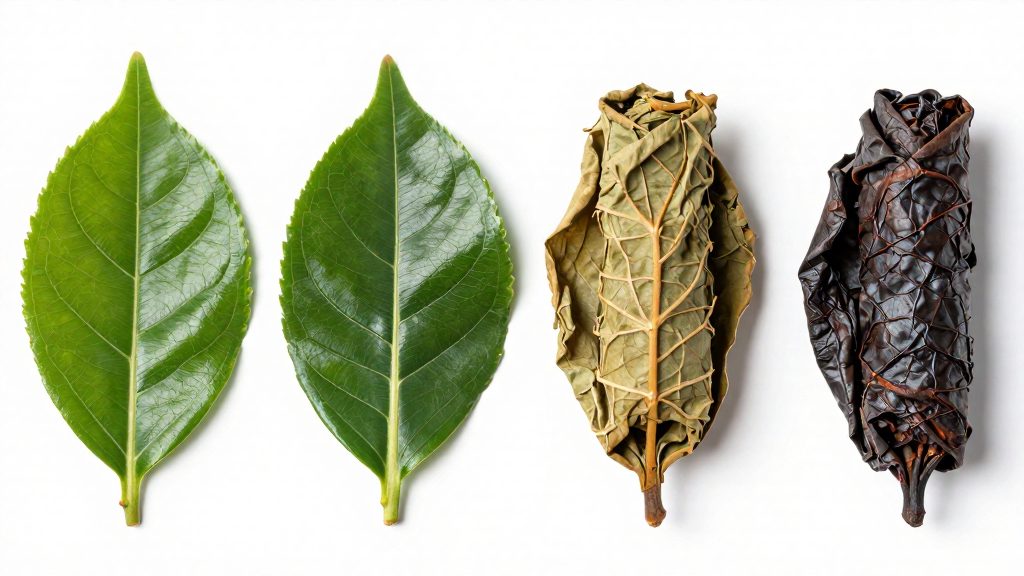
Oxidation is the step that separates black tea from green tea. After picking, the leaves are handled differently: black tea leaves are exposed to oxygen and allowed to oxidise, while green tea leaves are heated almost immediately to stop that reaction. According to Bigelow Tea (2026), black tea is made from oxidised leaves that are exposed to oxygen, lightly dried, then given a final drying and cut, whereas green tea leaves are not oxidised because they are heated right after plucking.
How black tea leaves are processed
Black tea production follows a fixed sequence of steps, each of which prepares the leaf for the next:
- Withering: the freshly picked leaves rest for about a day, which softens them and reduces their moisture.
- Cutting or rolling: the withered leaves are cut or rolled. This breaks cell walls and exposes the internal juices to air.
- Oxidation: the leaves sit in the open air over several days. According to Teamatica (2026), black tea leaves reach 90 to 100% oxidation during this period.
- Drying: the leaves are dried to stop the reaction and reduce moisture for storage.
The cutting or rolling step is what starts the oxidation in earnest. Without damaged cells, the leaf’s enzymes have little contact with oxygen, so the reaction stays slow.
Why green tea leaves are heated
Green tea skips the long oxidation stage. According to Teamatica (2026), green tea leaves are lightly withered and oxidise only about 1 to 8% before wok heat or steaming stops the process. Heat deactivates the enzymes responsible for oxidation, which keeps the leaf green.
How do green and black tea taste different?
Their flavour gap follows from how far the leaves oxidize after picking. Bigelow Tea (2026) describes black tea as having a more earthy, robust flavour and green tea as having a light, refreshing taste.
Black tea: earthy and robust
Bigelow Tea (2026) describes black tea with two descriptors. Earthy points to a grounded, soil-like character on the palate. Robust suggests a sturdier, more assertive cup that holds its presence through the sip.
Green tea: light and refreshing
Green tea’s profile is the opposite in weight. Bigelow Tea (2026) describes it as light and refreshing: the cup feels less heavy and leaves a cleaner impression than black tea.
Tasting vocabulary for telling them apart
| Term | Associated tea | What to check in the cup |
|---|---|---|
| Earthy | Black | Grounded, soil-like notes on the palate |
| Robust | Black | Sturdier, more assertive cup |
| Light | Green | Little weight or heaviness on the tongue |
| Refreshing | Green | Light, refreshing impression, less heavy than black tea |
To tell them apart at home, sip each tea plain, without milk or sugar, and compare the weight on your tongue before judging the aftertaste.
What water temperature suits green and black tea?
Teamatica (2026), a Canadian tea maker’s brand guide, recommends black tea at 95 to 100°C for 3 to 5 minutes and green tea at 75 to 85°C for 2 to 3 minutes. These ranges are a practical starting point for home brewing. They come from one brand’s guide, so other sources may give different figures.
| Tea | Water temperature | Steep time |
|---|---|---|
| Black tea | 95 to 100°C | 3 to 5 minutes |
| Green tea | 75 to 85°C | 2 to 3 minutes |
The black tea range starts 10°C above the top of the green tea range, and its steep time is also longer. Green tea is brewed cooler and for less time, so the two teas need different water settings.
Does green or black tea have more caffeine?
Black tea generally has more caffeine than green tea per cup, according to the broad per-cup ranges published by Teamatica (2026), a Canadian tea maker. Those ranges overlap between 20 and 40 mg, so a strong green tea can contain as much caffeine as a mild black tea. Leaf type sets the typical range, but it does not fix the exact amount in a given cup.
| Tea type | Caffeine per cup (Teamatica, 2026) |
|---|---|
| Black tea | 20 to 80 mg |
| Green tea | 10 to 40 mg |
Broad brand ranges are not lab measurements. They describe the spread a brand reports for each type, not the content of one specific product. Other published figures also differ. Some are given per 8 oz (237 mL) cup, which is a different serving basis from the ranges above, and these figures have not been confirmed against a primary laboratory source. Treat any single number with caution when comparing teas.
To compare two specific products, use the caffeine information on the packaging or the manufacturer’s published data. Where the label gives no caffeine figure, the leaf type alone is not enough to estimate it.
How do the dry and brewed leaves look?
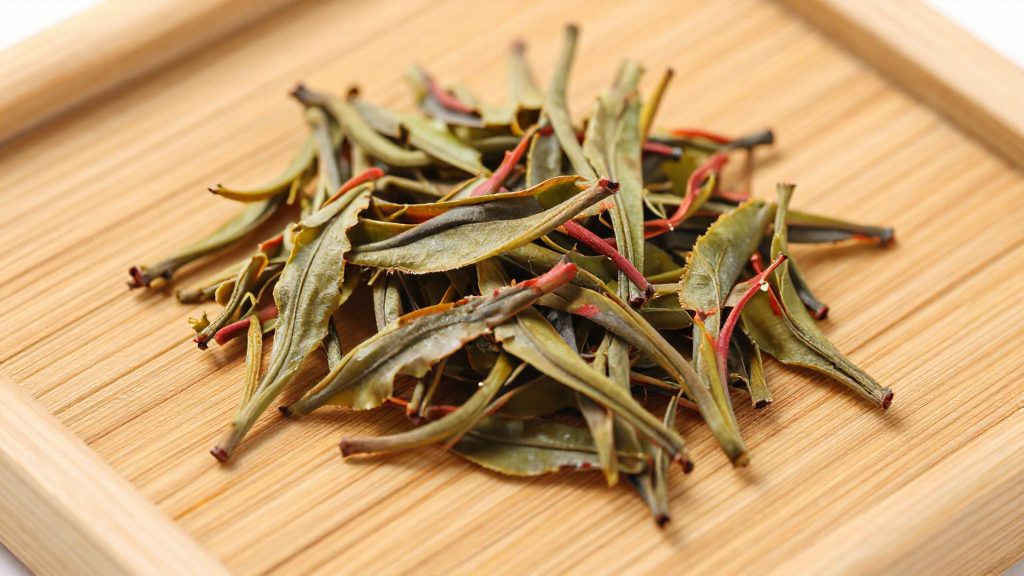
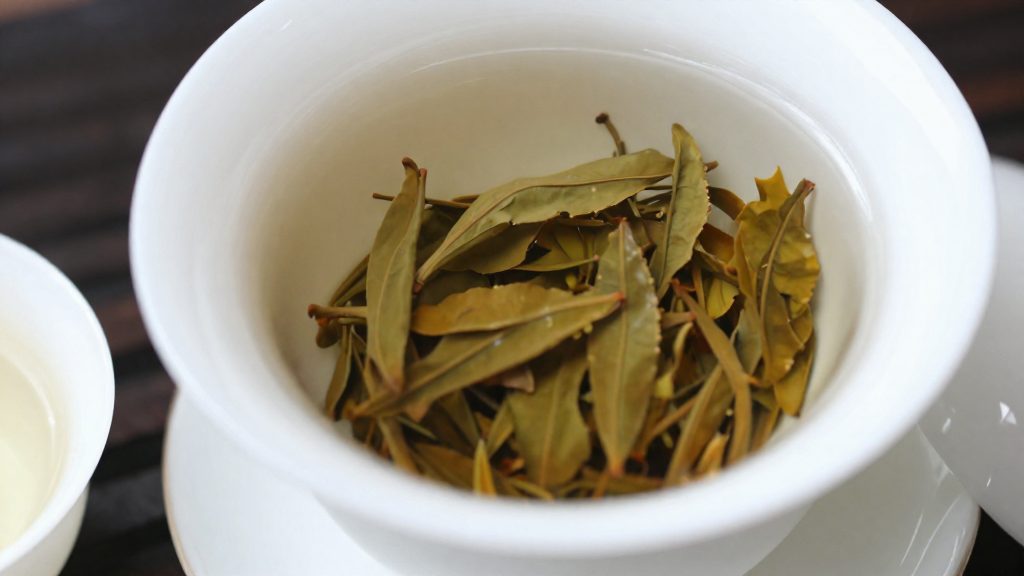
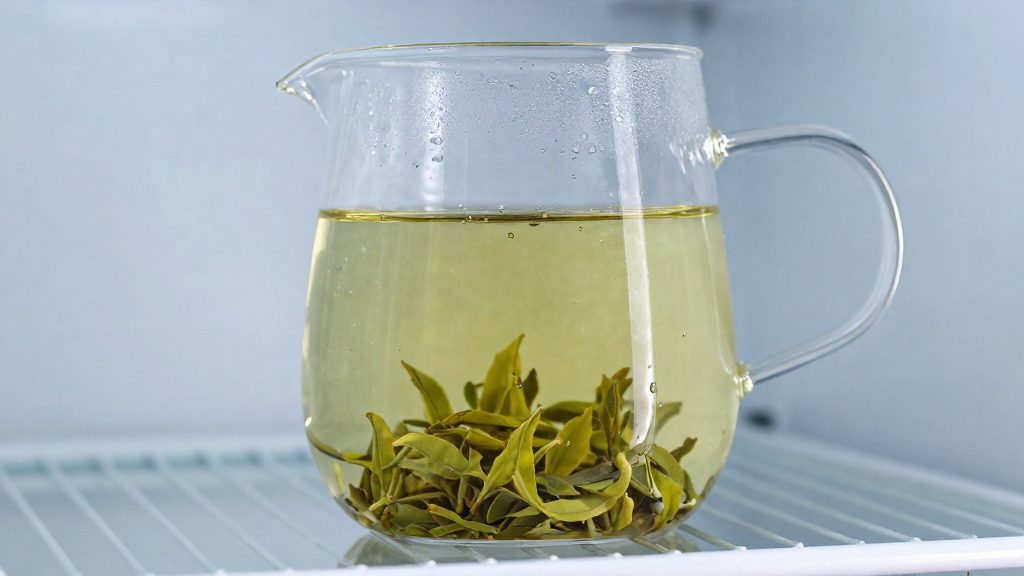
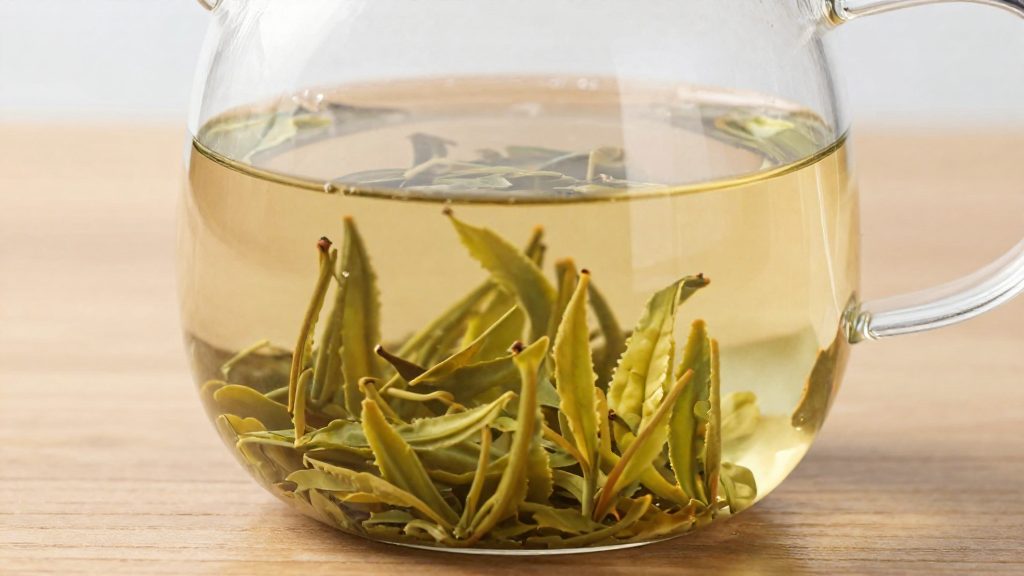
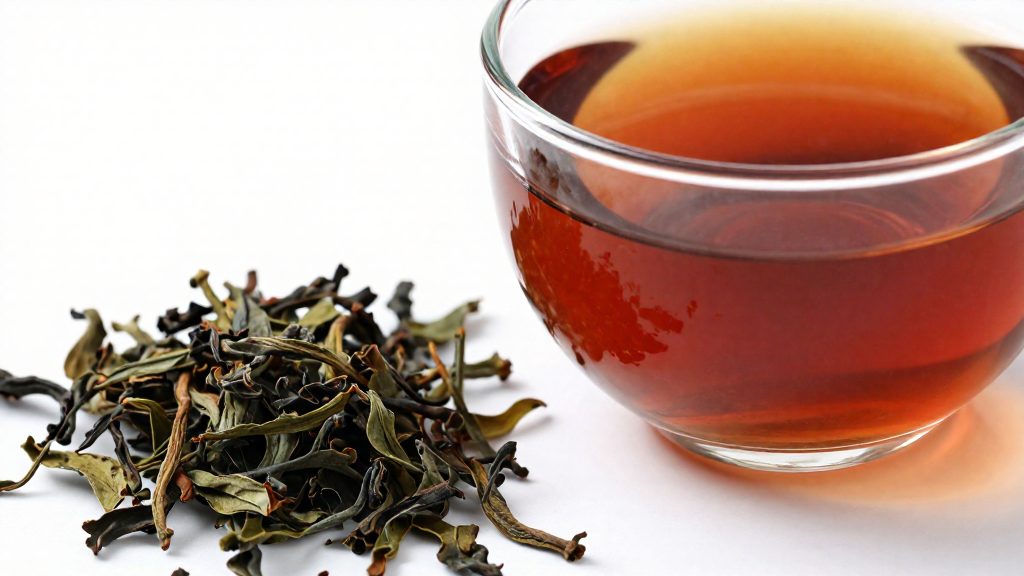
According to Bigelow Tea (2026), black tea gives a copper-coloured leaf and brew, while green tea keeps its green colour.
| Tea | Dry leaf | Brew |
|---|---|---|
| Black tea | Copper-coloured | Copper-coloured |
| Green tea | Keeps its green colour | Green |
To compare them at home, put a small spoonful of each dry leaf on a white plate or saucer. Black tea shows warm copper and brown tones. Green tea stays green. Next, brew each one in a clear glass or a white cup and compare the liquor against a light background. The black tea liquor appears copper, and the green tea liquor appears green.
Loose leaf or bags: does it matter?
The difference between loose leaf and bagged tea lies mainly in the size of the leaf pieces. Bags usually hold cut or fine leaf pieces, which release flavour quickly in hot water but give less room for the leaf to open. Whole leaf gives more room to expand, so the infusion can develop more gradually and the leaf can be seen and checked. Both green and black tea are sold in either format, so the choice depends on the product rather than on the type of tea alone.
Cut leaf is the standard in tea bags. Small fragments have more surface area in contact with the water, which speeds up extraction and produces a brew that is ready quickly. Because the pieces are already broken, they cannot unfurl the way a whole leaf does.
Whole leaf keeps the leaf largely intact, so it opens fully in the pot, gaiwan or infuser. A larger leaf needs room to move, so use a brewing vessel with space for expansion rather than a small, tightly packed basket.
Leaf style and origin are often printed on the packaging. Check the label for terms such as whole leaf, cut, fannings or dust, and for the country or region of origin. These terms describe how the leaf was processed and sized, so they help you predict how the tea will behave in the cup.