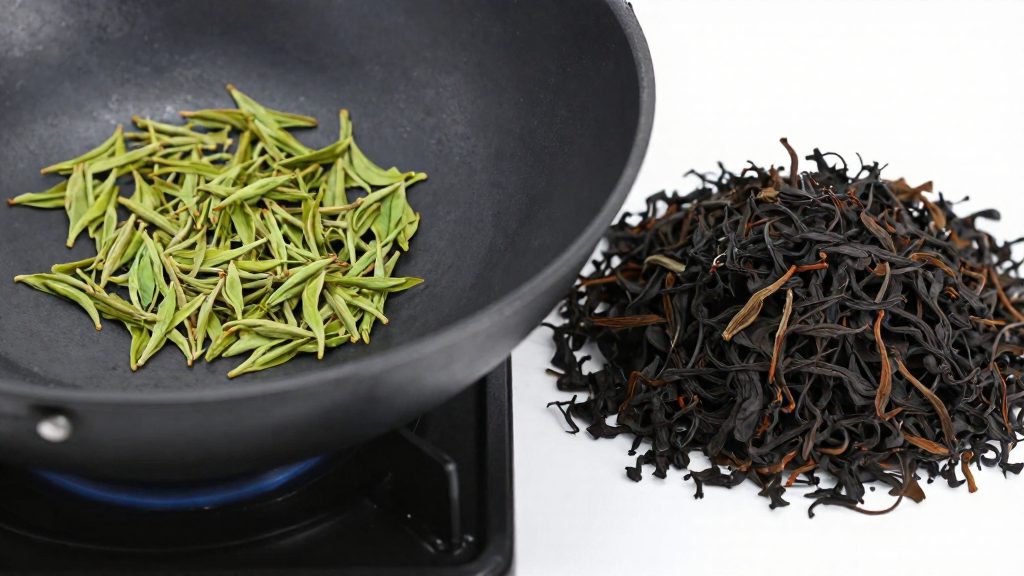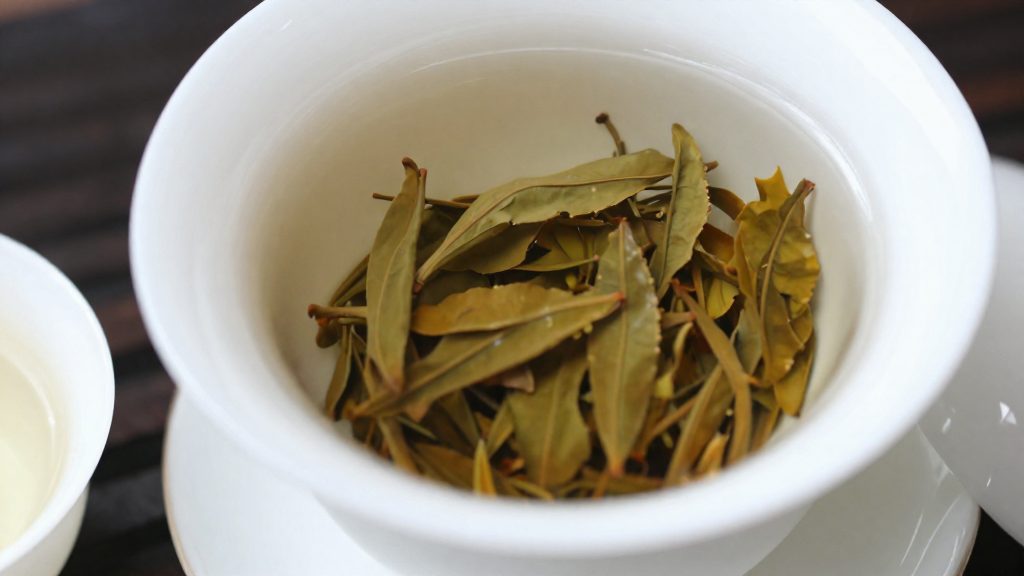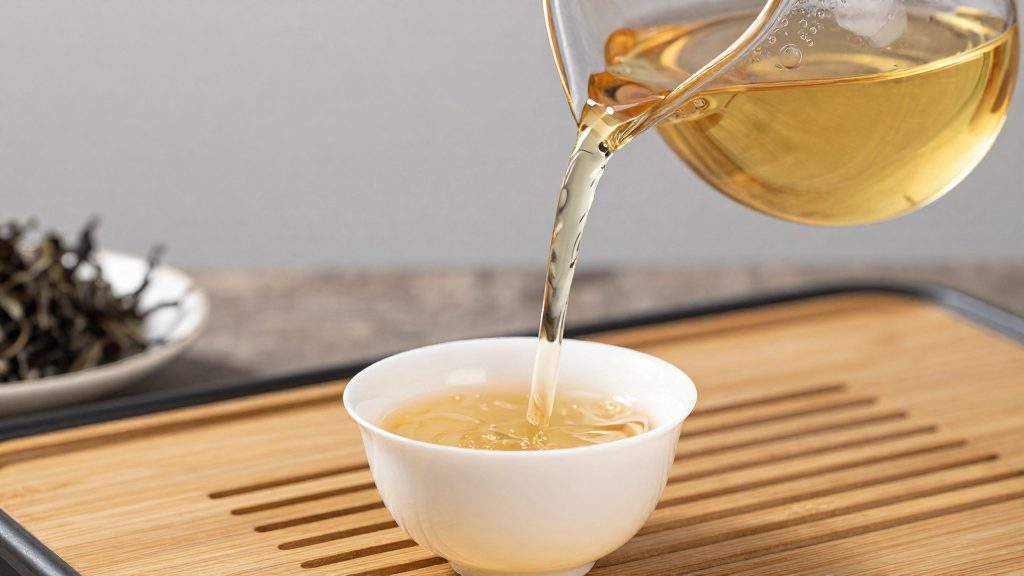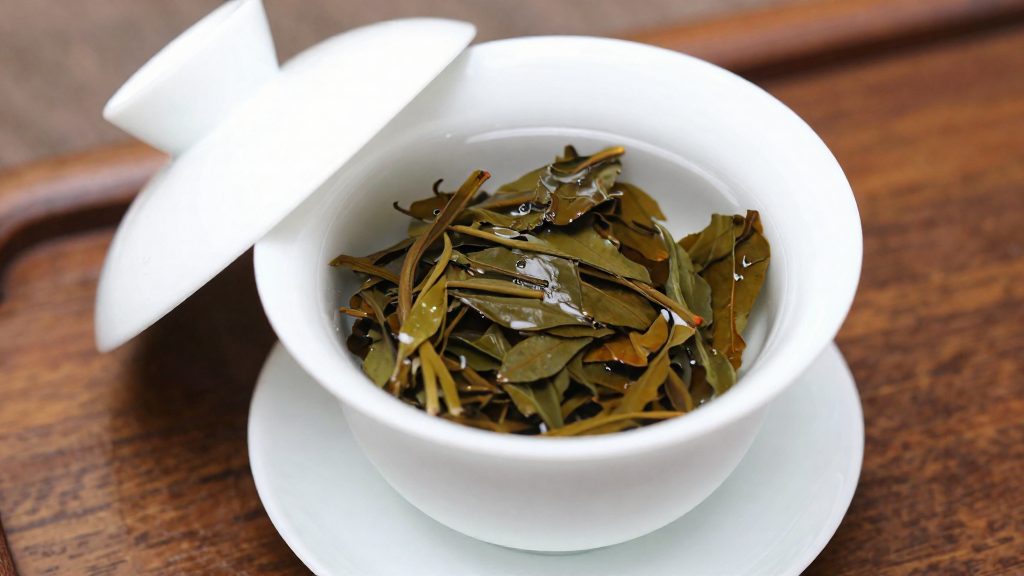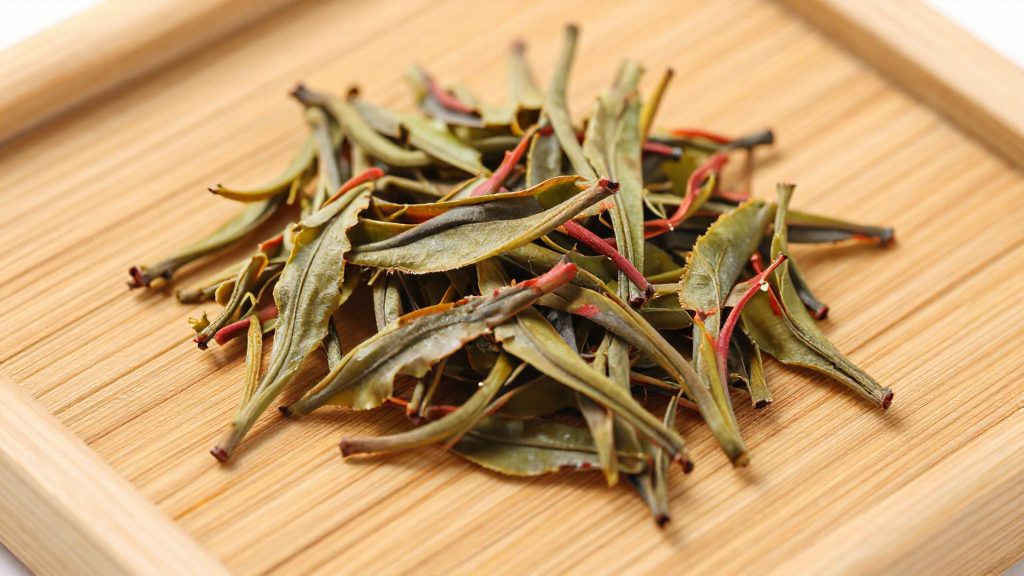
Oolong tea is made by partly oxidizing fresh leaves, then stopping that oxidation with heat before rolling and drying the leaf. This places it between green and black tea: green and white teas are not oxidized, black tea is fully oxidized, and oolong falls in between.
How is oolong tea processed?
Where oolong sits on the oxidation scale
| Tea type | Oxidation level |
|---|---|
| Green | Not oxidized |
| White | Not oxidized |
| Oolong | Roughly 10–70%, depending on style |
| Black | Fully oxidized |
Published figures differ slightly at the lower bound: IFT Food Technology Magazine gives 5% to 70%, and Te Company gives 10% to 70%. Treat the range as approximate. Oxidation is the variable that separates oolong styles: the more the leaf is allowed to oxidize before fixing, the closer the cup moves toward black tea.
The production sequence
Oolong processing follows a general order, and producers do not always use the same step names.
| Step | What happens | Purpose |
|---|---|---|
| Withering | Leaves are spread on mats in sun or a breezy room and lose up to 50% of their moisture (IFT). | Begins slight enzymatic oxidation. |
| Shaking | Leaves are rocked or shaken to bruise their edges (Tea Guardian). | Lets enzymes trigger oxidation. |
| Fixation | Heat is applied by pan roasting in a wok, steaming, or baking in drums (IFT). | Denatures enzymes, stopping oxidation. |
| Rolling | Leaves are shaped into spirals, balls, or pellets (IFT). | Gives the leaf its finished form. |
| Drying | Leaves are baked and dried (Tea Guardian). | Reduces remaining moisture. |
| Roasting (optional) | Can be repeated at different temperatures (Te Company). Charcoal roasting can add a rich flavour (IFT). | Adds flavour; not required for every oolong. |
Withering and shaking are covered in their own sections, so this table only shows where they fit in the sequence.
Roasting’s place in the sequence
Tea Guardian uses ‘roasting (sha qing)’ for the fixing step itself, whereas Te Company describes roasting as an optional step that can be repeated at different temperatures. Roasting’s position therefore depends on how a producer labels its steps.
Withering: the first step
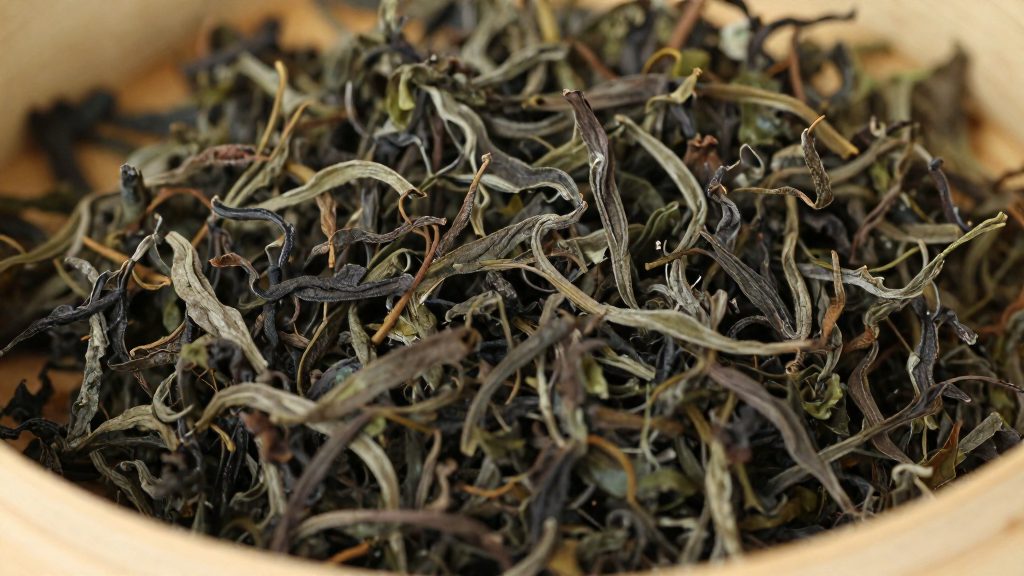
Withering is the first stage of oolong processing. Freshly plucked leaves are spread on mats so that they lose water before any further handling. According to IFT Food Technology Magazine, the leaves are spread in sun or in a breezy room and can lose up to 50% of their moisture at this stage. Slight enzymatic oxidation also begins during withering.
The sources describe two settings:
- Sun-withering: the traditional method. According to Tea Guardian, traditional oolong production uses sun-withering for 1 to 2 hours right after plucking, and the leaves are then shaded.
- Breezy-room withering: leaves are spread on mats in a room with moving air, which allows moisture to leave the leaves without direct sunlight.
Withering is mainly a dehydration step. Its purpose is to remove a large part of the leaf’s water while the enzymes start working slowly.
Bruising and oxidation
Bruising is the step that starts enzymatic oxidation in oolong. According to Tea Guardian, producers rock or shake the leaves so their edges are damaged. Damaged leaf cells let enzymes act on the leaf’s compounds, and that reaction oxidizes the leaf.
Oxidation continues until heat is applied in the fixing step, so the point at which fixing happens sets how far the leaf oxidizes.
How bruising shapes style
Bruising is where oxidation begins, so the amount of bruising applied before fixing shapes how far the leaf oxidizes. The same leaf can be finished as different oolong styles depending on how the producer rocks or shakes it.
Fixing: stopping oxidation with heat
Fixing is the step where heat halts oxidation by denaturing enzymes, the proteins that drive the chemical changes in the leaf. Once the enzymes are inactivated, the leaf stops oxidising at whatever level it has reached.
According to IFT Food Technology Magazine, fixing is carried out in one of three ways:
- Pan roasting in a wok: the leaves are heated directly in a wok.
- Steaming: the leaves are heated with steam.
- Baking in drums: the leaves are heated in drums, an alternative to pan roasting.
Each method achieves the same result: the heat deactivates the enzymes, so the leaf keeps the oxidation it has developed up to that point.
Rolling, drying and roasting
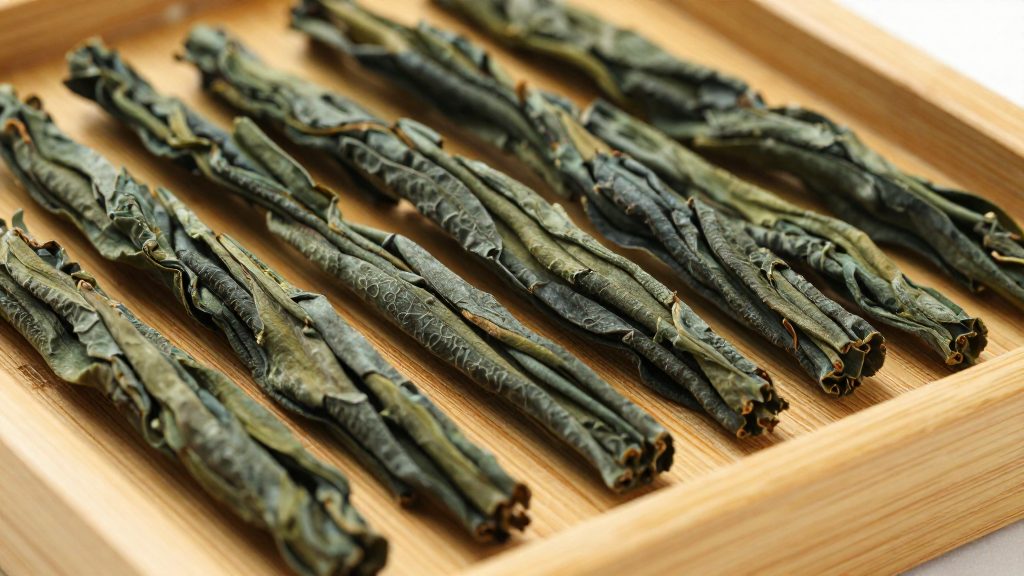
After fixing, oolong leaves are rolled into spirals, balls or pellets, then dried. According to IFT Food Technology Magazine, this shaping and drying follows the heat treatment that stops oxidation.
Roasting is optional. According to IFT Food Technology Magazine, charcoal roasting can add a rich flavour. According to Te Company, roasting can be repeated at different temperatures, so two roasted oolongs can differ in roast level.
Roasting temperatures and times depend on the producer. Check the producer’s product information for specifics.
Why does oxidation level change the taste?
Oxidation is the main control on oolong flavour. Lightly oxidized oolong tastes closer to green tea, while heavily oxidized oolong tastes closer to black tea. The position within the oxidation range determines whether the cup reads as fresh and vegetal or as rounder and darker. The same tea material can therefore sit anywhere between two familiar reference points depending on how far the leaf was allowed to oxidize before fixing.
Light oxidation keeps the character of unoxidized leaf. Lightly oxidized styles taste closer to green tea, according to Te Company.
Heavy oxidation pushes the cup toward black tea. Strongly oxidized oolong tastes closer to black tea, according to Te Company. According to Te Company, heavily oxidized styles taste closer to black tea.
Tasting vocabulary for light versus heavy oolong
| Descriptor | Light oolong (closer to green) | Heavy oolong (closer to black) |
|---|---|---|
| Aroma | Fresh, vegetal, floral | Toasted, ripe, sweet |
| Body | Lighter, thinner | Fuller, rounder |
| Finish | Clean, brisk | Warm, lingering |
Where is oolong grown?
Oolong is mainly produced in China and Taiwan. According to Te Company (retailer page, undated), oolong accounts for over 90% of Taiwan’s tea production and consumption.
Taiwanese styles include five commonly named ones:
- Baozhong
- Alishan
- Lishan
- Dong Ding
- Dong Fang Mei Ren
For the growing area, elevation or climate of a named style, check the origin on the package or vendor listing.
Brewing oolong at home
Oolong is produced across a wide range of oxidation levels, so no single brewing setting suits every oolong. Lightly oxidized oolongs sit nearer green tea and heavily oxidized ones nearer black tea. Start from the temperature and time printed on the vendor’s label or product page, then adjust by taste.
Water temperature by oxidation level
Use the oxidation position of the tea to choose a starting point, then refine it.
| Oolong position | Closer to | Starting approach |
|---|---|---|
| Lightly oxidized | Green tea | Cooler water, shorter first infusions |
| Mid-range | Between green and black | Water somewhat hotter than for lightly oxidized styles |
| Heavily oxidized | Black tea | Hotter water, which suits its fuller character |
If the label gives no guidance, the oxidation position is the most useful clue you have.
Rinsing and steeping
- Place the dry leaves in the vessel and pour in hot water to cover them.
- Pour the water off immediately. This rinse wakes the leaves and removes loose dust.
- Refill and steep for a short first infusion, then taste.
- Lengthen each following infusion gradually, since oolong leaves usually open over several steeps.
Gaiwan or teapot
| Vessel | How it handles oolong |
|---|---|
| Gaiwan | Lid and bowl let you pour off the liquid quickly, so you control the steep length precisely |
| Teapot | Holds more volume and suits a larger brew to share |
Choose a gaiwan when you want to test steep times across several infusions. Choose a teapot when you prefer a larger brew you can pour and share.