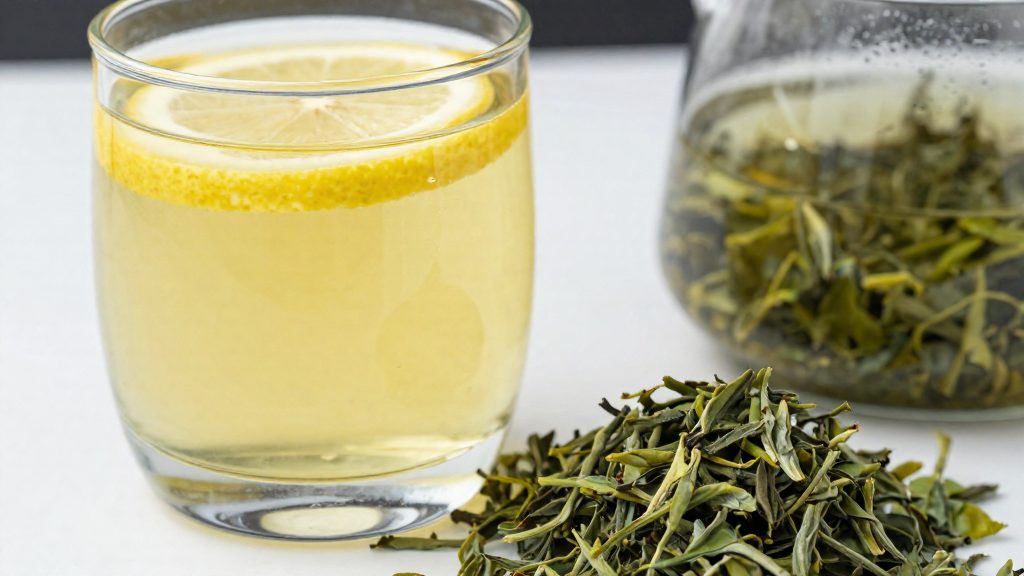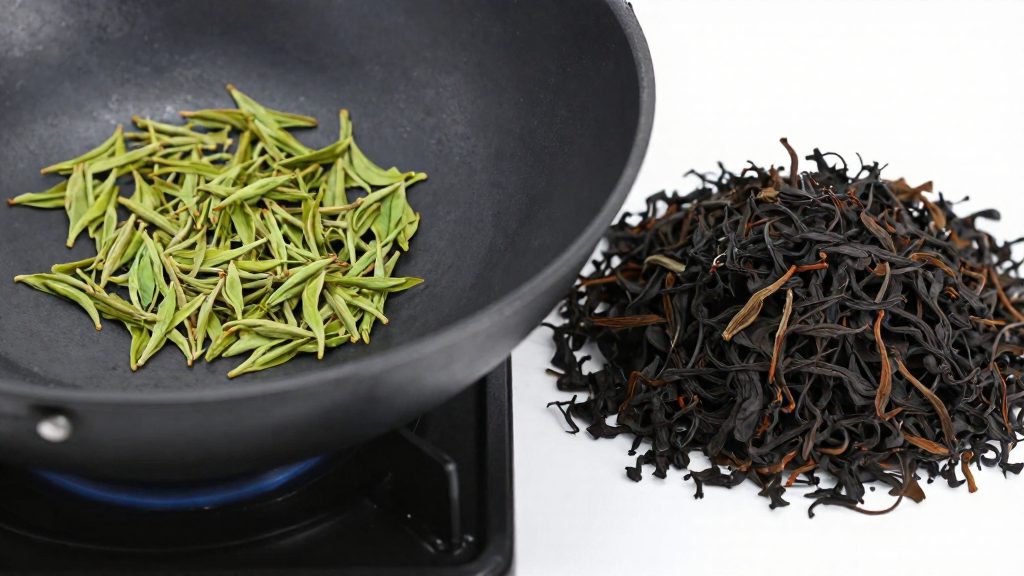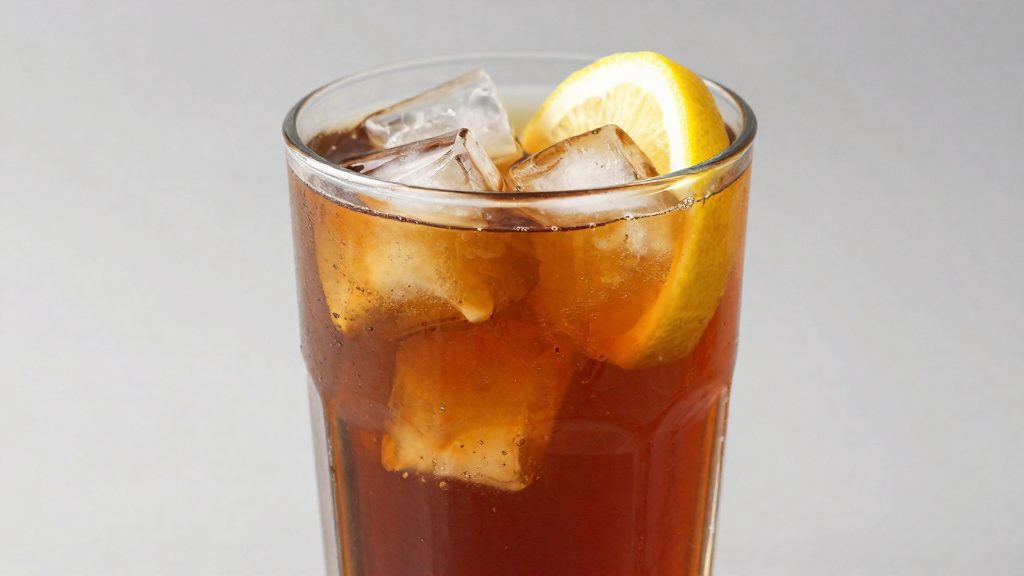
Sweet iced tea is black tea brewed strong, sweetened and poured over ice. Because ice melts into the cup and dilutes the liquid, the best base is a robust, full-bodied black tea that still tastes like tea at the end. Ceylon, Assam and Keemun are common black teas for iced service. The choice depends on how much body and strength the leaf brings to a chilled glass.
What is sweet iced tea, and which black tea works best?
How iced black tea is made
Sugar can go into the hot concentrate, or syrup can be added after chilling, so the tea needs enough strength to carry sugar and ice without tasting thin.
Black tea styles for iced service
- Ceylon: black tea from Sri Lanka, widely available and a common choice for iced black tea.
- Assam: black tea from northeast India, a common option when a strong, full-bodied base is the goal.
- Keemun: black tea from Anhui province, China, an option if you prefer a different flavour profile from Ceylon or Assam.
Why robust leaves hold flavour after dilution
Ice and melt water add volume, which lowers the strength of every sip. A leaf with more concentrated character keeps the tea recognisable after dilution, while a lighter black tea can taste watery once the ice starts to melt. To test a tea before committing to a batch, brew a small cup, let it cool and taste it before adding ice. If it already tastes weak, the diluted version will be weaker still.
Caffeine per cup
Caffeine content varies with the type of tea, the amount of leaf and the brewing method, so no single figure applies to every iced black tea. For published guidance on caffeine levels, check Health Canada’s caffeine page, and read the label or manufacturer’s instructions for the specific tea you buy.

Ingredients and ratios for a pitcher
For a large batch, the Tea Association of the USA (2026) gives 8-10 tea bags per quart of water. America’s Test Kitchen (2026) uses 10 bags with 4 cups of water, which is one quart, so its recipe sits at the top of that range. For a bigger pitcher, follow the Tea Association of the USA method: steep the bags in 1 quart of boiling water, then pour over the remaining cold water or ice.
The ATK black tea recipe combines tea, water, juice and syrup in fixed amounts:
| Ingredient | Amount (ATK recipe) |
|---|---|
| Black tea bags | 10 |
| Water | 4 cups |
| Juice | 2 cups |
| Simple syrup | 6-9 tablespoons |
| Yield | About 6½ cups |
The yield follows from the volumes. Six cups of water and juice, plus 6 to 9 tablespoons of syrup (about ⅜ to 9/16 cup), comes to roughly 6½ cups. This is my own arithmetic from the listed amounts, not a figure stated by the source.
How to brew black tea hot for iced tea
Brewing black tea hot for iced tea uses the same water temperature and steep time as a cup of hot tea. The difference is what happens afterward: the tea is poured over ice or cold water instead of being drunk hot. The Tea Association of the USA (2026) specifies fresh cold water brought to a full boil at 212°F, then steeped for 3-5 minutes.
Start with fresh, filtered water
Use fresh cold water for each brew. If your tap water is heavily chlorinated, filter it before heating, since the chlorine can affect the flavour of the finished tea (Tea Association of the USA, 2026).
Bring the water to a rolling boil
Heat the water to a rolling boil at 212°F (100°C). Quantities from the US sources are given in quarts and cups, so convert to millilitres or litres if your measuring tools are metric. Steeping black tea below this temperature is not the method the Tea Association of the USA (2026) describes.
Steep off the heat for 3-5 minutes
For a large batch, remove the pot from the heat before adding the tea, then steep for 3-5 minutes. For a small batch, brew the tea as you would for a hot cup and pour it over ice.
| Batch | Water | Steep | Finish |
|---|---|---|---|
| Single cup | Fresh cold water at a full boil (212°F) | One teaspoon or one tea bag, 3-5 minutes | Pour over ice |
| Large batch | 1 quart brought to a rolling boil, then removed from heat | Add tea and steep 3-5 minutes | Pour over remaining cold water or ice |
(Tea Association of the USA, 2026)
When should you add the sugar or simple syrup?
Sweeten the tea while it is still a hot concentrate, or add simple syrup after chilling. Avoid stirring granulated sugar into cold tea, because it dissolves slowly and can leave grains. Simple syrup is the more dependable choice for cold tea because it is already dissolved.
According to America’s Test Kitchen (2026), simple syrup is made from equal parts sugar and water, heated. Since it is already a liquid, it blends into cold tea without extra stirring.
| Sweetener and timing | Dissolution in cold tea | Practical result |
|---|---|---|
| Simple syrup, added after chilling | Already dissolved, so it mixes on contact | Sweetness can be adjusted in small additions |
| Granulated sugar, stirred into hot concentrate | Dissolved while the liquid is still hot, before dilution | Sugar is fully mixed before the tea meets ice |
| Granulated sugar, stirred into chilled tea | Slow, and grains can remain at the bottom | Harder to control evenly across the pitcher |
Sweetening the hot concentrate
In the large-batch method described by the Tea Association of the USA (2026), tea is brewed hot and then poured over cold water or ice. The hot concentrate stage is therefore the point where sugar can be stirred into a single liquid, before dilution. For small batches, the same logic applies: sweeten the hot brew before pouring it over ice.
Sweetening a room-temperature steep
America’s Test Kitchen (2026) steeps black tea at room temperature for 45 minutes and then adds simple syrup. Because this tea is never heated, the pre-dissolved syrup is the practical sweetener for this method.
Judging sweetness after dilution
Taste the batch after it is diluted and chilled, then add syrup in small amounts. Adjusting the concentrate by sight or taste alone can lead to an overly sweet or weak pitcher.
Can you cold brew sweet tea safely?
The Tea Association of the USA (2026) does not recommend sun tea or cold brew, because the water is not hot enough to kill bacteria and warm, long-standing conditions favour bacterial growth. America’s Test Kitchen (2026) publishes a room-temperature steeped black tea recipe, so the two sources give different advice on the same method. Neither source says that a short room-temperature steep is safe, so treat the ATK method with caution. The Tea Association’s concern about bacterial growth still applies.
| Source | Method | Position on room-temperature steeping |
|---|---|---|
| Tea Association of the USA (2026) | Sun tea and cold brew | Not recommended: the water is not hot enough to kill bacteria, and warm, long-standing conditions favour bacterial growth |
| America’s Test Kitchen (2026) | 10 tea bags in 4 cups of water, steeped 45 minutes at room temperature, then sweetened with 6-9 tablespoons of simple syrup (equal parts sugar and water, heated) | Published as a recipe; ATK says the room-temperature steep keeps the tea strong without bitterness, but it makes no food-safety claim |
Practical rules for holding sweetened tea
- Keep the steep short. The America’s Test Kitchen method uses a 45-minute steep, not an overnight one.
- Sweeten with syrup, not added sugar. Simple syrup is made by heating equal parts sugar and water, then cooling it before adding it to the tea.
- Refrigerate once steeping is finished. Move the tea to the fridge rather than leaving it on the counter. Neither source gives a fridge time limit, so check the storage guidance on your sugar or syrup packaging, or contact your local food safety authority for specific holding times.
- Discard tea that has been left out. If a pitcher has stood at room temperature for a long period, do not drink it.
How do you stop iced tea going cloudy or bitter?
Cloudiness and bitterness in iced black tea have different causes, so each needs its own fix. Chill haze is a fine, milky film that forms when a hot, concentrated brew cools quickly. Tannin bitterness comes from extra tannins extracted from the leaves when a bag is squeezed or left in the liquid too long. Control the cooling first, then control the steeping, and remove the bags on time.
Preventing chill haze
Haze is a temperature effect. It appears in liquid that looked clear while hot, once it drops in temperature. To reduce it:
- Dilute the concentrate with the remaining cold water before refrigerating it, rather than shock-cooling it undiluted.
- If the tea tastes off, check your tap water: the Tea Association of the USA (2026) advises filtering heavily chlorinated water first, because chlorine can affect flavour.
Removing bitterness from tannins
Tannins accumulate the longer leaves or bags sit in hot water, and squeezing a bag releases more liquid from the leaves. Two habits keep the batch smoother:
| Cause | Corrective step |
|---|---|
| Bag squeezed against the pot or spoon | Lift it out and let it drip |
| Bag left in hot water past the steep time | Set a timer and remove on schedule |
| Bag still in the concentrate as it cools | Remove all bags before chilling |
Removing bags promptly
Start a timer when you add the bags, using the steep time for your method. When it ends, lift the bags out straight away. Do not leave them in the pitcher while it cools, because the tea keeps extracting tannins as it sits.
Serving, storing and flavour variations
Iced black tea is finished by diluting and cooling a brewed concentrate, so how you add the ice determines the final strength.
Ice cubes versus chilled concentrate
There are two common ways to manage this dilution:
| Method | How it works | Practical result |
|---|---|---|
| Hot concentrate poured over ice | The tea melts ice as it goes in | Brew stronger than you want to drink; the melt brings the cup to the intended strength |
| Chilled concentrate poured over ice | The tea is fully cooled before it meets the ice | Less melt occurs, so the cup stays closer to the brewed strength |
Chilling the concentrate first gives more predictable results when you pour several glasses over time. Pouring hot tea over ice works well when you intend to drink the batch quickly.
Glass and pitcher choices
- Clear glass lets you judge colour, which is the simplest visual check on how strong the batch is.
- A pitcher with a lid keeps ice and fruit contained and limits splashing when you pour.
- A wide-mouth pitcher makes it easier to add ice, fruit and mint without fishing items out of a narrow neck.
- Fill each glass with ice before pouring so the tea reaches the ice rather than the empty glass.
Flavour variations: lemon, mint, peach and fruit
Add flavourings at serving time, to the glass or pitcher, rather than to the brewing water. This keeps the steep unchanged and lets each drinker adjust the taste.
- Lemon: add a wedge or thin slice to each glass for brightness.
- Mint: add a few sprigs to the pitcher or glass. Lightly bruise the leaves with your fingers to release more aroma.
- Peach: add thin slices of fresh peach to the pitcher, or use peach juice as a base.
- Juice as a base: America’s Test Kitchen (2026) adds 2 cups of juice to its room-temperature black tea recipe, so juice can carry the flavour of the drink rather than acting only as a garnish.