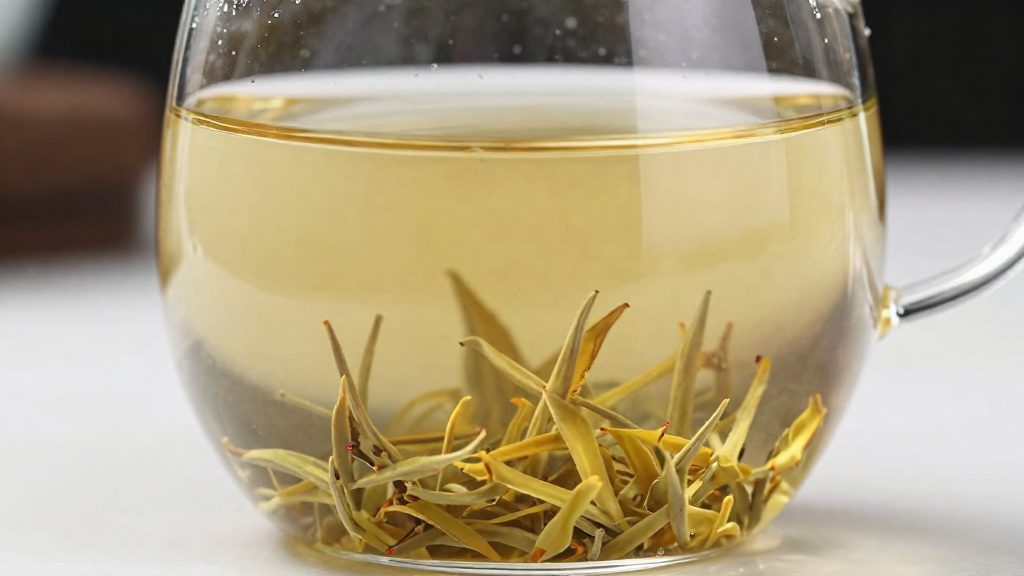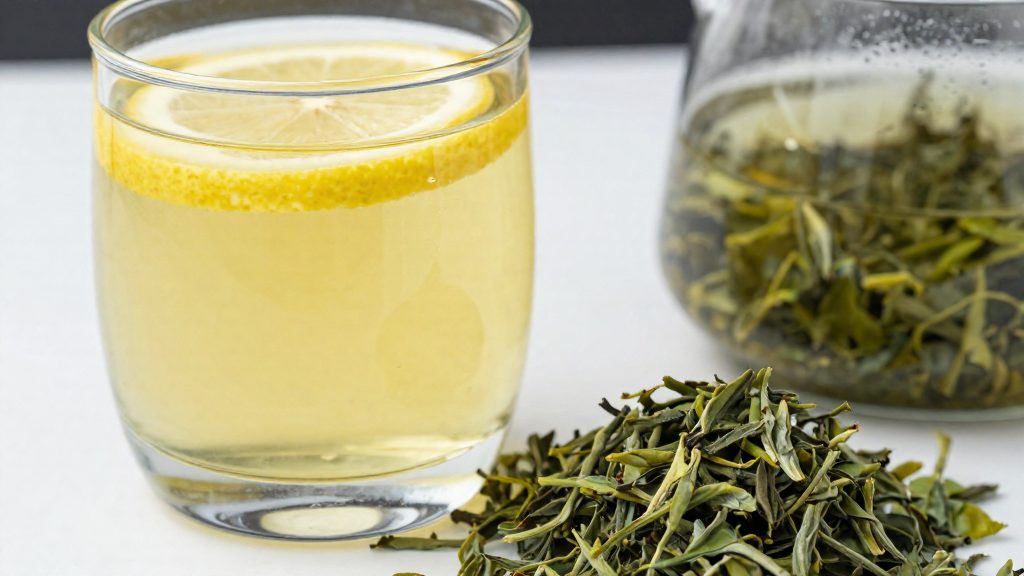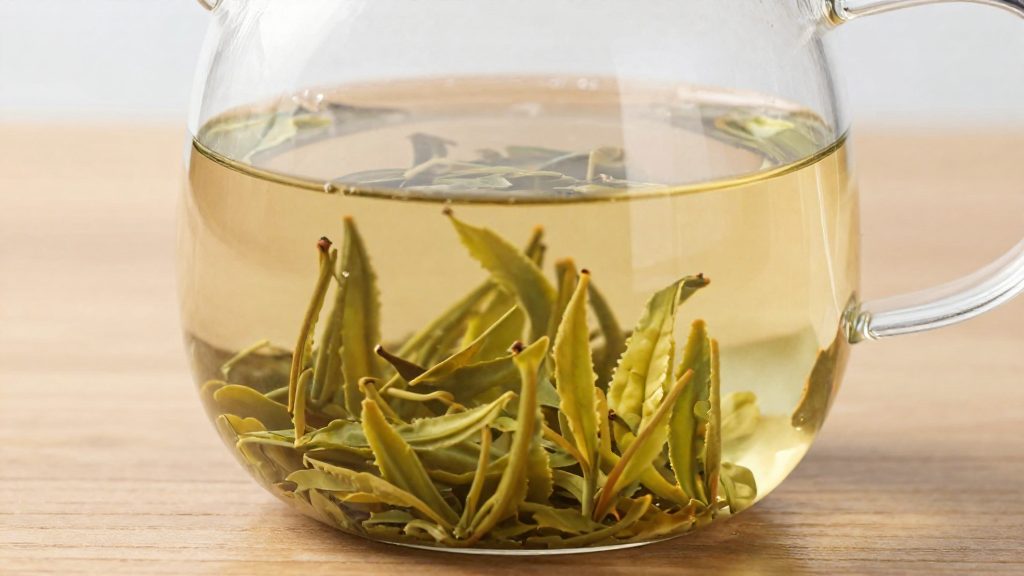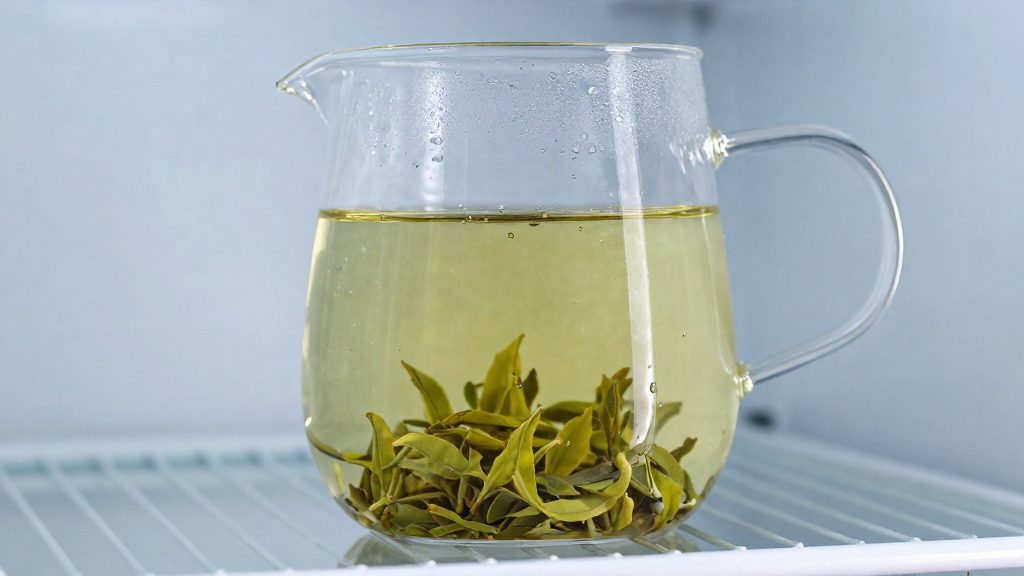
Cold brew green tea is tea made by steeping leaves in cold water inside the refrigerator instead of in water heated by a kettle. Extraction is slower, and the leaves release their compounds over a period of hours rather than minutes. The cup that results is typically lighter and smoother than the same leaves produce when hot-brewed. It is usually served chilled, either on its own or over ice.
What is cold brew green tea?
Cold steeping is a passive method. Leaves and cold water sit together in a closed container in the fridge. According to Nordqvist Tea (2026), cold extraction is slower than hot brewing, which is why the method is measured in hours.
Cold extraction versus hot brewing
| Factor | Hot brewing | Cold steeping |
|---|---|---|
| Water temperature | Set by the kettle | Set by the refrigerator |
| Extraction speed | Faster | Slower (Nordqvist Tea, 2026) |
| Flavour profile | Fuller, with more astringency | Smoother, with less astringency (general tasting principle) |
Cold water pulls compounds out of the leaf more gradually. This affects which compounds reach the cup first, so the flavour changes in character rather than just in strength.
Water temperature comes from the fridge, not the kettle
Cold steeping uses no kettle. Water goes into the container cold, and the refrigerator alone controls the temperature for the whole steep. Keep the container inside the fridge until the steep is finished. Moving it out to a warmer room partway through turns the process into a different, warmer steep. To confirm the cabinet is cold enough, check the appliance’s own temperature setting or use a standalone fridge thermometer.
Loose leaf versus bags in cold steeping
Both Hackberry Tea (2026) and Nordqvist Tea (2026) build their cold-steep method around loose-leaf green tea. Loose leaves move freely in the water and are strained out at the end. Before using tea bags for cold steeping, check the packaging or the manufacturer’s instructions to see whether they are suited to long steeping in cold water. Strain out the leaves before serving, whichever format you use.
How long should green tea steep in the fridge?
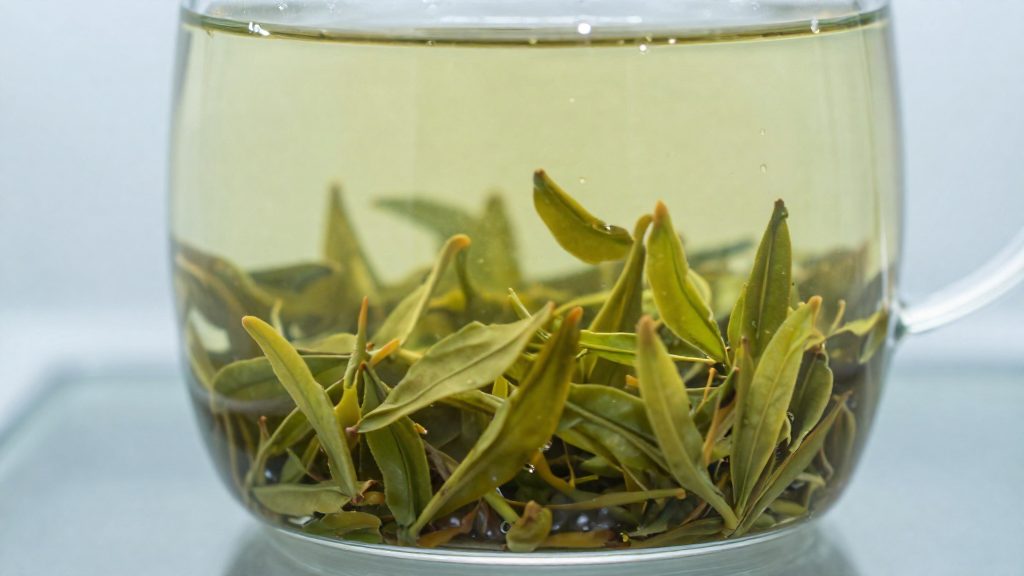
For green tea in the fridge, the published window is 6 to 8 hours. Hackberry Tea (2026) and Nordqvist Tea (2026) both give this range. Nordqvist adds that an overnight steep works well, which makes an evening start a practical choice.
| Source | Green tea window in fridge | Note |
|---|---|---|
| Hackberry Tea (2026) | 6 to 8 hours | Covers green tea only; black and oolong are listed separately |
| Nordqvist Tea (2026) | 6 to 8 hours | Overnight works well |
| Unverified search snippets | 2 to 6 hours | Not confirmed by a published source; treat as unconfirmed |
Some online search results list shorter windows, from 2 to 6 hours. These do not match the 6 to 8 hour range from the vendors above, and I could not confirm them, so do not use them as a standard. If you want a shorter steep, taste a small amount before the 6-hour mark and compare it with a cup from a longer steep.
To time the steep:
- Put the leaves and cold water in a sealed jar, pitcher or cold brew bottle.
- Refrigerate the container right away.
- Start the steep in the evening if you want an overnight infusion.
- Strain once the window has passed, and do not leave the leaves in the water longer than the window you chose.
Ratio of tea to water
Nordqvist Tea recommends 7 to 10 g per litre of loose-leaf green tea for cold brewing, which is 1.5 to 2 tablespoons per litre. Hackberry Tea uses a stronger concentrate: 5 tablespoons of tea in 4 cups of water, diluted with 4 more cups of cold water. Nordqvist states that its ratio is higher to make up for the slower cold extraction.
| Source | Tea-to-water ratio | Measure for one batch |
|---|---|---|
| Nordqvist Tea | 7 to 10 g per litre | 1.5 to 2 tablespoons per litre |
| Hackberry Tea concentrate | 5 tablespoons in 4 cups water | 5 tablespoons, then 4 more cups cold water |
| Hackberry Tea base recipe | 40:60 tea-to-water ratio | About 1 tablespoon per cup |
Nordqvist states that the higher ratio makes up for slower cold extraction. Within that range, you can start with 1.5 tablespoons for a lighter cup and go toward 2 tablespoons for a fuller one, adjusting to taste.
Hackberry’s concentrate is made in two stages: 5 tablespoons of tea sit in 4 cups of water, and 4 more cups of cold water are added afterwards.
Which green teas work best cold?
Green teas differ in leaf form and processing, and those differences affect how quickly they release flavour into cold water. The three styles below are examples of green teas with different leaf forms. Neither cited source ranks them for cold steeping, so treat the notes as general guidance.
Sencha: Japanese needle-leaf green
Sencha is a Japanese green tea made from needle-shaped leaves. It is sold both as loose leaf and in tea bags. Because the leaves are thin and fine, they expose a large surface area to the water, so the infusion picks up flavour steadily over a long steep in the fridge.
- Form: thin, needle-shaped leaves
- Best for: a clean, grassy cold brew
- Format: loose leaf gives the most control over strength; bagged sencha works for a simpler routine
Dragonwell (Longjing): pan-fired Chinese green
Dragonwell, also written Longjing, is a Chinese green tea with flat leaves. Its flat shape gives it a different surface profile from needle-leaf sencha, and it is pan-fired rather than steamed. Dragonwell is often described as a gentler, sweeter style, though neither cited source covers it. Use loose leaf so the flat leaves can open fully in the cold water.
Gunpowder: rolled-pellet Chinese green
Gunpowder is a Chinese green tea whose leaves are rolled into small pellets. The tight pellet shape means the leaves need time to unfurl, so a cold brew extracts more slowly than it would from loose, unrolled leaves. Gunpowder’s tight pellets may release flavour more slowly. This is general guidance, not from the cited sources, so taste and adjust the leaf quantity and steep time.
How long does cold brew green tea keep?
Once cold brew green tea is strained from its leaves, the sources in this section give two storage limits. Nordqvist Tea (2026) says the strained tea keeps up to 3 days in the fridge. Hackberry Tea (2026) gives up to 5 days for a concentrate that is covered and refrigerated. The two figures conflict, and the sources do not explain the difference, so the shorter one is the safer guide.
The sources do not explain the gap. Nordqvist’s figure is for strained tea, and Hackberry’s is for a covered, refrigerated concentrate. Nordqvist’s figure applies to tea that has been strained off the leaves. Hackberry’s figure applies to a covered concentrate, which is a stronger brew diluted later. Neither source describes how the two forms differ over time, so do not treat either figure as a guarantee for a specific jar or brew.
For a practical routine:
- Strain the leaves out before storing, as Nordqvist’s figure assumes.
- Keep the tea in a sealed, clean container in the coldest part of the fridge.
- Label the container with the day it was made.
- Discard it after 3 days, even if it looks and smells fine.
Why does cold brew green tea turn bitter?
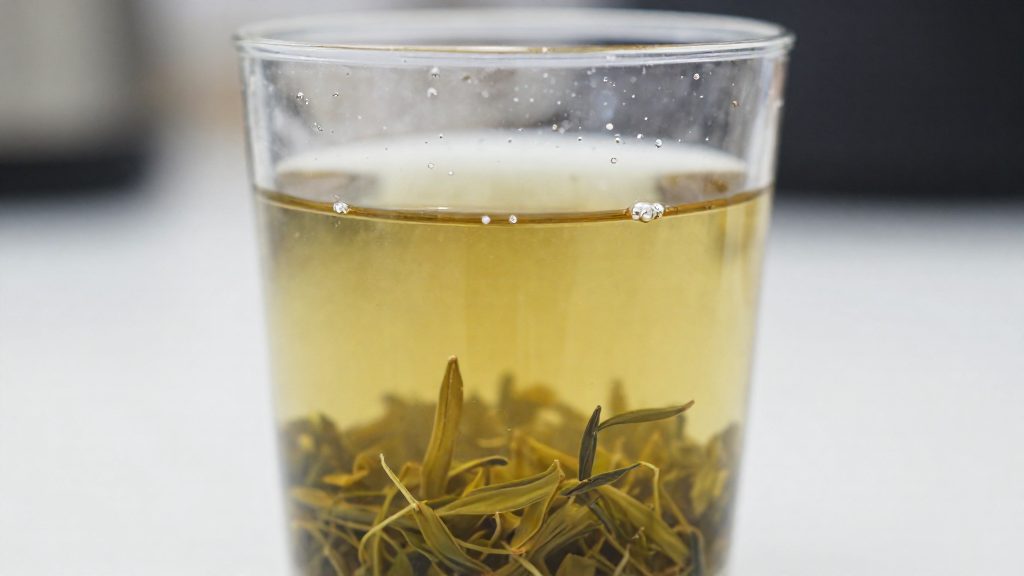
Cold brew green tea can turn bitter when the leaves stay in the water too long. The tea is often left to steep for many hours, and the longer the leaves sit, the more compounds leach out. Nordqvist Tea (2026) states that steeping should not go beyond 12 hours because of over-extraction. Past that point, the drink tends to taste harsh and dry rather than smooth.
The bitterness comes from astringent catechins, a group of polyphenols in green tea leaves. Extended steeping draws these compounds out in larger amounts, which gives the drink its puckering, drying character. A long steep can leave a strong, bitter result even though the brew looked pale.
Leaf grade also changes how fast bitterness develops. Broken or finely cut leaves have more surface area in contact with the water, so they release their compounds more quickly than whole leaves. A batch made with smaller leaves therefore needs a shorter steep to stay balanced, and a long steep that works with whole leaves may over-extract a finer grade.
Easy flavour variations
You can flavour cold green tea at two points: during steeping, or after straining. Either way, the steep time and tea-to-water ratio stay the same, so only the ingredients change.
| Addition or base | When to add | Method |
|---|---|---|
| Fresh mint sprigs | At steeping | Add with the leaves before refrigerating |
| Lemon slices | At steeping | Add thin slices with the leaves |
| Jasmine-scented green tea | Choose it as the base tea | Steep it the same way as plain green tea |
| Sweetener | After straining | Stir into the strained tea |
| Fruit | After straining | Add to each glass just before serving |
Mint and lemon can go into the jar with the leaves because they add flavour over the same cold steep. Mint gives a light note.
Jasmine-scented green tea gives a floral cup without extra botanicals. Pick it as the base tea and follow your usual cold-brew routine.
Sweetener and fruit belong in the strained tea, not the steeping jar. Adding them after straining lets you sweeten each glass to taste. According to Nordqvist Tea (2026), strained tea keeps up to 3 days in the fridge. That figure refers to the tea itself, so check the storage guidance on any fruit you add.