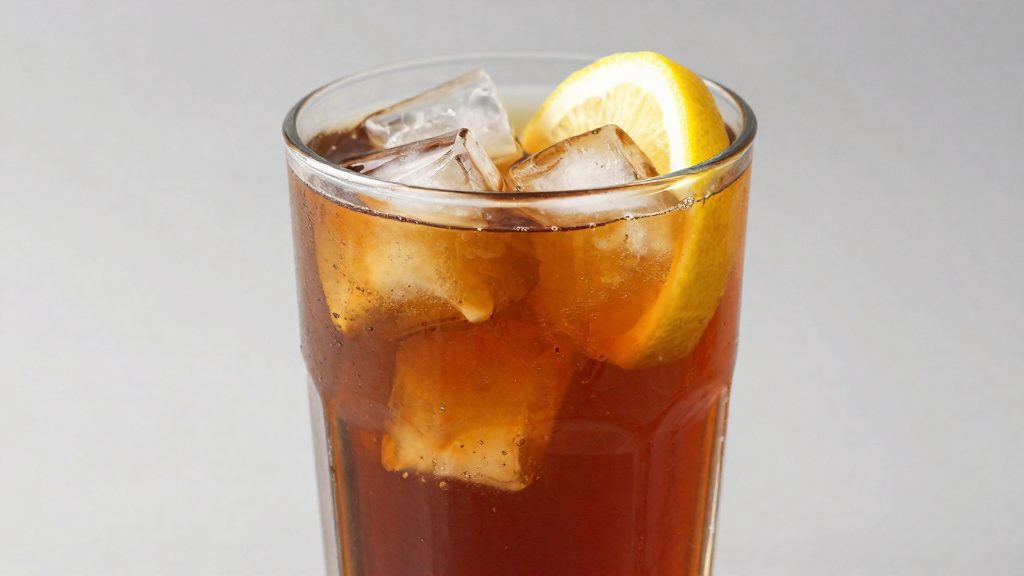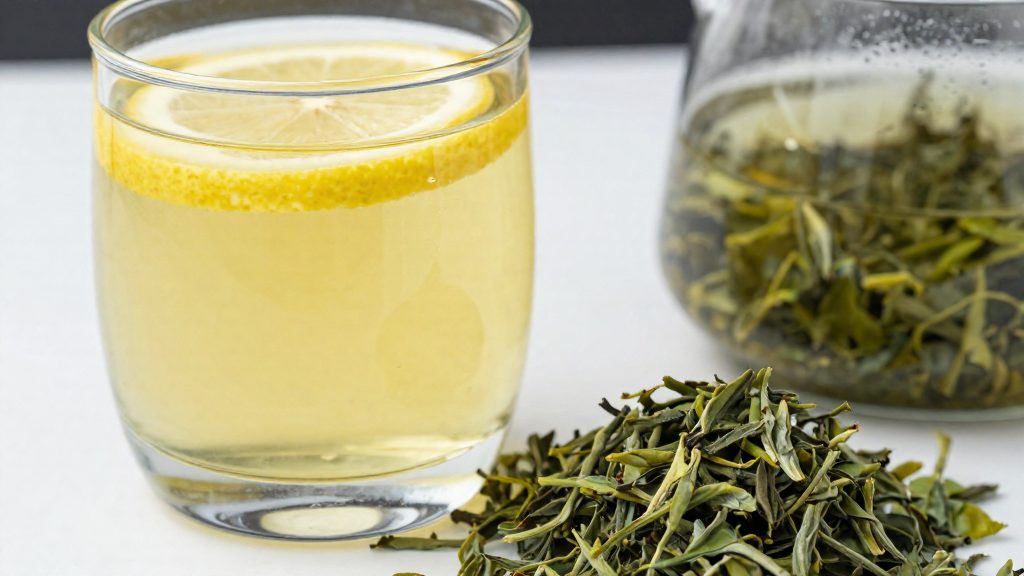
Steep 1 tablespoon of loose-leaf black tea per 8 oz (about 240 ml) of freshly boiled water for 3 to 5 minutes, then strain the hot infusion straight over a full glass of ice. This is the single-glass method that Murchie’s Tea & Coffee describes. The brew is made at full strength and strained over ice, which chills it without a separate cooling step; the melting ice dilutes it slightly.
Hot-brew iced tea: the quick method
Black tea works well with this method: both sources below give boiling water and the same 3–5 minute steep. They differ in how the leaf is measured (1 tablespoon per 8 oz versus 1 teaspoon per cup).
| Source | Leaf | Water | Steep | Finish |
|---|---|---|---|---|
| Murchie’s Tea & Coffee, single-glass method | 1 tablespoon loose tea | 8 oz freshly boiled water | 3–5 minutes | Strain with a fine mesh strainer over a glass filled with ice |
| Tea Association of the USA, hot tea | 1 teaspoon per cup | Boiling (212°F / 100°C) | 3–5 minutes | Hot cup, served as usual |
Steps for one glass
- Boil fresh water. Use water straight from the boil: Murchie’s specifies freshly boiled water and the Tea Association of the USA specifies boiling (212°F) water.
- Measure the leaf. Add 1 tablespoon of loose tea per 8 oz of water, directly into the brewing vessel.
- Steep for 3 to 5 minutes. Start timing when the water is poured.
- Strain over ice. Pour through a fine mesh strainer into a glass filled with ice, so the leaves stay behind.
Dilution and chilling over ice
The dilution happens because the hot liquid melts part of the ice. The melt water mixes into the tea, so the finished drink tastes lighter than the same infusion served hot. Brewing at full strength for the 3 to 5 minute window keeps the flavour from becoming weak after melting. The sources in this method do not give a set percentage of dilution, so judge the strength by taste and adjust the leaf amount on your next glass.
How much loose leaf tea per glass or litre?
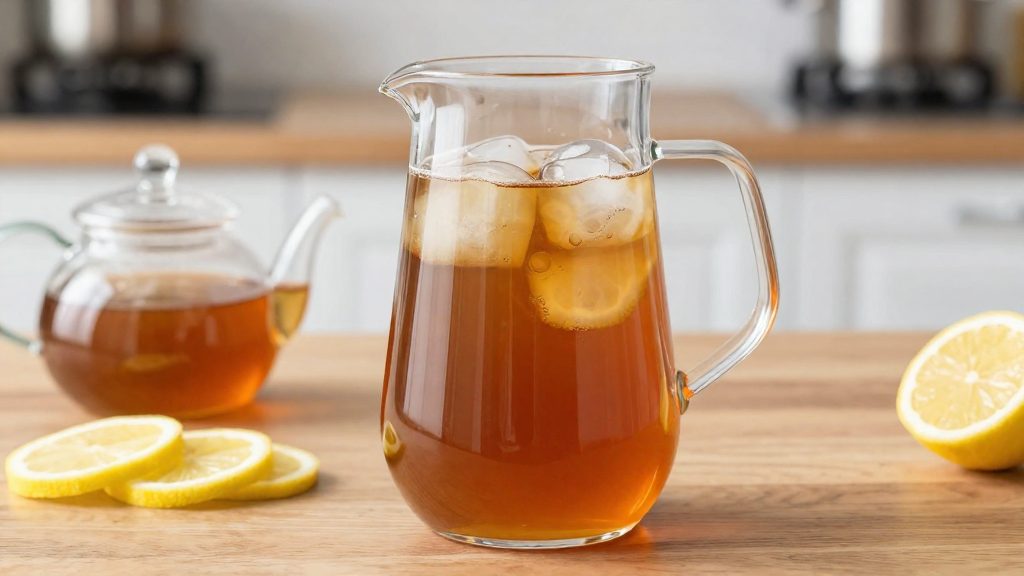
For a single glass, Murchie’s Tea & Coffee uses 1 tablespoon of loose tea per 8 oz of freshly boiled water. For a batch, the same publisher uses 4 tablespoons of loose tea per litre of freshly boiled water. Both figures are volume measures, so they work with ordinary measuring spoons.
The Tea Association of the USA, a US body (no Canadian association guidance was found), gives its figures per teaspoon, per bag and per US quart (about 946 ml). For hot tea it recommends one teaspoon of loose tea (or one bag) per cup in 212°F (boiling) water. For large-batch iced tea it uses 8–10 tea bags per quart. Because this batch figure is set in bags, it does not convert directly into a loose-leaf spoon count.
| Publisher | Use | Tea format | Quantity | Water |
|---|---|---|---|---|
| Murchie’s Tea & Coffee | Single glass | Loose leaf | 1 tablespoon | 8 oz freshly boiled |
| Murchie’s Tea & Coffee | Batch | Loose leaf | 4 tablespoons | 1 litre freshly boiled |
| Tea Association of the USA | Hot cup | Loose leaf | 1 teaspoon | 1 cup, 212°F (boiling) |
| Tea Association of the USA | Hot cup | Tea bag | 1 bag | 1 cup, 212°F (boiling) |
| Tea Association of the USA | Large-batch iced tea | Tea bags | 8–10 bags | 1 US quart |
The two sources use different units, so their figures are not interchangeable. Murchie’s specifies 8 oz for the glass, while the Tea Association specifies only “per cup,” so the two single-cup figures should not be compared as if they used the same volume.
Is cold brew iced tea safe and worth trying?
The Tea Association of the USA does not recommend cold brew iced tea on food-safety grounds, though other brands promote it. The Tea Association of the USA does not recommend sun tea or cold brew for foodservice or consumers. Whether cold brew is worth trying depends on a trade-off between a possible flavor preference and a hygiene recommendation that hot brewing avoids.
Boiling water as the kill-step
The Tea Association of the USA treats boiling water as a bacterial kill-step, the stage in brewing that reduces bacteria. Its hot-tea guidance and cold-brew position compare as follows:
| Method | Water temperature | Tea Association of the USA position |
|---|---|---|
| Hot brew | 212°F (boiling) | Boiling water acts as the kill-step |
| Sun tea | Sun-tea temperatures | Not recommended for consumers |
| Cold brew | Cold-brew temperatures | Not recommended for foodservice or consumers |
For hot tea, the association gives one teaspoon (or one bag) per cup in 212°F water for 3–5 minutes. Its large-batch iced tea uses 8–10 tea bags per quart, steeped 3–5 minutes, then poured over cold water or ice.
Why sun tea and cold brew are discouraged
Neither method passes through boiling water. The association’s reasoning is that boiling water acts as a kill-step, while sun-tea and cold-brew temperatures do not stop bacterial growth. Many tea brands do present cold brew as an easy method, so this is a point of disagreement, and hygiene is where it centres.
Flavor appeal versus safety
Brands promote cold brew as an easy route to a different flavor profile, and many drinkers enjoy it. That appeal is a matter of taste. The association’s recommendation concerns hygiene, not flavor, so taste alone does not answer the safety question.
If you want the iced-tea flavor, you can brew hot first. Murchie’s, a Canadian tea company, makes its big-batch iced tea with freshly boiled water, steeped 10 minutes in a heatproof jug, then strains it into a second jug, cools it and refrigerates it.
Which teas work best over ice?
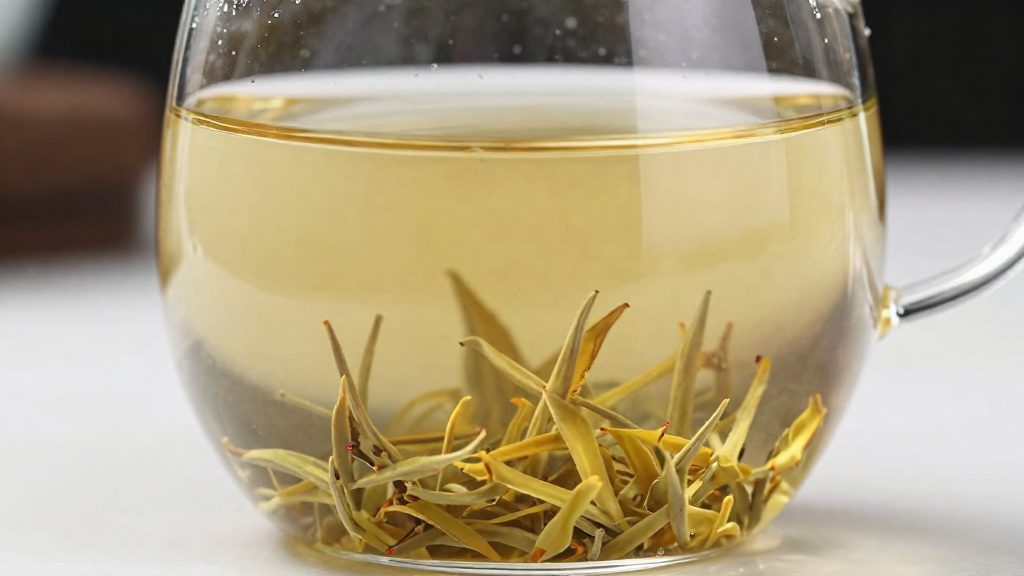
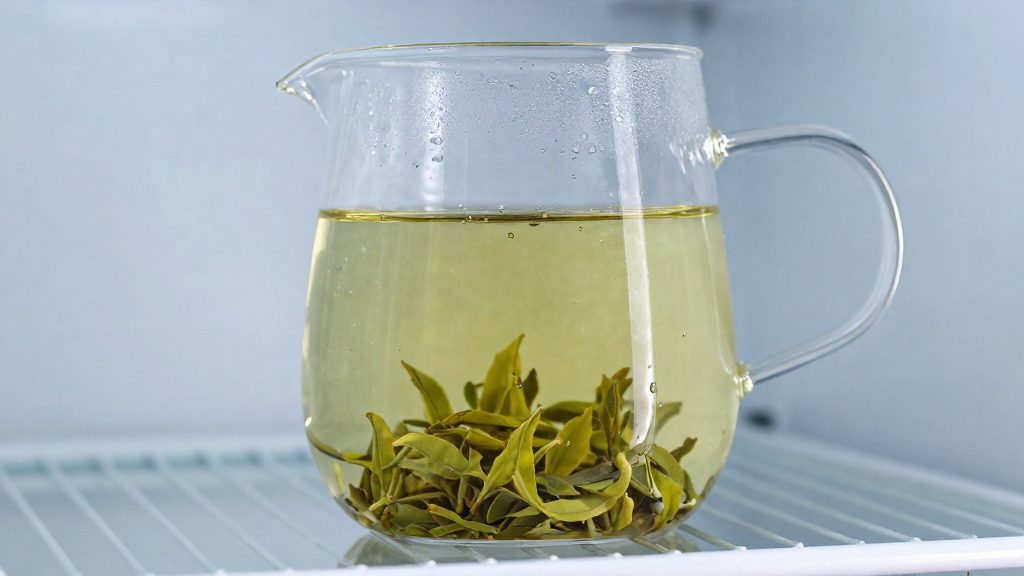
Green, oolong and white teas all work for iced tea when each is brewed at its own temperature and time, then strained over ice. The Tea Association of the USA gives separate hot-water settings for each category, so the tea type sets the water temperature more than a single kettle setting does.
| Tea category | Water temperature | Steep time |
|---|---|---|
| Green | 165–185°F | About 1 minute |
| Oolong | 180–190°F | 5–7 minutes |
| White | 180–190°F | 3–4 minutes |
Green tea
Green tea uses the cooler range and the shortest steep. At about one minute, the timer matters more here than with oolong or white, because a few extra minutes change the cup more quickly.
Oolong and white tea
Oolong needs the longest steep of the three, at 5–7 minutes in 180–190°F water. White tea uses the same temperature range with a shorter steep of 3–4 minutes. Both are hotter than green, so the water should be heated or cooled to the correct range before the leaves go in.
Steeping and chilling
Use the same temperature and time settings from the table, then chill.
How do you avoid cloudy or bitter iced tea?
Cloudiness and bitterness in iced tea can be linked to how fast the brew cools, how long the leaves stay in the water, and the water itself, although the cooling and mineral effects are not confirmed by the sources used here. The Tea Association of the USA gives separate temperatures and times for green, white and oolong teas. Keeping each tea’s temperature and time limits in mind and adjusting the cooling and water source addresses most problems with the finished glass.
Cloudiness from a rapid temperature drop
A temperature drop that is too sudden can make a hot brew turn hazy. Some brewers report that a sudden temperature drop can make tea hazy, but this was not confirmed by the sources used here, and the one-glass method above pours hot tea straight over ice.
- Strain the leaves out, cool the tea, then refrigerate it, as Murchie’s describes for batches.
- For a single glass, pour over a glass full of fresh ice.
- If the tea turns cloudy, try a different water source and compare.
Bitterness from excessive steep time
Bitterness is mainly a steep-time problem. Longer steeping generally makes tea more bitter, so start at the lower end of each range and taste before extending it.
| Tea (per Tea Association of the USA) | Water temperature | Steep time |
|---|---|---|
| Green tea | 165–185°F (74–85°C) | About 1 minute |
| White tea | 180–190°F (82–88°C) | 3–4 minutes |
| Oolong tea | 180–190°F (82–88°C) | 5–7 minutes |
Green tea has the shortest steep time of the three, at about 1 minute.
Mineral content and clarity
Water mineral content affects both clarity and taste. Water quality can affect taste and clarity. Use water you would drink plain, and if your tap water tastes strongly of minerals or chlorine, try filtered water. Use water you would drink plain: if your tap water tastes strongly of minerals or chlorine, switch to filtered water. Check your filter’s manufacturer instructions for its capacity and replacement schedule.
Making a big batch and storing it
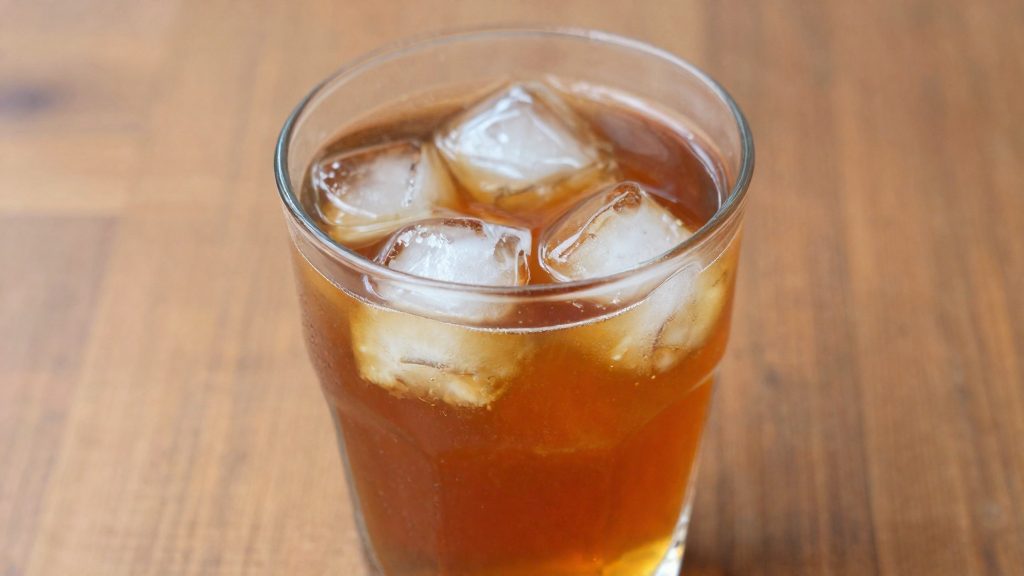
Murchie’s Tea & Coffee, a Canadian tea company, scales its iced tea to a full pitcher by steeping the leaves for 10 minutes in a heatproof jug, compared with the 3–5 minutes it uses for a single glass. The batch is then strained, cooled and refrigerated.
Ten-minute steep in a heatproof jug
Pour 1 litre of freshly boiled water over 4 tablespoons of loose leaf in a heatproof jug and let it steep for 10 minutes. Before pouring boiling water, confirm the jug is labelled heatproof or check the manufacturer’s instructions, since ordinary glass or ceramic pitchers may not tolerate it.
Two-jug straining and cooling
After steeping, pour the tea through a strainer into a second jug. This two-jug straining step removes the leaves from the batch, so the tea cools and is stored without them. Cool the strained tea, then refrigerate it.
| Step | Action |
|---|---|
| 1 | Steep loose leaf in freshly boiled water in a heatproof jug for 10 minutes |
| 2 | Strain the tea into a second jug to remove the leaves |
| 3 | Cool the strained tea |
| 4 | Refrigerate the cooled tea |
Refrigeration limit and labelling
Store the cooled tea in a covered container in the refrigerator. Murchie’s gives about 4 days as the storage window. Because the window is short, record the brewing date on the jug or on tape stuck to it, so you can check the batch before serving it.
Flavouring ideas for Canadian summers
Maple syrup, wild blueberries, mint, lemon and peach are suggested flavourings for iced tea in warm months, and each can go straight into the glass or pitcher once the tea is cold. Use them as accents rather than as the main flavour, so the tea still tastes like tea.
| Flavouring | Flavour note | How to add it |
|---|---|---|
| Maple syrup | Rounded, caramel-like sweetness | Stir into each glass; start with a small spoonful and adjust |
| Wild blueberries | Tart-sweet, juicy | Lightly crush a small handful in the bottom of the glass before pouring |
| Mint | Cool, fresh aroma | Bruise a few leaves between your palms, then add a sprig per glass |
| Lemon | Bright, sharp acidity | Add a thin wheel or wedge, or a squeeze of juice |
| Peach | Soft, floral sweetness | Add thin slices or small chunks of fresh peach |
Maple syrup is already liquid, so it stirs into a glass without a separate dissolving step. Its sweetness suits fruit with a sharp edge, which is why it pairs well with blueberries.
Mint and lemon are the simplest pairing. Mint supplies the aroma and lemon adds brightness, so the glass tastes fresher than either one alone. Peach works with the same mint: a few slices of peach and a bruised sprig in one glass give a soft, floral sweetness with a cool finish.
To pair wild blueberries with maple, muddle the berries first so their juice colours and flavours the tea, then sweeten with maple to taste. The berries supply the tartness and the syrup rounds it out.
Frequently asked questions
Can I use an infuser basket instead of a fine mesh strainer?
Yes, as long as the basket holds all the leaves and you lift it out when the 3 to 5 minute steep ends. Choose a basket infuser large enough for a full tablespoon of leaf, so the leaves have room to move in the water.
Should I sweeten the tea while it is hot or after it is cold?
Sweeten the strained tea while it is still warm, because warm liquid dissolves granulated sweetener more readily than cold liquid. Add it before you pour the tea over the ice so the ice does not have to dissolve it.
Does the single-glass ratio apply to green tea?
Not directly. The 1 tablespoon per 8 oz ratio above is written for black tea, and green tea needs its own temperature and time from the section above. Use that ratio as a starting point for green tea, then adjust by taste on your next glass.