Cold brew white tea ratio at a glance
Published guidance puts cold brew white tea at roughly 6 to 12 grams of leaf per litre of water, depending on the tea and the publisher. Valley of Tea (24 March 2026) recommends 10 to 12 g/L for white tea specifically. Rare Tea Company (2026) suggests about 6 g/L for whole-leaf teas, and Hackberry Tea (2026) gives about 1 tablespoon per cup. A practical starting point is 10 g/L, but this is a synthesis of these figures, not a published standard.
Cold brew white tea ratios by source
The four figures below come from tea sellers’ guidance. They use different units, so they are not directly interchangeable.
| Publisher | Ratio | Scope and conditions |
|---|---|---|
| Valley of Tea (24 March 2026) | 10 to 12 g/L | White tea, loose leaf, cold filtered water |
| Valley of Tea (24 March 2026) | 8 to 10 g/L | General cold brew range, not white tea specific |
| Rare Tea Company (2026) | about 6 g/L | Whole-leaf teas, cold filtered water |
| Hackberry Tea (2026) | about 1 tablespoon per cup, or about 1.5 times the hot-tea leaf amount | Cup size not stated |
Grams per litre (g/L) is the most useful unit for comparison because it fixes the leaf-to-water ratio regardless of cup size. The lowest published figure (about 6 g/L) and the highest (12 g/L) differ by a factor of two. For a 1-litre batch, that is 6 g of leaf at the low end and 12 g at the high end.
Hackberry’s “1.5 times the hot-tea amount” also depends on how much leaf you use for hot tea, so it is only a relative guide.
For white tea, the range that matches its most specific guidance is 10 to 12 g/L. Using 10 g/L as a starting point gives 5 g of leaf per 500 ml and 10 g per litre. Adjust in small steps toward 12 g/L if the result tastes too light.
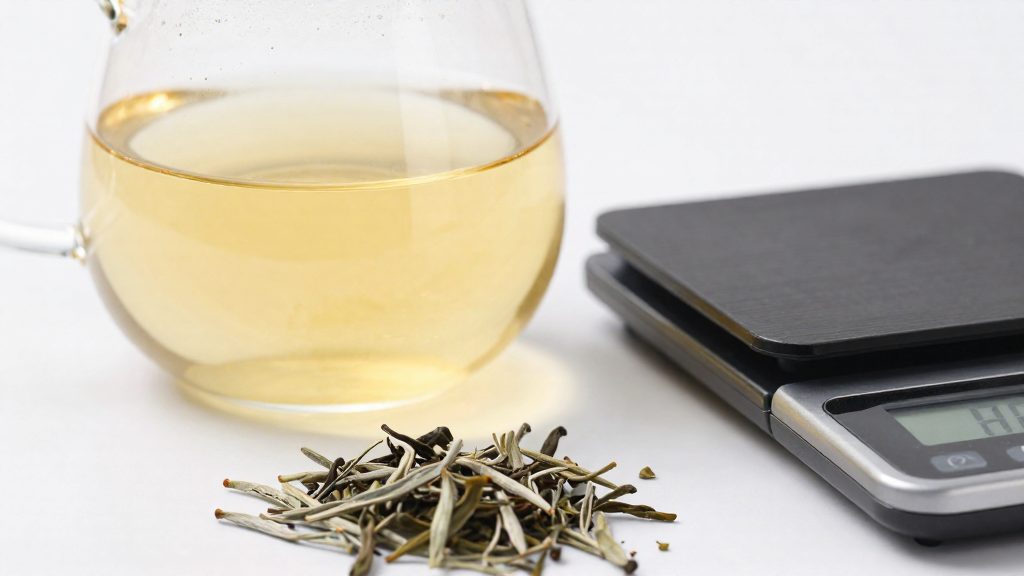
What do you need to cold brew white tea?
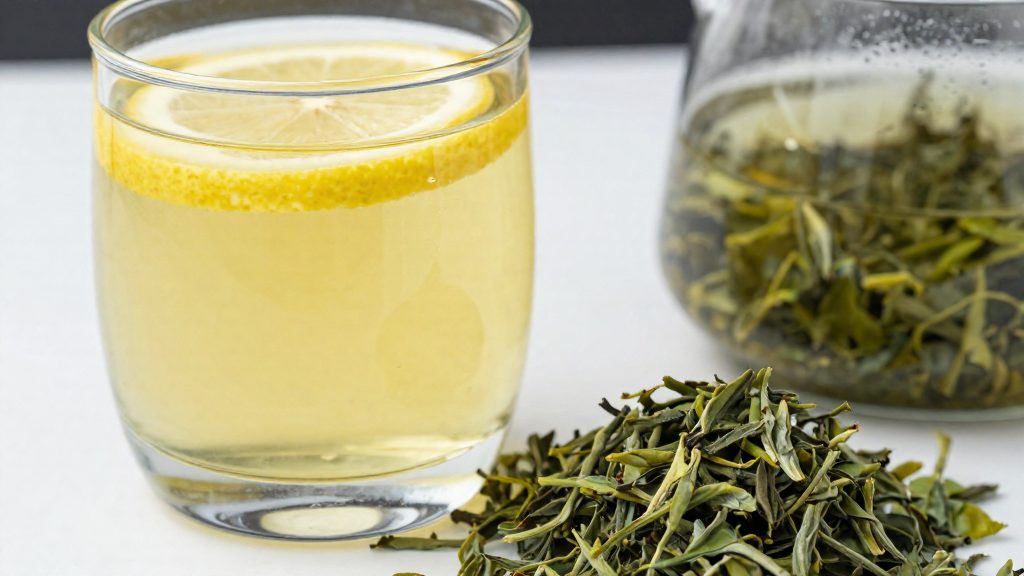
A cold brew needs three things: a lidded vessel that fits in your refrigerator, cold water that is preferably filtered, and white tea in a leaf form that suits a long, cool steep. Hackberry Tea (2026) prefers filtered water for its cold steep, and Rare Tea Company (2026) specifies cold filtered water, so filtration is the safer default. The sources here do not set a container material, so any clean pitcher or jar with a tight lid will work.
Filtered water versus tap water
- Filtered water is the option both Hackberry Tea (2026) and Rare Tea Company (2026) name. Since no heat is applied, the water’s own taste carries into the cup.
- Tap water quality varies by area. Check your local water utility’s published water quality report before deciding whether tap water is suitable.
Whole-leaf versus broken-leaf tea
- Rare Tea Company (2026) gives its ratio of about 6 g/L for whole-leaf teas.
- As general reasoning, not a sourced figure: broken leaf has more surface area, so it may release flavor faster and may turn bitter sooner over a long steep.
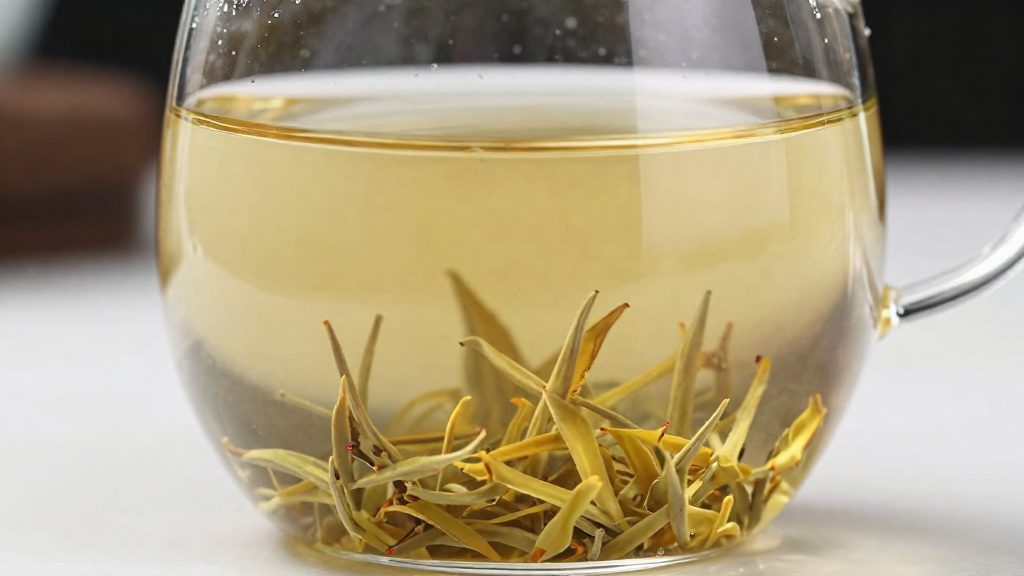
- Valley of Tea (2026) recommends Silver Needle and White Peony for cold brewing. Check the seller’s listing for leaf form before buying, since the leaf grade of a specific product is set by the producer.
Step-by-step cold brew white tea recipe
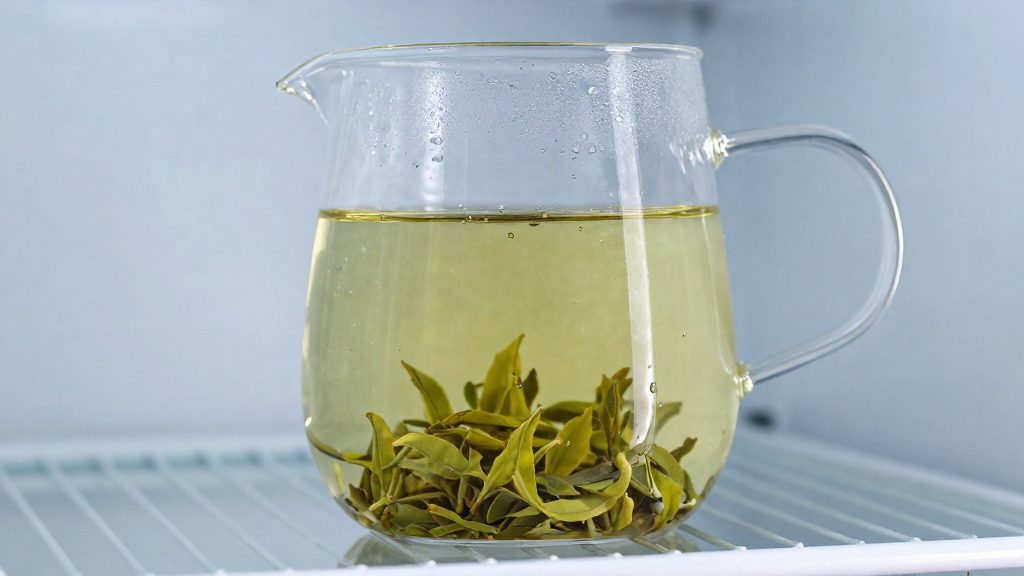
Cold brewing white tea takes three stages: weigh the dry leaf and combine it with cold filtered water, keep the mixture in a sealed vessel in the refrigerator, then remove every leaf before serving.
Step 1: Weigh the leaf and add water
- Weigh the dry leaf on a kitchen scale.
- Measure cold filtered water into a clean glass jug or bottle.
- Add the leaf to the water and stir gently so that all of it is wetted.
Silver Needle and White Peony are the white teas that Valley of Tea (March 2026) recommends for this method.
Step 2: Seal and refrigerate
- Close the jug with a lid or stopper so that the vessel is sealed.
- Place the sealed vessel in the refrigerator and leave it there for the planned steep time, opening it only for a planned taste check.
Step 3: Strain before serving
- Pour the infusion through a fine strainer or filter to remove every leaf. Rare Tea Company (2026) advises straining finely.
- Pour the strained tea into glasses and serve it cold, over ice if you wish.
How long should white tea cold brew?
For white tea, the most cited cold brew steep time is 6 to 8 hours in the refrigerator. Hackberry Tea (2026) gives 6 to 8 hours for white or green tea, and Valley of Tea (2026) gives the same window for white tea specifically. Rare Tea Company (2026) recommends refrigerating for 8 hours or overnight, and states that the infusion reaches equilibrium after about 8 hours. Valley of Tea (2026) also gives a wider general cold brew range of 4 to 12 hours that covers all tea types, not white tea alone.
Steep time figures by source
| Source (year) | Figure | Scope |
|---|---|---|
| Hackberry Tea (2026) | 6 to 8 hours | White or green tea |
| Valley of Tea (2026) | 6 to 8 hours | White tea, loose leaf in the fridge |
| Valley of Tea (2026) | 4 to 12 hours | General cold brew range, all tea types |
| Rare Tea Company (2026) | About 8 hours, or overnight | Whole-leaf teas; equilibrium reached after about 8 hours |
These figures are retailer guidance, not measured standards, so they describe a starting window rather than a fixed rule.
Choosing a time within the window
- Start at the low end. Begin at 6 hours for white tea, since both Hackberry Tea and Valley of Tea give that as the lower bound for this tea.
- Use the 8-hour mark as a checkpoint. Rare Tea Company’s equilibrium point suggests that 8 hours is when the infusion is described as complete.
Can you cold brew white tea at room temperature?
Every cold brew guide cited here specifies refrigerator steeping: Valley of Tea (2026-03-24), Hackberry Tea (2026) and Rare Tea Company (2026) all place the infusion in the fridge. None of these guides gives a counter-top method for white tea, so this article does not offer a room-temperature steep.
Why the fridge is the documented method
A cold infusion sits for hours in plain water with no preservative. A warm room gives bacteria more time to grow in that window, and a refrigerator slows this. This is general food-handling reasoning, not a measured threshold from a source, so treat refrigeration as the method the guides use rather than as a proven safety limit.
Counter steeping and local food-safety rules
Without a sourced time or ratio for room temperature, there is no documented basis for a counter steep. Before attempting any non-refrigerated steep, check the food-safety guidance for your country or region. Your national food safety agency or local health authority sets the rules for holding drinks at room temperature, and it is the right contact if that guidance is unclear.
Fitting a sealed jar into a crowded fridge
- Choose a narrow vessel. A glass jar or pitcher with a tight-fitting lid takes less shelf space than a wide bowl.
- Use a flat, middle shelf. Keep the jar away from the door, where temperature swings most.
- Clear space first. Move other items aside so the jar stands upright and cannot tip.
- Label the start time. A date and time on the jar shows when steeping began, which makes it easier to track the steep against the guide you followed.
How long does cold brew white tea keep?
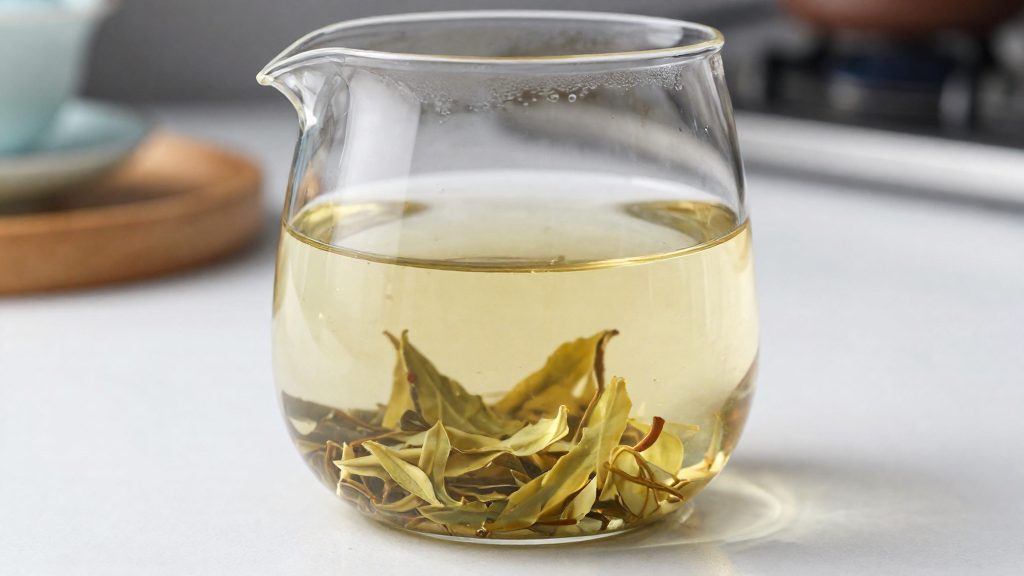
Strained cold brew white tea keeps 2 to 3 days in the fridge when stored in a sealed container, according to Valley of Tea (2026). Rare Tea Company (2026) gives a longer window of 3 to 4 days for the same storage condition. The two ranges overlap at 3 days, so plan around the shorter 2 to 3 day window.
| Source | Sealed storage in the fridge after straining |
|---|---|
| Valley of Tea (2026) | 2 to 3 days |
| Rare Tea Company (2026) | 3 to 4 days |
Both ranges apply only to strained, sealed cold brew. Once the leaves are removed, the liquid should be treated as perishable and kept in the fridge rather than left at room temperature.
Storing the batch
- Pour the strained tea into a clean, sealed glass container with a tight lid.
- Write the brew date on the container so you can count the days.
- Keep the container in the fridge the whole time, and avoid repeatedly opening it, which exposes the tea to air.
Checking before you drink
Smell the tea before pouring a glass. If it smells sour, musty or noticeably different from the first day, discard it. Do not rely on the day count alone, because a sealed container can still be opened and contaminated by a dirty pour spout or cup.
Cold brew versus hot-brewed iced tea
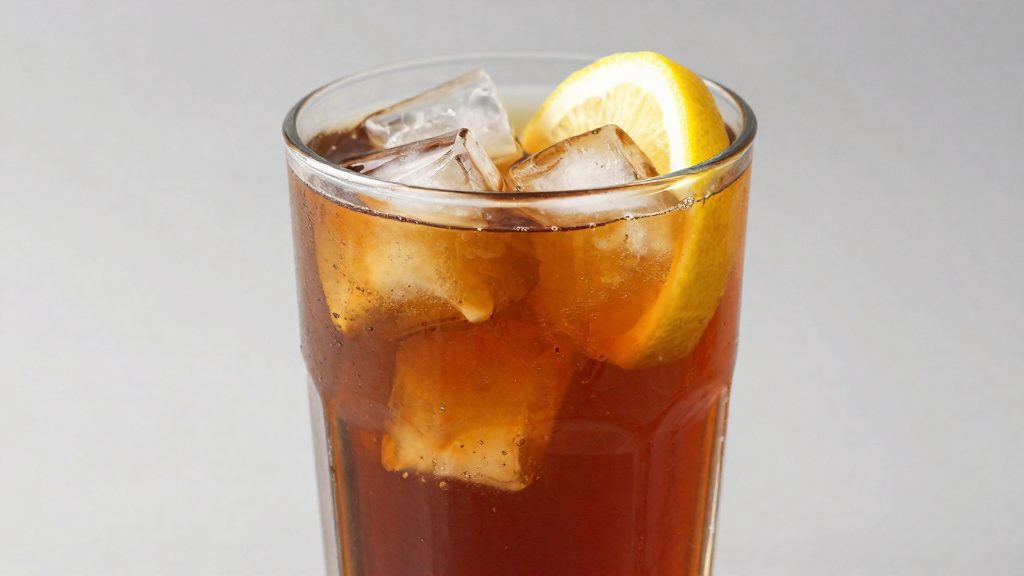
Cold brew and hot-brewed iced tea both end as a chilled drink served over ice, but they differ in how the leaves are steeped. According to Rare Tea Company (2026), cold infusions taste smooth.
| Factor | Cold brew | Hot-brewed iced tea |
|---|---|---|
| Water at the start | Cold water, unheated | Hot water |
| Time investment | Overnight in the fridge (Rare Tea Company, 2026) | Brewing takes minutes, then time to cool |
| Leaf handling | Leaves stay in the water for the whole steep; strain finely before serving (Rare Tea Company, 2026) | Leaves removed right after the hot brew, before chilling |
| Taste | Smooth (Rare Tea Company, 2026) | Brewed hot, then chilled |
Does cold brewing change caffeine?
Cold brewing does not produce one fixed caffeine figure for white tea, and no per-cup value can be stated with confidence. Valley of Tea (2026) says cold water pulls out less caffeine than hot water, while Rare Tea Company (2026) warns that cold infusions can be high in caffeine even though they taste smooth. Since the two statements point in opposite directions and no sourced caffeine figure exists for cold brew white tea, this question stays unresolved.
Factors that shift extraction
- Leaf amount: More leaf per litre puts more compounds into the water. This is the variable you control most directly.
- Contact time: Rare Tea Company (2026) states that the infusion reaches equilibrium after about 8 hours. Rare Tea Company does not say what happens beyond that point, so treat longer steeps with caution.
Checking a manufacturer’s caffeine data
Caffeine values on tea products are often tied to a specific preparation, so read them closely before applying them to cold brewing.
| What to check | Why it matters |
|---|---|
| Whether the figure is for dry leaf or a brewed cup | Dry-leaf and brewed values are not interchangeable |
| Whether the figure is for hot or cold preparation | A hot-water figure does not transfer to a cold brew |
| The leaf weight and steep time behind the figure | Changing either alters the extract |
If the label gives no caffeine information, contact the manufacturer with the product name and ask for data on the exact method you use.