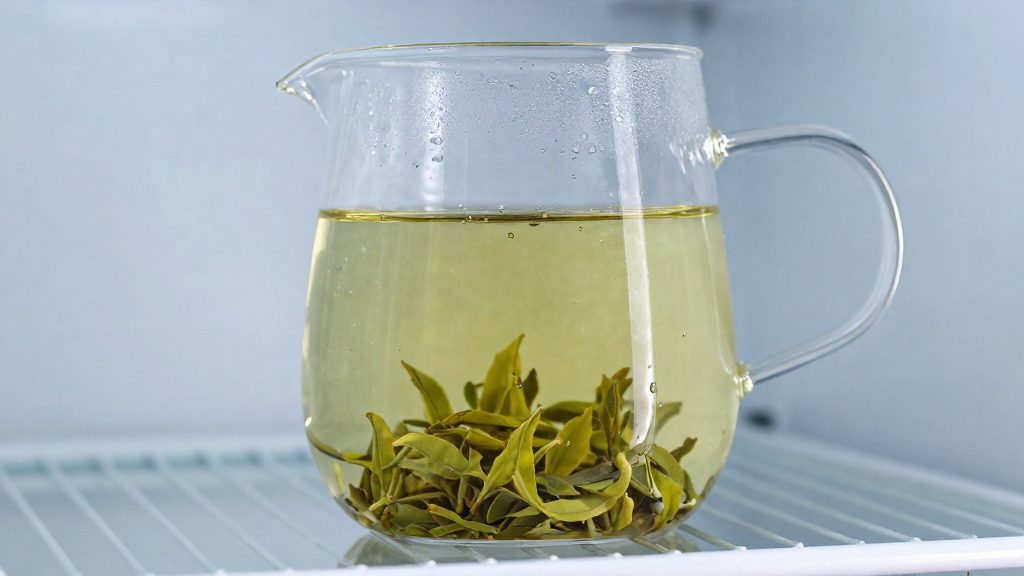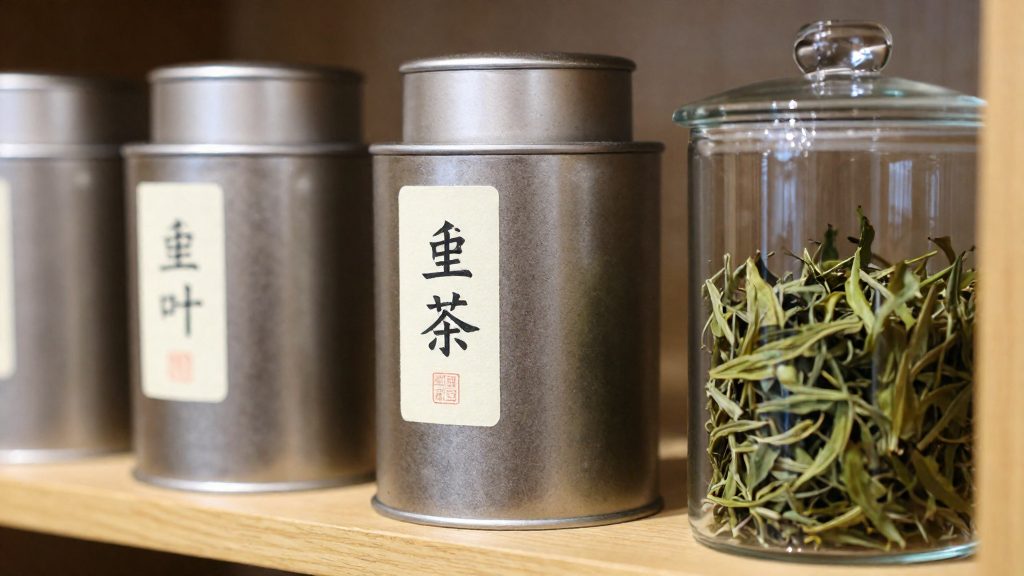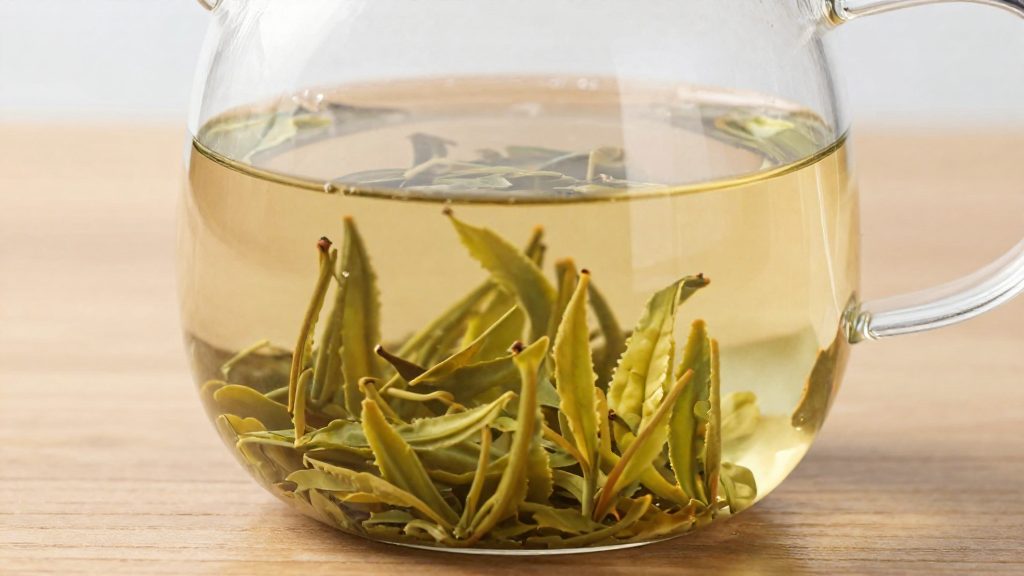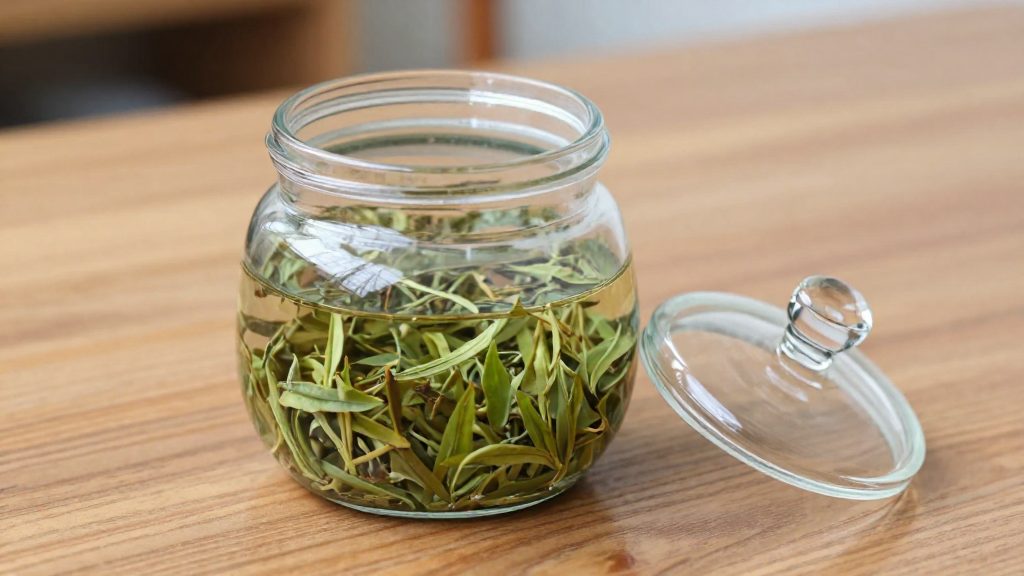
Green tea starts losing freshness as soon as the package is opened. Sugimoto USA states that oxidation begins the moment the package opens, and that oxygen, humidity, light, foreign odours and heat all degrade tea. Tezumi gives about 3 to 6 months of peak freshness for opened green tea. Other sources do not standardise this window, so treat it as an approximate guide.
Why does opened green tea lose its freshness?
Oxidation begins at opening
Once the seal is broken, the leaves are exposed to air. Sugimoto USA identifies oxidation as the first change, starting immediately at opening. Because oxidation is already underway, the first steps after opening matter more than most later habits.
Oxygen, humidity, light, odours and heat
Each environmental factor acts on the leaves in a different way:
- Oxygen drives oxidation, which is the main chemical change in an opened pack.
- Humidity degrades the tea, according to Sugimoto USA and Tezumi.
- UV light is listed by Tezumi as a key enemy of tea, alongside plain sunlight.
- Odours: foreign smells degrade tea, so leaves kept near strong-smelling items can pick up unwanted aromas (Sugimoto USA; Tezumi lists strong odours as an enemy).
- Heat and temperature swings degrade tea, per Sugimoto USA and Tezumi.
Colour and aroma as signs of ageing
Tezumi notes that oxidised teas such as black tea stay largely unchanged for years, although their aromas weaken. Green tea is not oxidised during processing, so its peak window after opening is much shorter.
Choose an airtight, opaque container
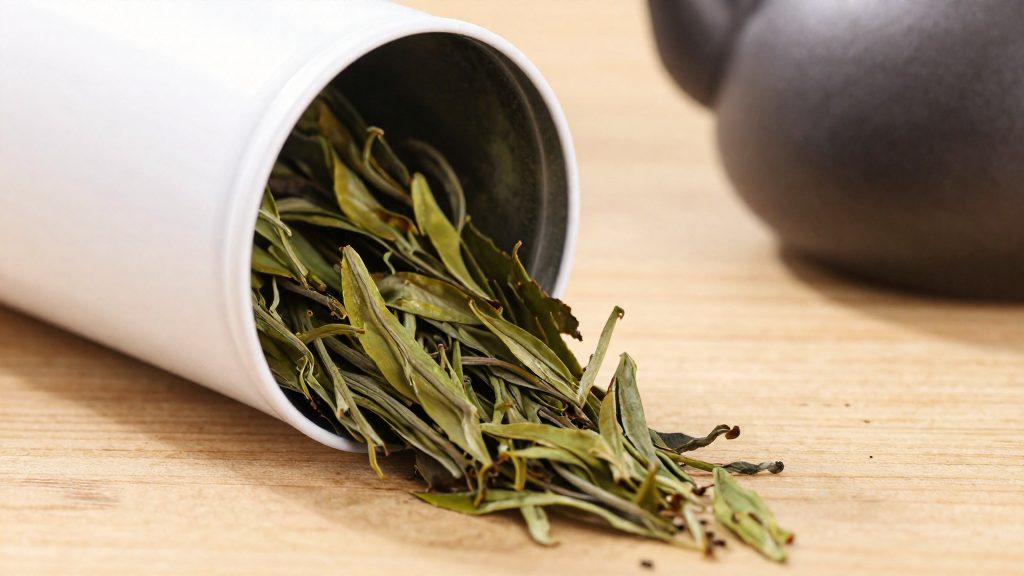
A suitable vessel has to do three things: seal tightly, block light, and leave little air above the leaves. Sugimoto USA treats moving the leaves promptly into an airtight container as the most important step.
Seal design: silicone gasket or clamp lid
Sugimoto USA recommends a container with either a silicone gasket or a clamp lid. Both keep the lid pressed against the body, which limits air exchange more effectively than a loose fit. Sugimoto USA advises avoiding snap-lid plastic containers.
Opaque body against light and UV
Tezumi advises a lightproof container, and Sugimoto USA specifies an opaque body that blocks light. Choose a tin, ceramic or dense plastic vessel over clear glass or thin see-through plastic, because transparent walls let UV reach the leaves.
Minimising headspace and transferring promptly
Sugimoto USA specifies little air space above the leaves. Pick a container sized to the amount of tea it will hold, so the gap between the leaves and the lid stays small as the level drops. Move the tea out of its original packaging as soon as you open it rather than leaving it in the pouch.
| Feature | Recommended | Avoid |
|---|---|---|
| Lid seal | Silicone gasket or clamp lid | Snap-lid plastic |
| Body | Opaque, blocks light and UV | Clear or see-through walls |
| Air above leaves | Little air space, container sized to the tea | Oversized container |
| Original packaging | Transfer promptly after opening | Paper bags, or a pouch opened several times |
Where to store it: pantry or fridge?
For daily drinking, the pantry is the usual default: a cool, dark cupboard. Cold storage is disputed: Sugimoto USA suggests the fridge or freezer for a sealed bulk reserve, while Tezumi advises against putting opened tea back in the freezer and allows the fridge only for infrequent drinkers. Both sources are Japanese-tea specialist sellers, and no Canadian standard was found.
Pantry conditions
- Cool and steady: keep the tin away from ovens, kettles, dishwashers and radiators, where temperature swings are frequent.
- Sealed: the lid should close tightly.
Fridge, freezer, or neither
| Location | What the sources say | Best use |
|---|---|---|
| Pantry | Cool, dark, away from heat; Tezumi advises it for regular drinkers | Opened daily-use tin |
| Fridge | Tezumi allows it for infrequent drinkers if the packaging is well sealed | Infrequent drinkers only, in a tightly sealed container |
| Freezer | Sugimoto USA suggests it for a sealed bulk reserve; Tezumi says opened tea should not go back in the freezer | Sealed bulk reserve, not the opened daily tin |
Splitting a bulk reserve from daily-use tea
Sugimoto USA describes a two-container method:
- Daily jar: a small airtight jar holding roughly one week of supply, kept at room temperature in your cupboard.
- Reserve: the rest of the tea in a larger sealed container, placed inside a second sealed bag, then stored in the fridge or freezer.
Refill the daily jar from the reserve, not the other way round. Each time you open the reserve, you expose the whole batch to air and moisture, so take out only what fits in the daily jar. Check the product label or the manufacturer’s storage instructions for any batch-specific guidance. The sources used are Japanese-tea specialist sellers, and no Canadian standard on home tea storage was found.
How to handle condensation
Condensation forms when warm, moist room air meets a cold container surface. If a tin or pouch is opened straight from cold storage, that moisture can collect on the outside and run toward the opening. Sugimoto USA advises letting the sealed container reach room temperature and wiping off condensation before opening. Its guidance covers the bulk reserve it stores in the fridge or freezer.
| Step | Action |
|---|---|
| 1 | Leave the sealed container, unopened, until it reaches room temperature. |
| 2 | Wipe the outside dry before touching the lid. |
| 3 | Open it and measure the tea. |
| 4 | Reseal immediately after each scoop or pinch. |
How long does opened green tea stay fresh?
According to Tezumi, opened green tea keeps its peak freshness for about 3 to 6 months. This is a single-source figure and is not standardised. The clock starts at the first opening, not at the purchase date. Tezumi says opened matcha can show oxidation in under a month.
What shortens the window
- Tea style: steamed green teas such as sencha degrade faster than pan-fired ones (Tezumi).
| Tea type | Shelf behaviour after opening | Source |
|---|---|---|
| Green tea (general) | Peak freshness of about 3 to 6 months | Tezumi |
| Oxidised tea, such as black tea | Stays largely unchanged for years, though its aroma weakens | Tezumi |
Judging staleness by aroma and taste
Smell is the first check. Open the tin, smell the dry leaves, and compare them with a newer tin of the same tea. Weakened aroma is the main sign that the tea is losing freshness. Then brew a small amount at the temperature in your recipe and compare the cup with a fresh one. A flat, dull or dusty smell in the dry leaves, or a thin cup with less aroma, means the tea is past its best.
Loose leaf versus bagged tea
The freshness figures above apply to opened loose-leaf green tea. For bagged tea, use the best-by date printed on the box and the manufacturer’s storage instructions, which give the most reliable guidance for that product.
Matcha and sencha: the most delicate
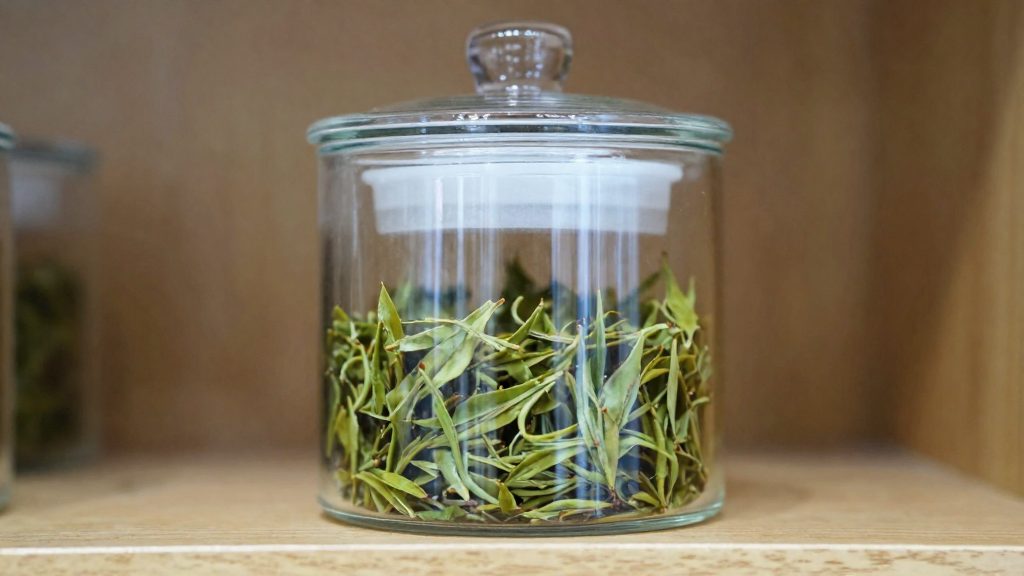
Matcha and sencha are among the more delicate green teas. Tezumi says steamed green teas such as sencha degrade faster than pan-fired ones, and that opened matcha can show oxidation in under a month. Matcha is ground into a fine powder that exposes far more surface to air and humidity than whole leaves do. Sencha is a steamed green tea with needle-shaped leaves. Each form needs a different handling routine.
Matcha’s fine powder and exposed surface
- A powder has much more surface area per gram than whole leaves, so every opening exposes more of the tea to oxygen and moisture.
- Every opening exposes the powder to air and moisture, so limit how often the tin is opened.
- Because of this, handle the tin for as short a time as possible and avoid leaving it open while you prepare a bowl.
Sencha’s needle-shaped leaves and handling
- Because steamed teas such as sencha degrade faster than pan-fired ones (Tezumi), limit how often the tin is opened.
- Remove only the amount for one session, rather than repeatedly opening the tin to top up a small container on the counter.
Dedicated dry scoop for matcha tins
| Handling step | Why it matters |
|---|---|
| Use a dry scoop only | Humidity is one of the factors that degrades tea (Tezumi) |
| Keep the scoop for matcha alone | Prevents aromas from other teas transferring to the powder |
Mistakes to avoid
Most shortened freshness comes from a handful of habits that undo the work of a good container. The errors below are the most common ones.
Keeping leaves in the original pouch
A pouch that has been opened several times is a poor long-term container. Each reopening lets oxygen and humidity in, and the pouch rarely closes tightly enough to keep the leaves sealed.
Using snap-lid plastic tins and paper bags
A snap lid does not seal against air, and paper does not block light or odours.
Storing tea beside spices, coffee or cleaning products
Keep the container away from spices, coffee or cleaning products. Tea absorbs nearby smells, so a sealed bag around the container adds a second barrier, as Sugimoto USA describes for its bulk reserve.