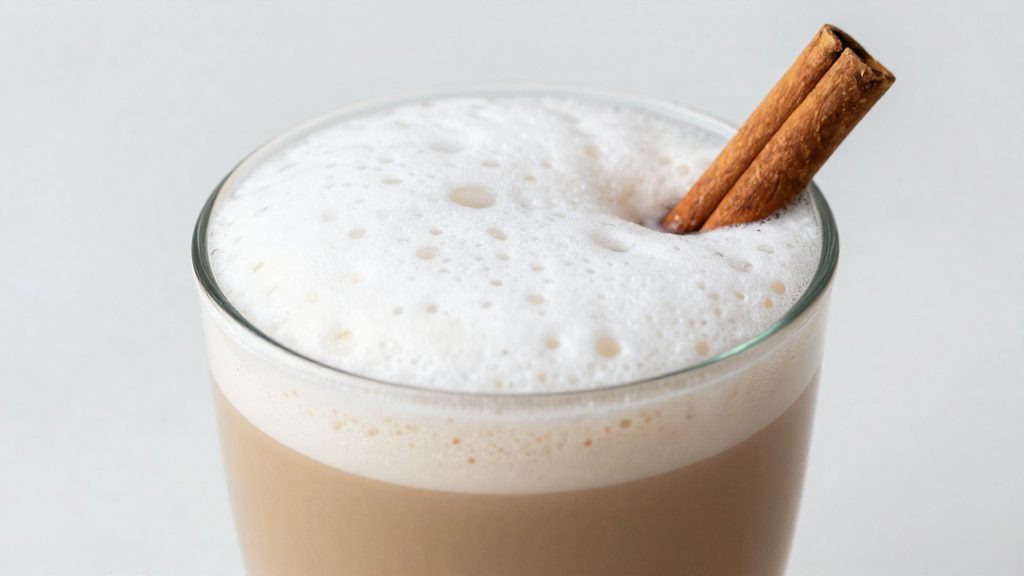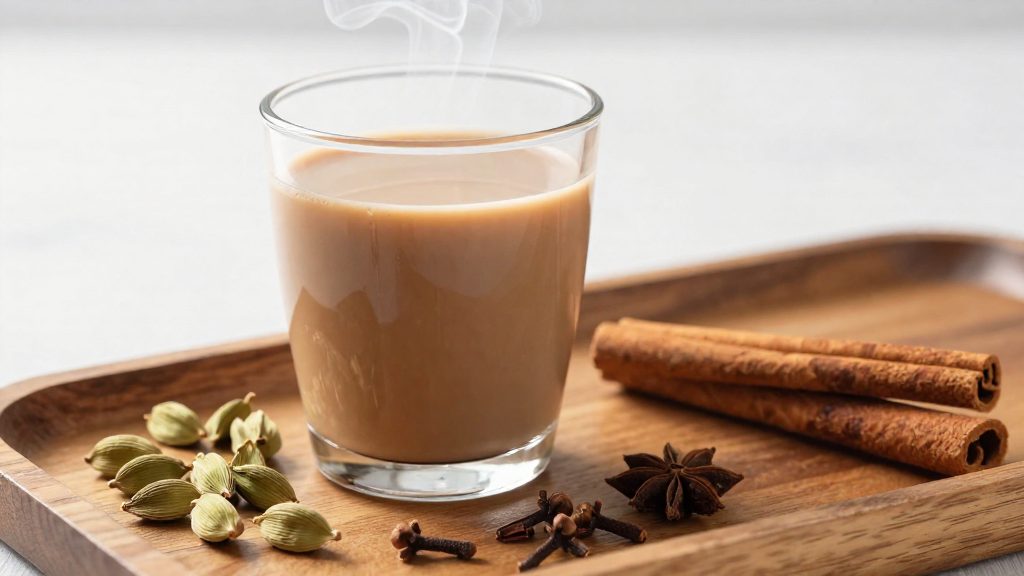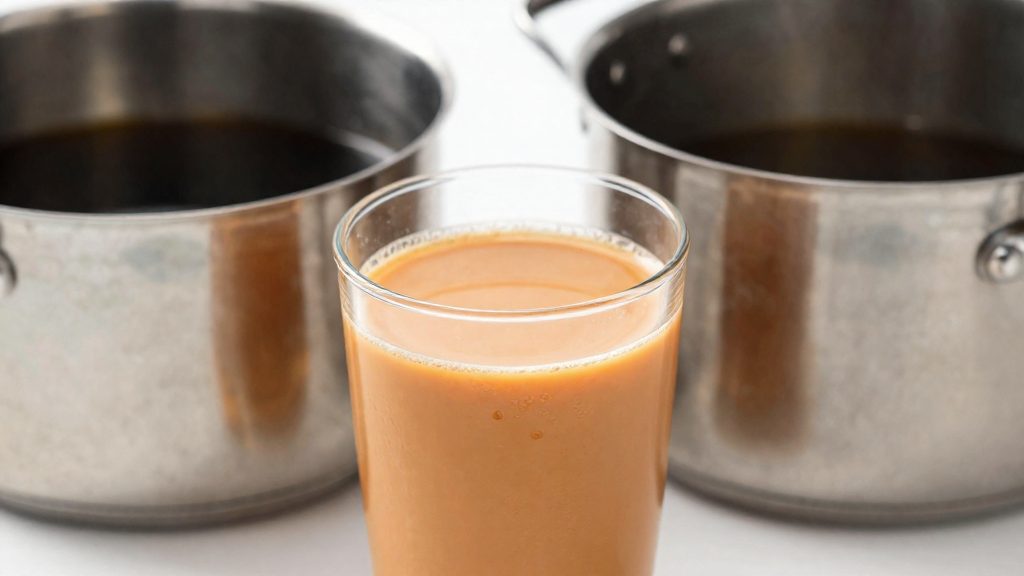
Hong Kong milk tea is a strong, sweetened black tea made with evaporated and condensed milk rather than fresh milk. The drink developed from British colonial tea habits in a subtropical climate where fresh milk was scarce, so shelf-stable evaporated and condensed milk became the standard dairy. According to The Takeout (2026), those shelf-stable milks replaced fresh milk for this reason. The result is a brew built to carry dairy and sugar, not a light cup with a splash of milk.
What makes Hong Kong milk tea different?
Dairy, sweetness and brew strength
| Feature | Hong Kong milk tea |
|---|---|
| Milk | Evaporated and sweetened condensed milk; fresh milk is not used (Artful Tea, 2026) |
| Sweetness | Supplied by the sweetened condensed milk |
| Brew strength | Stronger than a plain cup because milk and sweetener are added (Artful Tea, 2026) |
The other two features are set by the cans; brew strength is the only one that changes the tea itself.
Best tea for Hong Kong milk tea
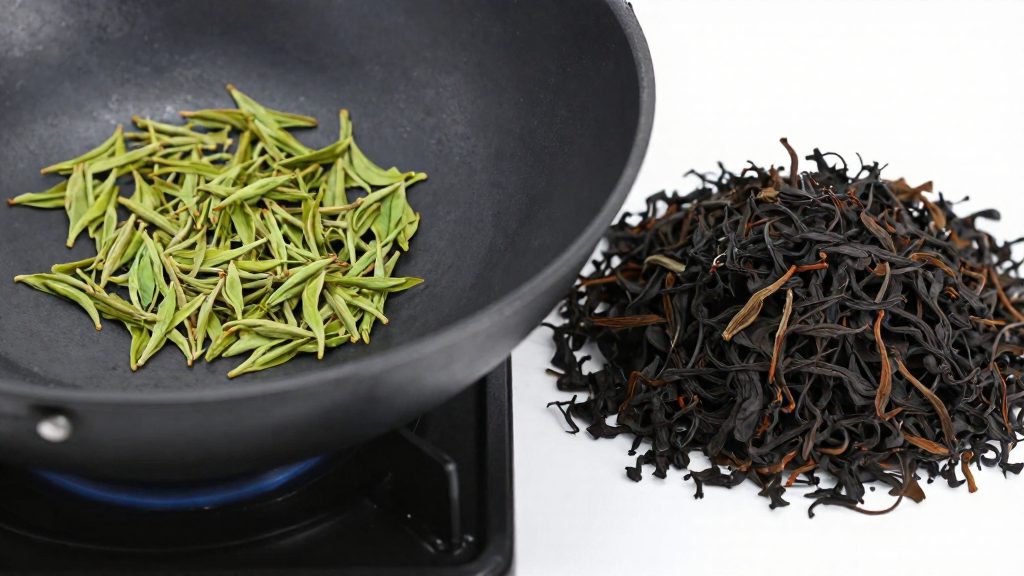
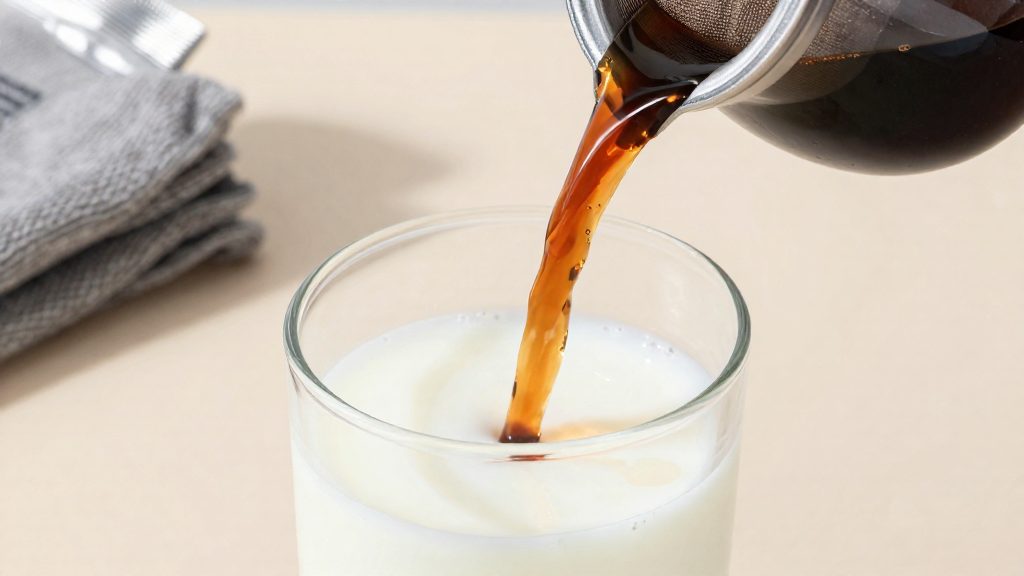
The recipes in these sources all use black tea. The named options are Ceylon orange pekoe, Lipton, and Earl Grey, used as loose leaf, fannings, or tea bags. Because the milk and sweetener dilute the flavour, the recipes are built around these black teas.
| Option | Format in the source | Source |
|---|---|---|
| Ceylon orange pekoe | Loose leaf or fannings for the batch version | The Woks of Life |
| Lipton | Loose leaf or fannings for the batch version, and a single bag for one serving | The Woks of Life |
| Earl Grey | Loose leaf or fannings for the batch version, and a single bag for one serving | The Woks of Life |
| Tetley orange pekoe | Tea bag, two per cup | The Takeout |
Fannings versus whole leaf
Fannings are the small pieces of black tea, and The Woks of Life lists them alongside leaf as interchangeable inputs for the same batch. The sources measure loose tea by spoon, and The Woks of Life gives a bag-to-spoon equivalence (see below) for converting between bags and loose tea.
Tea bags for single-serving cups
For one cup, The Woks of Life combines one bag each of Lipton, Orange Pekoe, and Earl Grey. The Takeout uses two Tetley orange pekoe bags for 10 oz of water and notes that Tetley is sold in Canada.
Ingredients and ratios
Hong Kong milk tea uses a strong black tea base, evaporated milk, and sweetened condensed milk for sweetness. The three recipe sources below use different amounts, so treat them as starting points and adjust to taste.
Loose leaf per cup
Artful Tea (2026) uses about 2 teaspoons of loose leaf per 6 oz of water, then adds about 1/3 cup evaporated milk and 1 tablespoon sweetened condensed milk.
Batch scaling
The Woks of Life (2026) makes a full batch from 10 tablespoons of black tea leaves or fannings in 6 cups (1.4 L) of water. The suggested teas are Ceylon Orange Pekoe, Lipton, Earl Grey, or similar. Each serving gets about 1/3 cup evaporated milk and about 1 teaspoon condensed milk.
The batch works out to roughly 3¾ teaspoons of leaf per 6 oz, nearly double the Artful Tea ratio. The sources do not explain the difference. The batch method also simmers for 15 minutes, so the two ratios are not directly comparable.
Bag equivalence
The Woks of Life (2026) states that 2 standard tea bags equal about 1 tablespoon of loose tea. That makes one bag about 1½ teaspoons of loose leaf.
Quantities compared
| Source (year) | Tea | Water | Evaporated milk | Condensed milk |
|---|---|---|---|---|
| Artful Tea (2026) | 2 tsp loose leaf | 6 oz | about 1/3 cup | 1 tbsp |
| The Woks of Life (2026), batch | 10 tbsp loose leaf or fannings | 6 cups (1.4 L) | about 1/3 cup per serving | about 1 tsp per serving |
| The Takeout (2026) | 2 tea bags | 10 oz | 2¼ tbsp | 2 tbsp |
How to brew it step by step
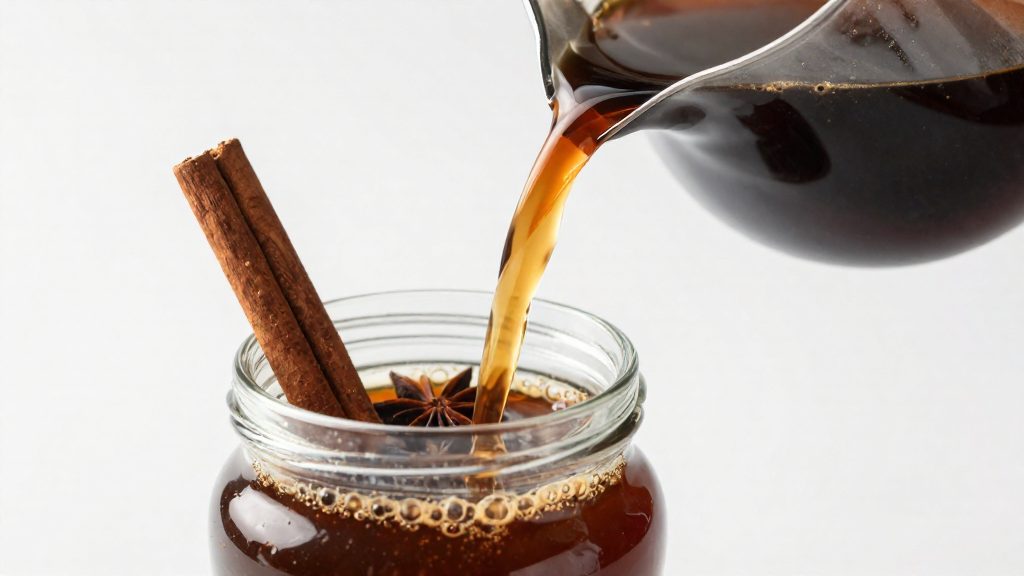
Hong Kong milk tea is made by boiling water, steeping black tea at a full boil, straining out the leaves, and then stirring evaporated milk and sweetener into the hot tea. Artful Tea (2026) gives a full boil of about 212°F (100°C) and a steep of 4 to 5 minutes, and notes that this is stronger than a plain cup because milk and sweetener are added. The Woks of Life (2026) uses a different approach for a batch, boiling and then simmering the tea for 15 minutes.
Boiling and steeping
Bring the water to a boil. Artful Tea and The Woks of Life use it at a full boil, while The Takeout lets it rest first. The Takeout (2026) uses a slightly cooler water: it lets boiled water rest for 45 seconds, reaching about 90°C (195°F), before steeping.
Pour the water over the leaves or bags in a teapot, cover it to hold heat, and start timing. The steep time depends on the method you follow:
| Method (publisher, year) | Water | Steep or simmer | Milk and sweetener |
|---|---|---|---|
| Artful Tea (2026), loose leaf | Full boil, about 212°F (100°C) | 4 to 5 minutes | Evaporated milk and sweetened condensed milk, adjusted to taste |
| The Takeout (2026), tea bags | Boiled, rested 45 seconds, about 90°C (195°F) | 4 minutes, two bags in 10 oz of water | 2¼ tbsp evaporated milk and 2 tbsp condensed milk, stirred for about 30 seconds |
| The Woks of Life (2026), single serving | Boiling water | 5 minutes, one bag each of Lipton, Orange Pekoe and Earl Grey | About 1/3 cup evaporated milk and 1 teaspoon condensed milk |
| The Woks of Life (2026), batch in a pot | Boil the water with the leaves | Simmer 15 minutes | Same per-serving milk as the single-serving method |
Simmering a batch
For several cups, put the water and leaves into a pot together and bring it to a boil. Reduce the heat to a gentle simmer and hold it there for 15 minutes, as The Woks of Life (2026) describes. The longer, lower-heat step lets one pot serve several cups, so you do not steep each cup separately.
Straining
Strain the tea before adding any milk. Pour it through a fine mesh strainer into a heatproof jug or directly into the cups. Fannings pass through a coarse strainer, so a fine mesh or a cloth-lined sieve keeps the cup clear.
Adding the milk and sweetener
Add the evaporated milk and sweetener while the strained tea is still hot. The Takeout (2026) stirs the milk in for about 30 seconds. Stir the cup until the condensed milk has fully dissolved, then taste it before serving.
Which milk should you use?
Hong Kong milk tea relies on shelf-stable dairy rather than fresh milk. The choice comes down to two cans: evaporated milk for dairy flavour without added sugar, and sweetened condensed milk for sweetness and a thicker finish. Non-dairy milks can replace them, but they behave differently in hot, strongly brewed tea.
Evaporated milk
Evaporated milk is unsweetened, shelf-stable dairy with much of its water removed. It gives the tea a milky, rounded flavour while leaving sugar entirely under your control. Artful Tea and The Woks of Life both use it as the main milk, with sweetness added separately.
Sweetened condensed milk
Sweetened condensed milk is also shelf-stable, but it is thick and already sweetened, so it serves as the sugar source. Because it dissolves into hot tea, it adds sweetness and body at the same time. Artful Tea adjusts it to taste, which suggests a small amount at a time is the practical approach.
Non-dairy milks
Plant milks vary widely in sugar, fat and protein, so none reproduces both the richness and sweetness of the canned pair. Unsweetened versions keep sugar fully adjustable, while sweetened versions add sugar before you start. Check the label for added sugar and stabilisers, and pour the milk in gradually while stirring, since some plant milks can separate or form flecks in hot tea.
| Milk | Sweetened | Role in the cup | Behaviour in hot tea |
|---|---|---|---|
| Evaporated milk | No | Dairy flavour and body | Adds no sugar; sweetness is added separately |
| Sweetened condensed milk | Yes | Sugar source and thick body | Dissolves quickly and adds sweetness with body |
| Unsweetened non-dairy milk | No | Dairy-free base | Varies by product; check label for stabilisers |
| Sweetened non-dairy milk | Yes | Dairy-free base with sugar | Varies by product; sweetness adds to the total |
How to make iced Hong Kong milk tea
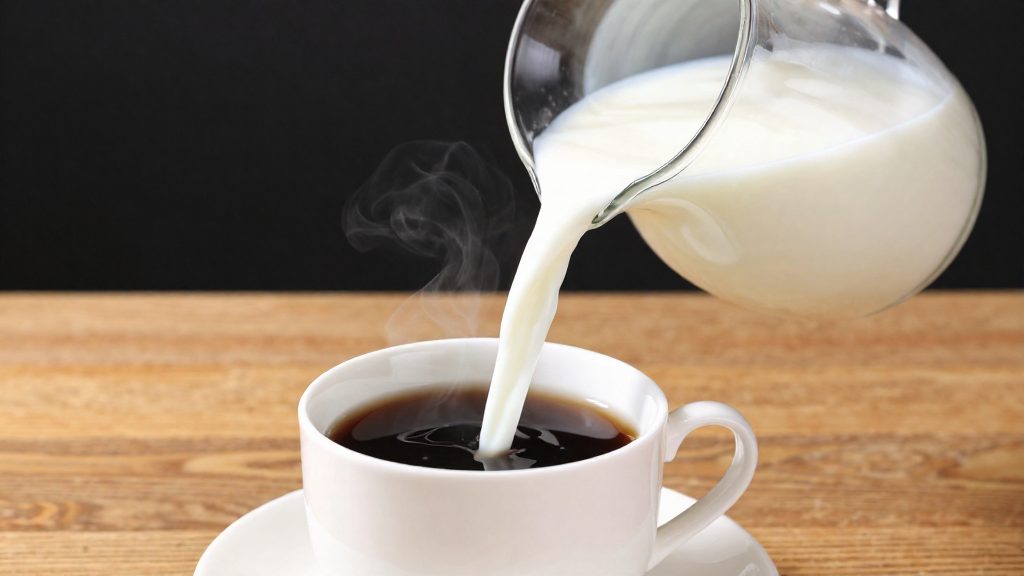
Iced Hong Kong milk tea starts with a concentrate: a batch brewed stronger than you would drink hot, sweetened and milked, then chilled and poured over ice. Artful Tea (2026) makes the iced version by brewing ahead, adding the milk and sweetener, chilling, and serving over ice.
Set the concentrate strength for dilution
Ice melts into the drink, so the concentrate needs more body than a hot cup. Recipes differ widely in leaf quantity and steep length, and no single dilution ratio is standard across the sources. Brew one batch, pour it over ice, and taste it once the ice has melted. If the drink tastes thin, increase the tea in the next batch.
Chill before pouring
Add the milk and sweetener to the hot concentrate, then refrigerate it until fully cold. Pouring warm liquid over ice speeds melting and dilutes the drink faster, so the concentrate should be cold before it meets the ice.
Glass preparation and ice choice
Fill the glass with ice before pouring so the tea goes over the ice rather than sitting at the bottom and warming.
Tips for a smoother, stronger cup
Preventing bitterness from over-steeping
Bitterness usually comes from leaves that stay in the water too long. Remove the leaves at the end of the steep instead of leaving them in the pot while you add milk.
If you use The Woks of Life’s batch method, which simmers the leaves for 15 minutes, don’t add extra steeping time on top of it. The sources use either a timed steep or a 15-minute simmer, so choose one method and stick to it.
Add the sweetened condensed milk last and in small amounts.
Straining fannings for a smooth texture
The Woks of Life’s batch allows fannings, and fine particles can end up in the cup, so strain carefully.
The bag method avoids most of this problem. In The Takeout’s method, the leaf stays inside the tea bags, so there is less loose material to remove.
Reheating leftover milk tea without scorching
Strain leftovers, refrigerate them promptly, and keep them without leaves so reheating only involves the milk. The scorching risk comes from the thick, sugary condensed milk, which sticks to the base of a pan.
Reheat in a small saucepan over low to medium heat and stir continuously. Stop heating as soon as the tea is hot and before it starts to bubble. Scorched sugar leaves a burnt taste that the sweetener cannot mask.