Masala Chai With Whole Spices: Recipe, Ratios and Method
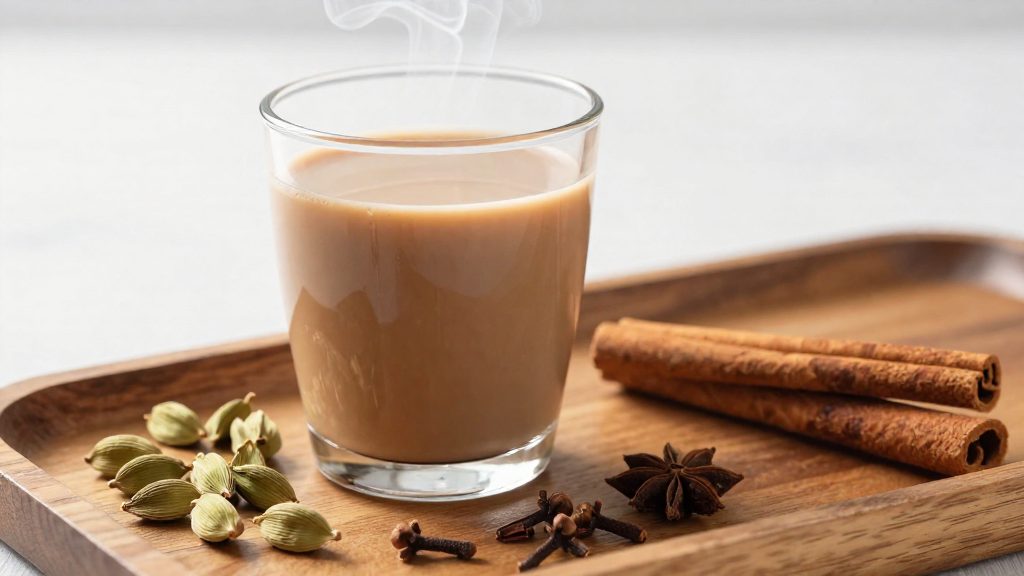
Masala chai combines several whole spices, each adding a separate layer to the cup. Green cardamom contributes a floral, citrusy aroma, cinnamon adds warm sweetness, and cloves bring sharp pungency. Black peppercorns add a dry heat, and fennel seed adds a mild sweetness that softens the finish. These are the spices used in the recipes compared here, although fennel appears only in the But First, Chai version.
What whole spices go into masala chai?
Each spice has a specific role in the blend:
| Spice | Flavour role | How to recognise it |
|---|---|---|
| Green cardamom pods | Floral, citrusy aroma; the most recognisable top note | Whole, green pods; the aromatic seeds sit inside the pod |
| Cinnamon stick | Warm, woody sweetness | Rolled bark; see the cassia and Ceylon comparison below |
| Cloves | Sharp, pungent, warm | Dark brown dried flower buds with a stem attached |
| Black peppercorns | Dry, sharp heat | Small, dried, round berries |
| Fennel seed | Mild, sweet, anise-like | Small, ridged, pale green-to-tan seeds |
Cassia versus true Ceylon cinnamon
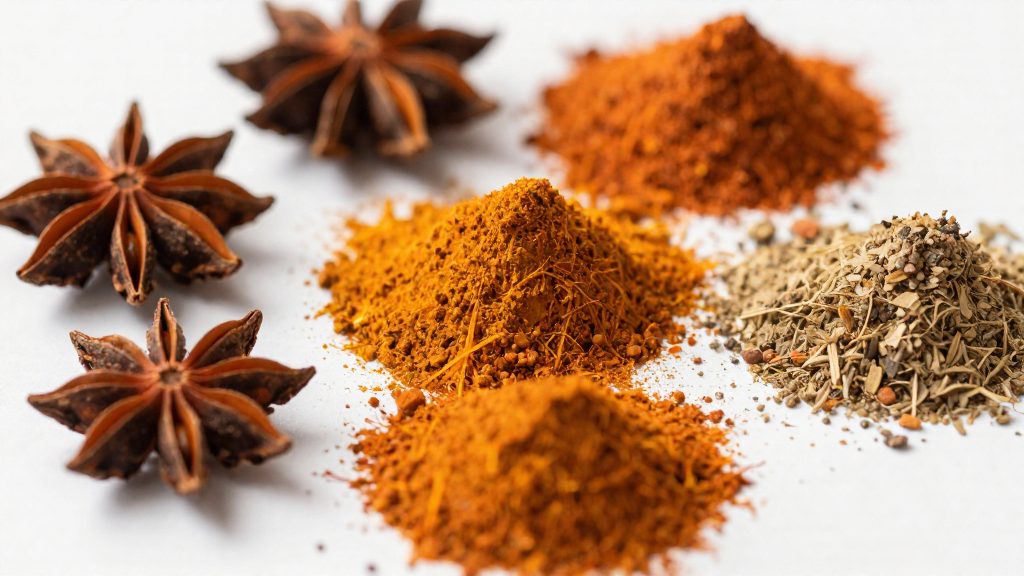
Cassia and Ceylon cinnamon are both sold as “cinnamon,” but they differ in both appearance and flavour:
- Cassia sticks are typically a single, thick, hard layer of bark, rolled into a tube with a darker reddish-brown colour. Its flavour is bolder and more pungent.
- Ceylon sticks are made of many thin layers of bark that look like paper and crumble easily. Its flavour is softer and more delicate.
How to make masala chai with whole spices
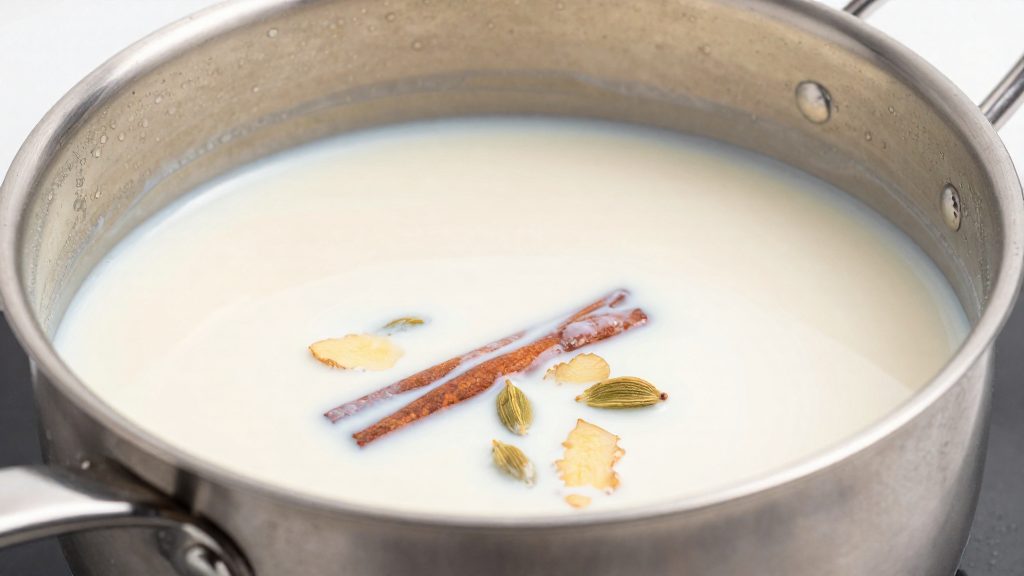
Whole-spice masala chai comes together in three moves: lightly crush the spices, simmer them with water and loose black tea until the liquid darkens, then add milk and repeat a boil-and-swirl cycle to build foam before straining.
Spice counts and light crushing
For 2 cups, But First, Chai (Famidha Ashraf, July 2024) uses these whole spices.
| Spice | Amount for 2 cups |
|---|---|
| Green cardamom pods | 3–4 |
| Cloves | 2–3 |
| Cinnamon stick | 1 inch (about 2.5 cm) |
| Black peppercorns | 1–2 |
The same recipe adds a pinch of fennel seeds and ½ inch of sliced ginger.
Minimalist Baker’s three-cup version uses 6–8 green cardamom pods, 3–4 cloves, one cinnamon stick and 1 tsp black peppercorns.
Crush the spices lightly before they go into the water: press or split the pods and cloves so the inside is exposed, but do not grind them. A mortar, the flat of a knife or a rolling pin works for this.
Simmering tea, spices and ginger
Heat the water until tiny bubbles appear, then add the crushed spices, sliced ginger and loose black tea. Bring the pot to a boil and keep it there until the tea darkens.
Sources do not agree on whether tea goes in with the spices or after a separate spice simmer. This method adds it at the start.
Adding milk and the boil-and-swirl cycle
Once the tea has darkened after 2–3 minutes of boiling, add the milk at about the 5-minute mark of the method and bring the pot to a boil. When foam forms, lift the pan off the heat and swirl it, then return it to the heat. Repeat this boil-and-swirl cycle at least twice, for no more than 3 minutes in total, then strain the chai into cups.
Which tea works best for chai?
The recipe in But First, Chai (Famidha Ashraf, 2024-07-23) recommends Assam or Darjeeling black loose-leaf tea for masala chai. Both are black teas, but they suit the spiced, milky cup differently, so your choice depends on whether you want a heavier base or a lighter, more aromatic one.
| Tea | Character for chai | Effect in the cup |
|---|---|---|
| Assam black tea | Malty, full-bodied | A sturdy base for the spices and milk |
| Darjeeling black tea | Lighter, floral | A delicate cup where floral notes sit alongside the spices |
Why tea strength must outlast spice and milk
In the method from But First, Chai, the tea, crushed spices and ginger boil together for 2–3 minutes until the tea darkens. Only then is the milk added. That colour change shows the tea has released enough flavour to carry the milk that follows. A weak tea gets lost once milk goes in, and the spices can then dominate the cup.
Because the spices and milk add so much to the flavour, choose the tea for its strength first and its character second. Assam’s malty body gives the most margin, while Darjeeling’s lighter, floral profile leaves the cup more delicate.
What is the right ratio of water, milk and tea?
For two cups of masala chai, the whole-spice recipe from But First, Chai (Famidha Ashraf, 2024-07-23) uses 1½ cups water to ½ cup full-fat milk, a 3:1 water-to-milk ratio, plus 1–2 tablespoons of loose black tea. For three cups, the slower method from Minimalist Baker (2019) uses 2½ cups water and 2 cups milk, plus 3 tablespoons of loose black tea. The two-cup version is mostly water, while the three-cup version is close to an even split between water and milk.
| Component | Two-cup batch | Three-cup batch |
|---|---|---|
| Water | 1½ cups | 2½ cups |
| Milk | ½ cup full-fat | 2 cups |
| Water-to-milk ratio | 3:1 | About 1.25:1 (2½ to 2) |
| Loose black tea | 1–2 tablespoons | 3 tablespoons |
Two-cup batch
The 3:1 ratio keeps the milk as a minor part of the liquid, so the tea and spices carry most of the flavour. Start with 1 tablespoon and move to 2 if you want a stronger cup.
Three-cup batch
The three-cup method uses a much higher milk share. Minimalist Baker’s recipe uses dairy-free milk, so these quantities describe that milk type only. The source does not give an adjusted ratio for dairy milk, so taste as you go.
Reading the figures
No official body or standard sets masala chai ratios. The figures above come from recipe-publisher websites, and they differ: the two-cup recipe uses 1–2 tablespoons of tea per 2 cups, while the three-cup method uses 3 tablespoons per 3 cups. Treat each ratio as a starting point for your own batch.
How long should you simmer chai?
Simmer time for masala chai depends on the method. The two recipes below use different timings: a quick method that boils the tea and spices for a few minutes before adding milk, and a slow method that simmers the spices for about 15 minutes before adding tea and milk. Across recipe publishers the simmer time varies, with sources cited at about 8 to 25 minutes, and the two recipes here differ considerably.
| Step | Quick method (But First, Chai, Famidha Ashraf, 2024-07-23) | Slow method (Minimalist Baker) |
|---|---|---|
| Spice stage | Water heated until tiny bubbles form, then tea, crushed spices and ginger boiled for 2–3 minutes | Spices simmered in 2½ cups water for about 15 minutes, until the liquid reduces by about a third |
| Tea and milk | Milk added at about the 5-minute mark | 3 Tbsp loose black tea and 2 cups milk added, then cooked covered on low for 5 minutes |
| Finish | No more than 3 minutes of boiling in total, then strain | Steep covered for 5 minutes or more, then strain |
Quick method timing
The quick method boils the tea and spices for 2–3 minutes, adds the milk at about the 5-minute mark, then limits the boil-and-swirl cycles to 3 minutes in total, so the finish falls at roughly 8 minutes.
Slow method timing
The slow method front-loads the spice extraction. Simmer until the liquid has reduced by about a third, then add the tea and milk, cover and cook on low for 5 minutes. Steep covered for 5 minutes or more, then strain.
The 10-minute boiling limit
The author of But First, Chai warns that boiling longer than 10 minutes can make the chai bitter. The slow method simmers the spices alone for about 15 minutes before the tea is added. That is a different method with its own timings, so do not mix the two sets of times. If you follow the slow method, the 15-minute simmer is the source’s own figure, not a general rule.
Can you use tea bags or plant-based milk?
Yes for tea bags. According to But First, Chai (Famidha Ashraf, 2024-07-23), when you use tea bags instead of loose leaf, the recipe calls for at least 2 per cup. Keep the spice quantities from the base recipe. Keep the spice quantities from the base recipe so the cardamom, clove and ginger still lead the cup.
For plant-based milk, check the carton before you buy it. Look for barista or full-fat labels, which signal a formulation closer to dairy milk. Then check the ingredient list for added sugar, since sweetness changes how the spices read.
Each milk type shifts the cup in a different way:
| Milk type | Label to check | What changes in the chai |
|---|---|---|
| The sources do not compare plant milks. The But First, Chai recipe uses full-fat milk, and the Minimalist Baker recipe uses dairy-free milk without naming a type. |
Storing whole spices and fixing bitter chai
Keep whole spices and loose black tea in an airtight, cool, dark container, away from the stove, the kettle and sunny windowsills. Stale spices can make a cup taste flat, so keeping them sealed and away from light and heat is sensible general practice. Store cardamom pods, cloves, cinnamon sticks, peppercorns and fennel seeds together, but keep the tea in its own container so its aroma does not mix with the spices.
Signs of stale whole spices
- Weak aroma: a pinch that smells faint or dusty before it goes into the pot is past its best. Replace it rather than adding more.
- Dull colour: cloves and cinnamon that look faded or pale usually have less scent.
- Musty smell: any damp or stale odour means the container was not sealed properly. Discard the affected spices.
Smell each spice before brewing. A chai built on fresh spices needs no extra quantity to taste strong.
Fixing a bitter cup
Use the table below to match the cause to the fix.
| Cause | Fix |
|---|---|
| Boiling for longer than 10 minutes (the But First, Chai author’s warning) | Follow the recipe’s timings and strain as soon as the final swirl is done |
| Leaves and spices left in the pot while it cools | Pour through a strainer straight away |
| Spices past their best, which push the cup toward harshness | Replace them and brew again with fresh spices |
If the strained cup still tastes sharp, add a little warm milk to taste. The first method adds milk partway through the brew, so a splash at the end is a simple adjustment that stays within the same recipe.