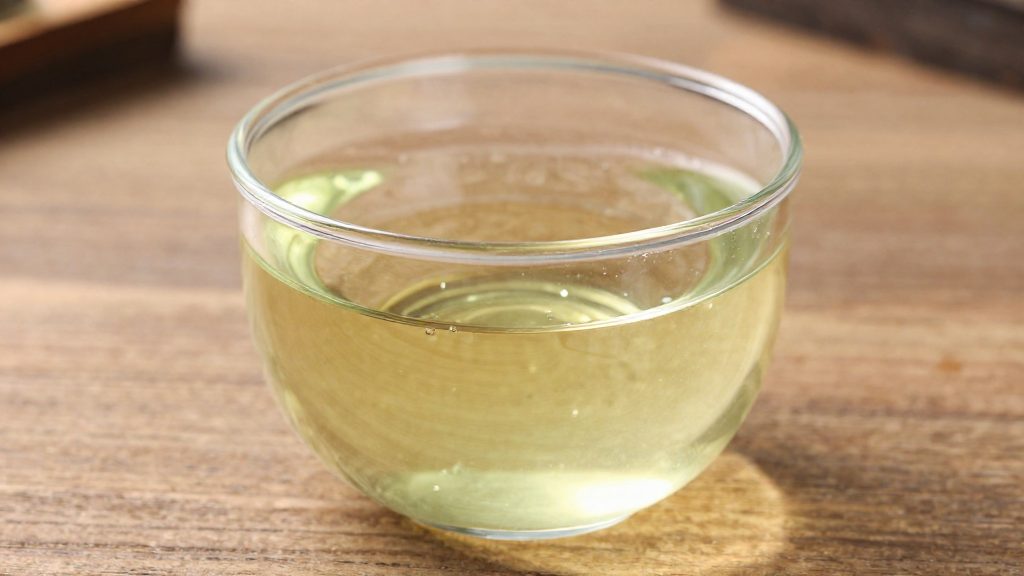
Hard water does not ruin green tea in an absolute sense. Its effect is better described as dulling the cup, and the degree depends on the tea and the drinker. The effect is one of degree, so a hard-water brew is usually drinkable but less vivid than the same leaf brewed with soft water.
Does hard water ruin green tea flavour?
What the sources say
Yunomi.life (2022-09-29) presents hard water as the weaker option for Japanese green tea. It is a specialist tea seller rather than an independent testing body, so its statements are practitioner guidance, not measured results.
The mechanism often offered is that minerals bind flavour compounds. This explanation is not independently confirmed here, so treat it as a plausible account rather than established chemistry.
Why the answer depends on tea and drinker
- Tea style: The sources address delicate Japanese green teas. They do not establish the same effect for other categories, such as black, oolong or pu-erh, so do not extend the verdict to them without testing.
- Drinker: Taste preference varies, so whether a dulled cup matters depends on the person drinking it.
What hard water does to the cup
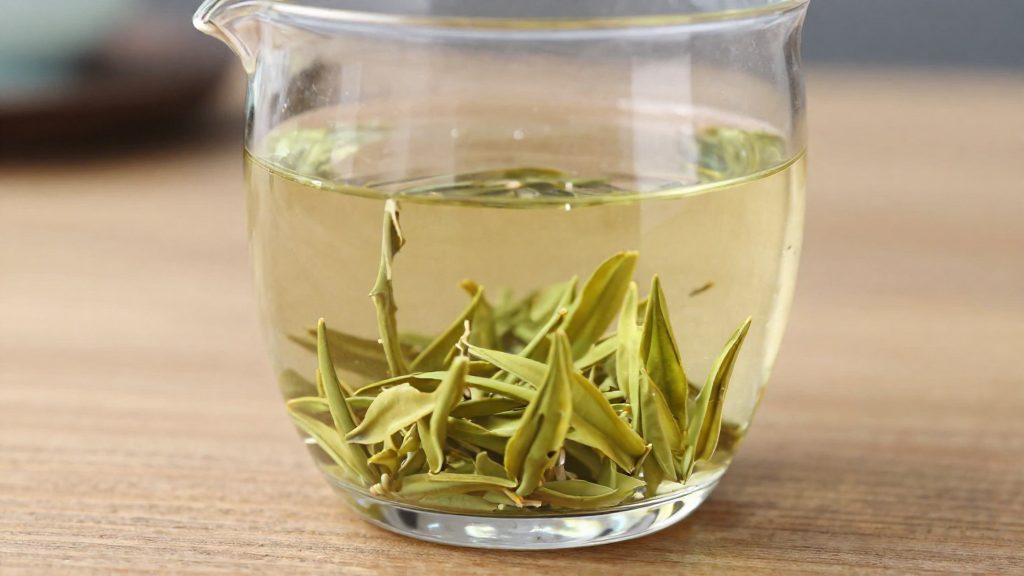
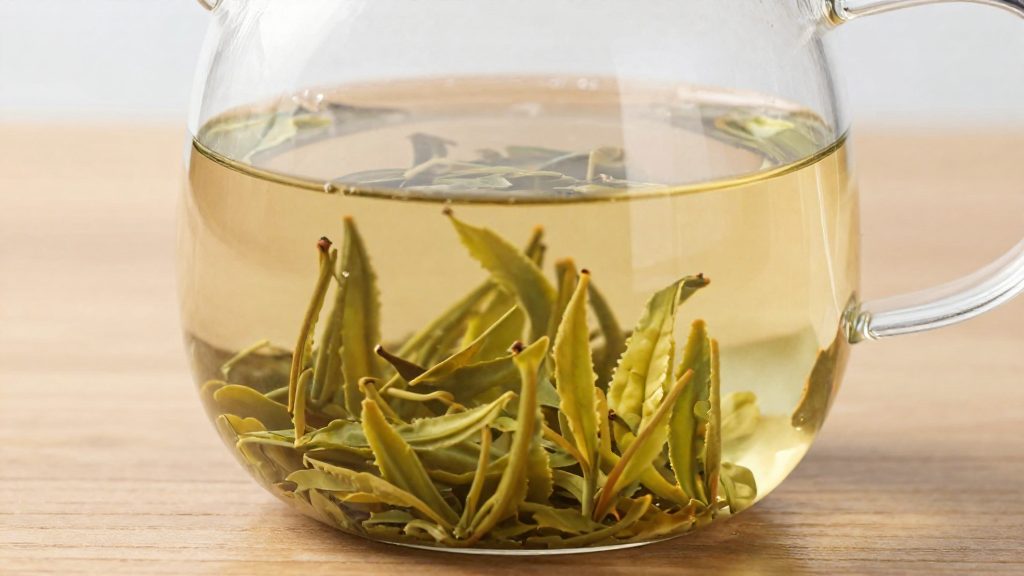
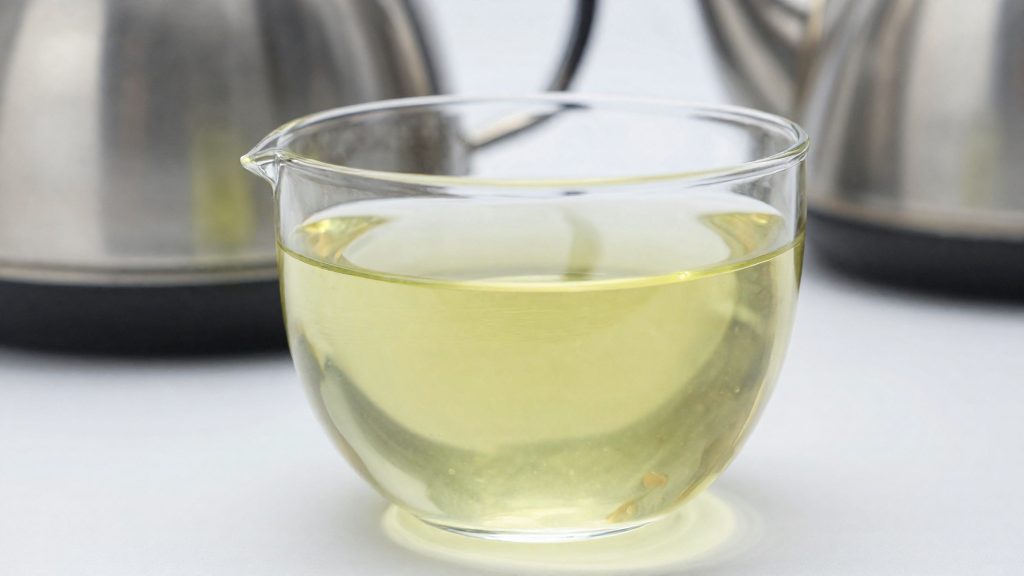
Hard water is usually described as changing the cup in two ways: the flavour becomes flatter and the liquor looks paler. Yunomi.life (2022) says that for Japanese green tea, hard water “flattens the taste” and makes the colour of the tea pale, while soft water lets the delicate flavours come through. Sugimoto USA describes the same pattern, noting that hard water tends to mute the rich flavours of Japanese green tea and gives a bland result. Both points come from specialist tea sellers, not from controlled tasting trials, so treat them as the commonly reported effect rather than a measured one.
Flattened taste and pale liquor
- Flattened taste: the sources report that hard water flattens the taste and mutes the rich flavours of Japanese green tea, giving a bland result.
- Pale liquor: the infusion is described as lighter in colour than the same leaf brewed in soft water.
Because the leaf and brewing settings stay the same in a side-by-side test, these two changes are the first things to compare when you suspect your water is the cause.
Proposed mechanism (unverified)
Some sources propose that minerals in hard water bind to flavour compounds, which would explain the flatter taste. This mechanism is not verified. It comes from secondary summaries, and I could not confirm it against the primary study.
Reported effects on catechins and caffeine (unverified)
Some summaries also report that harder water may lower catechin and caffeine levels in green tea. This claim has not been verified against a primary source and should not be treated as established.
How hard is too hard for green tea?
For Japanese green tea, Yunomi.life (2022-09-29) gives a suitable water hardness of 30 to 80 mg/L. The article measures hardness as calcium and magnesium content in mg/L and sorts water into the WHO hardness classes below.
| Class | Calcium and magnesium (mg/L) |
|---|---|
| Soft | 0–60 |
| Moderately hard | 61–120 |
| Hard | 121–180 |
| Very hard | Over 180 |
The 30 to 80 mg/L range straddles two classes. Water from 30 to 60 mg/L falls in the soft class, and water from 61 to 80 mg/L falls in the moderately hard class. Water in the hard and very hard classes sits above the suitable range.
These thresholds come from one specialist tea seller’s guidance on Japanese green tea, not from a brewing standard. Use them as a starting point and compare them with your own supply’s figures.
Why some drinkers like hard water
Some tasters report that hard water makes Japanese green tea taste milder and less astringent, which runs against the common advice to use soft water. The evidence is contested. Yunomi.life (2022) cites a report in which tasters found more umami in tea brewed with 304 mg/L of water than in tea brewed with 38 mg/L. Because that figure rests on one report, treat it as a preliminary observation rather than settled evidence.
The disagreement is partly about what a drinker expects from a green tea. If you prefer a rounder, less sharp cup, the tasting evidence gives you a reason to test hard water rather than assume it will ruin the brew.
How to test your own preference
- Brew the same tea, at the same temperature, time and leaf ratio, with two waters of different hardness.
- Change only the water between the two cups, then taste them back to back.
Hard water in Canada: check your tap
Tap water hardness varies by municipality, so no single Canadian value applies to your kitchen. Find the figure for your own supply first, then compare it with the scale used for tea. Three routes give that figure, and each differs in detail and in how the result is reported.
Three ways to find your hardness
| Method | Where to find it | What to check |
|---|---|---|
| Annual water quality report | Published by your utility, often on its website | Hardness results for your supply area and the sampling year |
| Municipal water service | Your city or town water department, by phone or email | The hardness figure and its unit, or confirmation that hardness is not reported |
| Home test strip | Read according to the manufacturer’s instructions | Hardness in ppm or grains, depending on the strip |
Reading the result
Confirm the unit before you compare numbers. A figure in ppm, a figure in grains and a figure in mg/L cannot be read against each other directly. If your strip reports in ppm or grains, look up the conversion in its instructions before you compare it with any mg/L value. If the utility report has no hardness line, ask the municipal water service directly. For federal drinking water guidance, check the Health Canada website.
What water should you use instead?
Low-mineral water is the usual alternative when tap water is hard. The three common options below differ in how they handle minerals, so check each one before relying on it.
| Option | What to check | Trade-off to test |
|---|---|---|
| Filtered water | The filter type and the manufacturer’s documentation on whether it reduces minerals | Filters act differently on minerals, so a filter that improves taste may not lower hardness |
| Bottled water | The total dissolved solids (TDS) figure or mineral content on the label | A lower mineral content may mean a softer brew, but only the label confirms it |
| Distilled and reverse osmosis water | Whether the product is labelled distilled or reverse osmosis (RO) | Very low mineral content can make the tea taste thin or flat |
For filtered water, read the manufacturer’s instructions to confirm what the cartridge removes. If the documentation does not say whether minerals are reduced, contact the manufacturer or test the filtered water’s hardness before relying on it.
For bottled water, the total dissolved solids figure is the most direct check. If the label lists no TDS or mineral content, contact the manufacturer rather than guessing.
For distilled and reverse osmosis water, a thinner or flatter cup is possible. This is untested here, so compare it with your tap water.
Does brewing temperature change the effect?
Brewing temperature and water hardness can interact, but the link is not established. The clearest published reference point is Sugimoto USA’s recommendation of 60°C (140°F) for its Homare Sencha. That figure applies to this specific product and is not a general rule for sencha or other Japanese green teas.
Because the temperature and hardness interaction is unverified, treat it as a hypothesis to test at home rather than a rule. One point is worth keeping in mind:
- Temperature sets extraction speed. Cooler water extracts more slowly, so the temperature you choose changes how much of the leaf’s flavour reaches the cup in a given time.
Trial method: lower temperature with harder water
Run a side-by-side test with one variable changed. Use a single batch of leaf and the same water source for both cups.
| Variable | Control cup | Test cup |
|---|---|---|
| Leaf weight and water volume | Same | Same |
| Water source | Same tap or bottle | Same tap or bottle |
| Temperature | Your usual temperature | 60°C (140°F), per Sugimoto’s Homare Sencha guidance |
| Steep time | Same | Same |
| Vessel | Same | Same |
Pour both cups at the same time and taste them within a few minutes of each other. Note colour, umami (savoury depth), and astringency (drying sensation). Repeat the test on at least two separate days before drawing a conclusion.
Quick fixes for a better cup
Three adjustments can change the cup without changing the water source: keeping the kettle clean, rinsing the dry leaves, and adjusting leaf quantity before changing steep time. None of them needs equipment beyond the kettle and teapot you already use.
Descale the kettle regularly
Limescale builds up on the heating element and inside the kettle wall over time. Descale on a schedule that matches how often you use the kettle, and follow the method in the manufacturer’s instructions. After descaling, rinse the kettle thoroughly and discard the first boil before brewing, so no cleaning residue reaches your cup.
Rinse the leaves before steeping
Some drinkers briefly rinse loose leaf before brewing. This is a personal preference with no source here, and it has no demonstrated link to water hardness. Delicate Japanese green teas may lose some flavour in a rinse, so test it before adopting it.
Adjust leaf quantity before lengthening the steep
If the cup tastes thin, add a little more leaf quantity before extending the steeping time. Longer steeps can add astringency, which is harder to correct than a small change in the amount of leaf. Compare your dose with the ratio printed on the packaging or in the seller’s brewing guide.