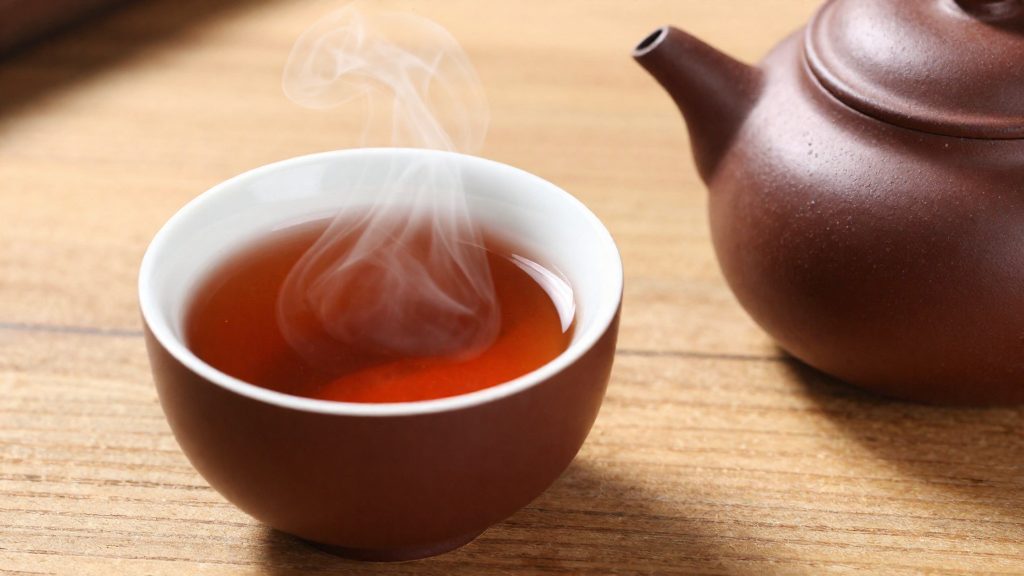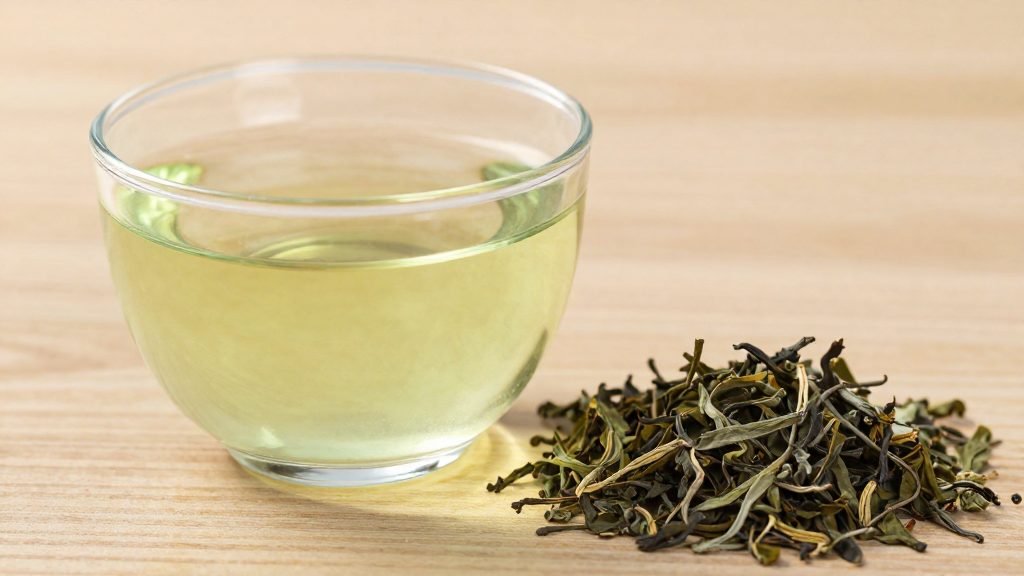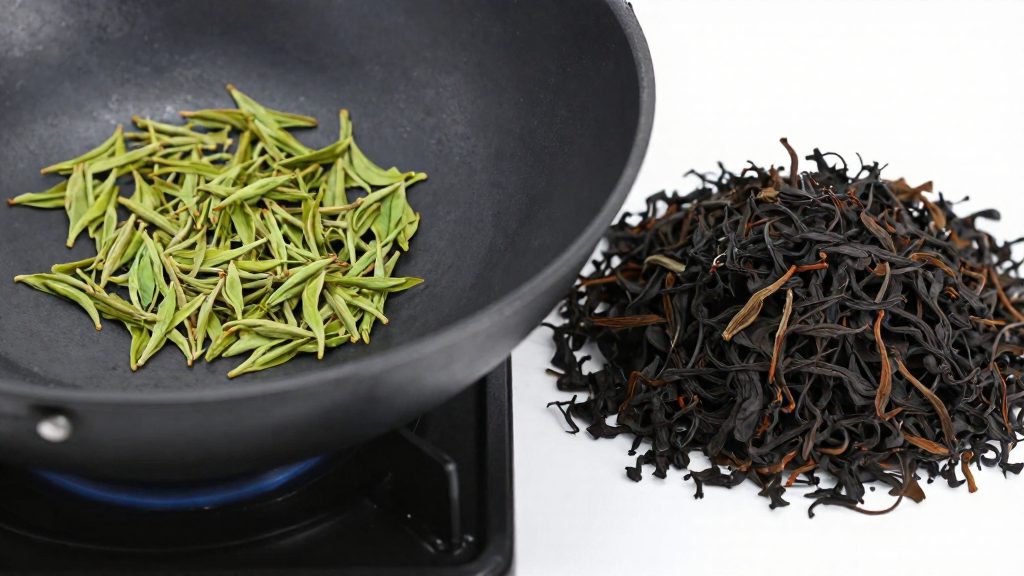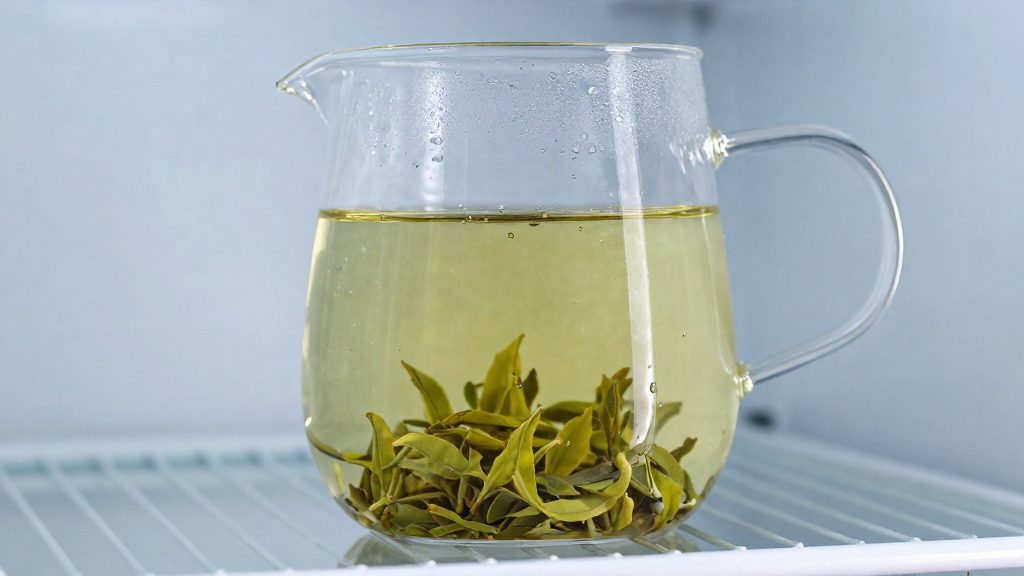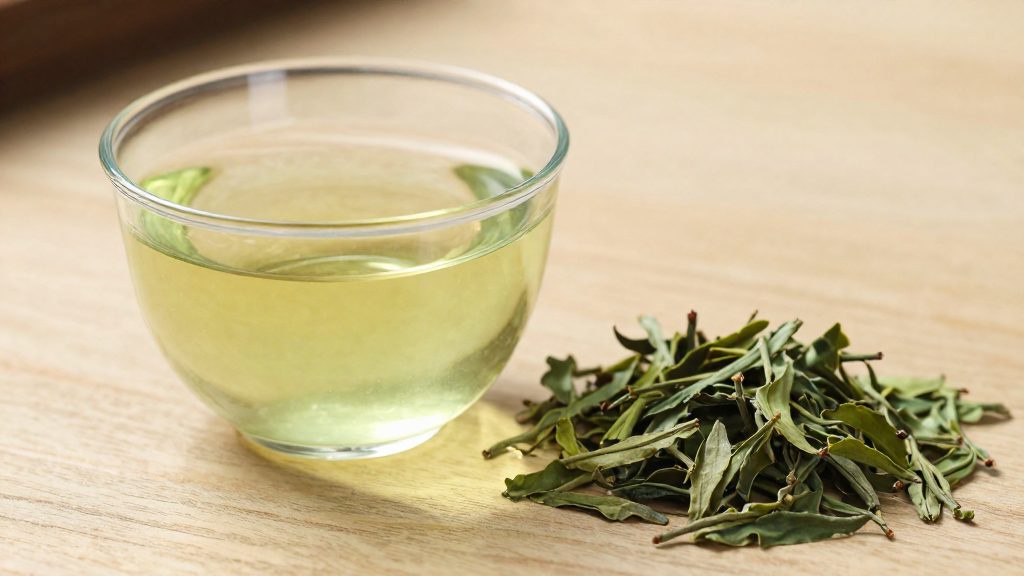
In tea tasting, vegetal is a descriptor for a flavour that reminds the taster of vegetables. It describes aroma and taste, not a measured value. Published glossaries use it mainly for green teas, and they differ in which vegetables they name: Mountain Rose Herbs (2026) lists grassy, herbaceous or marine flavours, while The Tea Cup of Life (2026) lists spinach or seaweed-like notes.
What does vegetal mean in green tea?
Vegetal is a tasting category used to sort what a green tea smells and tastes like. Because it is a sensory label, the same cup can be described with different words by different tasters.
Published glossary definitions side by side
| Source (year) | How it defines vegetal | Flavours or vegetables named |
|---|---|---|
| Mountain Rose Herbs (2026) | A term commonly used for green teas | Grassy, herbaceous or even marine |
| Tea Epicure (2026) | A way of describing green teas, where the taste reminds people of vegetables | Vegetables in general |
| The Tea Cup of Life (2026) | A tasting note for grassy, spinach or seaweed-like flavours in green teas | Spinach, seaweed |
The three glossaries agree on the core idea: vegetal refers to a green-plant character in green tea. They differ in detail. Tea Epicure stays general, while the other two give specific reference points.
Working out which vegetable the note recalls
Tea Epicure (2026) suggests trying to work out which vegetable the note recalls. A simple method:
- Brew the tea, then pour a small amount and let it cool slightly so the aroma is easier to pick up.
- Smell the cup first, then take a few small sips and let the taste settle on the palate.
- Compare the note with fresh vegetables you know, such as spinach or a cucumber, and with seaweed if you have it at home.
- Write down the closest match. Repeating this on the same tea over several sessions makes the comparison more reliable.
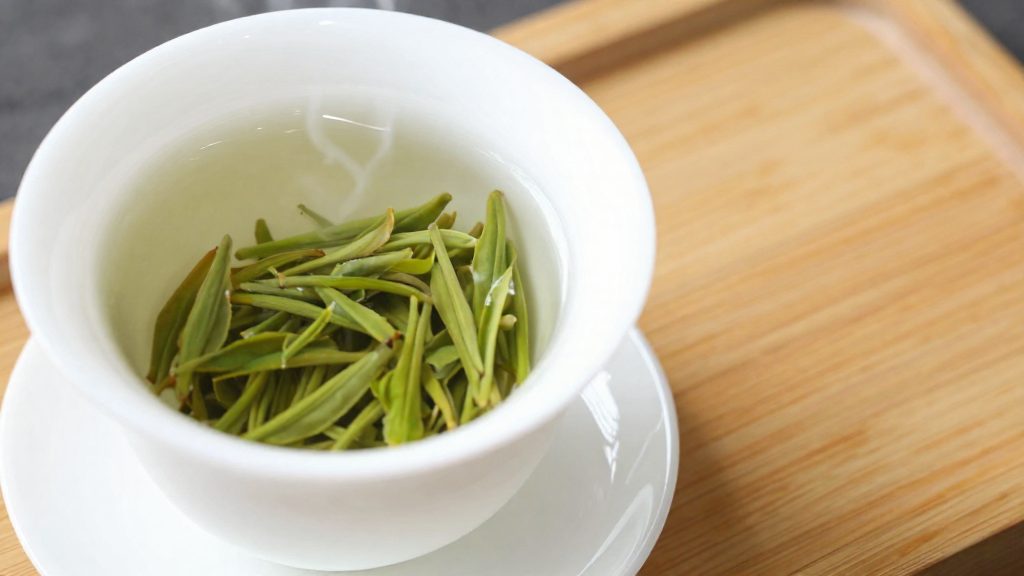
Vegetal, grassy or marine: how do the notes differ?
The three families share a vegetable-like character but point to different references, so telling them apart is mostly a matter of identifying which reference a sip brings to mind.
| Note family | Reference points | Source |
|---|---|---|
| Grassy | Fresh cut grass, leafy greens | The Tea Cup of Life (2026) |
| Marine | Seaweed, briny, ocean-like | Mountain Rose Herbs (2026); The Tea Cup of Life (2026) |
| Herbaceous | Named without further detail | Mountain Rose Herbs (2026) |
Grassy is the fresh, green note of lawn clippings and leafy greens.
Marine is the term Mountain Rose Herbs uses for some green teas, and The Tea Cup of Life describes seaweed-like flavours in its vegetal entry.
Herbaceous is the term Mountain Rose Herbs lists alongside grassy and marine. Its glossary entry gives no further detail.
To place a cup, sip it plain and compare it with the families above. If it recalls cut grass or spinach, the cup leans grassy. If it recalls the sea, it leans marine. If it recalls fresh herbs or stems, it leans herbaceous. Many green teas show more than one family, so note the dominant one first and then any secondary character.
Which green teas taste most vegetal?
The sources tie vegetal notes to green teas in general. The Tea Cup of Life glossary also says grassy notes are common in green teas, especially those steamed during processing. The Tea Cup of Life glossary says grassy notes are common in green teas, especially those steamed during processing. Its definition of vegetal (grassy, spinach or seaweed-like flavours) fits those teas most directly. None of the sources ranks styles by how vegetal they are, so treat the groupings below as starting points rather than a measured ranking.
| Tea style | What the sources link it to |
|---|---|
| Steamed Japanese green teas, such as sencha | Grassy notes, which the Tea Cup of Life glossary says are especially common in steamed teas |
| Matcha | Umami, a savoury taste the same glossary says is often found in matcha |
| Gyokuro | Umami, a savoury taste the same glossary says is often found in gyokuro |
Matcha and gyokuro are named for umami, not for grassiness, so they are not presented here as the most vegetal teas. A steamed sencha is the closer match to the grassy, spinach-like profile the definitions describe.
Is vegetal a flaw or a quality?
Vegetal is a tasting descriptor, not a verdict. Judging whether a vegetal note is wanted or unwanted means looking at the specific tea.
Check the label and the producer description
Start with the product page, before you brew.
- Read the tasting notes. If the producer lists vegetal or similar notes, the character is part of what the tea was sold as.
- Compare the listed notes with the tea’s category and name. A note that matches the description is easier to read as intended.
- Check whether the producer describes the processing. The processing method is part of the producer’s own account of the tea, so use that account rather than assumptions about what causes the note.
Compare with a reference tea from the same producer
A reference tea is a second tea from the same producer, ideally a different batch of the same type, that you already know well.
- Brew both teas.
- Taste them one after the other, using the same cup.
- Compare the vegetal note in strength, character and length on the palate.
If both teas show a similar vegetal character, that is an observation worth recording about this producer. If only one tea shows it, note that it is specific to that tea. Neither result explains the cause.
Separate intended character from clearly off-tasting cups
| Observation | How to read it | Next step |
|---|---|---|
| Vegetal note matches the producer’s description and repeats across brews | Likely the intended character of that tea | Record it in your tasting notes |
| Vegetal note is strong in one tea but absent in the producer’s other teas | Specific to that tea or batch | Re-taste it against the reference tea |
| Vegetal note comes with sour, musty or stale notes | Off-tasting, not a sign of intended character | Check the storage conditions and the packaging date on the label |
How to test brewing temperature and time against vegetal notes
Three brewing variables can be tested in your own kitchen: steeping time, the leaf-to-water ratio, and water temperature. Each one changes how much of the leaf dissolves into the water, so a controlled comparison may show whether your cup tastes different. It will not show why. The settings that work best depend on the specific tea and your equipment, so the reliable method is a controlled test in your own kitchen. Start from the instructions printed on the package or given by the seller, then adjust in small steps.
Steeping time and leaf-to-water ratio
These two variables interact. A higher leaf-to-water ratio and a longer steep both increase extraction, so a short steep with extra leaf can taste similar to a long steep with less leaf. Adjusting one without the other changes the balance of the cup in a way that is hard to read.
| Variable | How to change it | What to taste for |
|---|---|---|
| Steeping time | Brew the same leaf and water for different lengths | Whether vegetal notes sharpen or soften as the cup develops |
| Leaf-to-water ratio | Keep the water volume fixed and change the leaf weight | Whether the vegetal note is more intense or more delicate |
Water temperature on your kettle
Kettle settings are not always accurate, so check the actual water temperature with a thermometer before you test. Then brew the same tea at a lower, a middle and a higher temperature. Taste each cup in the same order, and note which setting brings the vegetal character forward and which one mutes it.
Changing one variable at a time
Keep all but one brewing variable fixed for each cup, and record the settings: water, leaf weight, temperature and steep time. Name the descriptor in each cup, so changes are easier to track from one test to the next.
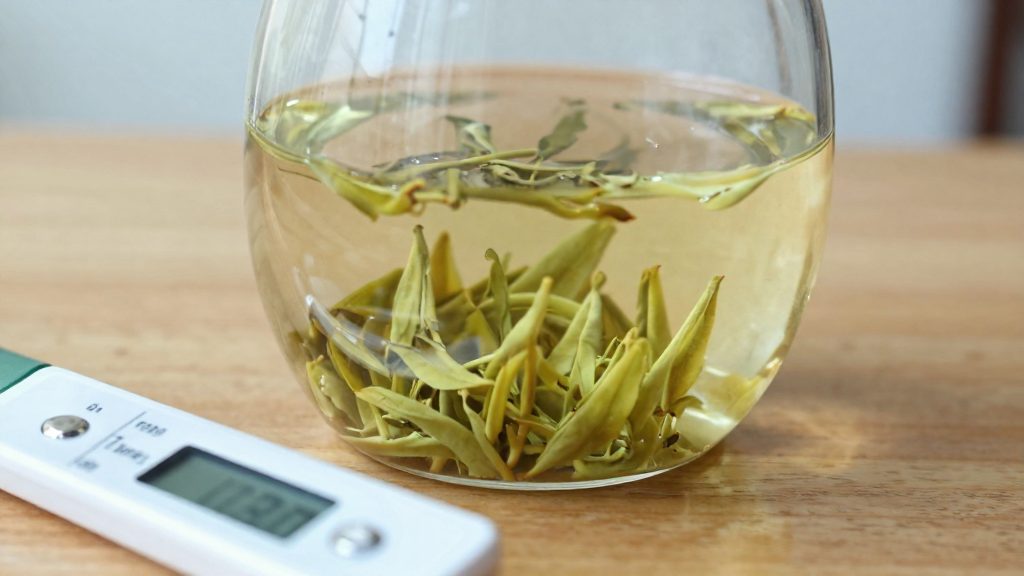
Words to pair with vegetal when you taste
Once a tea reads as vegetal, a second term narrows the note. The Tea Cup of Life glossary describes umami as a savoury taste, so it is the most direct companion when the vegetal character feels rounded and savoury rather than sharp. Use it to describe depth and body, not as a second vegetable.
Savoury and broth-like terms
Umami gives a vegetal note a savoury, mouth-filling quality. Umami is defined by The Tea Cup of Life as a savoury taste. Use it to describe depth and body in the cup. Keep the descriptor on the texture and depth, so it does not repeat the vegetable comparison.
Counterpoint terms: fresh, sweet, astringent
These terms describe what pulls against a vegetal note:
| Term | What it adds to a vegetal note | Quick check |
|---|---|---|
| Fresh | A lively lift that keeps the note from feeling heavy | Does the finish feel bright or flat? |
| Sweet | A rounder edge that softens savoury or green notes | Does the aftertaste stay smooth? |
| Astringent | A drying, puckering sensation across the tongue | Is the drying felt at the front or the back of the mouth? |
Astringent is a sensation rather than a flavour, so note it separately from taste words like sweet or savoury.
Choosing adjectives for intensity
Intensity words make a note specific. Use a simple qualitative scale:
- Faint: noticed only after a second sip
- Gentle: present but not the main character
- Clear: easy to name on the first sip
- Pronounced: the dominant note in the cup
How to describe your own cup
A useful tasting note records what you perceive in a fixed order, then rates one attribute on a fixed scale so that later cups can be compared. Name the vegetable you compare the tea to, such as spinach, so the note has a concrete reference point.
Sequence for writing a tasting note
- Brew with recorded conditions: water, leaf weight, temperature and steep time. Use the manufacturer’s instructions as your starting point.
- Smell the dry leaf, then the wet leaf after steeping. Note each separately.
- Take small sips and note the first impression, the mid-palate and the finish (the aftertaste).
- Write the note in this order: aroma, taste, finish, then the vegetable reference (for example, “spinach-like”).
- Add your vegetal score (see below) as the last line.
Rating vegetal intensity on a simple scale
Use one four-step scale and apply it to every cup. It is adapted from the intensity words above: ‘Absent’ is added at 0, ‘Gentle’ is dropped, and ‘Dominant’ replaces ‘Pronounced’ for the strongest level:
| Score | Label | What you note |
|---|---|---|
| 0 | Absent | No vegetal character detected |
| 1 | Faint | Only noticeable when you concentrate |
| 2 | Clear | Noticeable without effort |
| 3 | Dominant | Shapes the overall character of the cup |
Record the stage where you detected the note (aroma, taste or finish), because intensity can differ between them. This scale is your own convention, not a published standard, so scores are only comparable with other scores you have recorded on the same scale.
Comparing notes across two cups of one tea
Brew two cups of the same tea and change one variable only, such as steep time or water temperature. Write both notes in the same structure and compare:
- the vegetal score for each stage (aroma, taste, finish)
- the vegetable reference you chose
- any change in the finish
Repeat the comparison on a different day to check whether the difference holds.
The sources do not establish what causes vegetal notes, so a comparison shows how your cup changed, not why. Do not assume that one variable produced the note. Whether vegetal reads as positive or negative also varies across sources, so write the rating neutrally, for example “score 2, spinach-like” rather than “good” or “bad”.