In tea tasting, malty describes a sweet, cereal-like flavour. It is a sensory descriptor for what a taster perceives in a brewed cup, so it does not measure quality or rank a tea. Adagio Teas (2022) gives the most detailed wording, linking the note to yeasty, molasses and caramel sweetness with a beer- and whisky-like character. Other sources use simpler language, describing the note mainly as sweet and cereal-like.
What does malty mean in tea?
Sellers use the word in different ways, so the definition depends on who is describing the tea. The table below compares how three sources use the term.
| Source | Wording used for malty | Date |
|---|---|---|
| Adagio Teas | Yeasty, with molasses or caramel sweetness, reminiscent of beer and whisky | 2022 |
| Mountain Rose Herbs | “The sweet and uniquely malty flavor” | 2023 |
| Artful Tea | Listed among black tea notes, with no definition given | 2026 |
Adagio’s grain-like wording
Adagio Teas describes malty as a flavour associated with fermented grains. This is one vendor’s wording, not a shared standard.
Simpler definitions
Mountain Rose Herbs describes malty as “the sweet and uniquely malty flavor typically used to describe Assam black tea”. Artful Tea gives no definition for malty. Readers who see only the word in a product listing therefore have no fixed meaning to rely on.
Malty as a descriptor, not a measured quality
- A “malty” label tells you how a seller characterises the cup, not how strong or fresh it is.
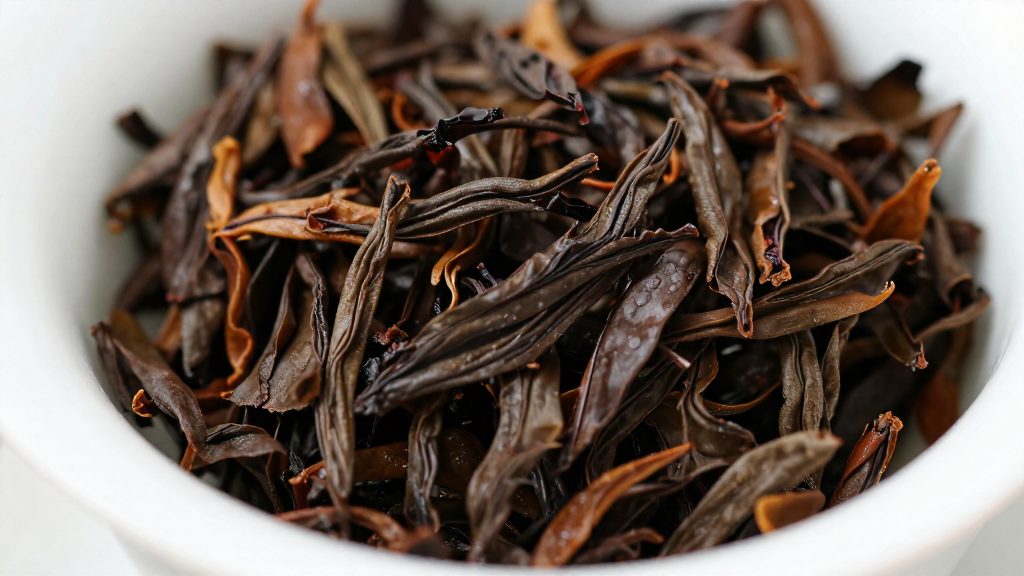
Which teas taste malty?
In vendor tasting notes, malty appears mainly on black teas. Artful Tea (2026) lists malty among the notes black teas may show, alongside earthy, fruity, sweet and smoky, and says black teas tend to be robust and full-bodied. Within that group, malty is one descriptor among several, not a note that every black tea carries.
Two Adagio Teas (2022-01-25) products are named as examples of the malty note:
| Tea | Named by | Context given |
|---|---|---|
| Assam Harmony | Adagio Teas (2022-01-25) | Listed as an example tea for the malty note |
| Scottish Breakfast | Adagio Teas (2022-01-25) | Listed as an example tea for the malty note |
Use these patterns to judge a product description:
- A malty descriptor on a black tea label usually sits in a list of tasting notes, not as a sole description.
- Descriptions that pair black tea with “robust” or “full-bodied” wording point to the heavier end of the black tea range.
- The vendor descriptions cited here attach malty to black teas. A malty label on a green, white, oolong or herbal tea is worth checking against the seller’s full description.
How does malty compare with nutty, earthy and caramel notes?
Malty is the closest of these four descriptors to cereal sweetness, while caramel leans toward toffee-like sugar, nutty toward dry roasted notes, and earthy toward damp soil. The four terms often appear on the same label.
| Descriptor | Main sensory cue | Typical sensation |
|---|---|---|
| Malty | Sweet, grain-like, cereal character | Round and soft on the palate |
| Caramel | Toffee or burnt-sugar sweetness | Rich, sugary, sticky finish |
| Nutty | Dry, roasted, toasted notes | Light, dry, slightly toasted |
| Earthy | Soil, damp wood, forest floor | Deep, grounded, less sweet |
Malty versus caramel. Caramel is the sweeter, more sugar-driven note. Adagio Teas links malty to molasses or caramel sweetness, so the two overlap. Malty is the note that reads more as cereal-like grain sweetness. If a cup tastes like caramel sauce, it is caramel. If it tastes like a whole wheat biscuit or porridge with a hint of sweetness, the malty descriptor may fit better.
Nutty versus earthy. Both are dry or low-sweet. Nutty suggests roasted or toasted notes, while earthy suggests damp soil or wood. Both are less sweet than malty.
Overlap on the same cup. Descriptors blend, so one cup can carry malty sweetness, caramel roundness and an earthy base at once. The most reliable way to separate them is to taste the same tea at two or three strengths. Sweetness that rises with strength points to malty or caramel. Dryness that grows points to nutty or earthy.
Why is Assam the classic malty tea?
Vendors use Assam as the reference for the malty note. Mountain Rose Herbs ties the word directly to this tea, describing malty as “the sweet and uniquely malty flavor typically used to describe Assam black tea” (Mountain Rose Herbs, 30 November 2023). When a shop calls a black tea malty, it is usually pointing back to Assam.
Adagio Teas (25 January 2022) makes the same link. It names malty as the note characteristic of Assam black teas. Artful Tea (2026) places malty within a wider set of black-tea notes instead.
| Source | Date | What it says |
|---|---|---|
| Mountain Rose Herbs | 30 November 2023 | Malty is the flavour typically used to describe Assam black tea |
| Adagio Teas | 25 January 2022 | Malty is characteristic of Assam black teas |
| Artful Tea | 2026 | Malty is one of several notes black teas may show, with no link to Assam specified |
Blends labelled Assam
An “Assam” label identifies the tea origin category. It does not by itself confirm that a particular blend carries malty notes, so check the product page’s tasting description before relying on the word.
How do you brew a tea to bring out malty notes?
No source supplied here establishes how to brew for malty notes, so treat the adjustments below as general black tea practice to test in your own cup. Three choices shape that result: the amount of leaf, the steeping time, and the water. Start from the supplier’s brewing instructions for the specific tea, since they set the baseline for that leaf. If none are given, use the adjustments below as a starting point and change one variable at a time so you can tell which one made the difference.
- Leaf-to-water ratio: Use more leaf than you would for a light or delicate tea. A fuller ratio supports the body that malty black teas are known for. Adjust in small steps and note the result.
- Steep time: Extend the infusion gradually rather than all at once. Over-steeping can add astringency that masks the sweeter, rounder notes, so judge the cup by taste as you go.
- Water temperature: Robust black leaves are typically brewed with water close to a full boil. Check the label for the exact figure, because the right temperature depends on the leaf grade.
- Water quality: Use fresh, filtered or good-tasting tap water. Off-flavours in the water carry straight into the cup and can hide the sweetness you are trying to draw out.
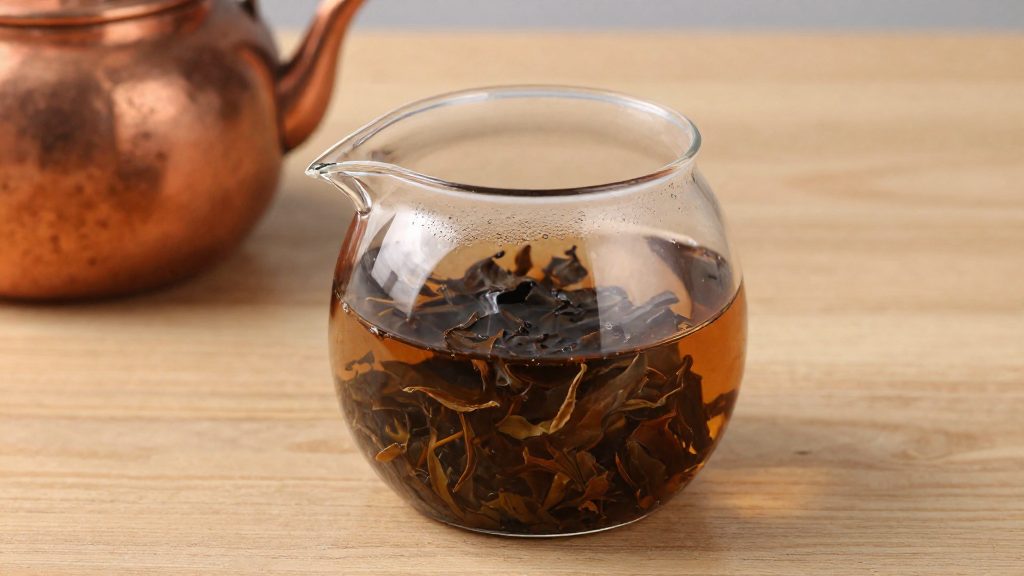
Does milk suit malty black teas?
Milk can either bring out or flatten the malty character of a black tea, and a side-by-side test is the quickest way to see which happens in your cup. The question is whether milk’s own sweetness reinforces the malty sweetness or covers it. Whether a particular tea suits milk is something only your own tasting can settle.
What to check in each cup
- Malty sweetness: Look for the molasses or caramel edge. A milk cup that tastes rounder and sweeter may be adding to it, while a milk cup where that edge has disappeared suggests milk is masking it.
- Body: Note whether the milk cup feels fuller in the mouth or thinner than the plain cup.
- Bitterness and dryness: Check whether the milk cup feels smoother or whether the tea’s bite still comes through.
Side-by-side test
- Brew one pot of a robust black tea so both cups come from the same batch.
- Pour equal amounts into two cups at the same time.
- Leave one cup plain. Add milk to the second cup in the same proportion each time you repeat the test.
- Taste the plain cup first, then the milk cup, without sugar.
- Repeat with a second tea to see whether the milk effect changes with the leaf.
| Observation | Milk supports the malty note | Milk masks the malty note |
|---|---|---|
| Sweetness | Caramel or molasses edge is still clear | Only generic sweetness remains |
| Body | Fuller feel with the tea’s character intact | Creamy feel with little tea flavour left |
| Finish | Malty notes linger after the sip | The finish is mostly milk |
How do you read tasting notes on a tea label?
A tasting note on tea packaging is a descriptor the seller chose to characterise the cup. The wording is not standardised across brands. Words such as malty, earthy, fruity, sweet and smoky describe flavour impressions, so the same word can mean different things depending on who wrote it. Read the note as the seller’s description, then check it against the product listing before you buy or brew.
Common tasting-note terms
The table below shows how Adagio Teas and Mountain Rose Herbs use the term malty.
| Term | Source and date | Wording used |
|---|---|---|
| Malty | Adagio Teas (2022-01-25) | Yeasty, with molasses or caramel sweetness, compared to beer and whisky. |
| Malty | Mountain Rose Herbs (2023-11-30) | “The sweet and uniquely malty flavor typically used to describe Assam black tea” |
Checking the package against the product page
- Read the tea type on the package first. A tasting note attached to a black tea does not describe a green or herbal blend.
- Compare the note on the package with the description on the product page. If the page names a different note or a different tea style, rely on the page and treat the package wording as a short summary.
- Look for a reference point. A note tied to a named style, such as Assam, tells you more than a standalone adjective.
Label language versus vendor vocabulary
Packaging is short, so it usually gives one or two words. Vendor pages use longer descriptions and different comparison points. When a vendor’s vocabulary differs from another seller’s, compare their descriptions rather than assuming the words carry the same meaning.