Herbal infusions made from a single non-tea plant, such as a flower, root or grass, are usually caffeine-free. Hibiscus, ginger and lemongrass are listed as caffeine-free by Republic of Tea, a US retailer’s blog. A blend can still include a caffeinated ingredient, however, so the package label determines the caffeine status of each product.
Which herbal infusions are caffeine free?
Three common examples, as listed by Republic of Tea, a tea retailer’s blog:
| Example | Plant part | Listed status |
|---|---|---|
| Hibiscus | Flower | Caffeine-free |
| Ginger | Root | Caffeine-free |
| Lemongrass | Grass | Caffeine-free |
This caffeine-free status rests only on the retailer’s blog, not on a primary source. Confirm it on the package or with the manufacturer before relying on it for a caffeine-sensitive drinker.
Pure fruit, flower and root infusions
A single-ingredient product is the simplest type to check. Steeping plain sliced fresh ginger, or using a dried hibiscus flower on its own, produces an infusion with no tea leaves in it. Whether that infusion contains caffeine depends on the plant named, so confirm the botanical name on the label. The same check applies to a product whose only ingredient is dried fruit.
Reading the ingredient list
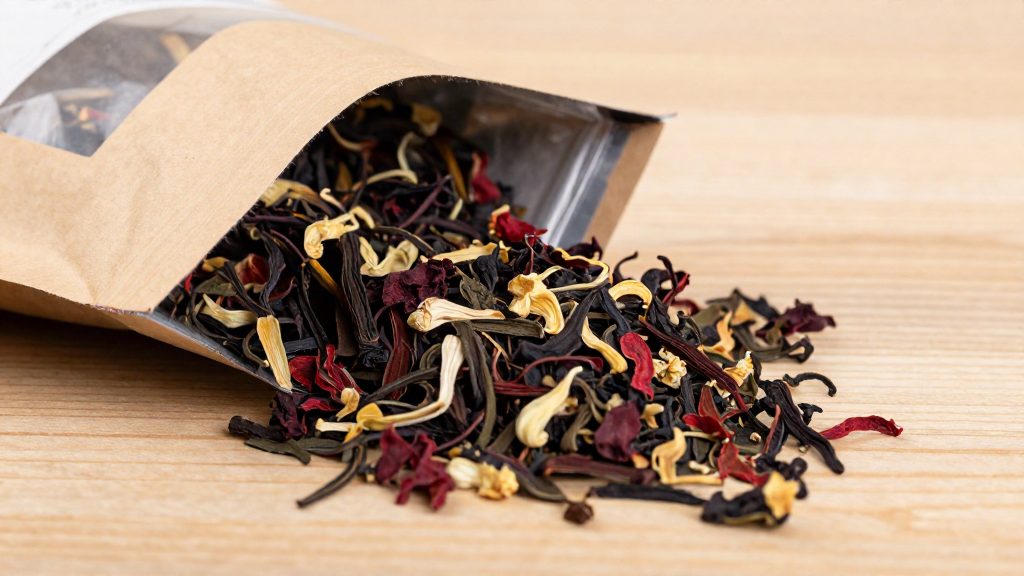
Blends often combine a caffeine-free plant with tea leaves or another caffeinated material, so the ingredient list matters more than the product name.
Why many herbal infusions are caffeine-free
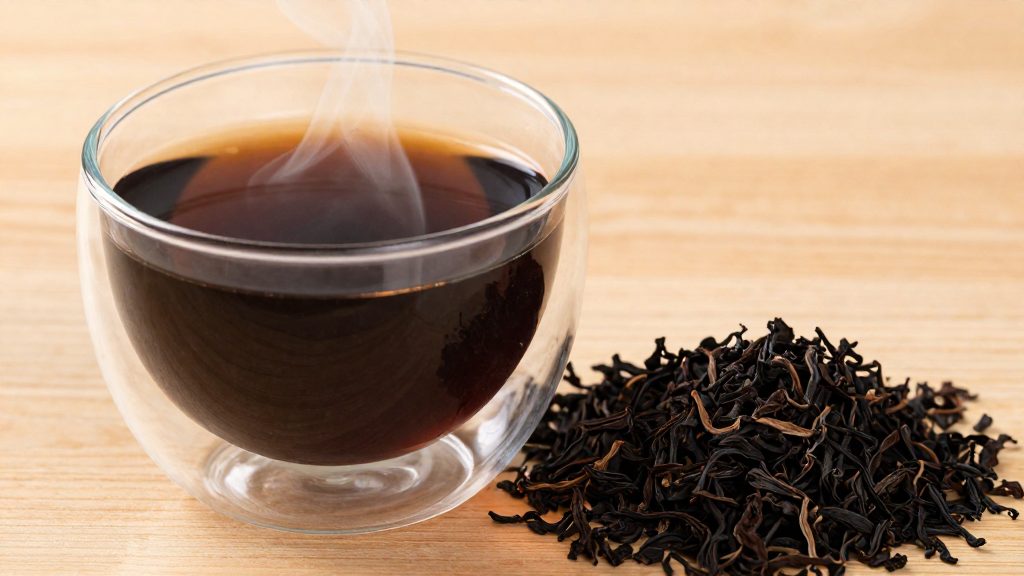
Caffeine in true tea comes from one species, Camellia sinensis. Black, green, oolong, white and pu-erh teas are all made from this plant, so they share its caffeine. Herbal infusions are made from other plants, and many of those plants do not naturally contain caffeine. The word ‘herbal’ describes how an ingredient is used, not a chemical category, so the caffeine question depends on the species in the cup.
Many common herbal infusions are caffeine-free because the plants they use do not naturally contain caffeine. This is not true of every plant, though. Some unrelated plants, such as yerba mate, do contain caffeine, so each ingredient has to be checked.
To assess a blend, identify the species of each ingredient:
- Camellia sinensis present: the blend contains true tea, and its caffeine comes from that portion.
- Only other species present: caffeine depends on whether any of those species naturally contains it, as with yerba mate.
Common caffeine-free picks: rooibos, chamomile, peppermint
Republic of Tea, a US retailer’s blog, lists rooibos, chamomile and peppermint as caffeine-free herbal infusions. For rooibos, the stated reason is that the plant does not naturally contain caffeine. For chamomile and peppermint, the status rests only on that blog, not on a primary source, so confirm it on the label before relying on it. None of these three is a true tea in the botanical sense. Their profiles differ in origin, flavour and typical use.
Rooibos
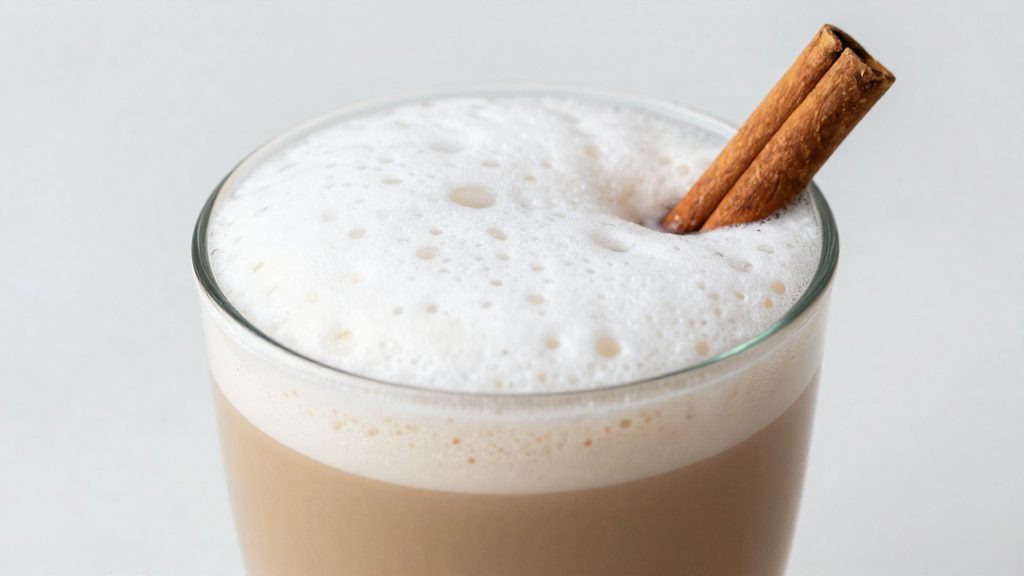
Rooibos is made from the plant Aspalathus linearis, which does not naturally contain caffeine, so pure rooibos is caffeine-free (according to The Republic of Tea, undated blog post). Its flavour is typically described as sweet and mellow, and it is often served with milk or sweetened.
- Origin: a plant rather than a tea leaf
- Flavour: mellow and slightly sweet
- Typical use: brewed plain, with milk, or as a base for blends
Chamomile
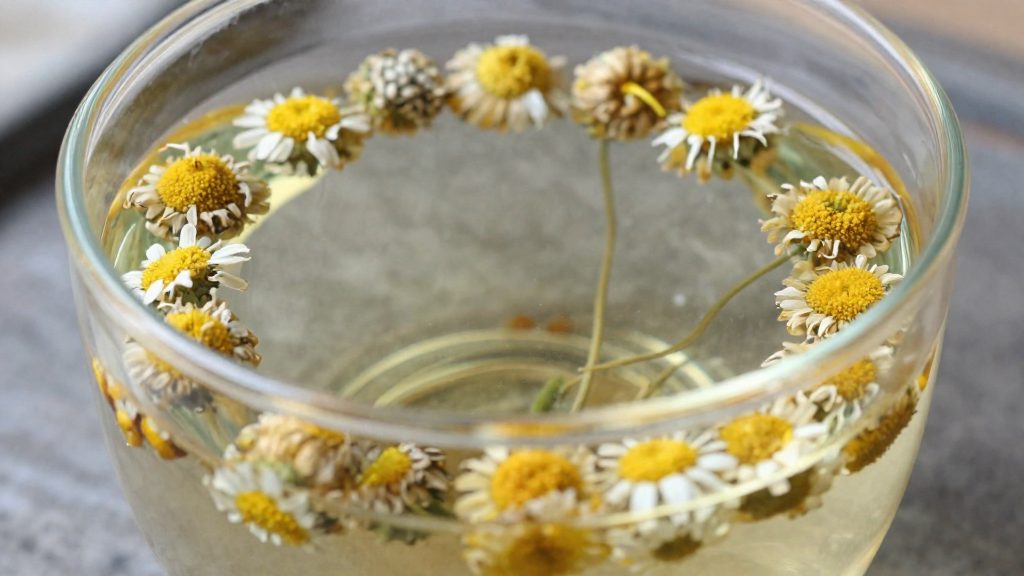
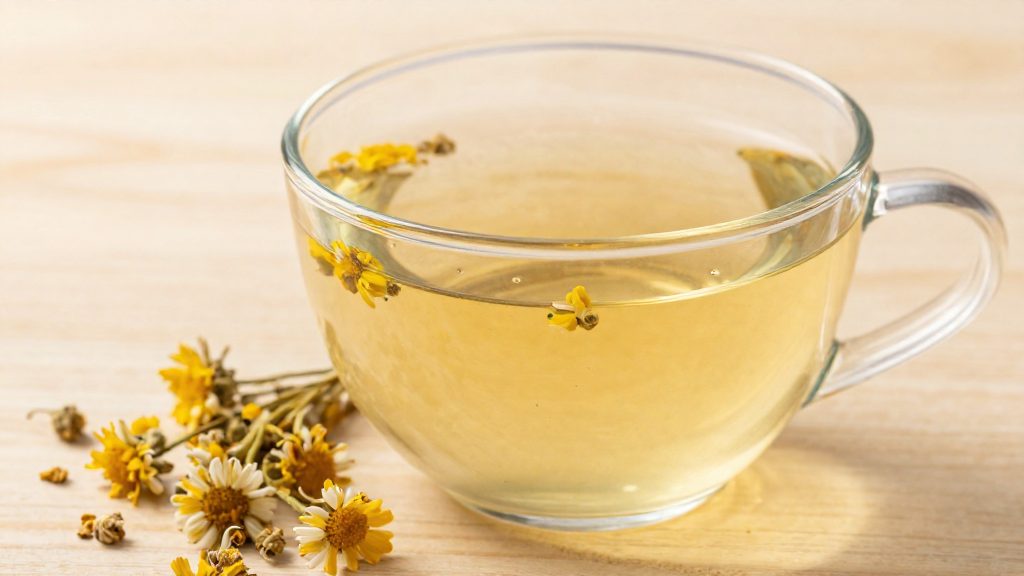
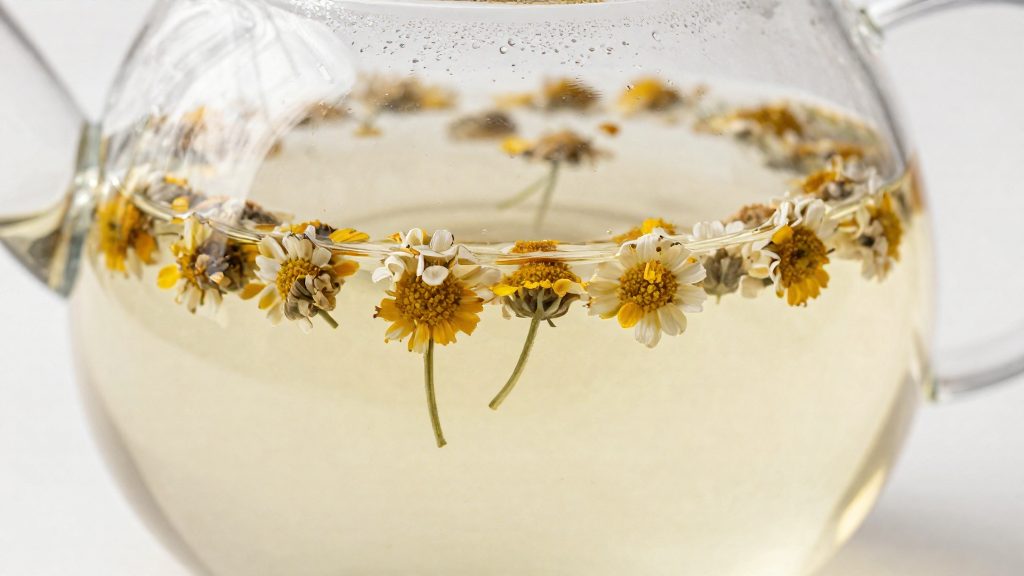
Chamomile infusions are made from dried flower heads. The flavour is light, floral and apple-like, with low astringency. It is most often drunk in the evening or used as a single-note infusion, and it blends easily with mint, lemon or honey.
- Flavour: light, floral, mildly sweet
- Caffeine status: listed as caffeine-free by Republic of Tea only; confirm on the label
- Typical use: single infusion, bedtime cup, base for blends
Peppermint
Peppermint infusions use the leaves of the mint plant. The flavour is sharp, cool and clean. Because the taste is strong, a small amount of leaf is usually enough for a full cup. It is commonly used as a palate cleanser after meals, mixed with other herbs, or served iced.
- Flavour: sharp, cool, clean
- Caffeine status: listed as caffeine-free by Republic of Tea only; confirm on the label
- Typical use: after-meal infusion, iced tea, herbal blend component
Herbal infusions that do contain caffeine
Not every plant infusion sold alongside herbal teas is caffeine-free. Yerba mate is the clearest example: Health Canada lists it among the flavourings and extracts that naturally contain caffeine (Health Canada, 2025-04-02). It is therefore not a caffeine-free infusion, even though it is brewed like a herbal tea.
A product can be marketed as a herbal infusion and still contain a caffeine-bearing ingredient if one of its flavourings or extracts comes from a plant that naturally contains caffeine.
The listing does not publish amounts. Health Canada names yerba mate as a natural source of caffeine but gives no milligram figure for it, so a caffeine level for yerba mate cannot be read from this source. If you need a figure for a specific product, check the manufacturer’s nutrition or product information, or contact the manufacturer directly.
Are all blends labelled tea caffeine free?
No. A blend’s name or base ingredient does not settle its caffeine status. A product can carry a herbal name, or use a plant that naturally has no caffeine, and still contain caffeine if it includes true tea leaves. Three blend types cause most of the confusion.
| Blend type | Caffeine status | What to check |
|---|---|---|
| Pure rooibos | Caffeine-free, because the plant does not naturally contain caffeine (according to Republic of Tea, undated) | Ingredient list shows only rooibos and flavourings |
| Rooibos blended with black or green tea | Contains caffeine from the added true tea | Ingredient list names black or green tea, or Camellia sinensis |
| Product named “tea” with no caffeine statement | Unknown from the name alone | Packaging wording and the full ingredient list |
Rooibos blends are the clearest case. Republic of Tea notes that some rooibos is mixed with caffeinated tea, so a plant base that is naturally caffeine-free does not guarantee the finished product is caffeine-free.
Products sold as “tea”: where a brand gives no caffeine statement, the name alone tells you nothing, and you should read the ingredient list.
Mixed packs can hold sachets with different contents. A multi-flavour pack may not carry one caffeine status for every sachet. Check each flavour’s ingredients rather than assuming the whole pack is uniform.
How to read a Canadian tea label
Yogi Tea’s Canadian FAQ states that each of its own boxes or sachets is labelled either Contains Caffeine or Caffeine Free. This is Yogi Tea’s labelling practice for its products, not a Canadian regulatory standard, so other brands may word this differently. A product sold as ‘tea’ can be caffeinated or naturally caffeine-free, so the front-of-pack statement and the ingredient list matter more than the product name.
Caffeine statements on the front
| Wording on pack | What it tells you |
|---|---|
| Contains Caffeine | The blend includes caffeinated material. Check the ingredients to see which component supplies it. |
| Caffeine Free | The brand states the product contains no caffeine. |
If a box shows neither phrase, don’t assume either outcome. Read the ingredient list, and if it is still unclear, contact the manufacturer through the details printed on the pack.
Ingredient terms that signal caffeine
Look for Camellia sinensis and the common names of teas made from it: black, green, oolong and white tea. These carry caffeine. A single cup from a tea-based blend will differ depending on how much leaf is used.
Naturally caffeinated botanicals
An ingredient list with no true tea in it can still contain caffeine, so check each botanical named on the pack.
Checking a label, step by step
- Find the front-of-pack statement: Contains Caffeine or Caffeine Free.
- Read the ingredient list in full, looking for Camellia sinensis, black, green, oolong or white tea.
- Look for yerba mate or other botanicals that are not on your usual list.
- If the statement and the ingredients disagree, or no statement appears, contact the brand before relying on the product.
Caffeine in true teas compared with herbal infusions
Herbal infusions are made from other plants, so their caffeine content depends on the ingredients in each product, not on the type of tea.
Health Canada gives these figures for a 8 oz (237 ml) cup (Health Canada, 2025-04-02):
| Preparation | Caffeine per 8 oz (237 ml) cup |
|---|---|
| Brewed black or green tea | About 30 to 50 mg |
| Instant tea | About 15 mg |
| Decaffeinated tea | 0 mg |
These figures apply to tea brewed from Camellia sinensis. Per-type ranges from Republic of Tea, a shop blog, are a separate, provisional source. They use a 6 oz (about 177 ml) cup instead of 8 oz (237 ml), so they should not be compared directly with the Health Canada numbers:
| Tea type | Caffeine per 6 oz cup (Republic of Tea) |
|---|---|
| Black | About 50 mg |
| Oolong | About 30 to 40 mg |
| Green | About 20 to 30 mg |
| White | About 15 to 20 mg |
Health Canada’s recommended maximum daily intake, also dated 2025-04-02, is:
| Group | Maximum daily caffeine |
|---|---|
| Adults | 400 mg |
| People who are pregnant, planning pregnancy or breastfeeding | 300 mg |
| Children and adolescents | 2.5 mg per kg of body weight (based on limited data) |
For a child, the limit is body weight in kg × 2.5 mg. A child weighing 30 kg would have a limit of 75 mg per day.
General brewing principles for herbal infusions
Herbal infusions follow the same basic logic as other plant infusions: the part of the plant decides how hot the water should be and how long it needs to release flavour. Flowers and leaves are generally more delicate than roots and woody pieces, so they need gentler handling. Exact temperatures, times and doses differ between products, so the manufacturer’s instructions on the packet are the reference for a specific blend.
Water temperature by plant material
Match the water to the plant material:
- Flowers and fine leaves (chamomile, hibiscus, peppermint): many packets suggest water that is hot but not at a hard, rolling boil. Follow the packet instructions. Cover the cup while steeping so aromatic compounds stay in the liquid.
- Roots and woody pieces (ginger root, dried lemongrass stalk): these release flavour from denser tissue, so they tolerate the hottest water you can pour.
Steep time and dose for flowers and roots
Flowers release their flavour faster than roots, so they need a shorter steep. Roots need a longer one. Start with a short steep for flowers and a longer one for roots, then adjust on the next cup.
For dose, weigh the dried material on a kitchen scale rather than measuring by spoon. Flowers and roots vary widely in density, so a spoon gives inconsistent results.
Reusing leaves for a second infusion
Whole dried leaves and intact flower heads usually give a second cup. Chopped or powdered material tends to exhaust after the first steep. For the second infusion, pour fresh water over the same material and extend the steep rather than repeating the first one exactly. A longer steep draws more from any caffeinated ingredient in the blend, whether true tea, yerba mate or another caffeine-bearing plant, so the caffeine status of a blend applies to every steep, not only the first. Taste the second cup against the first and adjust the time from there.