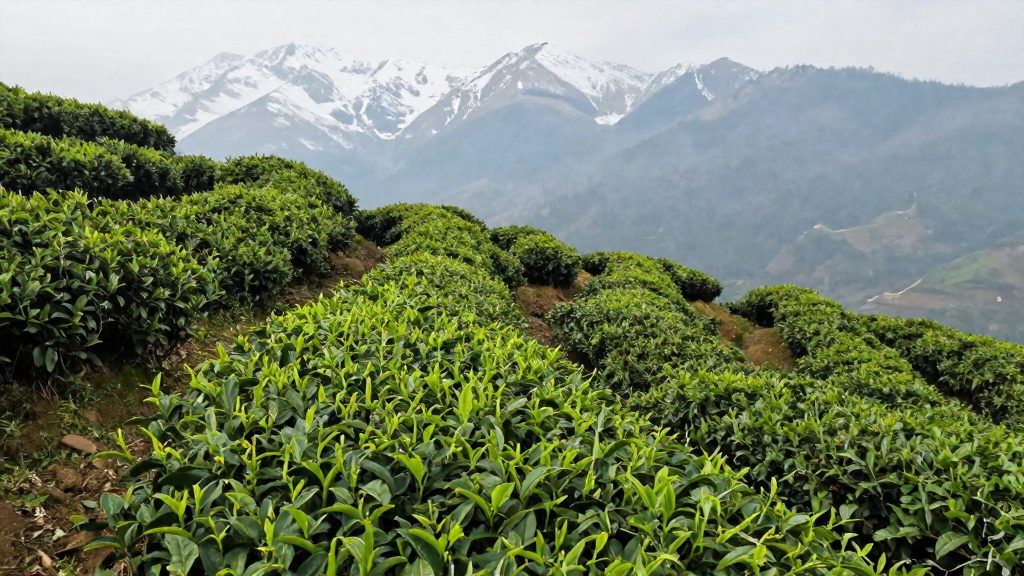
Darjeeling tea gardens are in West Bengal, in northern India, on Eastern Himalayan hillsides on the Indian side of the range. Wikipedia (2026) names the Darjeeling and Kalimpong districts as the area, but Kalimpong’s inclusion is unconfirmed. Nepal lies to the west, Bhutan to the east and Sikkim to the north. A tea estate in any of these neighbouring territories is not a Darjeeling garden. Because a district name alone does not confirm where a tea was grown, check the estate name on the pack.
Districts in West Bengal
The core district is Darjeeling. Wikipedia (2026) also names the Kalimpong district as part of the area, but this inclusion is not confirmed by other sources, so do not treat a Kalimpong label as proof of Darjeeling origin.
Why the district name is not enough
Two labels that both say “Darjeeling” can describe very different origins. A district name tells you the general region, while an estate name tells you the garden. Look for the estate first.
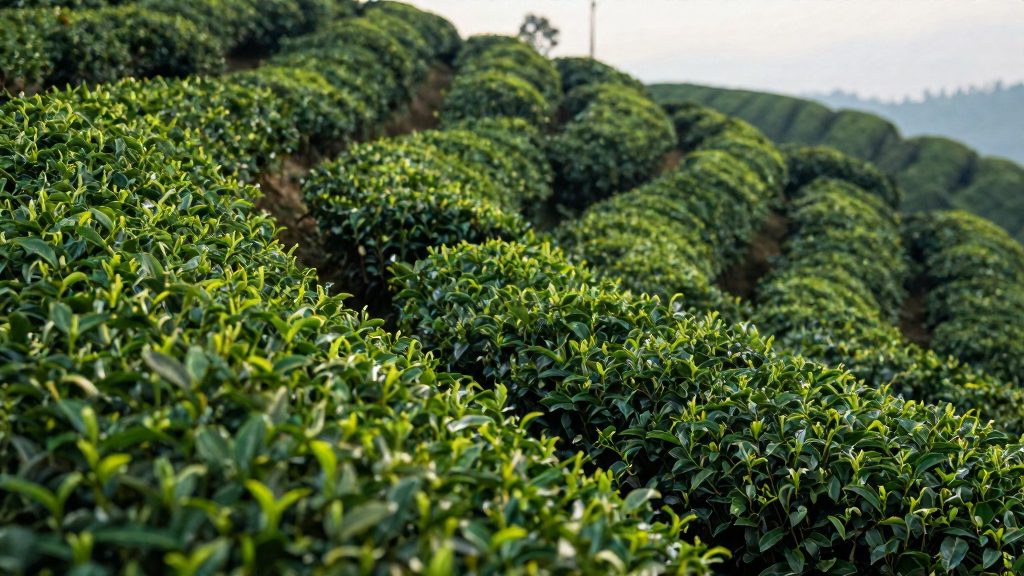
Hillside setting and elevation
The gardens grow on slopes, not on the lowland plains of northern Bengal. Wikipedia (2026) gives an elevation band of about 600 to 2,000 m. This range comes from Wikipedia alone, so treat it as a reported figure rather than a confirmed survey.
A grower from Gopaldhara estate, quoted in Down To Earth (2026), says the planting zone starts at 2,000 feet, about 600 m. This matches the lower end of the Wikipedia band, but it is one estate’s account.
| Reference point | Elevation | Source |
|---|---|---|
| Lower limit, as quoted by a grower | 2,000 feet (about 600 m) | Gopaldhara estate, quoted in Down To Earth (2026) |
| Upper end of the band | 2,000 m | Wikipedia (2026) |
How altitude relates to the cup
Altitude affects the pace of growth. Higher, cooler sites generally grow more slowly, and slower growth is one of the general links between a garden’s site and its cup character. This is a general principle of tea cultivation, not a measured result for any particular garden. Aspect, plucking practice and processing also shape flavour, so elevation alone does not predict how a Darjeeling will taste.
Neighbouring territories
| Direction | Neighbouring territory |
|---|---|
| West | Nepal |
| East | Bhutan |
| North | Sikkim |
These borders describe the surrounding region. Tea grown just across any of them falls outside the Darjeeling area.
Estates, area and output
The most cited figure is 87 estates recognised by the Tea Board of India, as reported by Down To Earth (2026) and Wikipedia (2026). The Tea Board’s own published list was not confirmed in these sources, so this figure is a reported total rather than a verified official count.
| Indicator | Figure | Source | Status |
|---|---|---|---|
| Recognised estates | 87 | Down To Earth (2026); Wikipedia (2026) | Not confirmed on an official Tea Board page |
| Planted area | About 17,500 ha | Wikipedia (2026) | Single source; definition unclear |
| Production, 2024 | About 6 million kg | Down To Earth (2026) | Other publications give conflicting figures |
| Earlier production | 12 million kg | Down To Earth (2026) | Year not stated |
| Gardens closed over the years | 13 | Down To Earth (2026) | Reported |
The area figure comes from an encyclopedia, not from an official count by the Tea Board of India. Output figures also differ between publications, and they use different units, such as kilograms and tonnes. Compare the year and unit before drawing conclusions from any single number.
Down To Earth (2026) also reports that nearly all Darjeeling gardens are certified organic. This is a reported claim that an official source has not confirmed, so check the certification on the individual pack.
Harvest flushes and months
Wikipedia (2026) states that Darjeeling gardens harvest in four flushes between March and November. Other sources report two or three flushes, so treat the count as uncertain. Each flush is a separate picking period, and the harvest month is the main way to tell one batch from another.
| Flush | Months per Wikipedia (2026) |
|---|---|
| First (spring) | About March to May |
| Second | May to June |
| Monsoon | July to September |
| Autumnal | October to November |
Because the flush count is uncertain, check the estate’s own harvest calendar if timing matters to you.
Comparing flushes fairly
Compare flushes only from the same estate. Gardens differ in their own timing and processing, so a flush comparison across different estates mixes several variables at once.
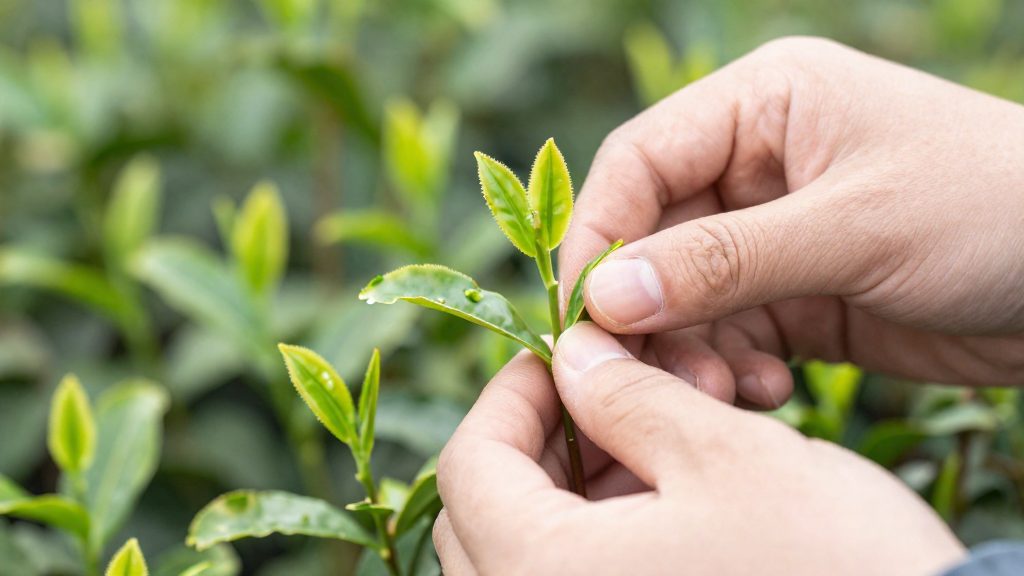
Checking origin on a pack
To verify Darjeeling origin, check three details on the pack: the origin wording, the garden name and the flush with its harvest month. According to Wikipedia (2026), “Darjeeling” became a registered geographical indication (GI) in 2004 and was granted EU protected geographical indication (PGI) status in 2011. You can confirm the EU status by searching the European Commission’s eAmbrosia register for “Darjeeling.”
| Check | Where to find it | Checkable answer |
|---|---|---|
| Origin wording | Front or side panel | GI or PGI reference alongside “Darjeeling” |
| Garden name | Pack or product page | A named estate, not only the district |
| Flush and month | Pack, lot code or seller reply | A named flush with a harvest month |
If a label is unclear, contact the seller or importer for written details.
Darjeeling compared with nearby regions
Darjeeling is a hill-grown tea, and altitude is the clearest way to separate it from lower-grown teas. Down To Earth (2026) places the Darjeeling gardens within Northern Bengal, alongside the Terai and Dooars. These are neighbouring tea areas in the same part of West Bengal, so a Northern Bengal origin on its own does not identify a Darjeeling hill tea.
Assam is generally grown at lower elevations than Darjeeling’s hill gardens. Chinese green and oolong teas come from many production areas, and no single altitude applies across China, so compare by stated estate or region rather than by country.
Conclusion
Darjeeling gardens lie in West Bengal’s Darjeeling district, with Kalimpong included in the area by Wikipedia (2026) but not confirmed elsewhere, on Eastern Himalayan hillsides bordered by Nepal, Bhutan and Sikkim. The estate count, area and output figures all come from a small number of sources and carry caveats, so check the estate name, flush and harvest month on the pack before you rely on any figure.