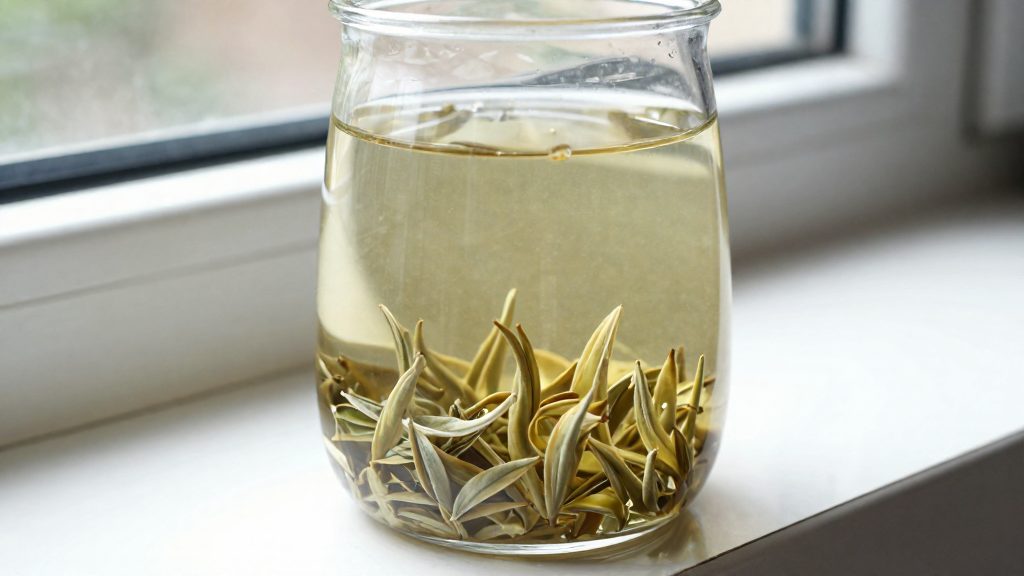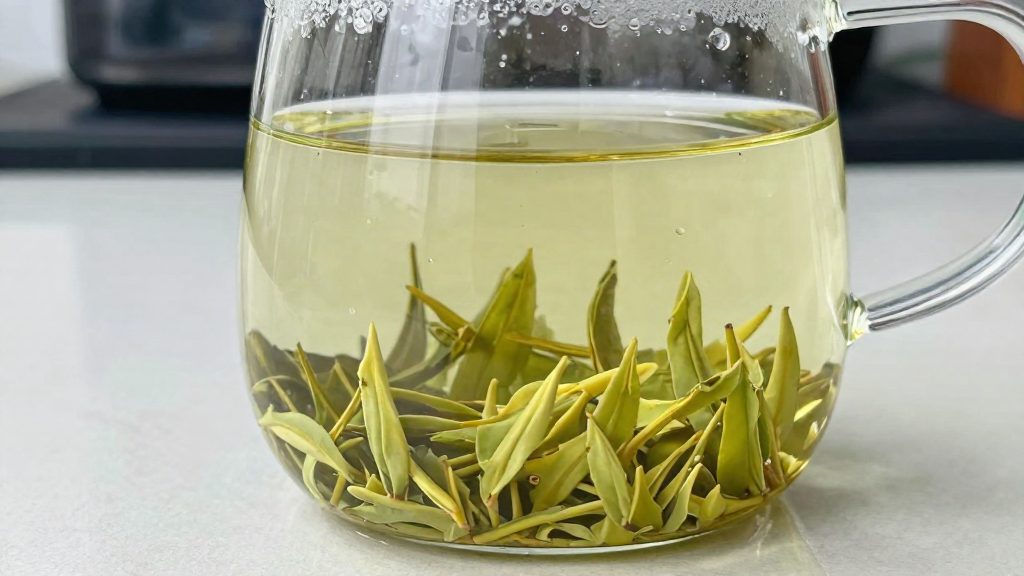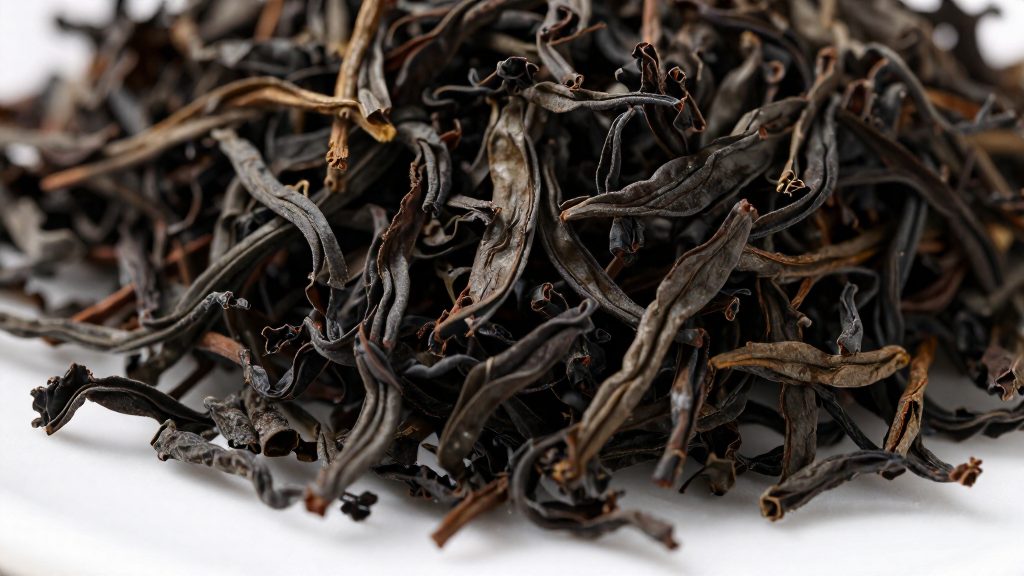
Brewed black tea often turns hazy as it cools, and the haze can persist or appear during refrigerator storage. The haze is a change in appearance as the temperature drops. It does not by itself show whether a stored batch is safe to drink.
Why Is My Iced Tea Cloudy?
Caffeine and tannins binding together
According to Red Rose Tea, caffeine and tannins can bind together in brewed tea. As the liquid cools, these bound particles make the tea look milky or hazy instead of clear. The source describes this as one cause of cloudy iced tea, so it is an explanation for one pattern of clouding rather than a complete account of every case.
The compounds in black tea
Smith Teamaker names four naturally occurring compounds in black tea that it links to the change on cooling:
- Theaflavins and thearubigins, pigments formed during the processing of black tea
- Catechins
- Caffeine
Smith Teamaker presents these compounds as associated with the haze, so they are the components involved rather than a single identified culprit.
Haze during cooling and refrigerator storage
- Haze can appear as brewed black tea cools.
- Haze can also appear during refrigerator storage, according to Smith Teamaker.
- Smith Teamaker reports that some black teas also cloud when cooled at room temperature, so letting tea cool before adding ice is not a guaranteed way to prevent haze.

Which Teas Are More Likely to Cloud?
Black tea can cloud when iced, and Assam is the origin Smith Teamaker specifically reports as prone to clouding. Clouding is not uniform across black teas, though. It varies among varieties and between batches of the same tea, so origin is a tendency, not a guarantee.
| Tea | Reported clouding tendency |
|---|---|
| Assam black tea | Especially prone to clouding (Smith Teamaker) |
| Other black teas | Varies by variety and batch (Smith Teamaker) |
Smith Teamaker’s remarks describe what it has observed, not a measured rate, so treat Assam as a higher-risk starting point rather than a confirmed outcome.
Spotting Assam on the Label
- Check the origin line on the packaging or product page for the name “Assam.”
- Look for the origin on the ingredient or description panel, not only in marketing text.
- If the label gives no origin, the manufacturer’s website or customer service can confirm it.
Can Hot Water Clear Cloudy Tea?
Sometimes. Smith Teamaker says adding a little hot water can help clear cloudy iced tea, but the manufacturer does not establish that the effect lasts once the glass is refrigerated again. Adding a little hot water may help clear cloudy tea, but the sources do not establish whether the clarity lasts after refrigeration.
Adding a little hot water to a cloudy glass
- Pour the cloudy tea into a glass that already contains ice, or pour it over ice in a separate glass.
- Add a small amount of hot water to the glass and stir gently.
- Check the glass after a few seconds. Clear tea means the step worked for that serving.
Use a small amount. Adding too much hot water dilutes the brew and changes its strength, which is a flavour trade-off rather than a clarity fix.
Cooling brewed tea to room temperature before icing
Red Rose Tea recommends cooling brewed tea to room temperature before adding ice. The approach targets the same temperature drop that triggers haze, but it does not prevent it:
- Let the brewed tea sit on the counter until it reaches room temperature, then add ice or refrigerate it.
- Smith Teamaker reports that some black teas also cloud when cooled at room temperature, so this step is not established as a reliable way to reduce or prevent haze.
Why these steps may not always clear haze
Haze has more than one cause, and the two methods above address only part of the problem.
Because the causes vary, a hot-water rescue may work on one glass and fail on the next. If you want consistently clear iced tea from a particular tea, test one serving first, then compare the result after the batch has been refrigerated.
Does Your Brewing Water Make a Difference?
Water can change how cloudy iced tea looks, but it is one variable among several. Red Rose Tea recommends filtered water for iced tea, yet filtration is not a guaranteed fix. The most reliable way to learn whether your water matters is a controlled side-by-side test at home.
Filtered Water as a First Variable
Filtered water is Red Rose Tea’s recommended brewing water, so it is the logical first change to test. Treat it as a hypothesis to check, not a solution to assume.
Running a Side-by-Side Test
Brew two batches at once and change only the water source:
- Use the same tea, the same dose, the same brewing temperature and steeping time, and the same kettle for both.
- Brew one batch with tap water and one with filtered water.
- Cool both in identical containers, placed in the same spot.
- Refrigerate them together and compare them at the same point in time.
| Keep identical | Change between batches |
|---|---|
| Tea type and product | Water source (tap or filtered) |
| Dose of tea | |
| Brewing temperature and time | |
| Kettle, vessel, and cooling method | |
| Fridge position and check time |
Recording Results to Compare Batches
Keep a simple log for each batch:
| Field | What to note |
|---|---|
| Date brewed | Exact date, for comparing storage time |
| Water source | Tap or filtered, and the filter type |
| Tea | Type and product name |
| Cooling method | Room temperature or straight to the fridge |
| Appearance | Clear, hazy, or cloudy, checked at the same time each batch |
| Storage time | Hours or days refrigerated |
Compare batches only when the tea and cooling method match. A log lets you see whether filtered water consistently reduces haze, or whether the difference disappears across different teas.
Brew Clear Iced Tea With Cold Water
Tetley’s published cold-water method for clear iced tea skips hot brewing. According to Tetley US, you use 4–6 regular tea bags per US quart of cold water, or one Family Size bag per quart, and steep for at least 6 hours or overnight. Refrigeration is an optional step, not a requirement.
| Element | Tetley US specification |
|---|---|
| Tea per US quart | 4–6 regular tea bags, or one Family Size bag |
| Steeping time | At least 6 hours, or overnight |
| Refrigeration | Optional step |
Steps:
- Pour cold water into a container sized for the batch, measuring in US quarts.
- Add 4–6 regular tea bags per quart, or one Family Size bag per quart.
- Steep for at least 6 hours or overnight. Refrigerate during steeping if you choose that option.
- Remove the bags when steeping is complete and serve.
Because the method is built on bag count per quart, scale the number of bags to the volume you make rather than to a fixed bag total. Check the label of the specific product you use, since the bag count above applies to Tetley’s own bags.

Choose a Blend Made for Icing
Check the product label for its intended brewing method and any specific claim about resisting clouding when refrigerated. Some blends are sold for cold serving, while others are made for hot brewing and may turn cloudy as the liquid cools. Check the wording on the package before you brew a large batch.
Look for iced or cold-brew wording
Check the front and side panels for terms such as “iced.” Tetley’s Classic Iced Tea Blend is designed for this use. According to Tetley US, it is specially blended to resist clouding when refrigerated. That claim applies to refrigerated storage of that specific product. Check each box separately, since a label on one product does not describe another.
Recognise hot-brew teas that can cloud
Tetley states that its teas intended for hot brewing may become cloudy when chilled. Smith Teamaker reports that black iced tea can turn cloudy as it cools, including during refrigeration. A tea sold mainly for hot cups is therefore not a reliable choice for iced tea without checking its label first.
| Product or category | Manufacturer’s statement | Source |
|---|---|---|
| Tetley Classic Iced Tea Blend | Specially blended to resist clouding when refrigerated | Tetley US |
| Tetley teas intended for hot brewing | May become cloudy when chilled | Tetley US |
| Black iced tea | Can turn cloudy as it cools, including during refrigeration | Smith Teamaker |
Should You Add Lemon or Baking Soda?
Lemon juice and baking soda are both suggested as fixes for cloudy iced tea, but the sources do not establish that either one clears the cloudiness reliably. Tetley recommends lemon juice, and Red Rose recommends baking soda, yet neither source gives a dependable quantity or proves the effect across different teas. Each additive also changes the drink in its own way, so the trade-off is between taste and an unconfirmed clarity result.
| Additive | What it changes | Clarity effect |
|---|---|---|
| Lemon juice | Adds acidity, which changes the taste of the tea | Recommended by Tetley for clearing cloudiness; not established as dependable across teas |
| Baking soda | Adds alkalinity, which may alter the flavor | Recommended by Red Rose; its effectiveness and the tannin explanation were not independently confirmed |
Because the clarity result is uncertain, test before you treat a whole pitcher:
- Pour a small portion of the cloudy tea into one glass.
- Add a small amount of the additive, stir, and wait for the glass to settle.
- Compare the glass with an untreated portion and taste both.