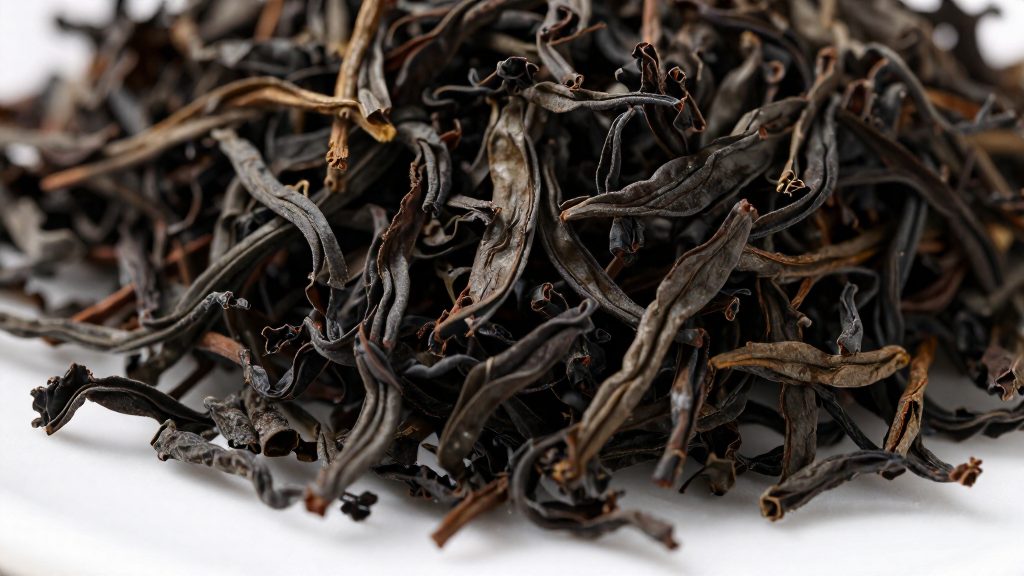
Stale black tea is usually identified by its dry-leaf aroma before any water touches it. Open the container, take a small pinch of leaves, and smell them directly. According to Teabox, a noticeably weaker dry-leaf aroma, sometimes described as cardboard or dust, is a sign that the tea has gone stale.
What are the signs of stale black tea?
Sniff the dry leaves before brewing
Take the sniff before you measure water or start the timer. Smell the dry leaves before brewing; after steeping, you can also assess the aroma of the drained leaves and the brewed tea. Keep the container lid closed between checks, and open it only long enough to sniff the leaves.
What a stale dry-leaf smell indicates
| Observation in the dry leaf | What it may indicate | Reservation |
|---|---|---|
| Weaker aroma with a cardboard or dust note | Stale tea, according to Teabox | No fixed threshold is established |
| Faded or discolored leaves alongside weak aroma | Stale-tea pattern, according to Nordqvist | Discoloration alone has not been established as a reliable diagnosis for black tea |
| Damp or musty smell | Absorbed moisture | — |
Reading the smell accurately
- A cardboard or dust note describes a flattened aroma, not a confirmed spoilage test. Treat it as a reason to inspect further, not as proof.
- Compare like with like. A black tea with a naturally subtle nose will smell quieter than a malty Assam, so use the same type of tea when judging.
- A weaker aroma than the same tea had when fresh can suggest aging, even without a musty smell. A damp or moldy smell calls for disposal, following the guidance below.
Weak aroma and flat flavor
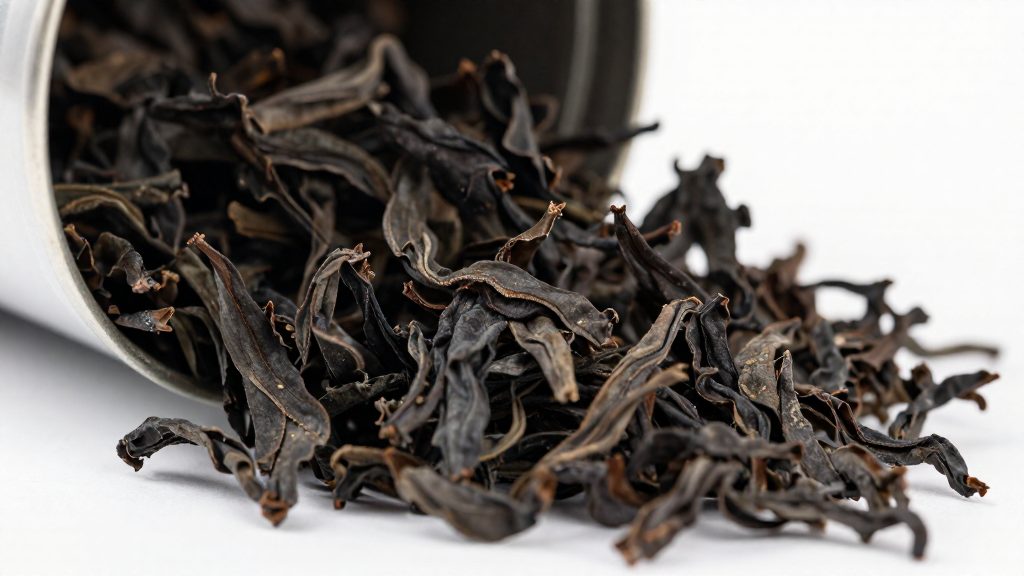
Stale black tea can show weaker dry-leaf aroma and produce a flat, dull cup when brewed with the usual settings. The dry leaf may already smell weaker, but the clearest test is brewing: when you use your normal leaf quantity, water temperature and steeping time, a tea that has lost its freshness produces a flat, dull cup with little aroma. According to Teabox, that result means the tea is past its best.
Reduced aroma once brewed
Teabox identifies aroma as one of the characteristics that fade in black tea. Black tea releases its scent during infusion, so a stale batch yields a cup that smells thinner or more muted than the same tea when fresh.
Briskness and body on the palate
Teabox names briskness as a characteristic that fades in black tea and states that body lasts longest, so the two carry different weight as indicators:
| Palate quality | Status for black tea (Teabox) | How to judge it |
|---|---|---|
| Briskness | Fades | Note whether the finish feels lively or flat |
| Body | Lasts longest | A thin body on its own is not a reliable sign of staleness |
Changes in leaf appearance and texture
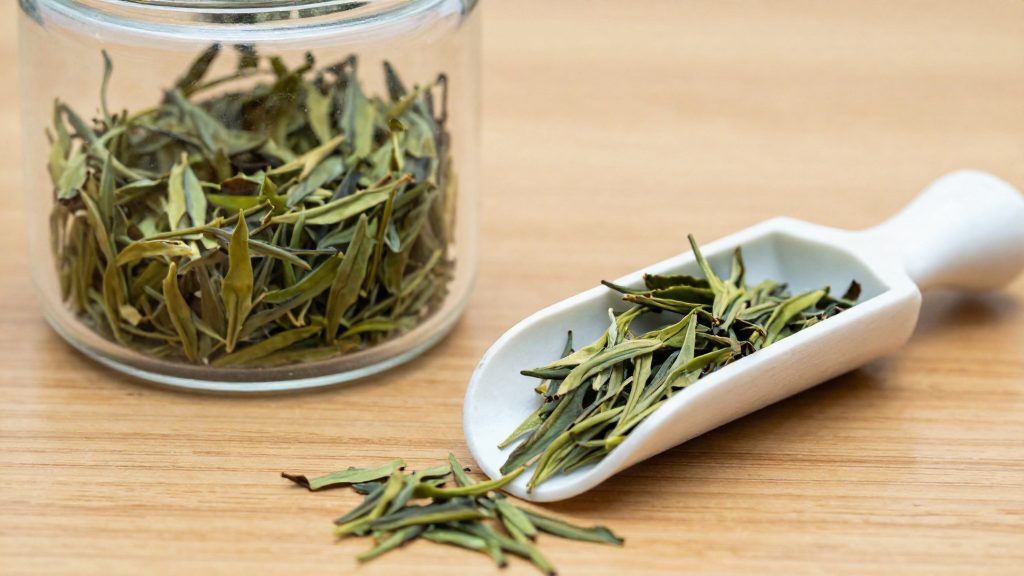
Dry leaf appearance is a useful visual check for black tea. According to Nordqvist, faded or discolored leaves can accompany weaker aroma and dull flavor in stale tea. Color alone has not been established as a reliable diagnosis for black tea, so read it together with aroma.
Faded leaves compared with fresh stock
Look at the suspect tea in the same light as a fresh sample:
- Look for leaves that have lost their even, dark tone and now appear dull or patchy.
- Treat fading as a warning only when the aroma is also weaker.
Soft leaves and clumps
Teabox notes that leaves which feel soft or clump together can indicate absorbed moisture. To test, pinch a small amount and separate it with your fingers. Dry leaves should separate readily, while leaves that stay bound together or feel limp suggest the tea has taken on moisture.
Compressed blocks in vacuum packs
Teabox states that a solid block in an unopened vacuum pack can result from compression rather than dampness. Firmness alone therefore does not indicate spoilage. Judge a pressed block by these checks:
| Observation | What it can indicate | Limit of the check |
|---|---|---|
| Firm block, sealed pack | Compression during pressing | Does not rule out moisture inside the pack |
| Soft or clumped leaves after opening | Absorbed moisture (Teabox) | — |
| Faded leaves with weak aroma | Stale tea (Nordqvist) | Color alone is not a reliable diagnosis for black tea |
Is it stale or poorly brewed?
A flat cup can come from aged leaves or from brewing settings that do not suit the tea. To tell them apart, keep a baseline brew and change only one variable per cup. Teabox describes a flat, dull cup with little aroma as a sign that tea is past its best when it appears with the usual leaf quantity, water temperature and steeping time, so those three settings are your reference point.
| Step | Change only | What the result tells you |
|---|---|---|
| 1 | Nothing: brew with your usual leaf amount, temperature and steeping time | Record aroma and taste as the baseline |
| 2 | Water temperature | If a different temperature clearly improves the cup, temperature was a factor; this does not establish whether the leaves are stale. |
| 3 | Water source | If a different water produces a fuller cup, water was a factor |
| 4 | Leaves from a different portion of the same tin, brewed with the baseline settings | If this cup is clearly better, the portions produced different results; this alone does not establish that the first portion has gone stale. |
Water is the variable most often overlooked. Taste the water on its own before brewing. An off taste in the water will carry into the cup, so a flat result may have nothing to do with the leaves. Brew the same leaves with a second water source, such as filtered water, and compare.
A comparison brew using fresh dry leaves from the same tea, with only the water temperature changed, can show whether temperature affects the cup; it cannot by itself establish whether the leaves are stale. It does not show that the leaves can be restored. The sources here do not establish that longer steeping or extra leaves recovers the original aroma of stale black tea, so treat a second brew as a diagnostic step, not a fix.
When should you discard black tea?
Discard black tea that shows visible mold or has a musty smell, since both point to moisture exposure. According to Bigelow Tea, moisture is one of the conditions that allows mold to develop in tea. Teabox advises discarding tea that is damp, smells musty or is visibly moldy. These checks address contamination, not flavor, so they are separate from judging whether a cup is weak.
Visible mold on leaves or inside the container
Check the leaves in the open container, then the inside of the lid, the walls and the base. Look for fuzzy growth or spots on the leaves or on the container surfaces. Visible growth on any part of the leaves or the container is a reason to discard the tea.
Musty smell from moisture exposure
A damp, musty odor is a discard sign.
| Sign | Source of advice | Action |
|---|---|---|
| Visible mold on leaves or inside the container | Teabox; Bigelow Tea (moisture enables mold) | Discard |
| Musty, damp smell from the dry leaves | Teabox | Discard |
Checking manufacturer and local food-safety guidance
For a product you suspect is moldy, read the manufacturer’s storage and disposal instructions on the packaging or its website. If the guidance is unclear, contact your local food-safety authority for advice on disposal. Follow applicable manufacturer and food-safety instructions; visual and smell checks do not replace them.
How long does black tea stay fresh?
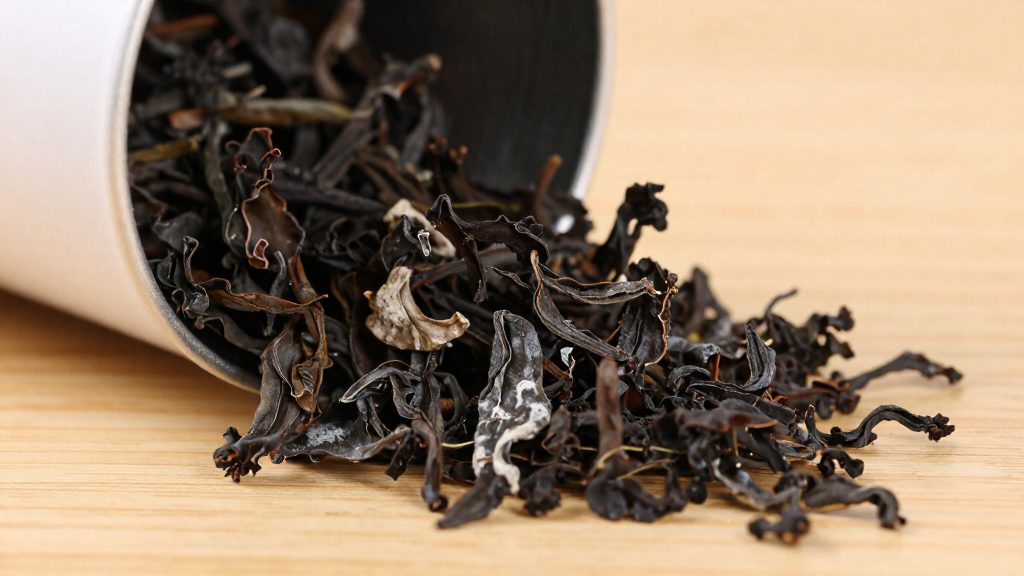
Black tea keeps its quality longer than less oxidized teas, but it still loses flavor over time. Manufacturer benchmarks range from one to three years, and each depends on the product, its packaging and how it is stored. No single freshness deadline applies across brands.
Black tea versus less oxidized teas
Harney & Sons (2019) states that black teas generally retain their quality longer than less oxidized teas, although they still lose flavor over time. The source gives no comparable time frame for green, white or oolong teas, so the advantage is relative, not a fixed number of months.
Manufacturer benchmarks
| Source | Condition the benchmark applies to | Stated benchmark |
|---|---|---|
| Bigelow Tea | Individually wrapped retail teas | Freshness guaranteed for three years from production |
| Teabox | Proper storage | 24 months |
| Nordqvist | Properly stored black tea | One to two years |
These figures cover different products and packaging, so they are not interchangeable.
After the guarantee period
Bigelow says that flavor may be less robust after the three-year guarantee period. The brand describes a gradual loss of strength rather than a fixed cut-off, so older stock should be judged by its cup as well as its date.
Storage habits that protect freshness
Light, heat, humidity, oxygen and odors all contribute to quality loss in tea, according to Harney & Sons (2019). Storage placement and container choice are the two levers a home drinker controls most directly.
Choose an opaque, airtight container
An opaque, airtight container helps protect tea against light, moisture, oxygen and surrounding odors, according to Harney & Sons (2019). Opacity blocks light, and a tight seal limits the air that reaches the leaves. Use a container that closes fully after each scoop, and keep the lid closed between uses rather than leaving it ajar while you make tea.
Keep tea away from strongly scented foods and spices
Tea absorbs surrounding odors, so storage near strongly scented foods or spices can change its flavor, according to Harney & Sons (2019). Store tea separately from items such as spices, coffee, and aromatic produce, even inside the same cupboard. Keep the container away from strong aromas as a precaution, especially when opening it, and close it promptly after use.
Avoid heat and humidity sources when choosing a spot
High temperatures and humidity both contribute to tea quality loss, according to Harney & Sons (2019). In practice, avoid placing tea on or beside stoves, ovens, dishwashers, radiators and sunny windowsills, since these areas bring heat and fluctuating warmth. Choose a cool, dry cupboard away from the sink and kettle, where steam reaches shelves.
| Storage factor | Why it matters | Practical placement |
|---|---|---|
| Light | Contributes to quality loss | Opaque container, dark cupboard |
| Oxygen | Contributes to quality loss | Airtight lid, closed after each use |
| Odors | Tea absorbs surrounding smells | Separate from spices and strongly scented foods |
| Heat | Contributes to quality loss | Away from stoves, ovens and radiators |
| Humidity | Contributes to quality loss; supports mold | Dry cupboard, away from sink and kettle |