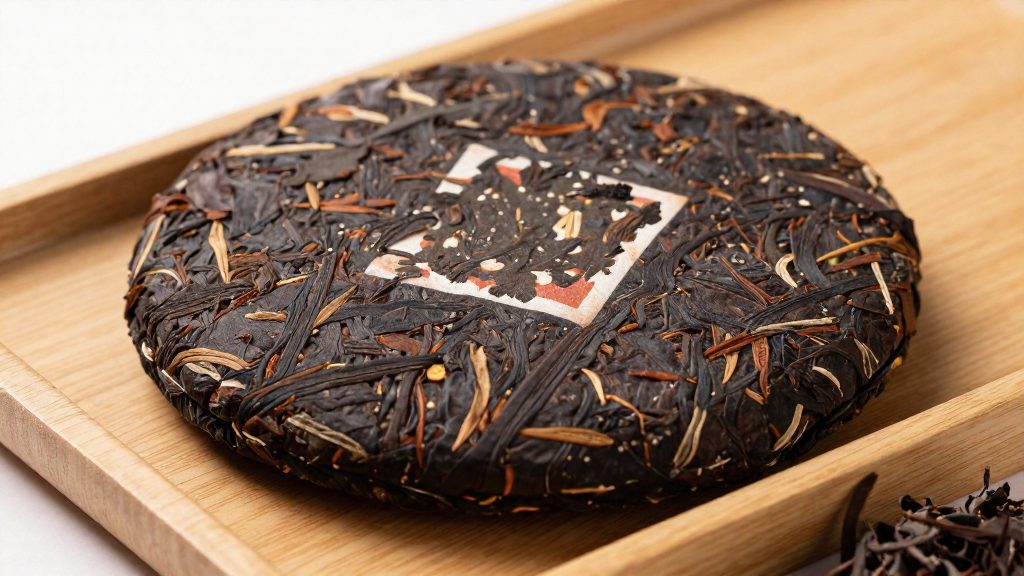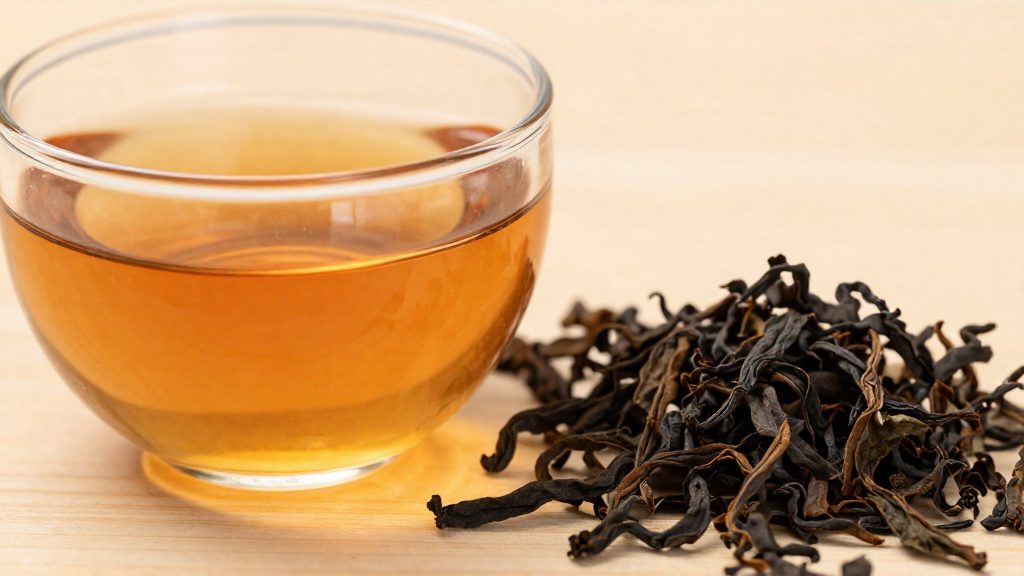
Oolong tastes do not share one profile. The range runs from green-leaning, fresh cups to darker, roasted ones, and the main variables are how far the leaf was allowed to oxidize and how it was finished. Because a single oolong name can describe very different liquor, tasting comparisons work better than one flavor label.
What Does Oolong Tea Taste Like?
Oxidation sets the flavor spectrum
Oxidation level is the main factor that places an oolong along the spectrum. Lightly oxidized oolongs often have fresh, floral profiles, while more heavily oxidized examples can develop richer fruit notes; roasted flavors depend on roasting, a separate processing step. Oxidation is a continuum, not a set of fixed bands, so no single percentage marks where a particular note begins. Use the producer’s description and your own side-by-side tasting to place a tea.
Light versus dark style contrasts
Harney & Sons uses lighter and darker examples to illustrate this contrast:
| Style or example | Aroma comparisons (per source) |
|---|---|
| Light oolongs | Lilac, gardenia, jasmine |
| Darker oolongs | Baked peach |
| Da Hong Pao (traditional) | Toasty flavors with stone fruit |
| Formosa Oolong | Nutty and toasty, with subdued peach |
Adagio Teas’ educational glossary adds a related example: high-mountain green oolongs with lilac notes.
Why oolong is not one flavor
- Processing varies widely. Oxidation and roasting are set separately for each tea, so one category covers both greener and darker cups.
- Comparisons are relative. The examples describe typical contrasts between styles, not a flavor that every oolong shares.
- Labels overlap. A tea named by its tradition or origin does not guarantee a specific aroma, so check the product description before buying.
Essential Oolong Tasting Notes Vocabulary
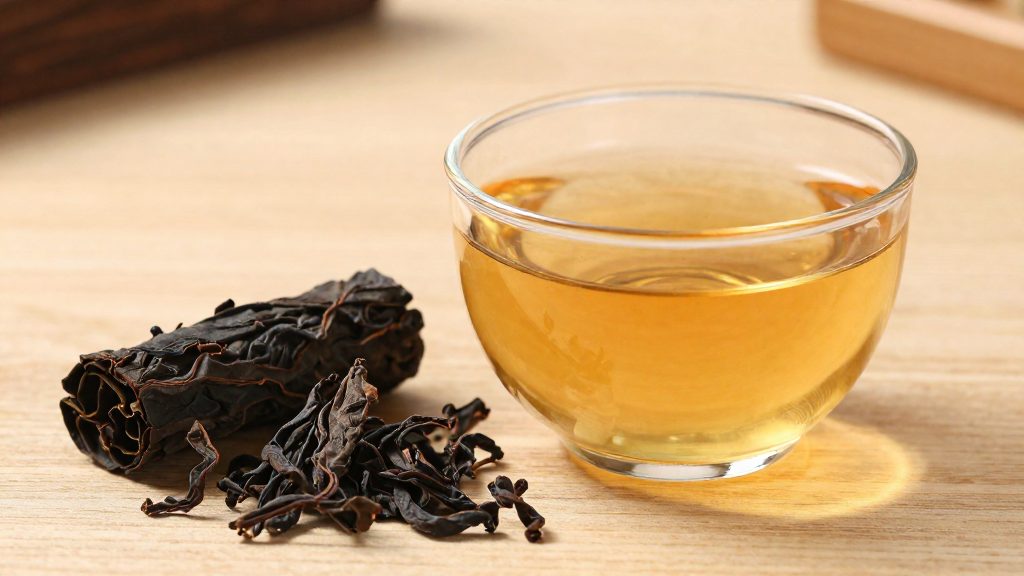
Consistent tasting notes depend on using descriptive terms consistently and recording appearance, aroma, taste, and mouthfeel separately. Appearance, sweetness, and overall impression are separate judgments, and each has its own vocabulary. The definitions below follow the sensory references published by TeaClass / Adagio Teas and Tea Review.
Liquor color
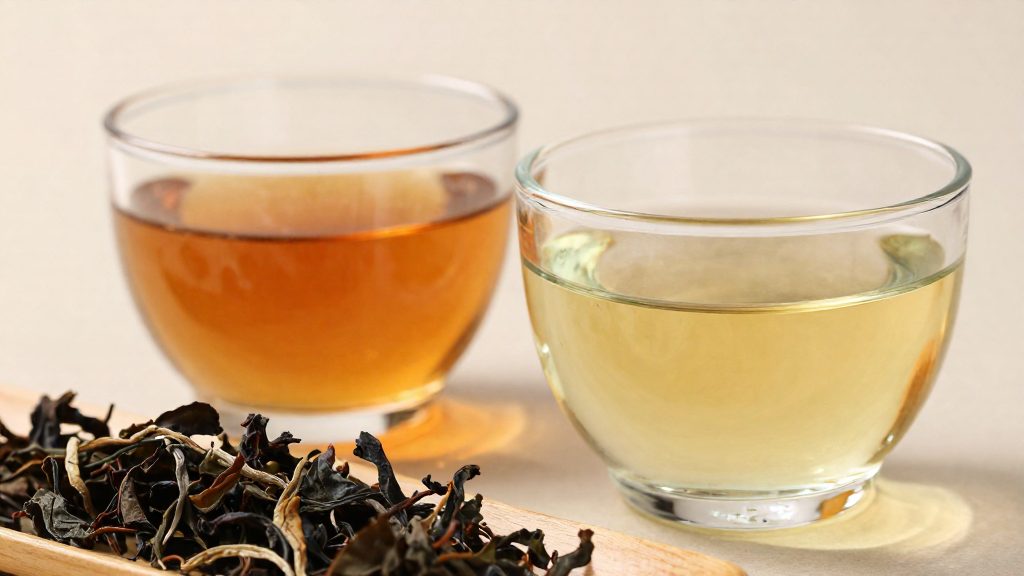
The liquor is the brewed liquid. TeaClass / Adagio Teas lists four color references for it: straw, amber, copper, and mahogany. Compare the liquid against these in good daylight.
Overall impression: smooth, soft, mild, mellow, round
According to TeaClass / Adagio Teas, these five words can describe teas with body and little astringent bite, and oolongs are often described as smooth. The terms overlap in meaning, so pick one for a given impression and use it each time you taste the same tea style, rather than rotating synonyms.
Sweetness references
Tea Review gives two sweetness comparisons:
| Term | Use in tasting notes | Source |
|---|---|---|
| Honey | Sweetness that reads as clear and rounded | Tea Review |
| Brown sugar | Sweetness that reads as deeper and richer | Tea Review |
Malt is a further comparison some tasters use. TeaClass / Adagio Teas defines malty through the rich, caramel sweetness of malted grain, using black teas as examples; use it for an oolong only when that comparison matches your experience.
Returning sweetness, the sweetness that appears after swallowing, is not established as a reliable sign of a better oolong, so do not use it alone to rank teas.
Floral, Fruity, Nutty, and Toasty Notes
Oolong aroma vocabulary groups into four families: floral, fruity, nutty, and toasty. Each family tends to show up in particular oolong styles, so the family you detect is a useful clue about the tea’s style and processing.
Floral notes in lighter oolongs
Lighter oolongs can suggest floral aromas such as lilac, gardenia, and jasmine. Adagio’s educational glossary (TeaClass / Adagio Teas) identifies high-mountain green oolongs as examples that show lilac notes, often paired with a buttery finish. When you taste a light oolong, note whether the flower comes through as a lilac-like or jasmine-like impression.
Fruity notes in darker oolongs
Darker oolongs can evoke baked peach and other stone-fruit notes. Harney & Sons describes its traditional Da Hong Pao as combining toasty flavors with stone fruit. Tea Review lists apricot and plum as lush, rounded fruit comparisons; choose whichever fruit most closely matches your own sensory impression.
Toasty and nutty notes in roasted oolongs
Toasty and nutty notes appear most often in roasted oolongs. Harney & Sons describes its Formosa Oolong as nutty and toasty, with subdued peach notes.
What Do Body and Mouthfeel Mean?
Body and mouthfeel describe how a tea feels in the mouth, separate from what it tastes like. Tea Review defines body and mouthfeel as the weight, texture, and substance of the liquid. Flavor words such as lilac or peach answer “what does it taste like?”, while body words answer “how heavy is it, and how does it move across the tongue?” Judging the feel first keeps a floral note from being mistaken for a texture.
Weight terms
Weight is the amount of substance you perceive. Tea Review lists four weight terms, which read in order from least to most substance:
| Term | What it signals |
|---|---|
| Thin | Little substance; the liquid feels watery on the tongue |
| Light | Some substance, but clearly less than medium |
| Medium | A balanced weight that neither thins out nor coats heavily |
| Full | Substantial weight that fills the mouth |
“Light” describes weight only. It is not the same as a “light oolong,” which refers to a style of tea with lighter-colored leaves.
Texture terms
Texture describes how the liquid feels as it moves. Tea Review names three texture terms:
- Silky: a smooth, gliding feel with no grain.
- Creamy: a rounded, fat-like feel. Harney & Sons notes that some oolong examples leave a coating sensation reminiscent of cream.
- Syrupy: a thick, slow-moving liquid that feels viscous.
Coating sensation
A coating sensation is a film that a tea leaves on the palate and tongue after you sip. To judge it, take a sip, hold it for a moment, and note whether the liquid feels thin and clear or whether a film stays behind. Creamy oolongs are the usual reference point for a coating feel, which is why the term appears in oolong tasting notes.
Bitterness Versus Astringency
Bitterness is a taste, while astringency is a physical drying sensation in the mouth. Because they are different kinds of sensation, a tea’s bitterness does not tell you how drying it will feel, and a note that lumps them together as “harsh” hides which one you actually noticed.
Bitterness as a taste
Bitterness is the taste you register during a sip. Keep the entry short, such as “bitter: moderate” or “bitter: none,” so the note stays focused on the taste itself.
Astringency as a drying sensation
Astringency is the drying feel on the mouth’s surfaces. To judge it, take a sip, hold it briefly, and check how dry or puckering the mouth feels.
Logging each attribute with separate ratings
Use a log with a distinct field for each attribute:
- Bitterness field: rate the taste only.
- Astringency field: rate the drying sensation only.
- Consistent scale: use the same numeric scale for both fields across every session so entries can be compared over time.
- Separate notes: if you write a comment, place it under the matching field, so a comment about taste never ends up beside the drying rating.
Describing Color, Aroma, and Finish
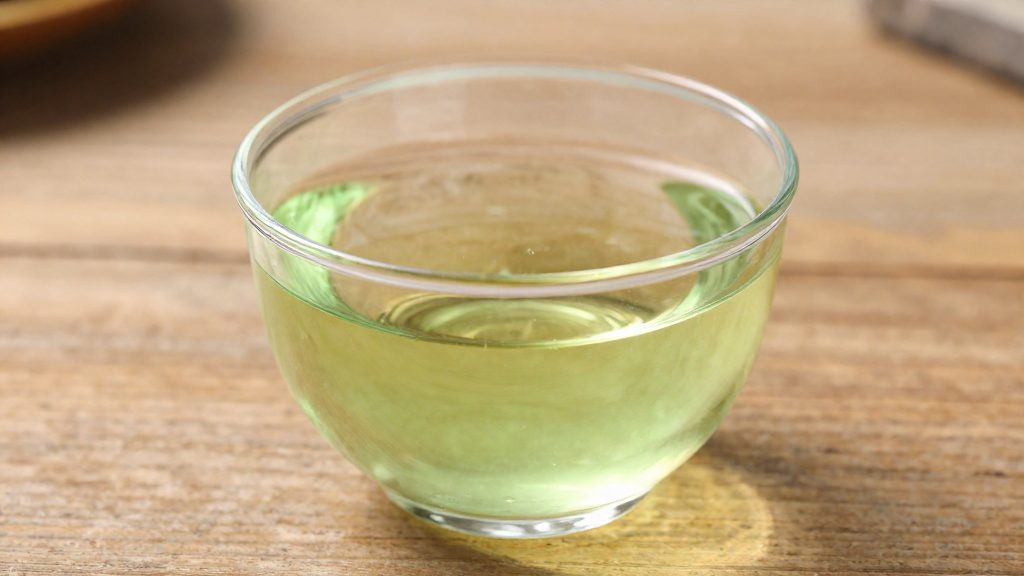
Liquor color, dry-leaf and empty-cup aroma, and finish are the non-flavor observations you can record before and after each cup. Liquor means the brewed liquid, and TeaClass / Adagio Teas lists straw, amber, copper, and mahogany as color terms for it. Write the color down with the brew settings beside it (leaf weight, water volume, and steep time), because a longer steep of the same tea will look darker.
Dry leaf and empty-cup aroma are two separate smells:
- Dry leaf: Place a spoonful of dry leaf in a dry, warm vessel, cover it, and smell it before adding water.
- Empty-cup aroma: After drinking or pouring out the liquor, smell the empty cup; record the wet leaf’s aroma separately if you also examine it.
Record the two in separate notes, since the leaf and the infused cup can smell different.
Finish (also called aftertaste) describes the sensations that remain after you swallow or spit the tea, according to Tea Review. Note what is still present and describe it in plain terms. Adagio’s glossary gives a buttery finish as an example for high-mountain green oolongs, which shows the kind of wording that works for this part of a tasting.
Writing Your First Oolong Tasting Notes
A tasting note works best when you record each element in the same order every session. Start with the dry leaf, then the liquor, then the mouthfeel and aftertaste. Writing these as separate entries keeps description apart from measurement, so you can compare sessions later.
Follow this sequence for each session:
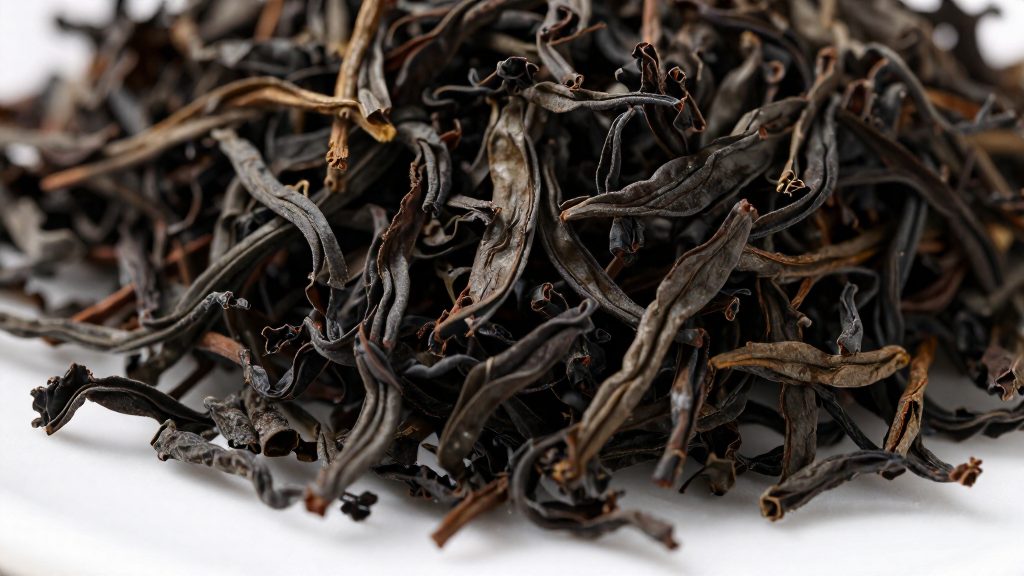
- Appearance of the dry leaf. Note the leaf shape and colour before brewing.
- Liquor colour. Describe the brewed liquid. Colour terms can include straw, amber, copper, and mahogany.
- Aroma. Smell the liquid and the empty cup. Record floral, fruity, or toasty impressions, using the terms from the earlier sections.
- Taste. Note sweetness, bitterness, and any other flavours on the palate.
- Body. Record weight and texture. Useful terms include light, medium, full, silky, creamy, syrupy, and thin.
- Astringency. Record the drying sensation on its own line.
- Finish. Note what remains after swallowing or spitting out the tea.
Template
Date:
Tea name and type:
Dry leaf:
Liquor colour:
Aroma:
Taste:
Body:
Astringency:
Finish:
Brewing parameters:
Overall impression:
Sample Filled-In Note
Date: [session date]
Tea name and type: Light oolong, high-mountain style (example type)
Dry leaf: Rolled, green-tinted leaves
Liquor colour: Straw
Aroma: Lilac and gardenia, with a light floral lift
Taste: Mildly sweet, with a faint honey impression
Body: Light to medium, smooth
Astringency: None detected
Finish: Lingering floral note, clean after swallowing
Brewing parameters: [temperature, leaf weight, water volume, steep time, infusion number]
Overall impression: Balanced, floral, would brew again at a slightly shorter time
Adapt the sample to what you actually taste. The lilac and gardenia entries are examples of the floral range Harney & Sons associates with light oolongs.
Recording Brewing Parameters with Each Note
Log the brewing parameters beside each tasting note, because the same tea tastes different at other settings. Record at minimum:
- Water temperature
- Leaf weight and water volume
- Steep time for each infusion
- Infusion number, since oolongs are typically brewed in several rounds
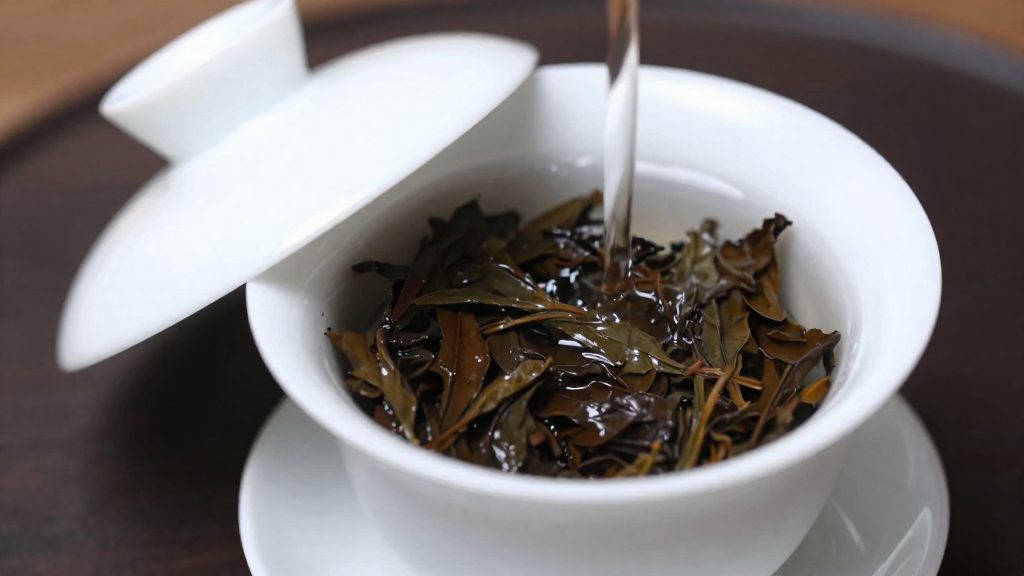
- Teapot or gaiwan used
Keeping these alongside the sensory notes lets you adjust one variable at a time. If a session tastes too astringent, the logged steep time shows whether you can shorten the next infusion.