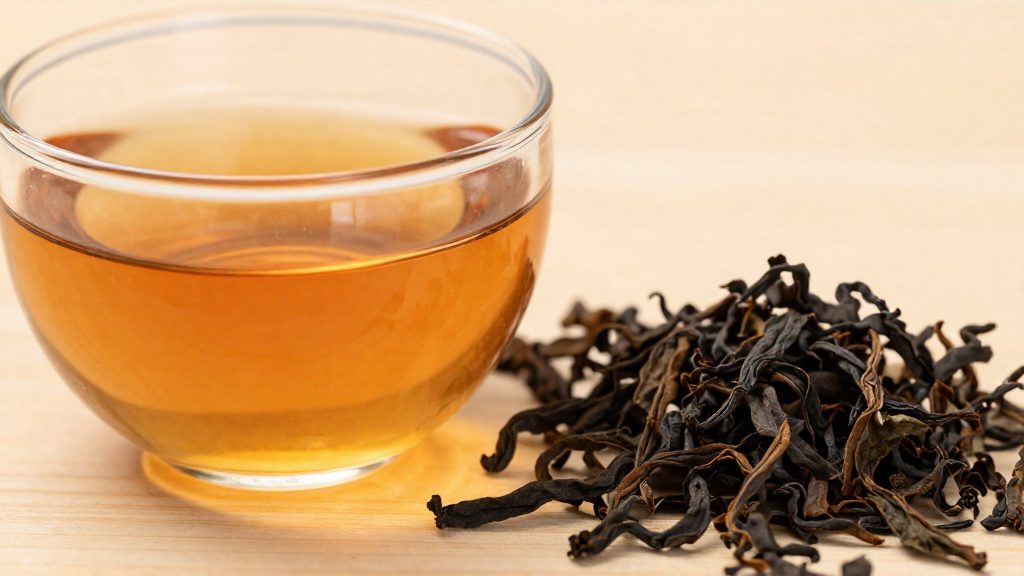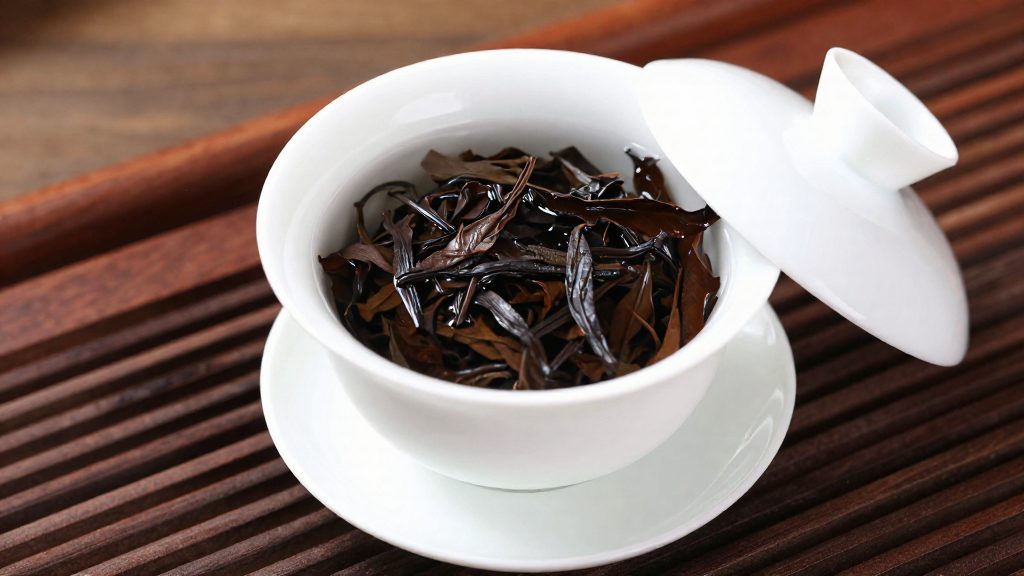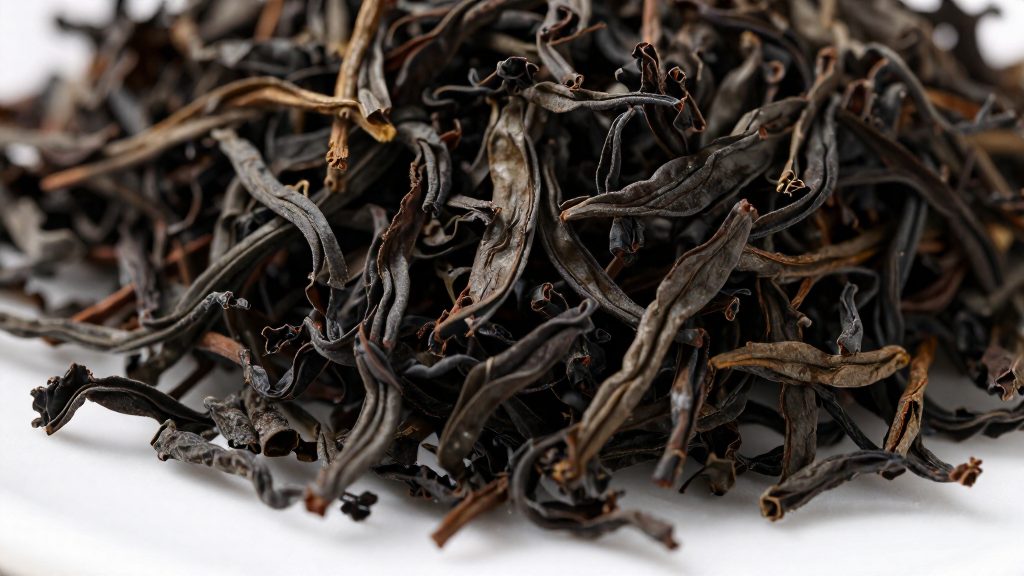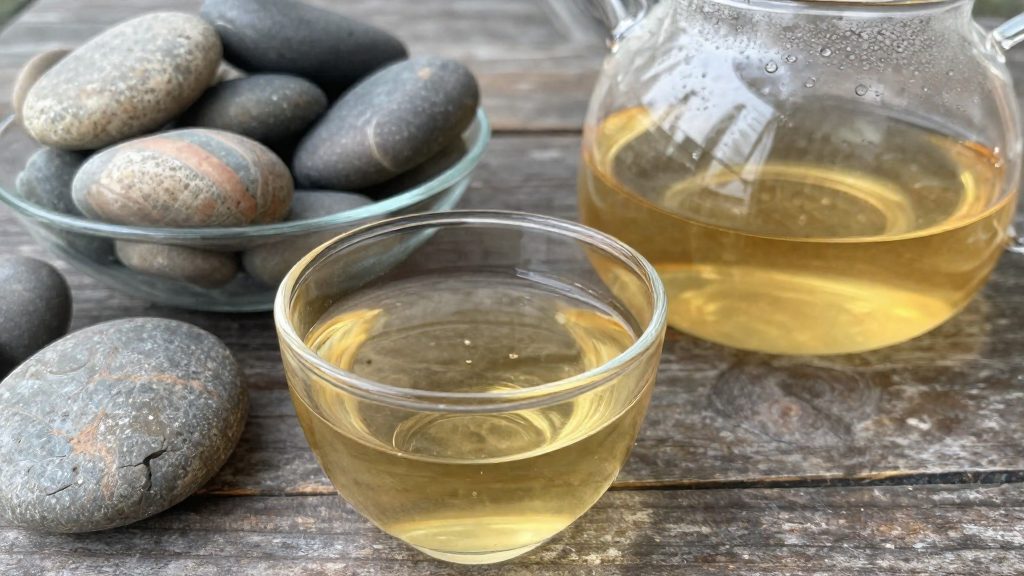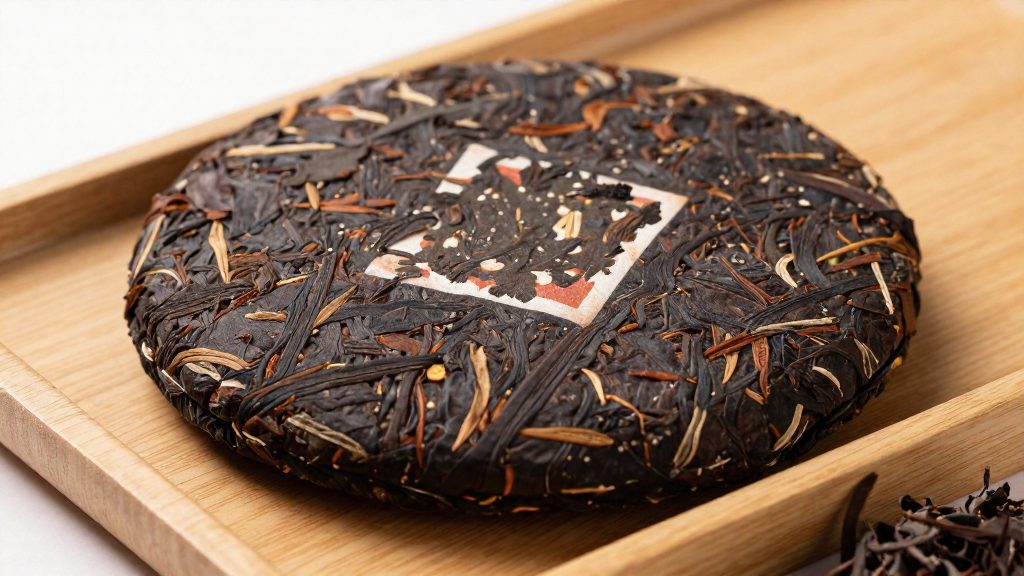
Pu-erh is a tea made from large-leaf Camellia sinensis, most often associated with Yunnan province in China. Its flavor depends on whether it is young raw (sheng) or ripe (shou) and how long it has aged. According to Chen Sheng Hao (July 2024), young raw pu-erh can show fresh floral, honey-like or fruity aromas with noticeable bitterness and astringency, while ripe pu-erh is typically described as woody, gently sweet, smooth and thick, with relatively little bitterness or astringency. A useful tasting note covers five separate dimensions: aroma, bitterness, astringency, sweetness and mouthfeel.
What Does Pu-erh Tea Taste Like?
Presentation formats
Pu-erh is sold in three common forms. The form changes how you portion the leaf, not the flavor vocabulary you use.
| Format | What it is | How to portion it |
|---|---|---|
| Pressed cake | Leaf compressed into a round disc | Work a tea pick along the edge to loosen a piece, then separate it by hand |
| Brick | Leaf pressed into a rectangular block | Break off a portion with a knife or pick |
| Loose leaf | Unpressed leaf | Measure directly with a spoon or scale |
Baseline tasting dimensions
Use these five dimensions as the starting point for any pu-erh before you compare styles or brewing methods.
| Dimension | What to note | Reference from the sources |
|---|---|---|
| Aroma | Floral, honey-like or fruity in young raw tea; woody in ripe tea | Chen Sheng Hao (July 2024) |
| Bitterness | Noticeable in young raw tea; softened as raw tea ages | Chen Sheng Hao (July 2024) |
| Astringency | Drying feel, present in young raw tea | Chen Sheng Hao (July 2024) |
| Sweetness | Huigan: a sweet aftertaste that follows bitterness | Chen Sheng Hao (July 2024) |
| Mouthfeel | Thick and smooth textures, especially in aged raw and ripe tea | Chen Sheng Hao (July 2024) |
Ripe tea is described as having relatively little bitterness, but “relatively little” is not the same as none.
Why tasting descriptors vary
Pu-erh descriptors are subjective, and the same cup can produce different words from different tasters. Several factors shape the result:
- Descriptors are perceptions. Aroma words describe what one person detects, and sensitivity to bitterness and astringency varies between people.
- Producer notes apply to one product. Rishi Tea & Botanicals describes the aromas of its own Pu’er Classic. That description does not transfer to other pu-erh teas.
- Individual teas need their own evidence. Aroma notes cannot be assumed for every pu-erh; each tea needs its own tasting.
How Do Sheng and Shou Differ?
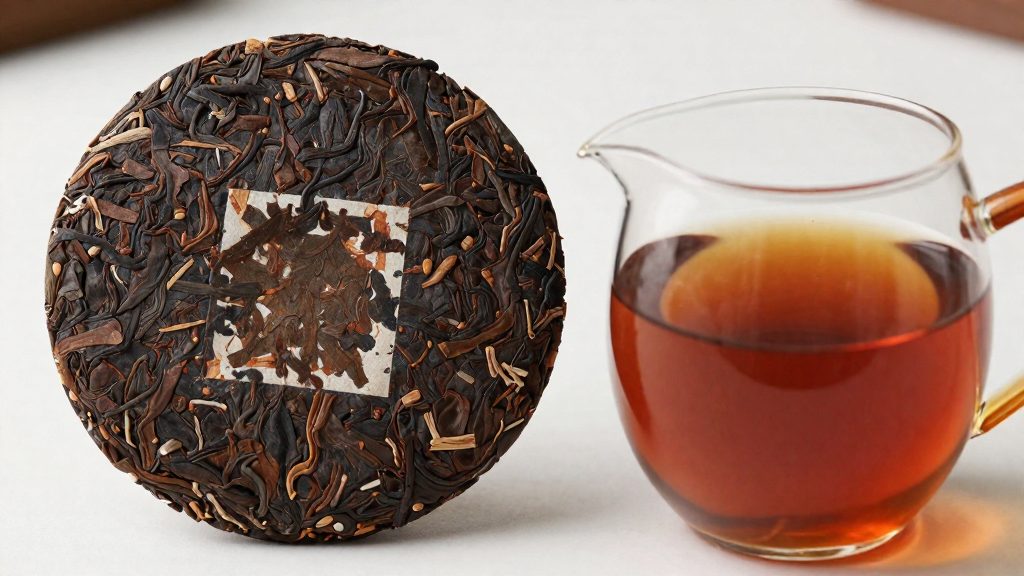
Sheng and shou are the two main categories of pu-erh, and their aroma profiles differ in a consistent direction. According to Chen Sheng Hao (2024), young raw pu-erh (sheng) can show fresh floral, honey-like or fruity aromas, while ripe pu-erh (shou) is more often described as gently sweet.
| Category | Typical aroma and character | Notes |
|---|---|---|
| Young sheng | Fresh floral, honey-like or fruity | Brightest aromatic profile of the three |
| Aged sheng | Mellower overall character | Change is described as a shift in character over time, not a fixed set of aroma notes |
| Ripe shou | Gently sweet | Described by Chen Sheng Hao (2024) as a different profile from young raw tea |
Aged sheng
Aged raw pu-erh is described as mellower than young raw tea, so the sharper fresh aromatics give way to a softer overall impression. How far a given tea has changed depends on the tea itself.
Reading labels to tell sheng from shou
Category terms are the fastest way to sort the two types before you buy:
- Look for sheng or “raw” versus shou or “ripe” in the product title or listing.
- If the listing names neither term, check the manufacturer’s product information or ask the seller which category the tea belongs to.
Earthy, Woody, and Cocoa Flavor Notes
Earthy, woody, and cocoa are common aroma descriptors for pu-erh. Rishi Tea & Botanicals describes its Pu’er Classic with cocoa and mushroom aromas, a woodsy character, and an earthy aroma resembling petrichor. Chen Sheng Hao (2024) describes ripe pu-erh (shou) as woody.
Earthy: the petrichor reference
Petrichor is the smell of earth after rainfall. Rishi uses it to describe the earthy aroma of its Pu’er Classic. To test this note, smell the dry leaf, then the infused leaf after the first steep, and check whether the scent resembles damp soil after rain. If the aroma is absent, the tea is not necessarily different from the description; your reference may simply differ.
Woody and woodsy character
Chen Sheng Hao (2024) lists woody as a possible descriptor for ripe pu-erh. Rishi uses the related term “woodsy” for its Pu’er Classic. The two words describe a similar dry, wooden impression, but they come from different producers and refer to different teas, so they should not be merged into one general rule.
Cocoa and mushroom aromas
Rishi attributes cocoa and mushroom aromas to its Pu’er Classic.
| Descriptor | Attributed to | Source |
|---|---|---|
| Earthy, resembling petrichor | Rishi Pu’er Classic | Rishi Tea & Botanicals |
| Woodsy character | Rishi Pu’er Classic | Rishi Tea & Botanicals |
| Cocoa and mushroom aromas | Rishi Pu’er Classic | Rishi Tea & Botanicals |
| Woody | Ripe pu-erh (shou), described as a possibility | Chen Sheng Hao (2024) |
Describe Body, Bitterness and Sweet Aftertaste
Describing body, bitterness and aftertaste as separate qualities makes pu-erh easier to compare than one flavor word. According to Chen Sheng Hao (2024), young raw pu-erh (sheng) shows noticeable bitterness and astringency, and ripe pu-erh (shou) has relatively little bitterness or astringency. Judge each quality on its own, in this order: mouthfeel, then bitterness, then aftertaste.
Mouthfeel: Thick and Smooth
Mouthfeel is how the liquid feels on the tongue and palate. Thick and smooth are texture words, so keep them out of your aroma notes. Aged raw pu-erh is described as having a smoother, thicker mouthfeel than young raw tea, which makes it a useful reference point when you compare styles.
Bitterness and Astringency
Bitterness is a taste, while astringency is a drying, puckering sensation on the tongue and inner cheeks. Young raw pu-erh can show both. Ask two separate questions: is the bitterness sharp or soft, and does the cup dry your mouth? A cup can be bitter without being astringent, and the reverse is also possible.
Bitterness also depends on how the tea was made. The producer notes that brewing can increase bitterness even in ripe tea, so compare bitterness only between cups brewed the same way.
Huigan: The Sweet Aftertaste
Huigan is a sweet aftertaste that follows bitterness. It is not sweetness on the first sip. After you swallow, notice whether a sweet sensation returns once the bitterness fades. If it does, record it as huigan in your notes.
How Brewing Changes the Flavor
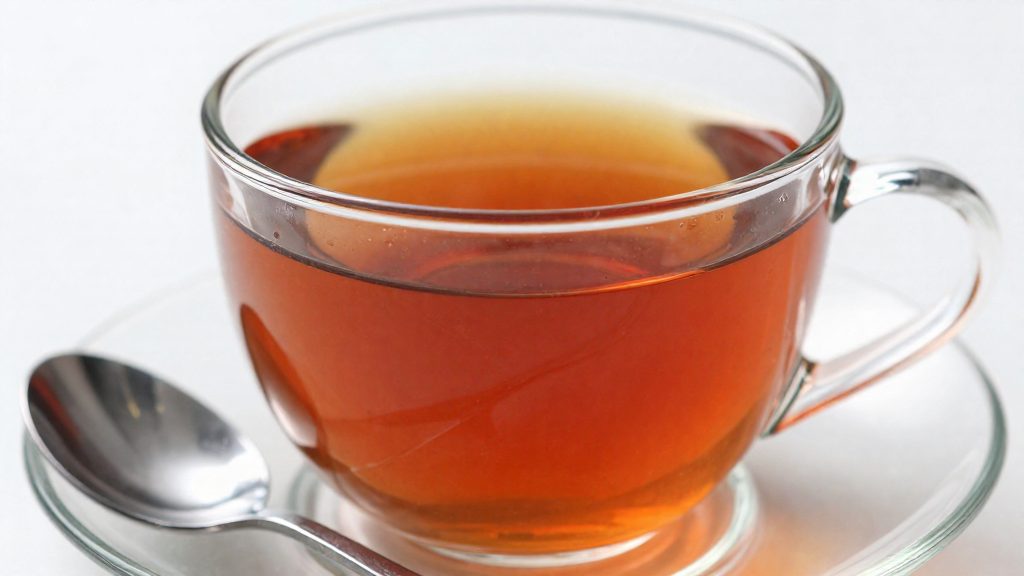
Leaf quantity and steep length are the two levers that most directly shift how strong a pu-erh tastes and how bitter it becomes in the cup.
Leaf Quantity and Steep Length
Chen Sheng Hao, in its guidance for pu-erh, states that more leaf or a longer steep produces a stronger, more bitter cup. Both variables work in the same direction.
| Adjustment | Effect on the cup |
|---|---|
| More leaf | Stronger, more bitter cup |
| Longer steep | Stronger, more bitter cup |
| Less leaf | Lighter cup with less bitterness |
| Shorter steep | Lighter cup with less bitterness |
Reducing Bitterness
When a cup tastes excessively bitter, Chen Sheng Hao recommends shortening the steep or reducing the amount of leaf. Change one variable at a time, so you can identify which adjustment solved the problem.
Adjusting Steep Length Between Rounds
Pu-erh is commonly brewed in multiple infusions from the same leaves. Successive infusions continue extracting compounds from the leaves, and adjusting steep length helps control the strength of each round. Judge each round by taste: if later rounds turn bitter, shorten the steep on the following round rather than adding more water or leaf.
Write Your Own Pu-erh Tasting Note
A repeatable tasting note works best when every session uses the same fields in the same order. Keep the record short: one line per field, written the same way each time. Over several sessions, the differences between teas become easier to spot than the differences in how you wrote them down.
Template fields
Record these five fields for each session:
| Field | What to note | Example entry |
|---|---|---|
| Aroma (dry leaf) | Smell the leaf before steeping | Honey-like, faintly floral |
| Aroma (infused) | Smell the wet leaf and the liquor | Woody, gently sweet |
| Taste | Main flavour impression on the first sip | Smooth, mild bitterness |
| Mouthfeel | Body and texture of the liquor | Thick, smooth |
| Aftertaste | What remains after swallowing | Sweet aftertaste following bitterness |
Mouthfeel and aftertaste help distinguish teas: aged raw (sheng) pu-erh is described as smoother and thicker than young raw tea, with softened bitterness.
Logging the brewing variables
Add three measurements to every entry, so that a change in the cup can be traced to a change in the brew:
- Leaf weight: grams of dry leaf, not a count of scoops.
- Water: volume and source, for example “120 ml, filtered tap water.”
- Steep time: seconds for each infusion, as the steep number changes across a session.
Write each change to the brew in the entry.
Keeping vocabulary consistent
Choose one word for each impression and reuse it. Record sweetness separately from honey-like aromas so that you can compare the same sensory qualities across sessions. Keep a short list of terms you have already used, and check new entries against it before saving.