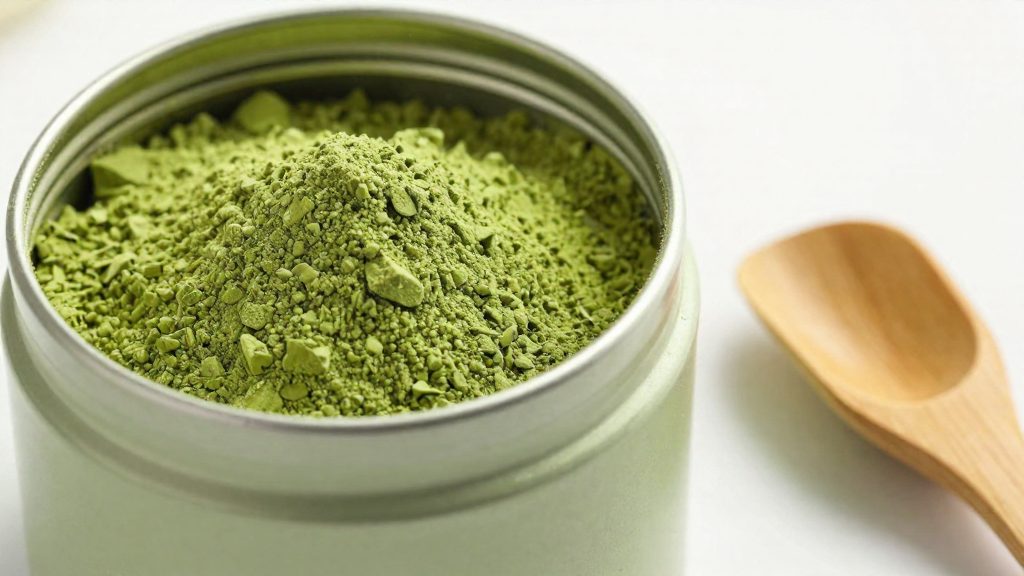
Opened matcha keeps its quality best in an opaque, tightly sealed container, kept away from sunlight, heat and strong odors, with as little air contact as possible. Ippodo Tea (2025) recommends this storage approach. Air exposure drives oxidation, which Jade Leaf Matcha US (2021) describes as dulling the vibrant green color and producing less pleasant, bitter notes. The three steps below address light, heat and odors, air contact, and daily handling.
How to Store Matcha After Opening
Block light, heat and strong odors
- Opaque container: Keep matcha in a container that blocks light. Ippodo Tea (2025) specifies opaque packaging.
- Away from sunlight: Choose a spot out of direct sun, such as a closed cupboard rather than a sunny windowsill.
- Away from heat: Keep the container clear of stoves, ovens, dishwashers and other heat sources.
- Away from strong odors: Store matcha away from spices, coffee, cleaning products and other strong-smelling items.
Limit air contact
Oxidation is the main quality risk once the tin is open. Keep the lid or closure fully sealed whenever the container is not in use, and avoid leaving it open while you measure. Transfer only what you need for a session rather than leaving the full container exposed on the counter.
Reseal after every scoop
Close the container immediately after each scoop, before you put it back in storage. Do not leave it open while you prepare tea.
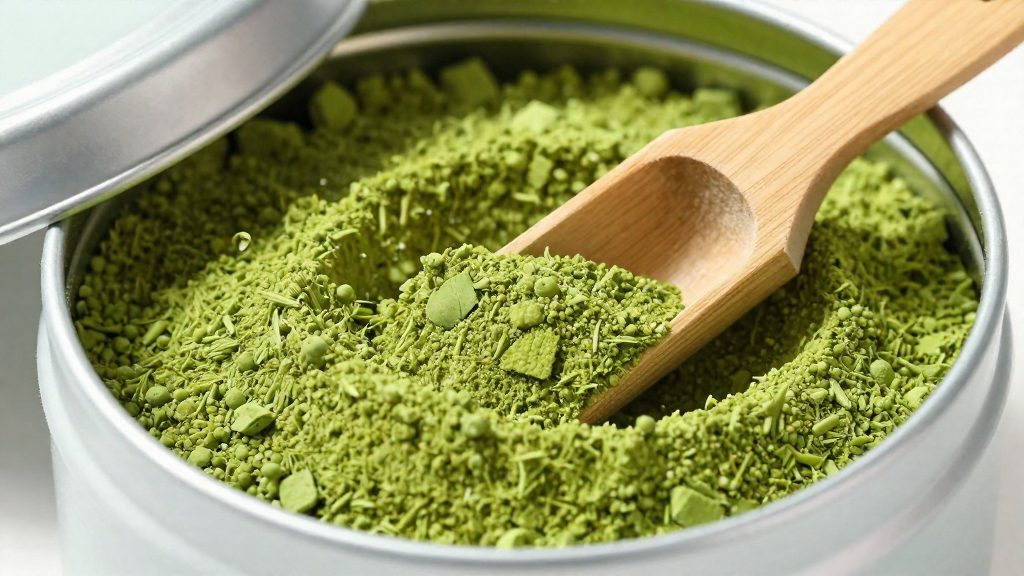
Which Container Keeps Matcha Fresh?
Opened matcha is best kept in an opaque, tightly sealed container, kept away from sunlight, heat and strong odors. Ippodo Tea recommends that, if the matcha came in an inner foil bag, you keep it in that bag between uses, rolled shut and clipped. The container matters because matcha is a very fine powder with a large surface area, so light, air and nearby smells reach it quickly once the seal is broken.
| Container option | What it does for opened matcha | Points to check |
|---|---|---|
| Original inner foil bag, rolled shut and clipped | Blocks light and keeps the powder inside the packaging Ippodo Tea designed for it | Roll the top down tightly after every scoop and clip it closed |
| Opaque, tightly sealed tin | Blocks light and resists the entry of outside odors when the lid seats properly | Confirm the lid closes fully and seals without gaps |
| Clear or translucent jar | Lets light reach the powder | Avoid for daily storage; keep it inside a dark cupboard if used |
Opaque, tightly sealed tin
According to Ippodo Tea (2025), the general rule for opened matcha is an opaque, tightly sealed container. Yamamasa Koyamaen Co., Ltd. notes that a poorly sealed container can let matcha absorb moisture and odors, so the lid is the part to inspect. Keep the tin in a cool, dark, dry place away from the stove and from spices or other strongly scented foods.
Original inner foil bag
If the matcha came in an inner foil bag, Ippodo Tea recommends keeping it in that bag, rolled shut and clipped between uses. Keeping the powder in its original packaging avoids transferring it to a new vessel, which means one less step where air or moisture can enter.
Minimising empty air space
Air around the powder is a source of oxidation. Jade Leaf Matcha US (2021) describes oxidation as causing matcha to lose its vibrant green color and develop less pleasant, bitter notes. To limit the air inside a container, use a tin or bag sized close to the amount you have left, and roll the foil bag down as the powder level drops.
Should You Refrigerate Opened Matcha?
Refrigeration is not a universal requirement for opened matcha. Jade Leaf Matcha US recommends refrigerating after opening in its FAQ (undated). Ippodo Tea (2025-03-11) recommends cupboard storage, and Yamamasa Koyamaen Co., Ltd. favors a cool, dark place for matcha you will drink quickly. Which option suits you depends on how well your container and your fridge protect the powder from moisture and odor absorption.
Moisture and odor risk inside a fridge
Yamamasa Koyamaen Co., Ltd. warns that a poorly sealed container in the refrigerator can let matcha absorb moisture and odors. A fridge is a humid, odor-rich environment, so the seal matters more there than in a dry cupboard. Ippodo Tea advises a tightly sealed, opaque container kept away from heat and strong odors, a rule that applies wherever you store the tin.
Strong odors on shared shelves
Refrigerator shelves are shared, so an opened tin placed beside onions, fish or spiced leftovers is exposed to those smells. Keep the tin on a shelf away from strongly scented foods, and check that its lid closes fully after each use.
Choosing between cupboard and refrigerator
| Placement | Source guidance | Main watch-out |
|---|---|---|
| Cool, dark cupboard | Matcha.com considers it suitable for an opened tin you will finish quickly; Ippodo Tea advises keeping it away from sunlight and heat | Heat and light exposure |
| Refrigerator | Jade Leaf Matcha US recommends it after opening (undated FAQ) | Moisture and odor absorption if the container is poorly sealed (Yamamasa Koyamaen Co., Ltd.) |
For most home drinkers, a cupboard suits a tin you will finish soon. If you choose the fridge, use a container that seals tightly and keep it away from strong food smells.
How Long Does Opened Matcha Last?
Ippodo Tea recommends finishing opened matcha within one month for its best taste (Ippodo Tea, 2025). Other sources give a longer window, so treat one month as the conservative target for vivid colour and fresh aroma rather than a hard cut-off. Once the tin is open, the clock starts running, so the amount you buy determines how much of the tin is still in good condition when you reach its last spoonfuls.
Best-Taste Window at a Glance
| Source | Recommended window after opening |
|---|---|
| Ippodo Tea (2025) | Within one month for best taste |
| Matcha.com | One to two months (undated) |
| Jade Leaf Matcha US | Two months (undated FAQ); three months (2021 article) |
The sources give different freshness windows; follow your producer’s instructions and use Ippodo’s one-month recommendation as a conservative best-taste target. Use the one-month figure as the safest planning point.
Storage Location for a Tin Finished Within a Month
Matcha.com considers a cool cupboard suitable for an opened tin that you will finish within a month (Matcha.com). The cupboard should be away from sunlight, heat and strong odours, and the tin should be tightly sealed and opaque, as Ippodo Tea (2025) advises. If you plan to keep the tin longer than a month, the other sources’ guidance on chilled or frozen storage applies, and that is covered in a separate section.
Matching Package Size to Drinking Frequency
Yamamasa Koyamaen Co., Ltd. advises buying package sizes that match your drinking frequency, because this limits quality loss from prolonged storage after opening. In practice:
- Daily drinkers: Choose a package based on how much matcha you use each day and the producer’s recommended freshness window.
- Occasional drinkers should buy a smaller tin, or portion the matcha into a small airtight container and keep the rest sealed.
- Reserve stock should stay unopened until needed, which keeps the larger quantity protected for longer.
Ippodo Tea (2025) also notes that matcha packed in an inner foil bag should stay in that bag, rolled shut and clipped between uses. Buy the size you will use within one month of opening, and check the manufacturer’s storage instructions on the label for the exact guidance on your product.
Prevent Moisture When Opening Chilled Matcha
Refrigerated or frozen matcha should reach room temperature before the lid comes off. Opening a cold tin exposes the powder to warm, humid air, which can form condensation on the inner surfaces and on the powder itself. Yamamasa Koyamaen Co., Ltd. identifies this condensation as a source of moisture-related quality loss. The sources give no fixed waiting time: leave the container sealed until the matcha inside has reached room temperature before opening it.
Warm before opening: Let the sealed container sit at room temperature before removing the lid. Opening a cold container exposes the matcha to moisture from warmer air; keep it sealed until it reaches room temperature.
Dry tools only: Keep water away from the powder during every scoop. Yamamasa Koyamaen Co., Ltd. warns that water droplets from wet hands or utensils can create hard chunks, which differ from the ordinary powder clumps that appear with age.
Hard chunks: Once water reaches the powder, these hard lumps can form and do not break up as normal clumps do. Use a clean, completely dry bamboo or stainless scoop each time, and return the lid immediately after scooping.
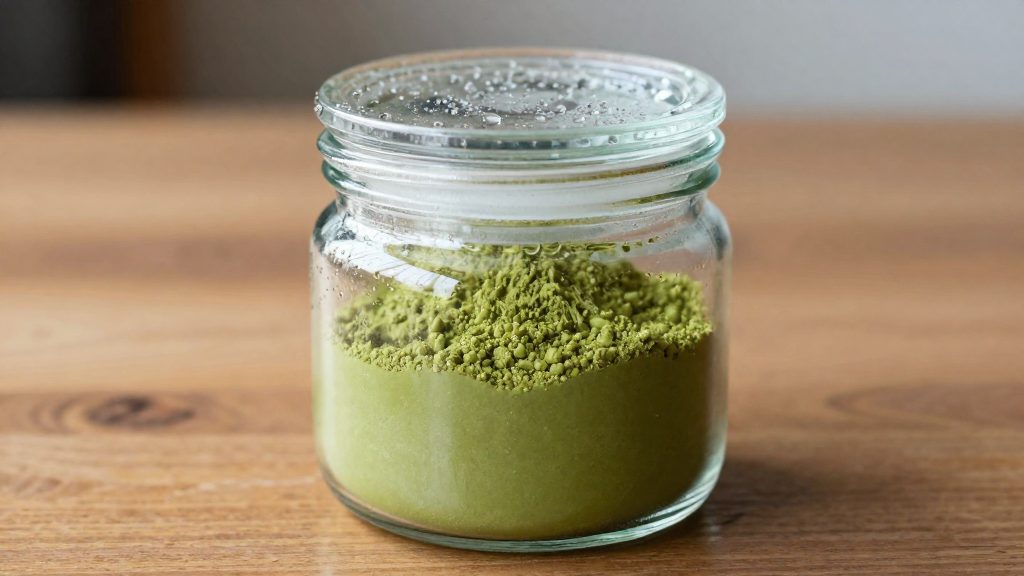
Can You Freeze Opened Matcha?
Freezing opened matcha is a storage option that some producers mention, but the answer depends on the product label and the producer’s own instructions. Matcha.com allows freezing for longer storage, while Yamamasa Koyamaen emphasizes keeping reserve stock unopened and avoiding condensation, so the method is best treated as conditional rather than default.
Check the label first. Manufacturer guidance differs between brands, and frozen-storage advice is not printed the same way on every tin or pouch. Before you freeze an opened container, read the instructions on the packaging or on the producer’s website.
Freezing Versus Other Storage Options
| Storage option | Source-backed point |
|---|---|
| Cool cupboard | Matcha.com considers it suitable for an opened tin that will be finished within a month. |
| Refrigerator | Jade Leaf recommends refrigerating after opening, while Ippodo recommends cupboard storage. |
| Freezer | Matcha.com permits freezing for longer storage; Yamamasa Koyamaen stresses avoiding condensation. |
Storage Duration Implications
Freezing is relevant only if you will not finish the tin within the freshness window. Ippodo recommends finishing opened matcha within one month for its best taste, and other sources give a range of one to three months, so the sources do not agree on a single figure. If you expect to use the tin slowly, buying a package size that matches your drinking frequency is the more reliable way to limit quality loss, according to Yamamasa Koyamaen.
Practical Handling Steps
- Keep the matcha in its opaque, tightly sealed container, or in the inner foil bag if the product came with one, rolled shut and clipped, as Ippodo recommends.
- Let the container reach room temperature before opening it, so condensation does not form on the powder.
- Keep wet hands and utensils away from the powder, because water droplets can create hard chunks.
Recognize Changes in Matcha Freshness
Oxidation shows up in opened matcha through two cues you can check at the moment you scoop: colour and taste. Fresh matcha has a vibrant green colour, and Jade Leaf describes oxidation as the process that makes matcha lose that vibrant green and develop less pleasant, bitter notes (Jade Leaf Matcha US, 2021-04-14). Judging both cues together gives a more reliable picture than either one alone.
Visual cues
- Colour shift: A powder that was bright green when the tin was opened and has dulled over time is showing the colour loss Jade Leaf links to oxidation. Compare it against a fresh sample or the colour on the product label rather than against memory.
- Uneven tone: Patches or a generally muted, greyish appearance across the powder are signs of the same colour loss, and are worth noting before you whisk.
Taste cues
- Bitterness: Oxidised matcha tends toward bitter, less pleasant notes, as described by Jade Leaf (Jade Leaf Matcha US, 2021-04-14). A bitter taste that was absent when the tin was new points to the same change.
- Flat or stale flavour: A loss of the fresh, grassy character you noticed on opening suggests the powder is no longer at its best.
What each cue means for brewing
| Cue | What it indicates | Practical response |
|---|---|---|
| Vibrant green colour | Little or no oxidation so far | Brew as usual, using your standard method |
| Dulled or greyish colour | Colour loss linked to oxidation | Taste before committing to a full bowl |
| Bitter, less pleasant notes | Oxidation has progressed | Use the powder for recipes where bitterness is less noticeable, such as milk-based drinks, or replace it |
Judging quality from colour and taste together
Check colour first, then taste a small amount of prepared matcha. If the color remains vibrant but the prepared matcha tastes bitter, check your preparation before attributing the change to storage; bitterness alone does not establish oxidation. If colour has dulled and the taste is already bitter, the oxidation cues point the same way, and the powder is past its prime for drinking straight. The sources do not provide a validated test that proves safety, so these cues judge freshness and taste only; check the package expiration date and the manufacturer’s instructions for any safety question.