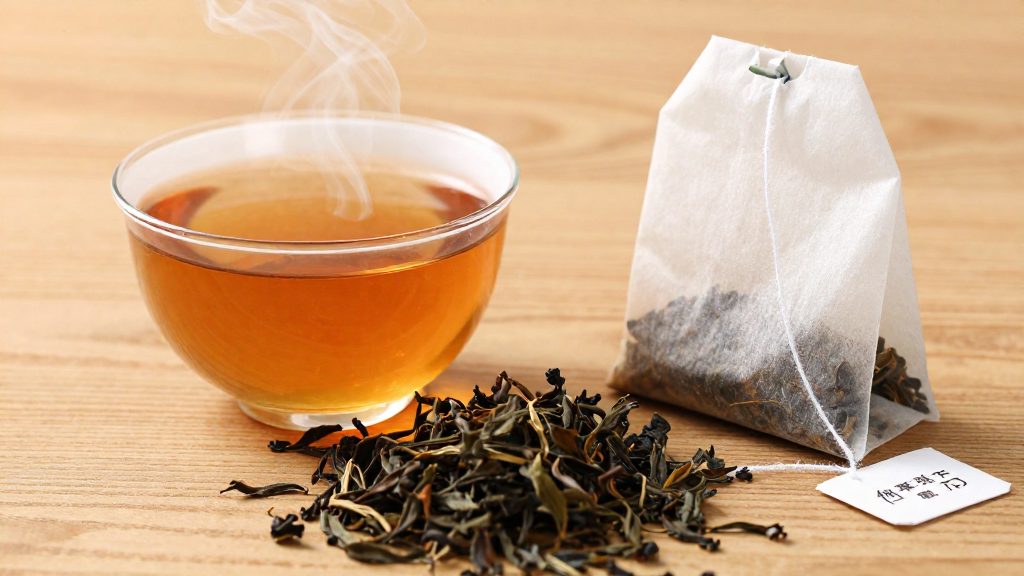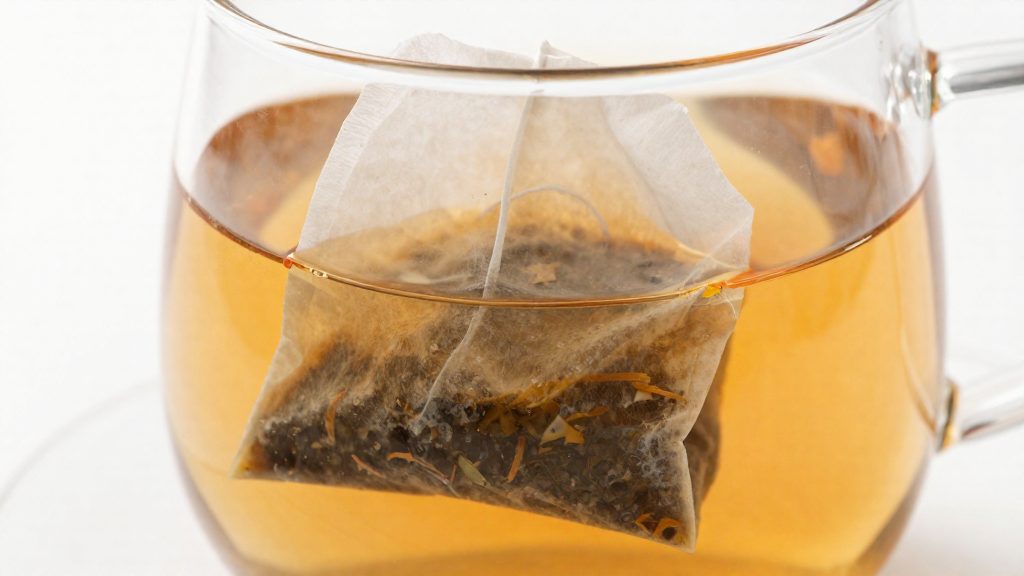
Tea bags do not have to contain tea dust. Harney & Sons states that its conventional teabags contain fannings but no dust (Harney & Sons, 2024-02-08). Fannings and dust are separate particle grades, and a United States federal specification for black tea excludes both from bagged and loose product. Whether a particular bag contains dust depends on the brand.
Are Tea Bags Made From Tea Dust?
What the Manufacturer States
Harney & Sons describes its conventional teabags as containing fannings but no dust (Harney & Sons, 2024-02-08). The statement is specific to that company’s conventional bags. It does not describe how other manufacturers fill theirs.
What the USDA Specification Excludes
USDA Commercial Item Description A-A-20033C, dated August 1, 2001, explicitly excludes fannings and dust from both bagged and loose black tea supplied under that specification (U.S. Department of Agriculture, 2001-08-01). This is a procurement document for black tea, so it defines what that supply may contain. It does not set rules for every tea bag sold to consumers.
| Source | Date | Product scope | Dust and fannings |
|---|---|---|---|
| Harney & Sons | 2024-02-08 | Conventional teabags | Fannings present, dust absent |
| U.S. Department of Agriculture, A-A-20033C | 2001-08-01 | Bagged and loose black tea under this specification | Both excluded |
Why Dust Is Often Assumed in Bags
Fine grades are produced together. Because the grades are close in size and come from the same line, a fine tea in a bag is easily taken to be dust.
Whole Leaves, Broken Leaves, Fannings, and Dust
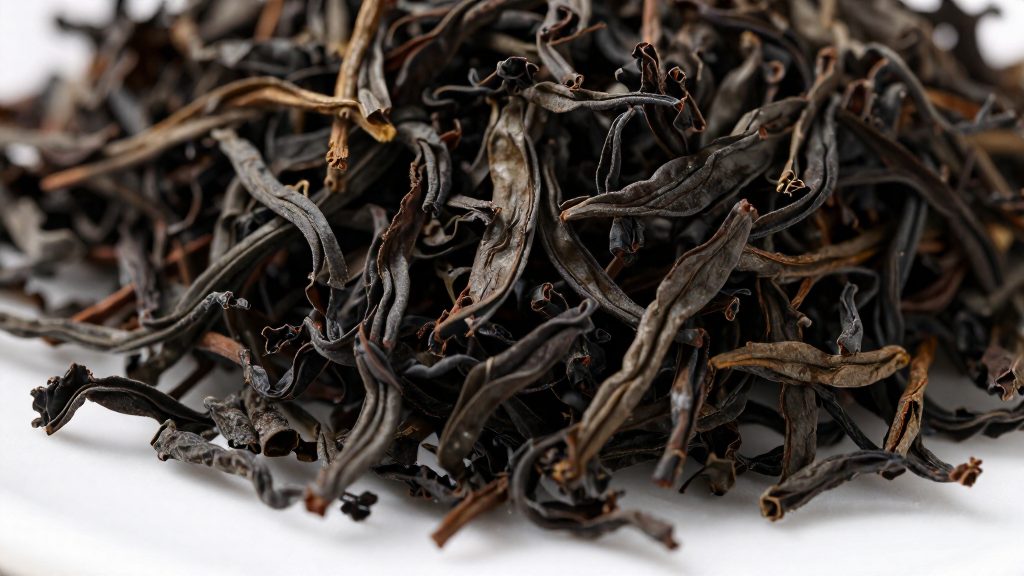
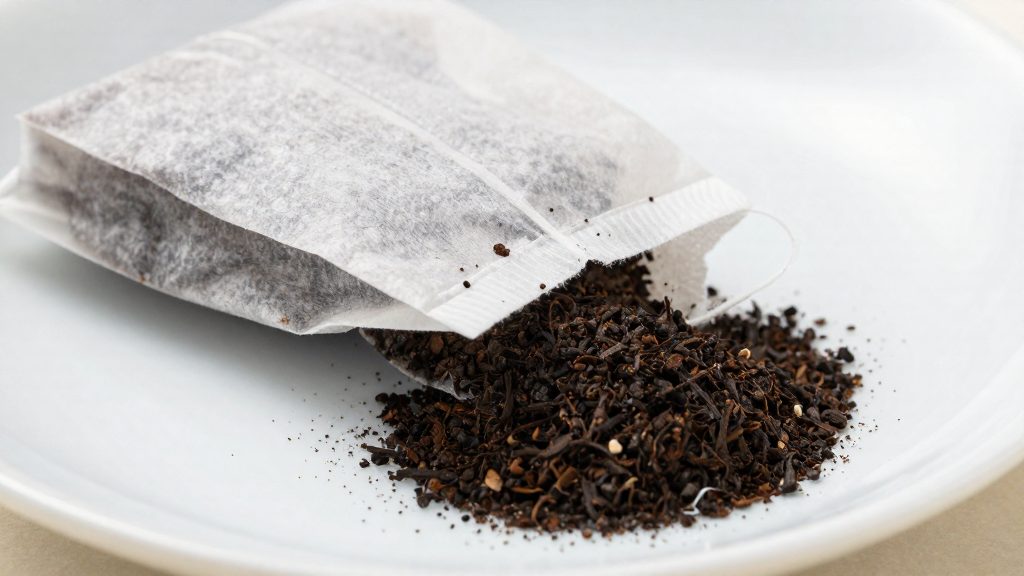
Tea leaves are classified by particle size, from whole leaves down to dust. Whole leaves are full, unbroken leaves. Broken leaves are smaller pieces. Fannings are finely broken pieces, and dust is a finer powder than fannings. The United Nations Conference on Trade and Development (2016) states that tea manufacture produces different leaf sizes, which are sorted into grades.
Whole leaves
Whole leaves are intact leaves that have not been reduced in size.
Broken leaves, fannings, and dust
Broken leaves, fannings, and dust are all produced by deliberately reducing leaf size.
| Particle size | Physical form | Infusion behaviour |
|---|---|---|
| Broken leaf | Leaf pieces smaller than whole leaves | — |
| Fannings | Finely broken pieces of leaf | Finer than broken leaf, so smaller particles and a shorter steep |
| Dust | Powder finer than fannings | The finest grade of the set |
Sorting by size
Particle sizes are separated after manufacture using methods that include graduated mesh sifters: stacked screens with progressively finer openings. Leaves pass through the screens and are caught at the mesh that matches their size. UNCTAD (2016) lists this as one of the sorting methods used in grading.
How Tea Bag Leaves Are Processed
Cutting-Tearing-Curling (CTC) machines are the step that most deliberately shrinks the leaf.
Stages of CTC Processing
CTC is named for its three actions: cutting, tearing, and curling. Each action produces more small particles, so the proportion of fine material is set by the machinery and the processing choices made at the factory.
Separating Grades by Mesh
Each mesh opening retains a range of particle sizes, so the output forms distinct streams.
| Grade | Relative size | Notes |
|---|---|---|
| Whole leaf | Largest | Retained on the coarsest mesh |
| Broken leaf | Smaller than whole leaf | — |
| Fannings | Finely broken pieces | Finer than broken leaf |
| Dust | Finest powder | — |
Filling Sachets from Sorted Streams
Packing lines draw from these separate grade streams. The grade inside a bag is therefore set at the filling stage, not by the bag format itself.
Can Tea Bags Contain Whole Leaves?
Yes. A tea bag is a container, and the leaf material inside determines whether the leaves are whole or cut. Harney & Sons states that many of its pyramid sachets contain full tea leaves (Harney & Sons, February 2024), so bagged tea is not limited to small particles.
Pyramid Sachets Holding Full Leaves
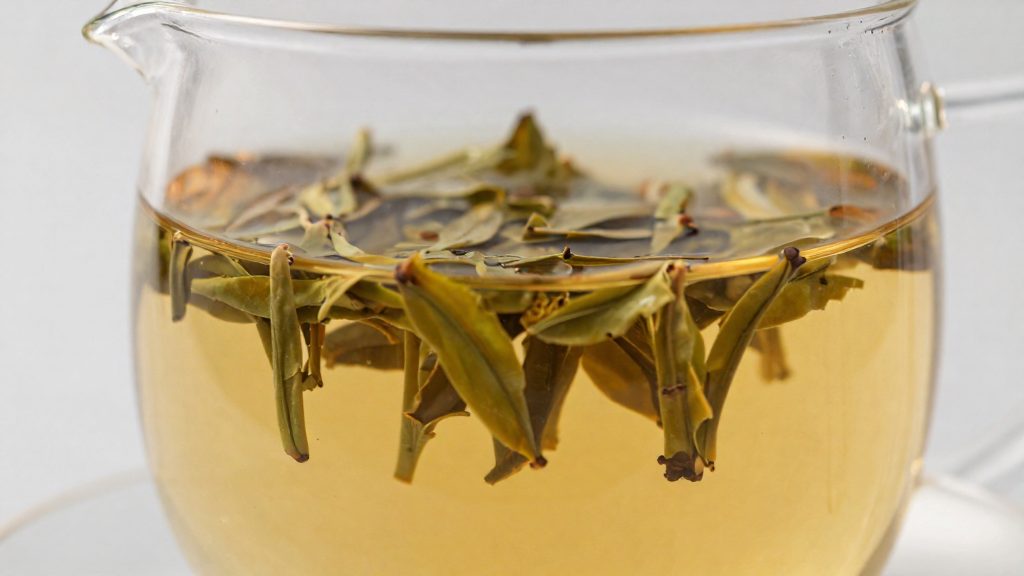
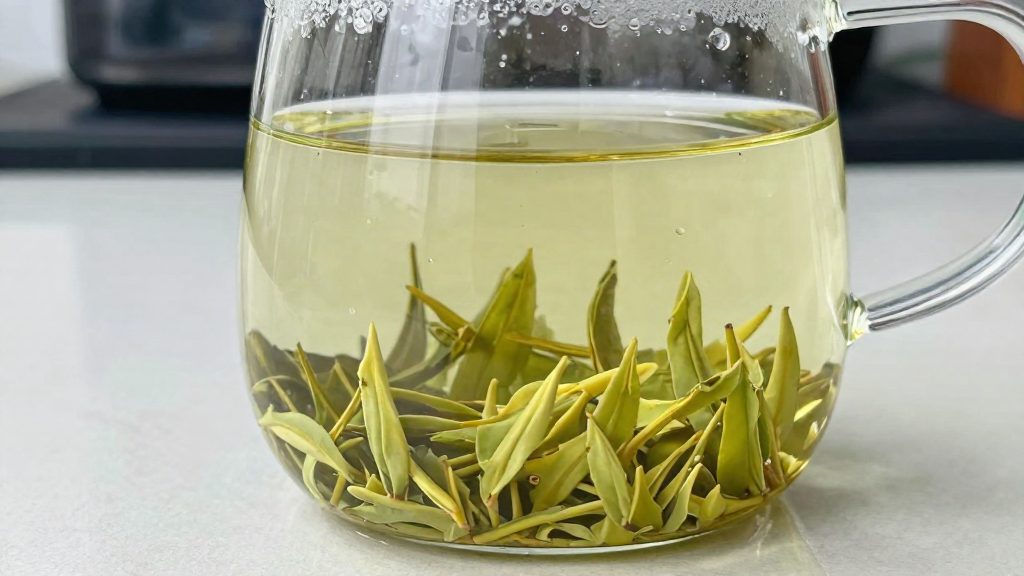
A pyramid sachet is a three-dimensional bag. Its shape gives whole leaves more interior space than a flat square bag offers, so the leaves have room to expand and move when water enters. Whole leaves are also larger than fannings, so they fill the bag differently and can be seen when the bag is opened.
Full-Leaf Versus Cut-Leaf Tea in Bags
The two styles differ in the material inside the bag:
| Bag format | Leaf material | Source |
|---|---|---|
| Pyramid sachet (many Harney & Sons products) | Full tea leaves | Harney & Sons (February 2024) |
To compare a bag with loose tea, open one and check the contents. Whole leaves stay visibly intact, while cut leaf appears as small, uniform fragments. Compare the bag contents with a loose sample of the same tea if the manufacturer offers one.
Reading Bag Labels for Leaf Style
Look for leaf-style wording on the front of the package or in the product description, such as “whole leaf” or “full leaf”. If the label names only the tea type and gives no leaf-style term, check the manufacturer’s product page or contact the manufacturer directly.
Does Leaf Size Determine Tea Quality?
No. According to the United Nations Conference on Trade and Development (2016), a tea’s particle-size grade does not necessarily indicate its flavor or quality. Size reflects how the leaf was processed and sorted, while the character of the cup depends on several other factors that a grade does not show.
What the grade does record
Manufacturers produce leaves of different sizes and sort them into grades (UNCTAD, 2016). A grade therefore describes the cut size of the particles. It does not describe how the tea was grown, harvested or made.
Factors that shape the cup
UNCTAD (2016) names origin, variety, growing conditions, harvest and manufacture as factors that also matter. Each one can change the cup independently of size:
- Origin: the region where the tea plant grows.
- Variety: the plant type, which affects the leaf’s aroma and flavor potential.
- Growing conditions: the climate and soil the plant grows in.
- Harvest timing: the point in the season when leaves are picked, which changes the chemistry of the leaf.
- Manufacture: the processing steps applied after picking.
Two teas with the same grade can therefore taste very different. Two teas of different grades can also have similar character if their origin, variety and processing are alike.
Processing and particle size
Particle size is often a result of processing. A small particle size tells you that a cutting method was used, not how that method compares with other processing routes in terms of flavor.
Why Smaller Tea Leaves Brew Faster
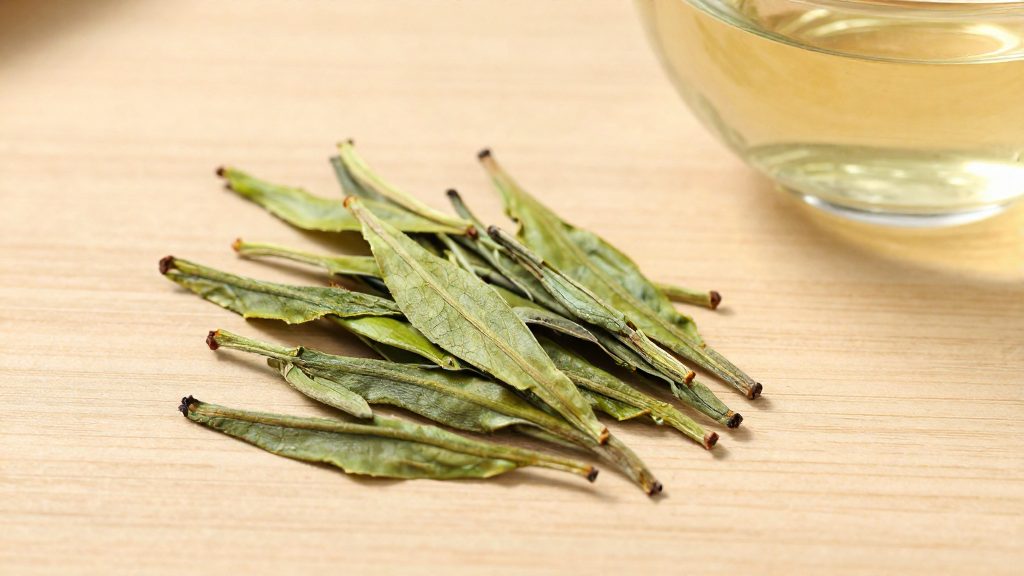
Smaller tea leaves brew faster because water contacts more of their material at once. Extraction happens at the leaf surface, where dissolved compounds move from the leaf into the surrounding water. Breaking or cutting a leaf increases its surface area relative to its weight, so the same amount of tea presents more surface to the water. Harney & Sons states that broken leaves infuse faster than whole leaves (2024), which fits this geometry.
How Leaf Form Affects Extraction Rate
| Leaf form | Surface exposed to water | Expected extraction speed |
|---|---|---|
| Whole leaf | Lowest | Slowest, because water must work through intact tissue |
| Broken leaf | Higher | Faster, as stated by Harney & Sons (2024) |
| Fannings and dust | Highest | Fastest, by the same mechanism |
The last row is an inference from surface area, not a measured result. Fannings and dust are finer than broken leaves, so the reasoning applies to them, but published timing figures for these grades were not located.
Adjusting Steep Time for Fine Grades
Fine grades generally extract faster than whole leaves under comparable conditions, so begin with the package instructions and adjust the steep time to taste. Specific reductions depend on the tea type, water temperature and leaf quantity. Use the manufacturer’s instructions as a starting point, then adjust:
- Begin at the shorter end of the range printed on the package.
- Taste at set intervals, noting the time of each cup.
- Remove the leaves or bag from the water as soon as the flavour reaches the strength you want.
- Keep a short log for each tea, since a fine grade and a whole-leaf tea from the same producer may need very different times.
Choosing Between Loose Tea and Bags
Loose leaf gives you control over leaf size, dose, steep time, and the number of infusions, at the cost of an infuser and more cleanup. Bags give you a pre-measured cup with almost no cleanup, but you have less say in what the bag contains and how many times it can be steeped. Choose by how you brew: loose leaf suits repeated steeps and careful tasting, while bags suit quick, consistent cups.
Leaf Integrity
Loose leaf lets you see the leaf before it goes in the water, so you can judge its size, colour, and condition. Bagged tea is enclosed, so you can only check the label. Bag contents vary by brand.
Flexibility for Multiple Infusions
Loose leaf can be steeped several times. You decide how long each infusion runs and can extend the time for later steeps as the leaf releases less flavour. A single bag is usually made for one cup, so re-steeping it gives a much weaker result, and the bag is typically discarded after one use.
Bag Convenience and Single-Serve Portioning
A bag gives you the same dose every time, which makes it practical for offices, travel, and brewing a single cup without measuring. With loose leaf, you measure the dose yourself with a spoon or a scale, and the amount you use changes the cup’s strength.
Infuser Choice for Loose Leaf
The infuser determines how much room the leaf has and how easily you can clean up afterward.
| Infuser type | Leaf room | Cleanup |
|---|---|---|
| Open basket | High; leaves can spread out | Tip the leaf out and rinse the basket |
| Mesh ball | Limited; leaves are confined | Empty the ball and rinse it |
| Teapot strainer | Depends on the pot; leaves float freely | Strain the leaves out and rinse the strainer |
| Gaiwan with lid | Open; leaves spread across the bowl | Pour the leaves out and rinse the bowl |
Choose an infuser that leaves room for the leaf to expand, especially for whole-leaf teas you plan to steep more than once.
Decision Framework
- Choose loose leaf if you want to re-steep the same leaves, adjust the dose and time, or inspect the leaf before brewing.
- Choose bags if you want a fixed dose per cup, minimal cleanup, or a portable option.
- Choose loose leaf with an open infuser if you want the most room for the leaf to expand.