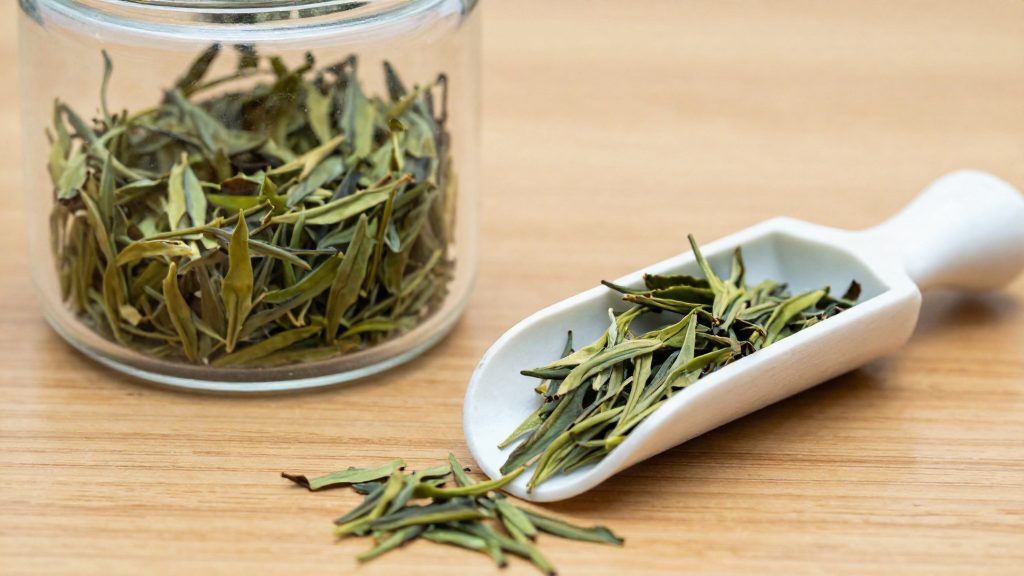
How Long Does Green Tea Stay Fresh?
Hibiki-an, a Japanese green tea producer, gives two shelf-life windows for its unopened packages: six months stored in a dark place below 68°F (20°C), and one year if refrigerated. These figures apply only to Hibiki-an’s own products. No universal freshness period for all loose leaf green tea was established by the sources used here, so treat other brands’ dates as unverified until the manufacturer confirms them.
How Long Does Green Tea Stay Fresh?
Shelf-life windows by storage state
| Storage state (unopened Hibiki-an packages) | Window stated by Hibiki-an | Conditions |
|---|---|---|
| Room storage in a dark place | Six months, ideal freshness | Below 68°F (20°C) |
| Refrigerated, for longer storage | One year | Unopened packages only |
Hibiki-an recommends refrigeration only for unopened packages of its green tea. Once a package is opened, the company’s refrigerated window does not apply, and no opened-package window is given in the sources used here.
Reading a harvest date against the window
Many packages print a date, but its meaning varies. Before applying a window, confirm what the date marks: harvest, packing, or a best-by date. Hibiki-an’s windows do not specify their starting point in the sources used here.
- Find the printed date on the package or tin.
- Confirm with the manufacturer whether it is a harvest, packing, or best-by date.
- Apply a shelf-life window only if the manufacturer confirms both its starting point and its storage conditions; do not add it to a harvest, packing, or best-by date without that confirmation.
- Compare the result with today’s date.
For example, a package dated 1 March 2026 that is kept unopened in a dark place below 68°F (20°C) reaches the six-month mark on 1 September 2026. This is arithmetic applied to Hibiki-an’s figure, not a guarantee for that tea.
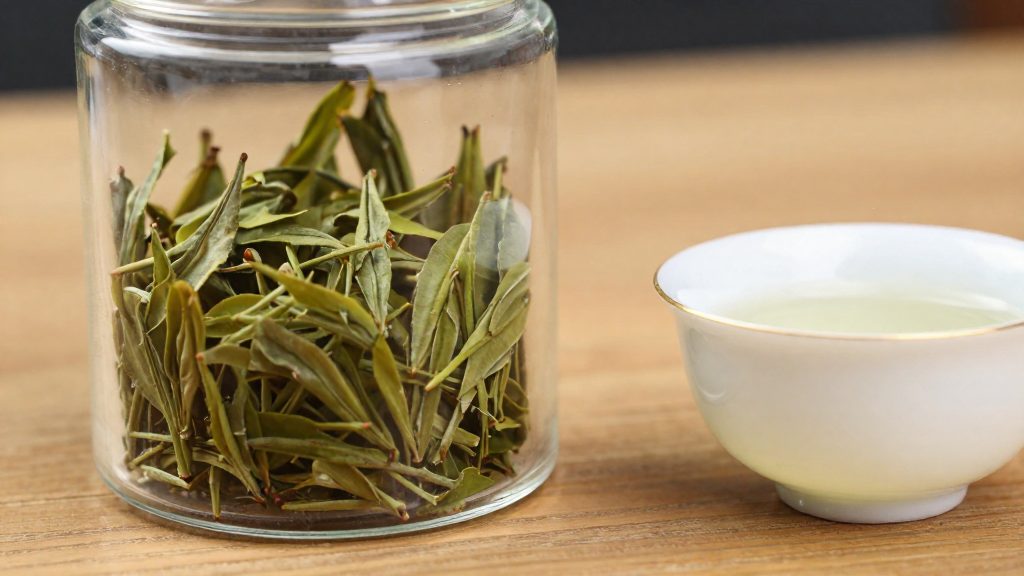
Choose an Airtight, Opaque Container
Light, oxygen, and moisture are the three main threats a tin has to block. According to Rishi Tea & Botanicals, an opaque, airtight, moisture-resistant container helps protect tea from sunlight, oxygen, and moisture. Each feature addresses one of these threats, so a tin should meet all three requirements.
| Feature | What it protects against | Source |
|---|---|---|
| Opaque body | Sunlight | Rishi Tea & Botanicals |
| Airtight lid or seal | Oxygen | Rishi Tea & Botanicals |
| Moisture-resistant material | Moisture from the air | Rishi Tea & Botanicals |
| Little unused space inside | Air exposure within the container | Hibiki-an |
Check the lid when you buy a tin. A lid that sits loosely or lets air in around the rim fails the airtight requirement, even if the body is opaque.
Minimize Headspace
Headspace is the empty air between the leaves and the lid. Hibiki-an recommends a container with little unused space to limit how much air the green tea is exposed to. As the tin empties, the headspace grows. Move the remaining leaves into a smaller tin, or into a smaller airtight container, so the leaves fill most of the volume. This is a practical step you can take without buying a new tin for every batch.
Wash and Dry Tins Before Refilling
Any moisture left in a tin can reach the leaves. Rishi Tea & Botanicals advises that tea tins should be allowed to dry completely after washing before being refilled. Wash the tin with warm water, dry it fully with a clean cloth, then leave it open until no moisture remains. Clean the tin before reuse, since Hibiki-an describes a clean, odor-free container as the baseline for green tea storage.
Keep Tea Cool, Dry, and Odor-Free
Store loose leaf green tea in a cool, dry pantry or cupboard, away from light, heat, and strong smells. Rishi Tea & Botanicals recommends this placement for tea tins. Hibiki-an gives a specific temperature limit: its unopened Japanese green tea keeps ideal freshness for six months in a dark place below 68°F (20°C).
Placement Guidance by Factor
Harney & Sons (2019-10-03) lists light, high temperatures, humidity, oxygen, and surrounding odors as factors that reduce the quality of stored loose leaf tea. The table below maps each factor to a practical placement choice.
| Factor | What the sources say | Practical placement |
|---|---|---|
| Temperature | Dark place below 68°F (20°C) for Hibiki-an’s unopened products | Interior cupboard, not beside an oven, stove, or other heat source |
| Light | Light reduces quality (Harney & Sons, 2019-10-03) | Closed cupboard, not a sunny windowsill or open counter |
| Humidity | Humidity reduces quality (Harney & Sons, 2019-10-03); a dry pantry is recommended (Rishi Tea & Botanicals) | Dry shelf, away from the sink, dishwasher, and kettle steam |
| Odors | Surrounding odors reduce quality (Harney & Sons, 2019-10-03) | Separate shelf from spices, cleaning products, and other strong-smelling items |
Separating Tea From Strong Odors
Tea absorbs smells from its surroundings, so keep it apart from spices such as curry powder, cumin, and cinnamon, and from cleaning products. A shared shelf is only acceptable if the tea sits inside a closed container and nothing else on that shelf gives off a strong scent.
Store Opened and Unopened Tea Differently
A sealed package and an opened tin carry different risks. The seal keeps air contact to a minimum until you open it, so the handling that matters most begins at first use. According to Harney & Sons (2019), light, high temperatures, humidity, oxygen and surrounding odors can all reduce the quality of stored loose leaf tea. Each time a tin is opened, its leaves meet fresh air, so the practical goal is to open the container as rarely as possible and reseal it at once.
| Aspect | Sealed package | Opened tin |
|---|---|---|
| Air contact | Limited to the package’s intact seal | Every opening exposes the leaves to surrounding air |
| Container | Manufacturer’s packaging | Airtight, opaque, moisture-resistant container (Rishi Tea & Botanicals) |
Limiting how often the tin is opened
- Scoop only what you need, then close the lid immediately.
- Choose a container with little unused space, as Hibiki-an recommends, so less air sits above the leaves.
Reading the manufacturer’s sealed-package instructions
Check the label or the manufacturer’s storage instructions for the specific tea you bought. If they are missing or unclear, contact the manufacturer directly before choosing a storage method.
Should You Refrigerate or Freeze Green Tea?
Refrigeration is not a universal storage method for loose leaf green tea, and the sources differ on it. Hibiki-an recommends refrigerating unopened packages of its own Japanese green tea for longer storage. Harney & Sons generally discourages refrigerator storage but allows a possible long-term exception. Tezumi recommends freezing unopened green tea, but no manufacturer or official source confirms that claim, so check the product label before trying it.
| Source | Advice | Scope or status |
|---|---|---|
| Hibiki-an | Refrigerate unopened packages for longer storage | Applies to its own green tea products and packaging |
| Harney & Sons | Generally discourages refrigerator storage, with a possible long-term exception | General guidance on storing tea |
| Tezumi | Freeze unopened green tea | Not independently confirmed by a manufacturer or official source |
Refrigerating unopened packages
Hibiki-an limits its refrigeration advice to sealed packages.
Freezing claims
Tezumi’s freezing recommendation applies to unopened green tea only. The source does not establish a universal freezer temperature or a method that protects leaves from moisture.
Let Cold Tea Warm Before Opening
Refrigerated loose leaf green tea needs a warm-up step before the package is opened. Harney & Sons (2019-10-03) notes that opening a container of cold tea can cause moisture from the surrounding air to condense on the leaves. Hibiki-an, a Japanese green tea seller, recommends keeping the package unopened until it reaches room temperature, so that condensation does not affect the quality of the tea.
Keep the Package Sealed Until It Reaches Room Temperature
After you take green tea out of the refrigerator, leave the package sealed on the counter until its temperature matches the room. Hibiki-an gives this as its guidance for its own packaging. The sealed wrapper keeps the cold leaves isolated from the humid room air during the warm-up.
Room temperature is the reference point, not a set time. The warm-up length depends on how cold the package was and how thick the wrapper is, so check the package itself rather than counting minutes.
Check the Outside of the Package for Condensation
Before you open the package, look at its exterior. Moisture beading or a film on the outside of the wrapper or tin means the package is still colder than the surrounding air. Keep the package sealed until the entire package and its contents have reached room temperature; a dry exterior alone does not establish that the leaves inside have warmed sufficiently.
Buy Quantities You Can Use Fresh
The simplest way to keep loose leaf green tea from going stale is to buy only what you will drink within its useful life. A larger tin may cost less per gram, but compare unit prices and buy only an amount you expect to use while fresh. Calculate your consumption before you buy.
Estimate how fast you will finish a tin
Use this estimate:
Days to finish = leaf weight in grams ÷ (cups per day × grams per cup)
| Input | Where to get it |
|---|---|
| Leaf weight | Net weight printed on the package |
| Cups per day | A one-week log of the cups you actually brew |
| Grams per cup | Weigh your usual dose on a kitchen scale |
- Count only the cups you brew now. Tea you plan to drink “someday” should not count.
- Use your own dose, not a generic one. For this estimate, count only cups brewed with a fresh dose of leaves; additional infusions of the same leaves do not consume another dose.
- Aim to finish a little before the result, which leaves room for slow weeks.
Split a large purchase into smaller portions
When a supplier sells a big quantity, divide it into several airtight containers, each sized to the period you calculated. Fill them from the bulk package and keep the spares sealed until a container is empty. Choose container sizes that match your estimate, not the size of the bulk package.