Hong Kong Milk Tea at Home: Method, Tea Choice and Milk Ratios
Hong Kong-style milk tea is a strongly brewed, creamy black tea that can be served hot or iced, according to The Kitchn (2024-01-20). Its identity comes from two features: a concentrated tea base and a rich, concentrated milk, rather than a light brew with a splash of milk. The drink is distinct from British-style milk tea, which uses a different balance of tea strength and milk.
What Is Hong Kong Milk Tea?
Defining traits
- Strong brew: The base is brewed strongly enough to hold its flavour once milk is added. In Magimix’s appliance-specific recipe, 20 g of loose black tea is combined with 600 g of boiled water, a ratio of about 1:30 by weight.
- Creamy texture: The body comes from concentrated milk. Magimix’s recipe uses 250 g of evaporated milk.
Comparison with British-style milk tea
British-style milk tea is usually made by adding fresh milk to a brewed tea. Hong Kong-style milk tea differs in two ways: the tea is brewed stronger, and the milk is concentrated before or during blending. The two drinks should not be treated as interchangeable, because the same cup will taste noticeably different depending on which approach is used.
Serving styles
| Serving | Defining feature |
|---|---|
| Hot | The brewed, milk-blended tea is served directly |
| Iced | The prepared drink is poured over ice |
Which Black Tea Works Best?
The Kitchn (2024-01-20) recommends Ceylon or orange pekoe black tea for Hong Kong-style milk tea, in either loose leaf or tea bag form. Ceylon identifies the tea’s origin in Sri Lanka, while orange pekoe identifies a leaf grade; a Ceylon black tea can also be orange pekoe. The same source advises against overly perfumed teas for this recipe.
Ceylon and orange pekoe are not interchangeable terms. The Kitchn lists them together, but the label is the reliable guide to what you have in the pack. Check it before you buy.
Strength, malt character and floral aroma vary from tea to tea and producer to producer, so compare them directly rather than relying on a general rule. Assam is a common black tea you can test the same way: brew it with your usual method, then taste it beside a Ceylon or orange pekoe. Note which one stands up better to milk and sugar.
| Tea choice | Source | Practical note |
|---|---|---|
| Ceylon | The Kitchn (2024-01-20) | Recommended for this recipe |
| Orange pekoe | The Kitchn (2024-01-20) | Recommended for this recipe; check the label, as it is not the same as Ceylon |
| Earl Grey | Archan Chan’s cookbook excerpt | Included in a different recipe; The Kitchn advises against overly perfumed teas |
Perfumed teas. The Kitchn’s advice against overly perfumed teas and the Earl Grey choice in Archan Chan’s excerpt reflect different recipe decisions, not one agreed standard. If you test a scented tea, brew it alone first, then with milk, so you can judge whether the perfume still comes through once the milk is added.
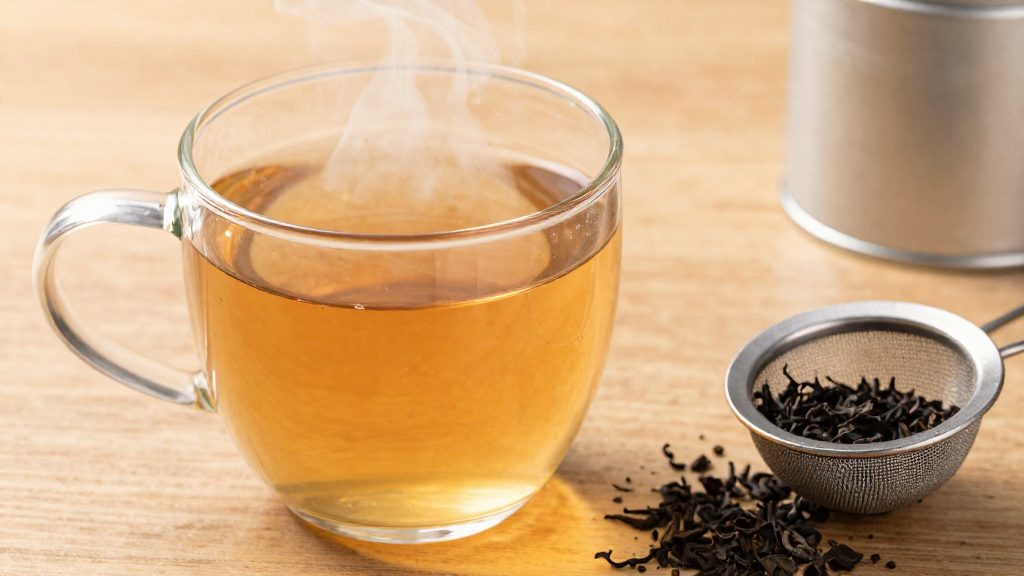
Loose leaf versus bags. Both formats are accepted for this recipe. Bags are the simpler option and need less measuring. Loose leaf lets you choose the exact grade and origin, and you can open the pack to check the leaf before brewing.
Evaporated Milk Versus Condensed Milk
Evaporated milk and sweetened condensed milk are not interchangeable in a Hong Kong-style milk tea recipe. Evaporated milk contains no added sugar, while sweetened condensed milk contains added sugar, so swapping one for the other changes both the sweetness and the body of the drink. Carnation advises against substituting one directly for the other (Nestlé CARNATION). Read the label before you buy: the two products are often shelved together and look similar.
Sugar Content and Sweetness
The difference comes down to whether sugar has been added. The table below shows how the two products compare on the points that matter for this recipe.
| Feature | Evaporated milk | Sweetened condensed milk |
|---|---|---|
| Added sugar | None | Yes |
| Sweetness in the finished tea | Set by the sugar you add separately | Set by the sugar already in the can |
| Control over sweetness | Full, through added sugar | Limited, because the sugar level is fixed by the product |
Because evaporated milk contains no added sugar, you can adjust the drink’s added sweetness separately; the milk still contains naturally occurring sugars. With sweetened condensed milk, the sugar is already in the can, so the drink ends up sweeter and harder to adjust.
Reduced Whole Milk and Cream Base
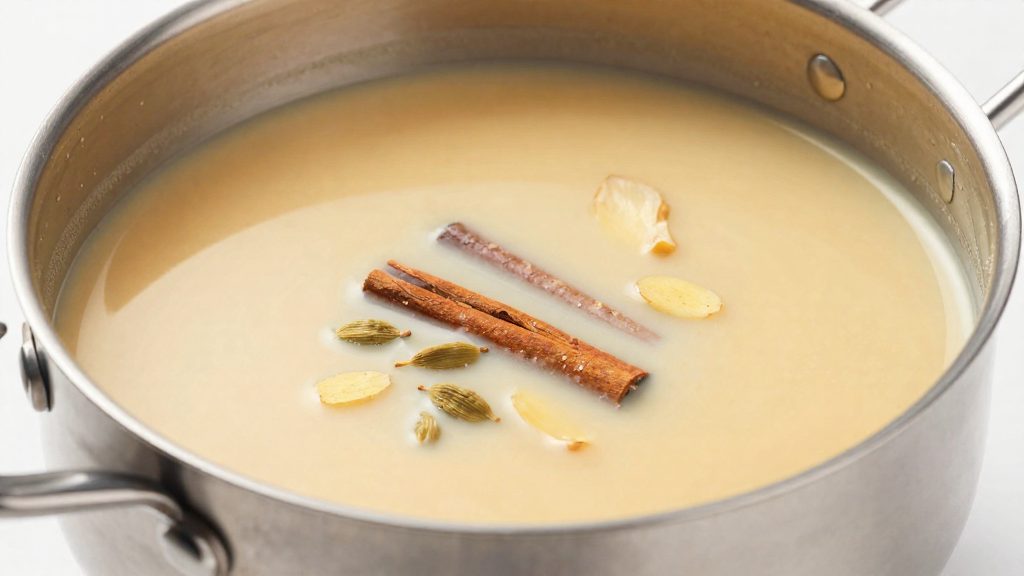
If you cannot find evaporated milk, The Kitchn offers an alternative. Reduce whole milk, heavy cream, sugar and salt on the stove until you have a concentrated milk base, then blend that base with the strained tea (The Kitchn, 2024-01-20). This route gives you a creamy, rich result without using canned milk, and the sugar and salt in the base are added by you, not by a manufacturer.
Ingredients and Equipment
Batch quantities
The two published recipes below use different methods and different amounts. Use one recipe as written rather than mixing their quantities.
| Source | Black tea | Water |
|---|---|---|
| Magimix (appliance recipe) | 20 g loose black tea | 600 g boiled water |
| The Kitchn (2024) | 12 black tea bags, or 1/2 cup loose black tea | 5 cups |
The Magimix appliance recipe uses 250 g evaporated milk with 600 g water and 20 g tea. For the separate stovetop adaptation, The Kitchn uses 2 cups whole milk, 1/2 cup heavy cream, 1/2 cup granulated sugar and 1/4 teaspoon kosher salt, reduced to 1 cup before blending with the strained tea brewed from 5 cups water. These are separate recipe formulations, not a universal milk-to-tea ratio.
Pot and kettle requirements
- Kettle: The Magimix recipe calls for 600 g of boiled water, so the kettle should boil at least that amount in one batch. Weighing the water is more precise than estimating from the kettle’s markings.
- Pot: The Kitchn’s method simmers 5 cups of water before the tea steeps off the heat. The pot must therefore hold at least 5 cups with room to spare so the water does not boil over.
Refrigerating opened evaporated milk
Nestlé CARNATION recommends the following for opened evaporated milk:
- Refrigerate it promptly after opening.
- Keep it covered, or transfer it to an airtight container.
- Use it within a few days.
How to Make Hong Kong Style Milk Tea
The stovetop method is built around one principle: extract the tea first, then combine it with milk. The Kitchn’s home adaptation (2024) simmers the mixture for 5 minutes, then steeps it off the heat for 10 minutes before straining.
Simmer, Steep, Strain
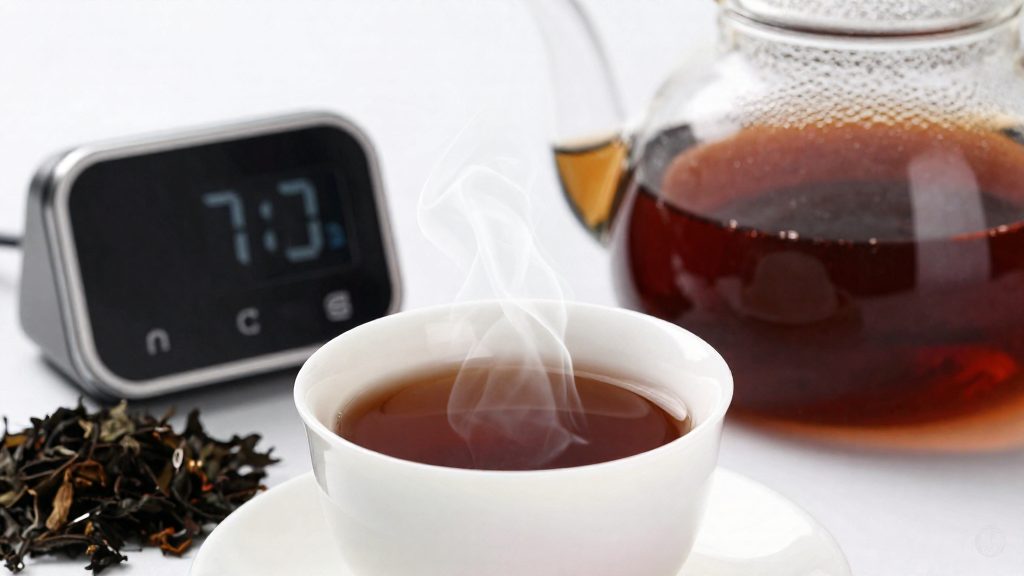
- Simmer. Bring the water and tea to a simmer and hold it there for 5 minutes. Simmering extracts the strong, dark body the style depends on.
- Steep. Remove the pot from the heat and let the tea steep for 10 minutes. Steeping off the heat avoids continuing to boil the leaves.
- Strain. Pour the liquid through a fine strainer to remove loose leaves or bag material before adding any dairy.
Combining Tea and Milk
Add the milk only after the tea is strained. For The Kitchn’s stovetop adaptation, prepare the sweetened, reduced milk base separately, blend it until smooth, then add the strained tea and blend again on low speed. Follow the separate mixing and straining sequence if using Magimix’s appliance recipe.
Blending With Evaporated Milk and Sugar
Evaporated milk is the common choice in this style. If you want sweetness, add sugar separately and adjust to taste.
For the home method, the Magimix recipe for its appliance uses a different measure set: 20 g of loose black tea, 600 g of boiled water, 250 g of evaporated milk and 60 g of white sugar. These figures belong to that appliance-specific method and should not be applied to the stovetop steps above.
Do You Need a Tea Sock?
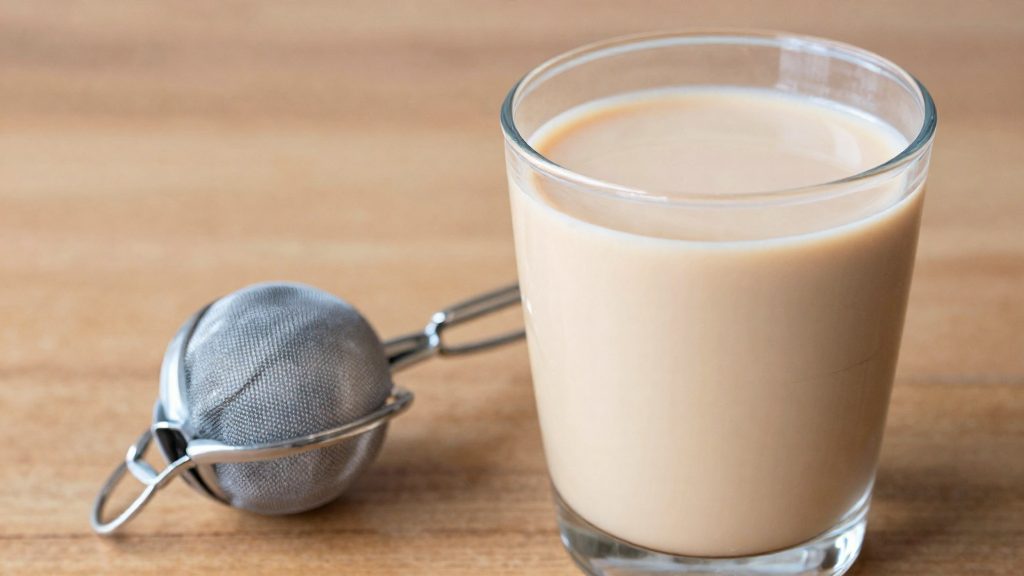
A cloth tea sock is not required for Hong Kong-style milk tea, but it is the tool most often used for a smoother cup. The straining tool decides how much leaf debris reaches the final drink. The two options differ mainly in filtration fineness, upkeep and sediment.
Cloth filter texture and reuse care
A cloth sock has a tighter weave than most mesh, so it catches finer particles. Its trade-off is upkeep:
- Rinse promptly in plain warm water after each use, before tannin stains set in the fabric.
- Air-dry it fully between brews to limit odours.
- Replace it when the weave thins or a smell persists after washing.
Fine mesh strainer trade-offs
A fine mesh strainer is quicker to clean and has nothing to dry or store wet. Its openings are larger than a cloth weave, so small leaf fragments and fine sediment pass through more readily. Both tools need to be rinsed soon after use to prevent staining.
| Factor | Cloth tea sock | Fine mesh strainer |
|---|---|---|
| Filtration fineness | Tighter weave catches finer particles | Open mesh lets more fine fragments through |
| Cleaning | Needs rinsing and full drying; can hold odours | Rinses quickly; no drying step |
| Reuse | Usable until the weave thins or odour persists | Reusable while the mesh stays intact |
Sediment left in each cup
Sediment is the practical test of clarity. A loosely woven strainer typically leaves a film of fine particles at the bottom of each cup, and a tighter cloth reduces that film. Pouring the final portion slowly and leaving the last spoonful in the pot lowers sediment with either tool.
How to Serve It Iced
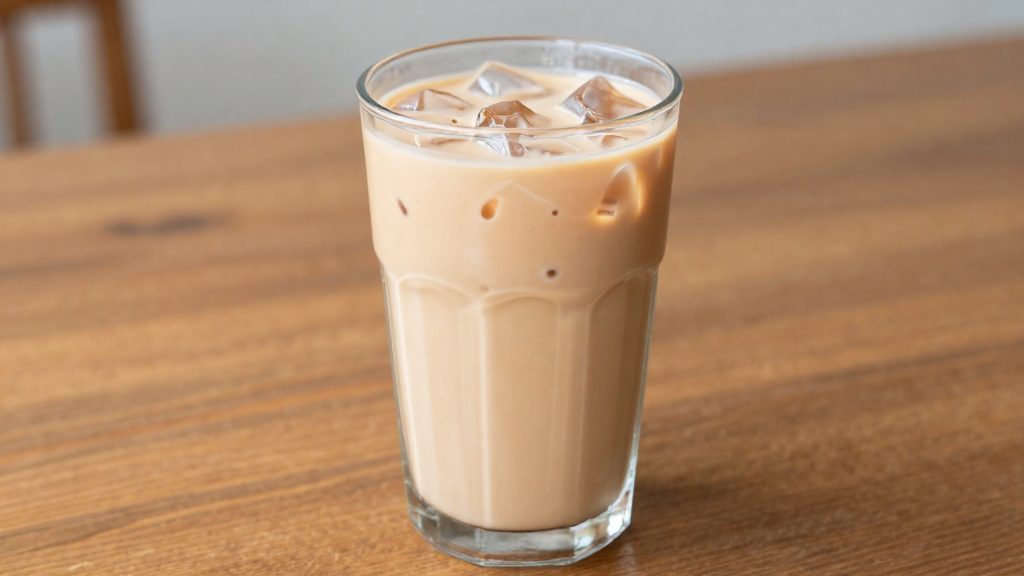
Iced Hong Kong-style milk tea holds its flavour best when the brewed tea is cold before it reaches the glass. The Kitchn recommends chilling the prepared drink before pouring it over ice to limit dilution, which means the ice keeps its shape longer and the tea stays closer to the strength you intended. Start with a brew that is fully chilled, then build the glass around it.
Chill the Brew Before Pouring
Pour the finished, strained tea and milk mixture into a sealed container and refrigerate it until cold. Keep the container covered so the tea does not pick up fridge odours. Pouring warm tea over ice melts the ice quickly, and the drink becomes watery within a few minutes. A cold base gives you a steadier result from the first sip to the last.
Glass Size and Ice Fill
Choose a glass large enough to hold the cold tea and a generous amount of ice with room to spare. Fill the glass with ice first, then pour the chilled tea over it. Chill the prepared milk tea before pouring it over ice to limit dilution; greater contact between ice and tea does not by itself guarantee less melting. Leave a small gap at the top so the drink does not overflow when you add a straw.
Serving Vessel and Straw Choice
A clear glass displays the tea and ice, but visible layering does not reliably show how much the drink has diluted. Use a wide straw so the thick, creamy tea flows easily through it. Stir the drink gently before the first sip to combine the milk and tea, since they can separate slightly in the glass.
Adjusting Strength and Sweetness
Change one variable per batch, then taste the result against the previous cup.
Dialing Strength Up or Down
- Tea quantity is the lever to change. Add or remove bags or loose leaf while keeping the 5 cups of water fixed.
- Make the change in the next batch rather than mid-brew, so the difference is easy to compare.
- Keep the brewing method identical between batches so that only the amount of tea differs.
Adjusting Sugar After the First Cup
- Add sugar in small increments on the next batch and taste again before changing it further.
- Sugar is the only sweetener to adjust.
Milk-to-Tea Ratio for a Creamier Cup
- To make the cup creamier, raise the amount of evaporated milk in steps while keeping the tea quantity unchanged.