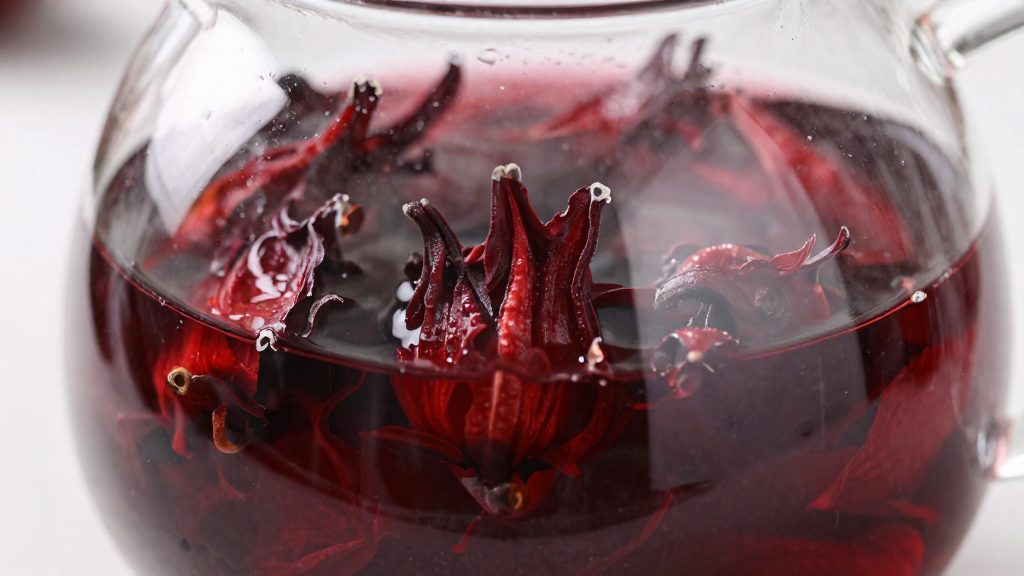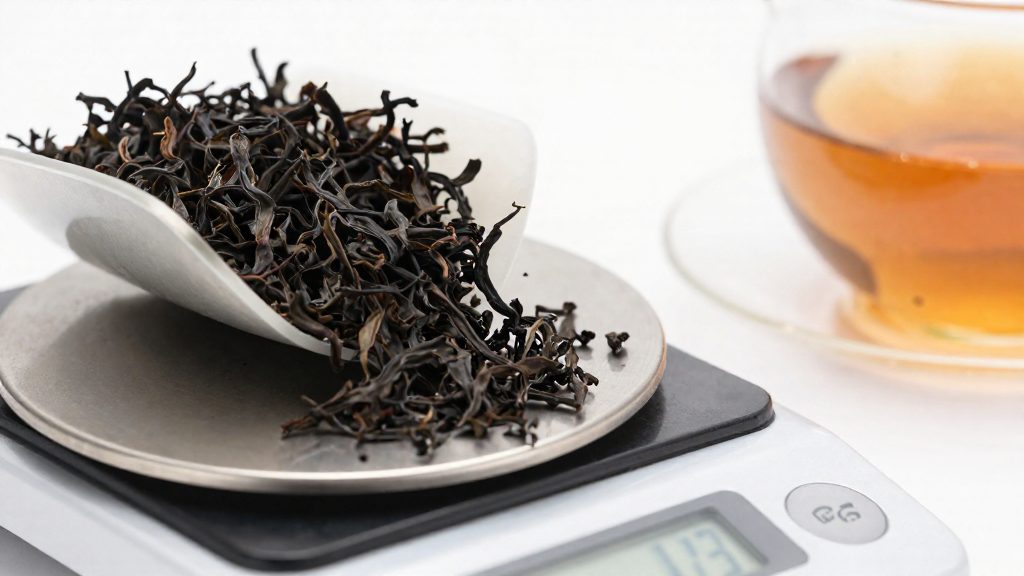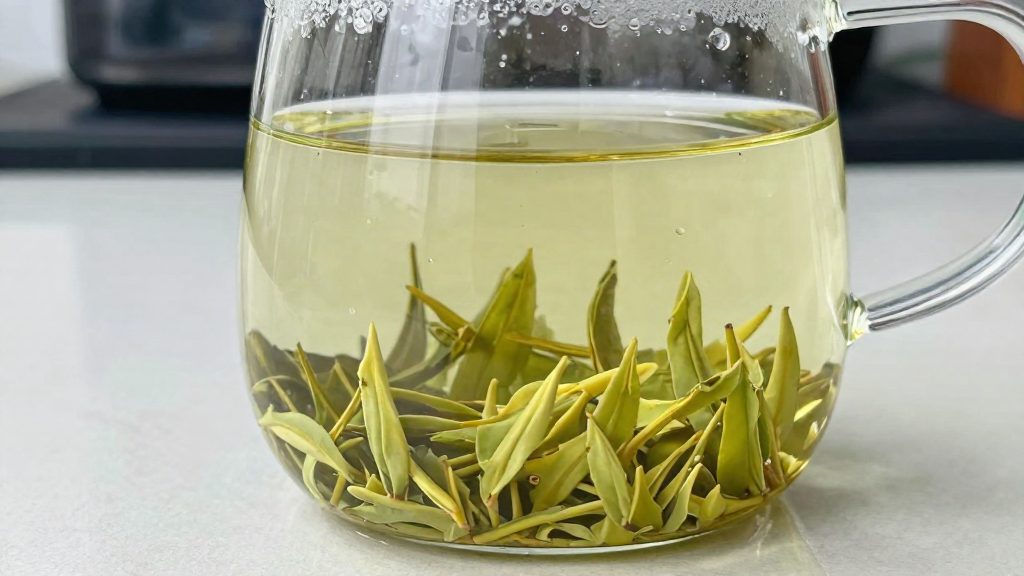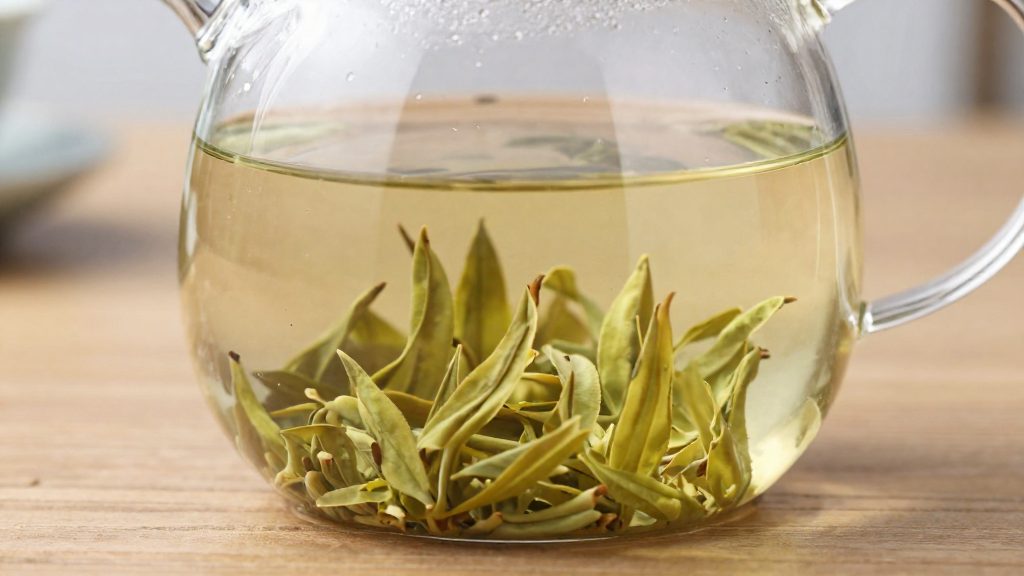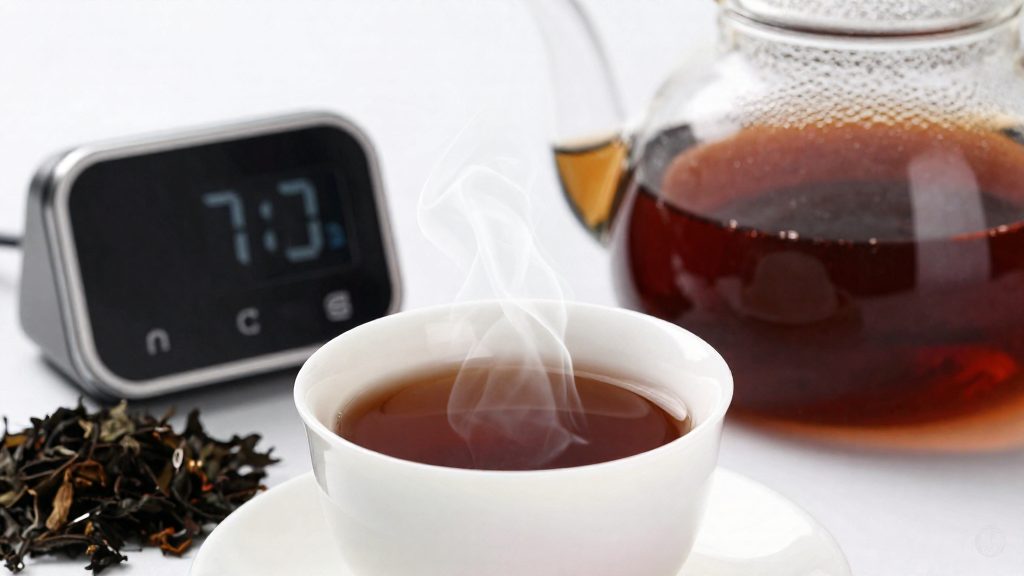
Most published guidance places black tea steeping between 2 and 5 minutes, but the sources do not agree on one number. Bigelow Tea gives a general range of 2–4 minutes, The Republic of Tea recommends 3–5 minutes, and Harney & Sons recommends a full 5-minute steep. Because these windows differ, the packaging time printed on your tea is the most specific reference you have.
How Long Should Black Tea Steep?
Steeping windows by publisher
| Publisher | Recommended steep | Scope |
|---|---|---|
| Bigelow Tea | 2–4 minutes | General range |
| The Republic of Tea | 3–5 minutes | Full-leaf black tea and black tea bags |
| Harney & Sons | 5 minutes | Full steep for black tea |
Where the windows overlap
Harney & Sons’ 5 minutes falls at the top of The Republic of Tea’s range and outside Bigelow’s general range. Bigelow Tea’s 2–4-minute range and The Republic of Tea’s 3–5-minute range are equally wide. The Republic of Tea’s range also includes Harney & Sons’ recommended 5-minute steep.
Strength and steep time
Twinings recommends increasing brewing time for a stronger cup. Steeping well beyond the recommended window is not advised as a way to gain strength.
Covering the cup
Bigelow Tea recommends covering the cup while the tea steeps, so heat stays in the cup during the brewing period.
Water Temperature for Strong Black Tea
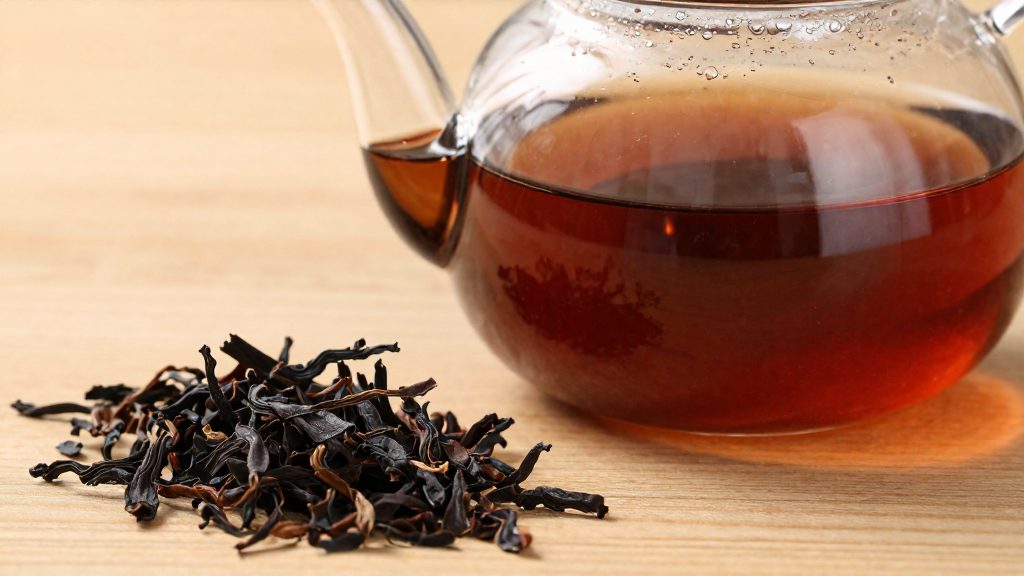
Harney & Sons recommends brewing black tea with water between 205°F and 212°F, roughly 96°C to 100°C. This is a near-boiling window; follow the temperature instructions for your particular black tea. The top of the range corresponds to a full boil, and the bottom sits about 7°F (roughly 4°C) below it. Pour the water as soon as it reaches this range so the brew starts at the intended temperature.
If you use an electric kettle with temperature presets, choose a setting within this window. Because kettle controls differ by model, check the kettle setting against the manufacturer’s instructions before relying on it.
How Much Tea Should You Use?
Leaf dosing sets the baseline strength of the cup, so measure the leaf instead of estimating it by eye. The Republic of Tea recommends about one teaspoon of loose tea or one tea bag per 6-fluid-ounce cup. Measuring by volume with a teaspoon is the simplest home method, and the same ratio scales to any vessel.
Measuring per cup
Count the cups you are brewing, then multiply by one teaspoon per cup:
| Water volume (fl oz) | Loose leaf (approx. teaspoons) |
|---|---|
| 6 | 1 |
| 12 | 2 |
| 18 | 3 |
| 24 | 4 |
These values are calculated from The Republic of Tea’s ratio of one teaspoon per 6 fluid ounces.
Measuring per teapot volume
For a teapot, divide its capacity by 6 fluid ounces to find the number of cups, then multiply by one teaspoon. A 30-fluid-ounce teapot holds five cups, so it takes about five teaspoons of loose leaf. Fill the pot only to the level you plan to brew. Leaf sized for a full pot will be too strong for a partial one.
If you use a kitchen scale, check the weight of a teaspoon of your specific tea on the package or in the manufacturer’s instructions. Leaf weight varies by cut and style, so a volume measure and a weight measure for the same tea can differ.
Making a stronger cup
Harney & Sons recommends increasing the amount of tea rather than extending the brewing time to get a stronger cup. Add leaf in small increments and taste the result before changing anything else. Sources do not establish a universal extra quantity of leaves or bags for strong flavor, so there is no fixed number of additional teaspoons to apply. Treat the baseline ratio as your starting point and adjust from there.
Tea Bags and Loose Leaf Brewing
Format changes how much leaf fits into the water and how freely it can open. A bag holds a pre-packed portion in a small pouch, while loose leaf is measured by volume. Timing does not have to change with format: The Republic of Tea recommends the same 3–5 minutes for full-leaf black tea and black tea bags.
Same Timer, Different Leaf Movement
What separates the two formats is leaf movement:
- Tea bags: The leaf is confined to a pouch that limits how far it can unfurl.
- Loose leaf: The leaves need open space inside the infuser. A packed basket leaves less room for water to circulate around the leaf.
Checking the Packaging Brewing Time
Bigelow recommends consulting the brewing time printed on its packaging. Its general range for black tea is 2–4 minutes, and the figures from other publishers differ.
These are general guidelines, not a universal rule for strong black tea. For a specific blend, follow the instructions on its package or from its manufacturer.
How Can You Avoid Bitter Tea?
Bitterness in black tea usually comes from oversteeping: the leaves or bag stay in the water past the intended time and keep releasing compounds into the cup. The Republic of Tea warns that oversteeping can make tea bitter, so the main control is ending the infusion on schedule. The same rule applies to loose leaf and tea bags.
Once the timer ends, remove the leaves from the water. The Republic of Tea instructs brewers to remove the infuser or tea bag after brewing. In practice:
- Lift out the infuser basket, or the tea bag, as soon as the timer sounds.
- Set the infuser on a saucer or a spare cup, not back in the pot or mug.
- If you brew in a teapot, transfer the tea into a serving pot or cups so the leaves stop steeping.
To check strength before committing to a full cup, taste a small sample early. Pour a little tea from the brewing vessel into a small cup, taste it, and decide whether the cup needs more time or should be strained now. Record the result, such as the time and how the tea tasted, and use it for the next brew with the same tea and the same water.
Water Quality and Brewing Tools
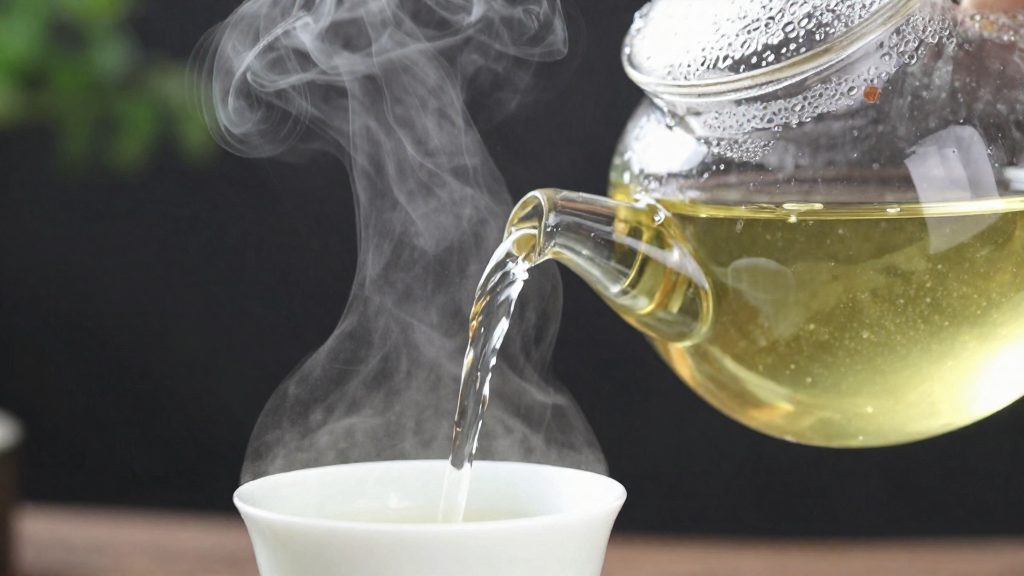
Water and vessel size shape every black tea brew. The Republic of Tea recommends fresh filtered, spring, or bottled water. The kettle, teapot, or gaiwan determines whether the water reaches the intended temperature and volume.
Water Sourcing
- Use fresh water for each pot. Do not reuse water that has already been boiled and left standing.
- If your tap water tastes or smells off, filtered or bottled water is the option The Republic of Tea recommends.
- Follow your kettle manufacturer’s instructions for cleaning and descaling, since mineral buildup changes how the kettle heats.
Kettle Types
| Kettle type | How it works | What it means for black tea |
|---|---|---|
| Variable-temperature kettle | Holds a chosen target temperature | Select the target from the brewing guidance on your tea’s packaging |
| Fixed-boil kettle | Heats water to a boil and switches off | Brewing starts from boiling water, so use it for teas labelled for boiling water |
Teapot and Gaiwan Sizing
Size the vessel to the number of cups you plan to pour, then match the leaf to it using the per-cup measure.
A gaiwan is a small lidded bowl. Set the leaf-to-water proportion by measuring the tea and the water you plan to use. Scale the number of cups to fit the bowl.
For a stronger cup, Harney & Sons recommends increasing the amount of tea rather than extending the brewing time. The sources do not establish a universal extra quantity, so increase the leaf in small steps in your own vessel and compare the results.
A Simple Strong Black Tea Method
A repeatable routine gives you a strong cup you can reproduce. Follow the same sequence every time, change one variable at a time, and record each brew so you can tell which change made the difference.
Step-by-Step Sequence
- Measure the leaf first. Set the amount before heating any water.
- Heat the water to the target range. Note the temperature you actually reached.
- Pour and cover. Bigelow recommends covering the cup while the tea steeps.
- Start the timer.
- Remove the infuser or bag. The Republic of Tea instructs brewers to remove it once brewing is complete.
- Taste before judging color. Twinings advises against judging completion by color alone, because color develops before the full flavor does.
- Write the result in your log.
Changing One Variable per Cup
A strong cup can come from three levers: leaf quantity, water temperature, and steep time. Changing more than one at a time makes it impossible to know which change worked.
| Variable | How to change it | Keep constant |
|---|---|---|
| Leaf quantity | Add a small amount of leaf per cup | Water temperature, steep time, water volume |
| Water temperature | Adjust within the target range | Leaf quantity, steep time, water volume |
| Steep time | Lengthen or shorten by a small step | Leaf quantity, water temperature, water volume |
Test increasing the leaf and increasing the steep on separate cups to see which suits your tea and taste.
Logging Each Brew
Record the following for every cup:
- Leaf weight or volume, in grams or teaspoons
- Water temperature, in °F or °C, as measured
- Steep time, in minutes and seconds
- Tasting note, such as strength, bitterness, or body
- The one variable you changed compared with the previous cup
A brew log turns trial and error into a short sequence of comparisons. When a cup tastes right, the log lets you repeat it exactly. When you buy a new tea, start the log again from the package instructions, since different black teas respond differently to the same settings.