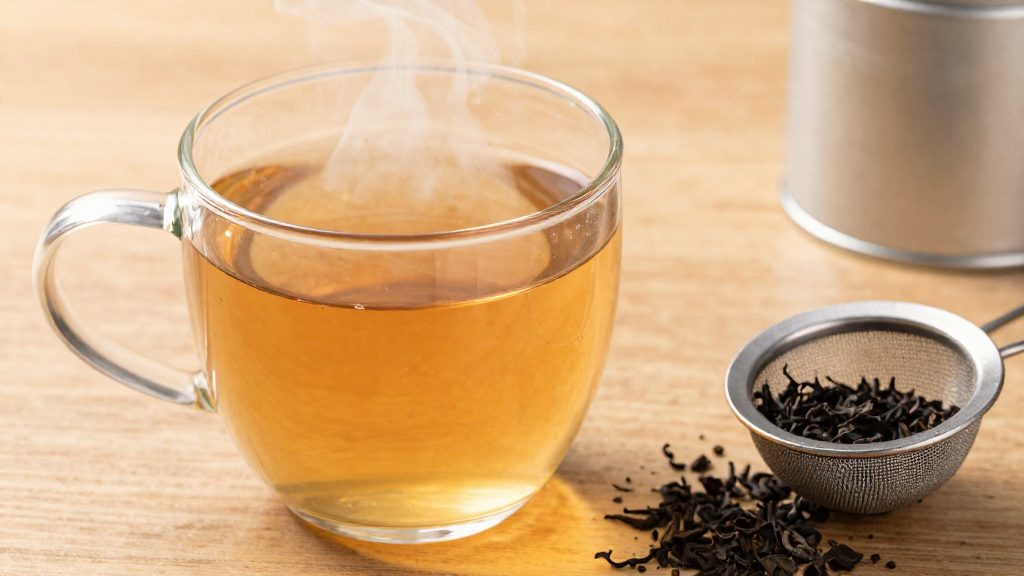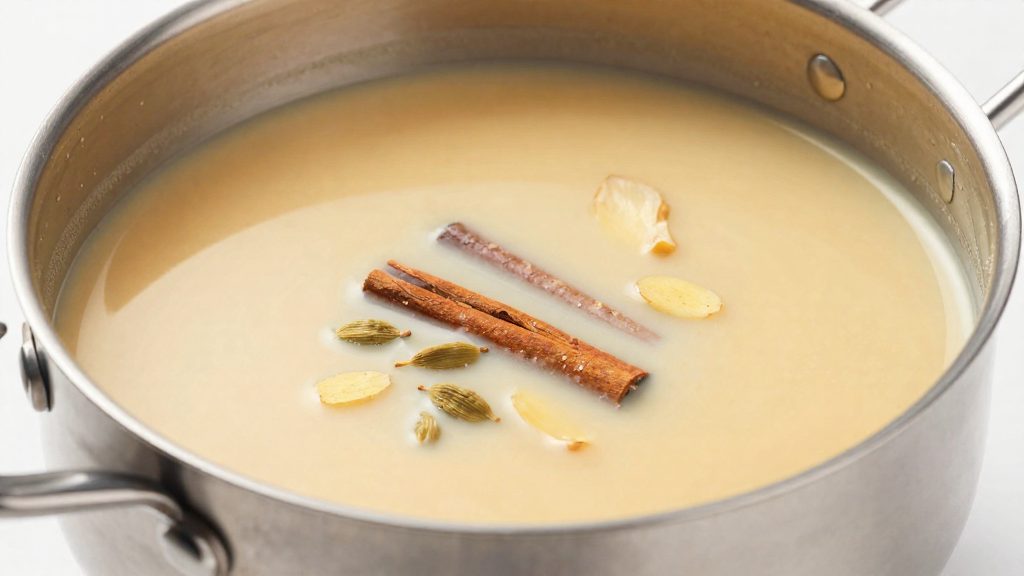
The best black tea for a chai latte is a strong, full-bodied one that still tastes like tea after milk and spices go in. Milk adds volume and softens flavor, so a light, delicate black tea can disappear into the cup. Pre-blended masala chai bags and plain black tea take different routes to the same result: one arrives with spices already built in, while the other leaves the spice choice to you.
What Black Tea Works for Chai?
Choose the tea by how it tastes with milk, not only on its own. A stronger brew starts with more flavor than the latte needs, so what remains after milk is added still reads clearly as black tea.
Strong Indian Black Tea Bases
Harney & Sons uses a strong Indian black tea base for its Chai blend, chosen to keep its flavor when combined with milk and spices (Harney & Sons). This is the clearest documented case of a base selected for milk, and it shows what to look for on a label: words such as “strong,” “full-bodied,” or a named Indian base.
Pre-Blended Masala Chai Versus Plain Black Tea
A pre-blended masala chai sets the flavor balance for you. Rishi’s Masala Chai combines black tea with cinnamon, cardamom, ginger, black pepper, and cloves (Rishi Tea & Botanicals), so the tea and spice ratio is already decided.
Stash’s hot chai latte uses 2 Double Spice Chai black tea bags (Stash Tea, 2016-02-07). That quantity applies to the branded blend and does not carry over to plain black tea with separately measured spices.
With plain black tea, you control the spice but must measure it yourself, so adjust spice by taste in small steps and note what changes.
Picking One
- Choose a black tea whose label describes a strong or full-bodied base if you want the tea to hold up under milk.
- Choose a pre-blended chai if you want a consistent spice profile without measuring.
- Choose plain black tea if you want to set the spices yourself.
Spices for a Homemade Chai Latte
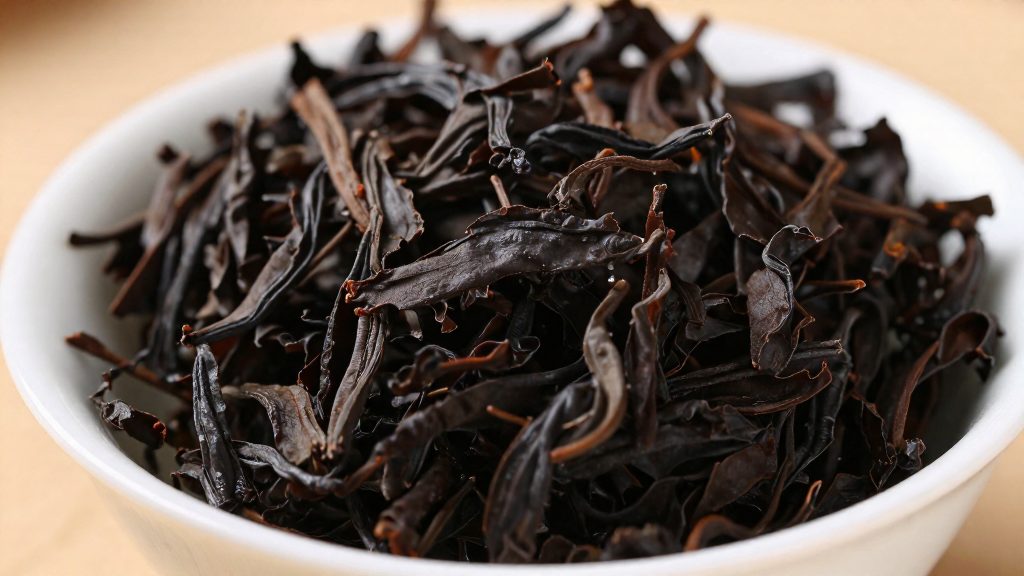
A homemade chai spice mix draws on six spices: cinnamon, ginger, cardamom, nutmeg, cloves and black pepper. Rishi Tea & Botanicals’ Masala Chai combines black tea with five of them and omits nutmeg, while Harney & Sons’ homemade chai spice mixture includes all six in ground form.
Spices in the reference blends
| Spice | Rishi’s Masala Chai (Rishi Tea & Botanicals) | Homemade chai spice mixture (Harney & Sons, 2024-07-11) |
|---|---|---|
| Cinnamon | Included | Ground |
| Ginger | Included | Ground |
| Cardamom | Included | Ground |
| Nutmeg | Not listed | Ground |
| Cloves | Included | Ground |
| Black pepper | Included | Ground |
Ground versus whole spices
Harney & Sons’ mixture is built from ground spices. Whole spices can be ground at home in a small spice grinder or with a mortar and pestle, which lets you grind only what you need for a batch.
- Ground spices: measure directly from the jar; no grinding step.
- Whole spices: grind shortly before blending to keep the mix fresh.
- Freshness check: if a ground spice has lost its smell, replace it. Check the packaging for a date or storage advice.
Combining the spices
Mix the ground spices in one small, airtight jar and label it with the date. Blending them ahead means each spoonful carries the same proportions, which makes adjustments easier.
Optional extra spice for an iced latte
Harney & Sons’ iced chai latte recipe (2024-07-11) makes extra spice optional. Prepare the homemade mix first, then add a small portion to the glass only if you want a stronger flavor in the iced version.
How Much Milk Should You Use?
For a chai latte made with a branded chai blend, the milk-to-water ratio depends on the recipe. Stash Tea (2016) uses a 1:3 water-to-milk ratio for a single hot cup, while Rishi Tea & Botanicals uses a 1:1 ratio for a stovetop pot. Both ratios come from their own blends, so use them as starting points.
| Method | Tea | Water | Milk | Water : milk | Source |
|---|---|---|---|---|---|
| Hot latte | 2 Double Spice Chai black tea bags | 1/4 cup boiling water | 3/4 cup whole milk | 1:3 | Stash Tea (2016) |
| Stovetop simmer | 2 tablespoons loose chai blend | 1 cup water | 1 cup milk | 1:1 | Rishi Tea & Botanicals |
Hot latte: 1:3 ratio
Stash keeps the water volume small, so the brewed tea is concentrated before it meets most of the cup’s volume in milk. Three quarters of the finished drink is milk, which gives a creamy cup in which the spice notes remain noticeable.
Stovetop: 1:1 ratio
Rishi’s method simmers the loose blend in equal parts water and milk, then strains it. Rishi’s recipe uses equal volumes of water and milk, whereas Stash’s uses three parts milk to one part water. These proportions alone do not establish which finished drink has stronger tea or spice flavors.
Milk fat content and body
Milk fat shapes the texture of the cup more than its flavor profile. Whole milk, the milk Stash specifies, gives a rounder, heavier mouthfeel that carries the spices fully. Lower-fat milk produces a thinner cup in which the tea and spices stand out more sharply. Fat percentages vary by product, so check the fat percentage on the carton label and choose the milk that matches the body you want.
How to Make a Chai Latte
A hot chai latte begins with a concentrated chai brew: black tea and spices steeped in a small amount of hot water, then combined with milk. The steep method depends on the format. Harney & Sons recommends 212°F boiling water with a 5-minute steep for its black-tea Chai blend, Stash Tea steeps bagged chai for 3–5 minutes, and Rishi Tea & Botanicals simmers its loose blend on the stove. The three methods use different water amounts and timings, so match the method to your tea format.
Steeping a Loose Chai Blend
Harney & Sons’ guidance for its loose black-tea Chai blend is to use boiling water at 212°F and steep for 5 minutes. Use the water as soon as it reaches a full boil, then pour it over the blend and steep without stirring. Strain the liquid before combining it with milk.
Steeping Bagged Chai
Stash Tea’s hot chai latte recipe uses 2 Double Spice Chai black tea bags with 1/4 cup of boiling water. Steep the bags for 3–5 minutes, then combine the brewed tea with heated milk (Stash Tea, 2016-02-07). A shorter steep gives a lighter cup, and a longer steep gives a stronger one.
Stovetop Simmer
Rishi Tea & Botanicals’ stovetop method uses 2 tablespoons of its loose chai blend with 1 cup of water. Add the milk to the same pot, bring the mixture to a boil, then reduce the heat and simmer for 5 minutes. Strain the spices out before serving.
| Method | Chai format | Water | Heat or process | Steep or simmer time | Source |
|---|---|---|---|---|---|
| Loose blend, steeped | Harney & Sons Chai blend | Boiling water at 212°F | Steep | 5 minutes | Harney & Sons |
| Bagged, hot latte | 2 Double Spice Chai black tea bags | 1/4 cup boiling water | Steep, then combine with milk | 3–5 minutes | Stash Tea (2016-02-07) |
| Stovetop | 2 tablespoons loose chai blend | 1 cup water, plus milk | Boil, then simmer | 5 minutes | Rishi Tea & Botanicals |
Frothing Milk and Adding Sweetness
Milk is warmed and frothed as a separate step, then combined with the brewed black tea. Stash’s hot chai latte method follows this order: steep the tea bags for 3–5 minutes, warm the milk separately in a pan, froth it, and combine it with the brewed tea (Stash Tea, 2016-02-07). Keeping the milk and tea apart until the final step lets you control the milk’s temperature and texture without over-steeping the tea. The recipe uses 2 Double Spice Chai black tea bags, 1/4 cup boiling water, and 3/4 cup whole milk, which gives a concentrated tea base that holds up against the milk.
Warming and Frothing the Milk
- Pour the milk into a small saucepan over medium heat.
- Warm it until steam rises and small bubbles form at the edges. Do not let it boil.
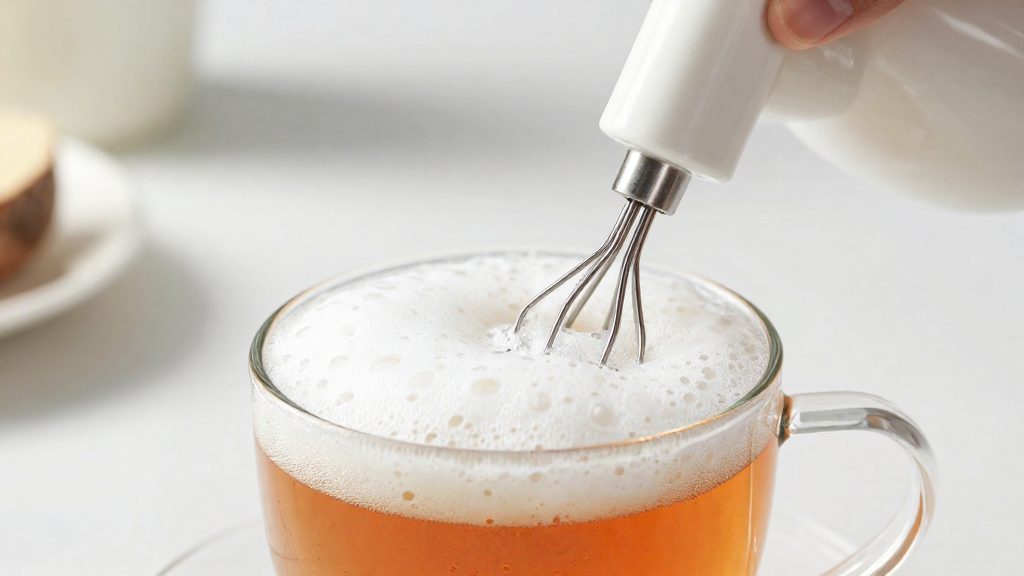
- Froth the warm milk using a handheld frother, a French press, or a milk frother.
- Pour the frothed milk over the brewed tea, holding back the foam with a spoon if you want a thinner latte, or spooning it on top for a foamier finish.
Adding Honey or Sugar
Honey or sugar is optional and is added to taste. Stash lists honey or sugar as optional in its hot chai latte recipe (Stash Tea, 2016-02-07). Stir the sweetener into the brewed tea before adding the milk so it dissolves fully. Add it in small amounts, taste, and adjust.
| Step | Action | Source |
|---|---|---|
| Steep | Brew tea bags in 1/4 cup boiling water for 3–5 minutes | Stash Tea (2016-02-07) |
| Warm | Heat milk separately in a pan until steaming | Stash Tea (2016-02-07) |
| Froth | Froth the warmed milk | Stash Tea (2016-02-07) |
| Combine | Pour frothed milk over the brewed tea | Stash Tea (2016-02-07) |
| Sweeten | Add honey or sugar to taste, optional | Stash Tea (2016-02-07) |
Making an Iced Chai Latte
Harney & Sons’ single-serving iced chai latte uses one chai sachet, steeped in 1/4 cup of boiling water for 5 minutes to make a concentrate. Ice goes into the hot concentrate, and then 1/2 cup of milk or a milk alternative is poured over. The ice cools and dilutes the concentrate before the milk is added, so the drink is built in that order (according to Harney & Sons, 2024-07-11).
The method has three steps:
| Step | Action | Quantity (Harney & Sons, 2024-07-11) |
|---|---|---|
| 1. Steep | Steep one chai sachet in boiling water for 5 minutes | 1 sachet, 1/4 cup boiling water |
| 2. Chill | Add ice directly over the hot concentrate | Ice to fill the glass |
| 3. Finish | Pour milk or a milk alternative over the ice | 1/2 cup |
Steep first, then add ice. Pour the concentrate into a glass, add ice, and then pour the milk over the top. Adding milk before the ice would not change the method’s listed quantities, but the recipe specifies this order.
Use the sachet as the base. The quantities above apply to Harney’s own chai sachet.
Adjusting Tea Strength and Spice
With plain black tea and separately measured spices, you can adjust the two ingredients independently, although the recipes above do not establish a tested dose for that combination. With a pre-blended chai, adding more blend increases both tea and spices. Strength depends on how much dry tea you steep in a fixed volume of water. Spice level depends on how much ground or whole spice enters the cup. Change one at a time so you can tell which adjustment made the difference.
Dry tea quantity as the strength lever
The amount of dry tea per cup is the most direct way to change strength. Published recipes show the range: Stash’s hot chai latte uses 2 Double Spice Chai black tea bags with 1/4 cup boiling water (Stash Tea, 2016-02-07), while Rishi’s stovetop method uses 2 tablespoons of loose chai blend with 1 cup water and 1 cup milk (Rishi Tea & Botanicals).
| Adjustment | Stronger tea base | Lighter tea base |
|---|---|---|
| Dry tea per cup | Add leaf or another bag | Remove leaf or use one bag |
| Taste result | More bitterness and astringency | Milder, with spices more prominent |
Stronger base: bitterness and astringency
A stronger base raises bitterness and astringency, the dry, puckering sensation on the tongue. Spices add their own bite, so an over-concentrated tea base can make the finished latte taste harsh. If the cup is harsh, reduce the tea before you remove any spice. This keeps the spice profile intact while lowering the tannin-driven edge.
Black pepper and ginger intensity
Black pepper and ginger are the spices that most change the bite of the cup. Rishi’s masala chai lists black pepper and ginger among its spices (Rishi Tea & Botanicals). Harney & Sons’ homemade chai spice mixture combines ground ginger and black pepper with cinnamon, cardamom, nutmeg and cloves, and its iced latte recipe treats extra spice as optional (Harney & Sons, 2024-07-11). To increase heat, add ground black pepper or ground ginger in small pinches, stir, and taste. To reduce it, lower the amount in the next batch rather than diluting the finished cup.