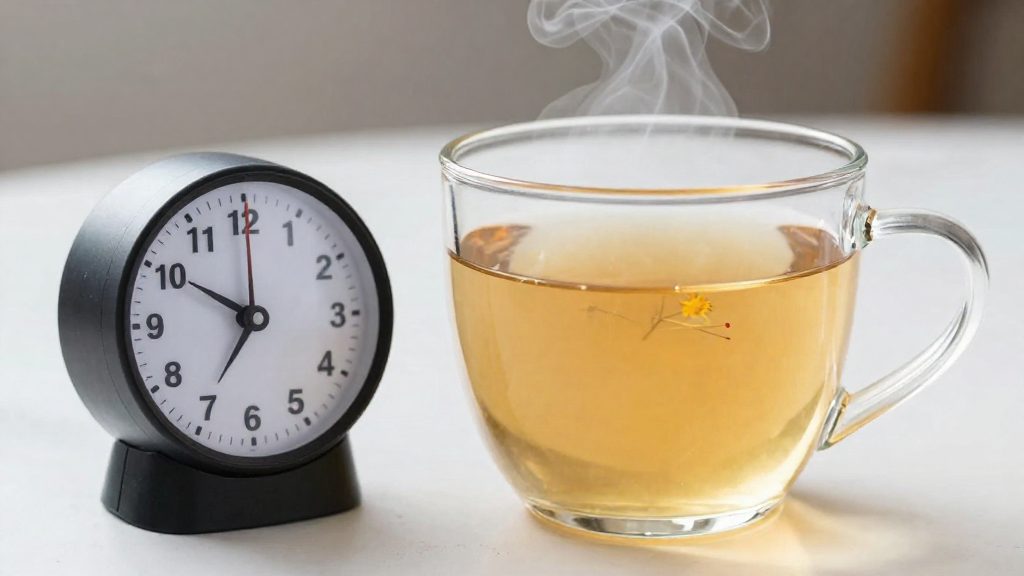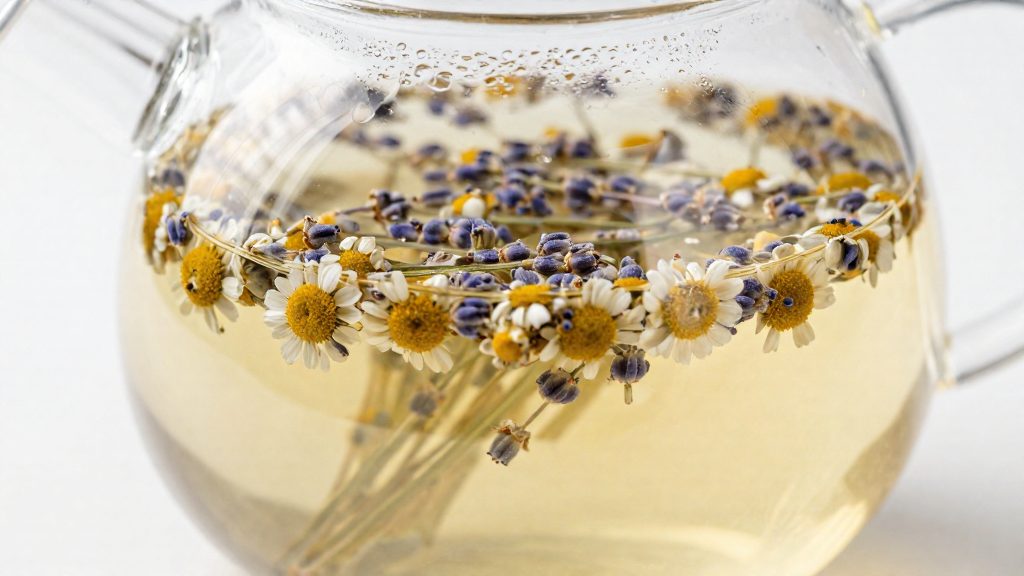
A single cup of chamomile and lavender herbal tea, according to the State of Connecticut (2025), uses 1 teaspoon of chamomile flowers or one chamomile tea bag, 1/2 teaspoon of lavender flowers, and 1 cup of boiling water. Lavender is measured at half the volume of chamomile, so it sits in the background of the cup. No universal ratio for this pairing has been established, so treat this formula as a starting point and adjust it to taste.
Chamomile and Lavender Herbal Tea Recipe
Ratio for One Cup
| Ingredient | Amount per cup | Form |
|---|---|---|
| Chamomile | 1 teaspoon, or 1 tea bag | Flowers or bag |
| Lavender | 1/2 teaspoon | Flowers |
| Water | 1 cup | Freshly boiled |
For the loose-flower version, the volume ratio is 2 parts chamomile to 1 part lavender; the tea-bag alternative has no specified flower volume. Both amounts are spoon measures. The supplied sources give no gram equivalents for these spoon measures. To record weights for repeat batches, weigh your own measured portions of each herb.
Method
- Measure both herbs with measuring spoons. Add the chamomile flowers and lavender flowers to a cup or infuser, or place the chamomile tea bag in the cup and add the lavender to an infuser.
- Pour in 1 cup of boiling water over the herbs.
- Cover the cup while the infusion steeps to hold in aroma.
- Strain before drinking. Pour through a fine strainer, or lift out the tea bag or infuser, as the Connecticut recipe directs.
Which Flowers Should You Use?
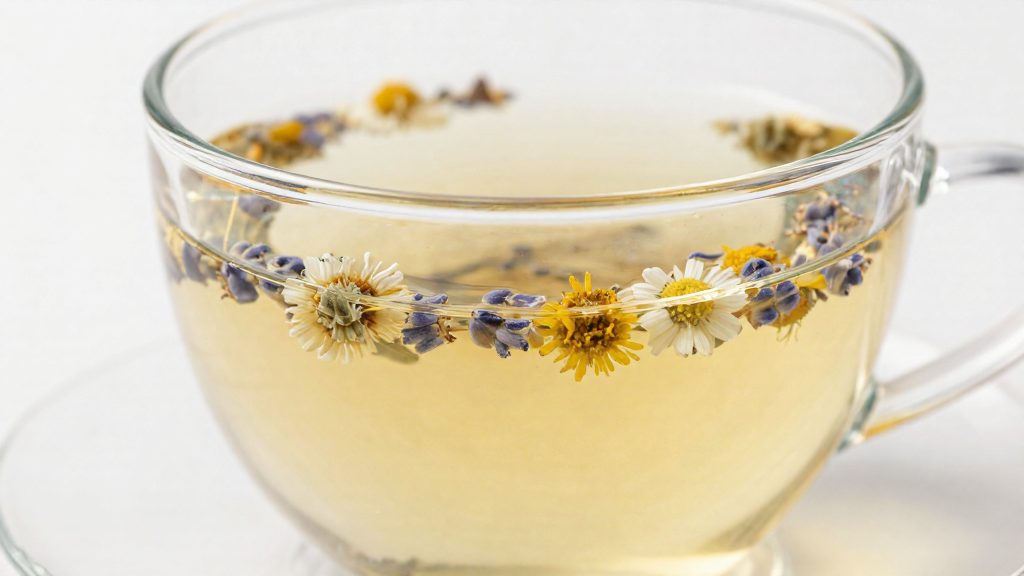
Start with the botanical name on the package. The two species named in the sources for this section are Matricaria chamomilla for chamomile and Lavandula angustifolia for lavender. Traditional Medicinals names both in its Chamomile & Lavender blend, so matching these names on a label tells you which plants you are buying.
| Option | Source | What it means for your choice |
|---|---|---|
| Matricaria chamomilla (chamomile) | Traditional Medicinals | Named species in its chamomile and lavender blend |
| Lavandula angustifolia (lavender) | Traditional Medicinals | Named species in the same blend |
| Chamomile flowers, loose | State of Connecticut (2025) | Standard form in the homemade single-cup recipe |
| Chamomile tea bag | State of Connecticut (2025) | Accepted alternative to loose flowers in the same recipe |
| Fresh or dried flowers | The Herb Society of America (2025) | Both are named as usable for chamomile |
Chamomile species
Common names for chamomile vary between sellers. If a label says only “Roman chamomile” or a similar name, look up the Latin name before comparing it with Matricaria chamomilla. The sources used here do not compare the species’ flavors, so test any difference yourself by brewing one batch with each.
Lavender species
Lavandin is a lavender-type name you may see on some labels. The verified data here covers only Lavandula angustifolia. For lavandin, check the species on the packaging and brew small batches side by side to compare flavor.
Fresh versus dried flowers
The Herb Society of America (2025) describes chamomile as having a green apple flavor and says fresh or dried flowers can be used in recipes. Choose the form that is available to you. Dried flowers are the form sold in most packaged teas and blends.
Ingredients and Equipment
The homemade version needs three ingredients: chamomile, lavender flowers, and boiling water. The commercial Traditional Medicinals Chamomile & Lavender blend uses a different set of ingredients and proportions.
What the commercial blend contains
Traditional Medicinals lists three ingredients in its Chamomile & Lavender blend: chamomile flowers, lemon balm leaves, and lavender flowers (Traditional Medicinals). The lemon balm leaves are the only leaf component. The Connecticut homemade recipe does not include them, so a cup made from the homemade formula will not taste the same as the commercial blend. To match the commercial blend, you would need to add lemon balm yourself, and the sources do not give a quantity for that.
Caffeine-free labeling
Traditional Medicinals labels this blend caffeine free (Traditional Medicinals). That statement applies to this product only. Check the label on your own box, because blends from other brands can differ. The sources provide no laboratory caffeine measurement for the homemade recipe. Check that your ingredients are plain chamomile and lavender rather than blends containing additional ingredients.
Tea bag or loose flowers
The two chamomile formats are interchangeable in the Connecticut recipe, but lavender is listed only as loose flowers.
| Chamomile format | Measure in recipe | Lavender | Removal step |
|---|---|---|---|
| Loose flowers | 1 teaspoon | 1/2 teaspoon loose flowers | Strain or lift out infuser |
| Tea bag | 1 chamomile tea bag | 1/2 teaspoon loose flowers | Remove the bag or infuser |
Measurements are by volume. The sources do not give a weight for a teaspoon of flowers, but you can weigh your own measured portions to record batch-specific weights.
Equipment checklist
- Kettle to bring water to a boil
- Measuring teaspoons for the chamomile and lavender
- Infuser, strainer or tea bag to hold the flowers during steeping
- Cup or teapot sized for one cup of water
Storage of dried flowers
The Herb Society of America recommends storing dried chamomile flowers in an airtight, dark-colored container away from direct sunlight (The Herb Society of America, 2025). Lavender flowers stored the same way keep the blend together in one place and protect both from light.
How Long Should You Steep It?
The steep window depends on whether you brew loose flowers or a packaged blend. The State of Connecticut (2025) gives 5–7 minutes for a homemade single cup, while Traditional Medicinals gives 10 minutes for its two-bag blend. These are separate preparations, so neither figure is a universal steeping time.
| Format | Source | Dose | Water | Steep time |
|---|---|---|---|---|
| Loose chamomile and lavender flowers | State of Connecticut (2025) | 1 teaspoon chamomile flowers, 1/2 teaspoon lavender flowers | 1 cup boiling water | 5–7 minutes |
| Chamomile & Lavender packaged blend | Traditional Medicinals | 2 tea bags | 8 fluid ounces freshly boiled water | 10 minutes, covered |
Loose flowers: 5 to 7 minutes
Start the timer as soon as the boiling water meets the flowers. Pick a point within the 5–7 minute range and keep it fixed. Using the same time for every batch makes it easier to tell whether a change in the cup came from the recipe or from the timing.
Two-bag blend: 10 minutes, covered
Traditional Medicinals directs you to pour freshly boiled water over the two bags and steep them covered for 10 minutes. The time applies to that product only.
Covering the cup while it steeps
The Connecticut recipe does not mention covering, so for loose flowers a saucer over the cup is a simple home habit rather than a stated requirement.
Honey and Lemon Variations
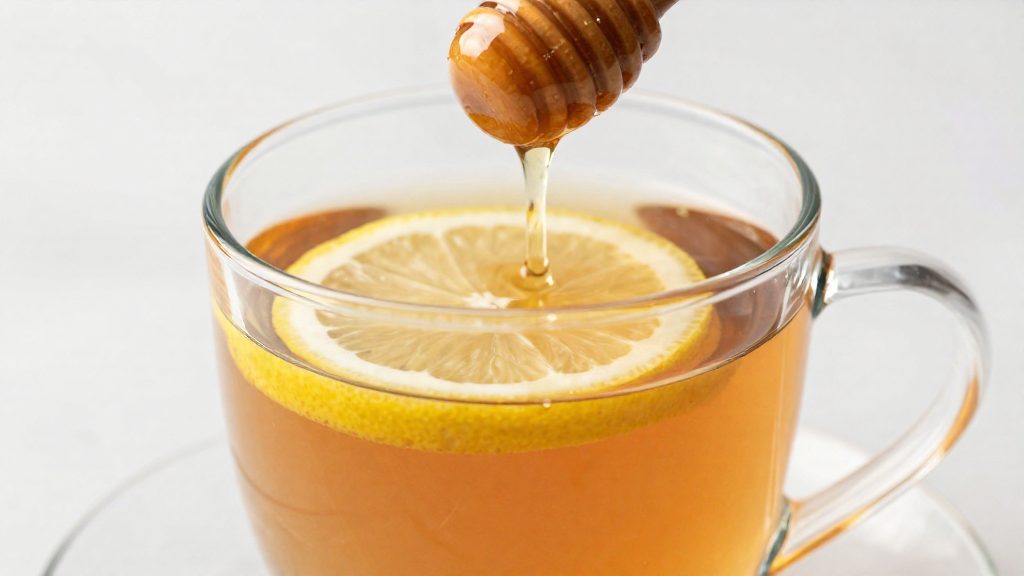
Honey and lemon juice are optional additions to a chamomile and lavender infusion. The Connecticut recipe lists both as optional, so the base infusion works without them, and they can be added to the cup after steeping.
Adding Honey
Dissolve the honey in the infusion while it is still warm, after you have strained out the flowers or removed the bag or infuser. Stir until it is fully dissolved, then taste and adjust. Stir the honey into the warm infusion until it is evenly mixed.
Adding Lemon Juice
Lemon juice is the second optional addition in the same recipe. Stir a small amount into the cup, taste, and add more only if you want a sharper edge. Lemon brightens the floral notes of chamomile and lavender, giving the cup a more citrus-forward character than the plain infusion. Add honey and lemon juice to taste, stirring until the honey is fully mixed.
How to Serve It Iced
Iced chamomile and lavender tea is made by brewing a stronger-than-usual infusion, cooling it, and then pouring it over ice so the melt water brings it back to a drinkable strength. The Connecticut recipe for the hot version allows the infusion to cool before it is poured over ice (State of Connecticut, 2025). Because ice dilutes the cup as it melts, the brew strength and the cooling steps need to be planned together.
Cooling the Infusion Before Pouring
Steep the flowers as you would for a hot cup, then strip the infusion from the solids. Leaving the lavender in while the liquid cools tends to pull more floral bitterness into the cup, so removing it at the end of the steep is the safer habit.
For later serving, transfer the strained infusion to a clean, heat-safe container and refrigerate promptly; divide larger batches into smaller containers to help them cool quickly. Pouring hot liquid straight onto ice melts the cubes quickly and produces a watery cup.
Ice Dilution and Strength
Ice adds water as it melts, so the cooled infusion should be brewed somewhat stronger than the hot cup you would normally drink. The sources do not give a dilution ratio, so adjust by taste: pour a small serving over ice, taste it after a minute or two, and add more infusion or less ice on the next cup until the flavour is balanced.
Holding the Brewed Infusion Chilled
Store the cooled infusion in a sealed glass or food-safe container in the refrigerator until you are ready to serve. The sources do not establish a tested refrigerated shelf life for this infusion. Refrigerate promptly and prepare only what you plan to serve soon. Discard any infusion showing spoilage, but do not rely on normal smell or appearance as proof of safety. Make a fresh batch rather than holding it for several days.
Storing Your Dried Flowers
The Herb Society of America (2025) recommends keeping dried chamomile flowers in an airtight, dark-colored container away from direct sunlight. Use a jar or tin that seals properly and blocks light, such as tinted glass or an opaque tin. Store a chamomile and lavender mix in a single container, so the same light and seal conditions apply to both flowers.
Keep the container in a cool, dry place, such as a cupboard away from the heat and steam produced by the stove, dishwasher, sink, and kettle. Avoid putting the jar in the refrigerator or freezer. Opening a cold container in a warm kitchen exposes the flowers to humid air, which is the main risk for dried herbs stored at home.
Moisture also enters through the spoon. Scoop with a dry spoon each time and reseal the lid right away.
Label each jar with the purchase or harvest date and the flower contents. Undated jars are hard to rotate, so an older batch can end up at the back of the cupboard.