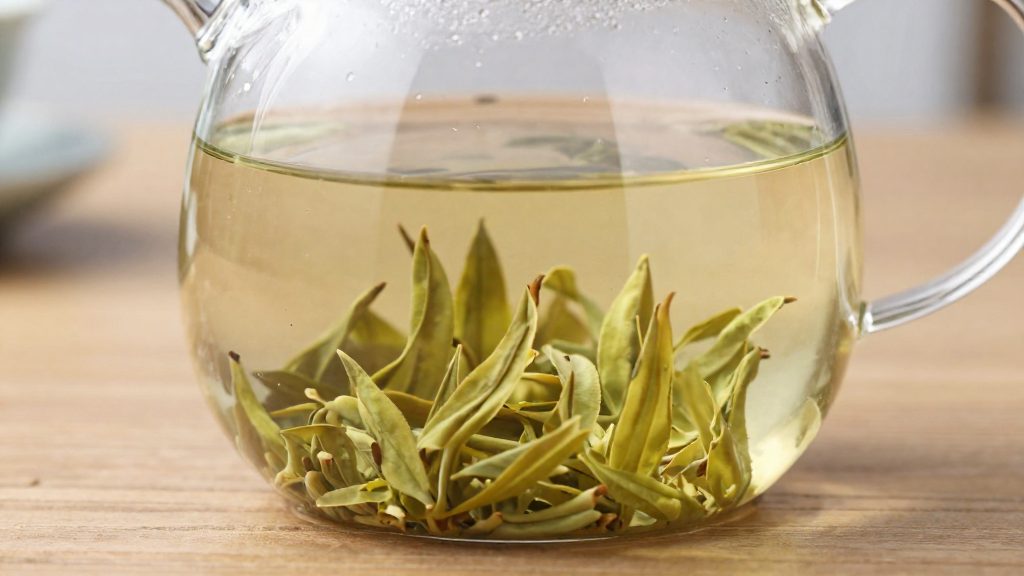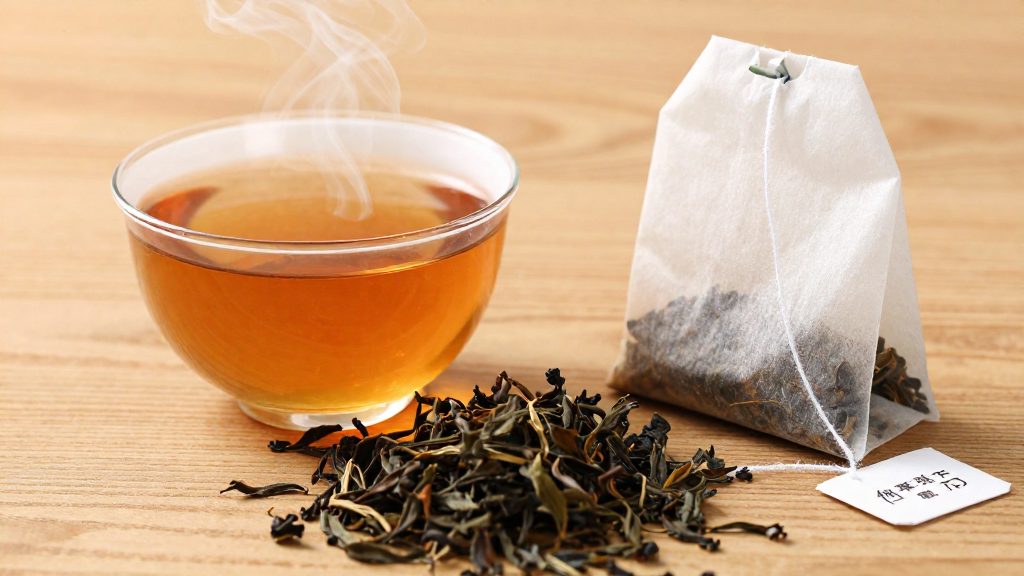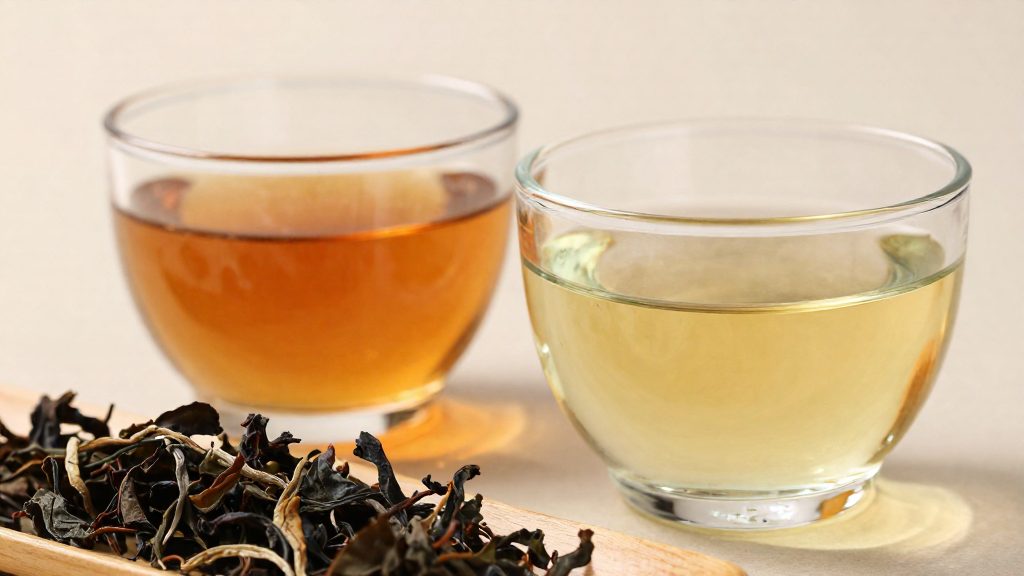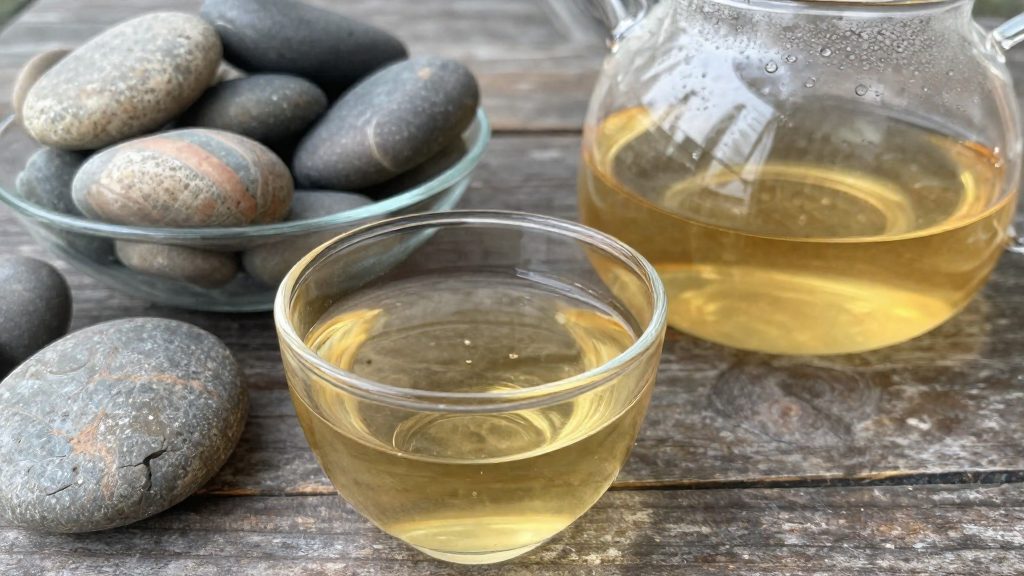
Water hardness can change how tea tastes, but the effect depends on both the tea and the minerals in the water. Hardness generally measures dissolved calcium and magnesium, according to the U.S. Geological Survey (2026). Two waters with similar hardness can still differ in other dissolved solids, and those differences can affect the cup. Expect a noticeable but variable shift, not a fixed rule that hard water always tastes worse.
Does Water Hardness Affect Tea Taste?
Mineral content and perceived sweetness and bitterness
Minerals in brewing water can alter how sweetness and bitterness are perceived in tea. Published comparisons of tap and bottled water in green and black tea have reported such differences, but the waters in those comparisons differed in several properties at once. Hardness alone cannot be credited for the change.
Two common assumptions do not hold universally:
- Hard water does not make tea more bitter every time.
- Softer water is not automatically better for tea.
Treat hardness as one input among leaf quality, leaf weight, temperature, and steep time.
Setting expectations before a home test
A useful home test changes only the water. Keep the rest of the brew identical:
| Variable | What to keep constant | Why it matters |
|---|---|---|
| Tea | Same batch and type of leaf | Leaf differences can outweigh water differences |
| Leaf weight | Same measured amount for each cup | Changes strength and bitterness independently of water |
| Temperature and steep time | Same settings for both waters | Prevents brewing-time differences from being mistaken for water effects |
| Vessel | Same teapot, gaiwan, or cup | Isolates the water as the only variable |
| Tasting | Pour side by side and taste blind | Reduces expectation bias |
Set realistic expectations before tasting:
- Differences are often subtle, so a blind comparison is more reliable than a single cup.
- Findings for green and black tea should not be assumed to carry over to oolong, white, pu-erh, matcha, or herbal infusions. Test each category separately.
- For a measured hardness figure, contact your local water utility. The USGS (2026) advises using local sources, including the utility, because its national hardness map is not suited to individual household decisions.
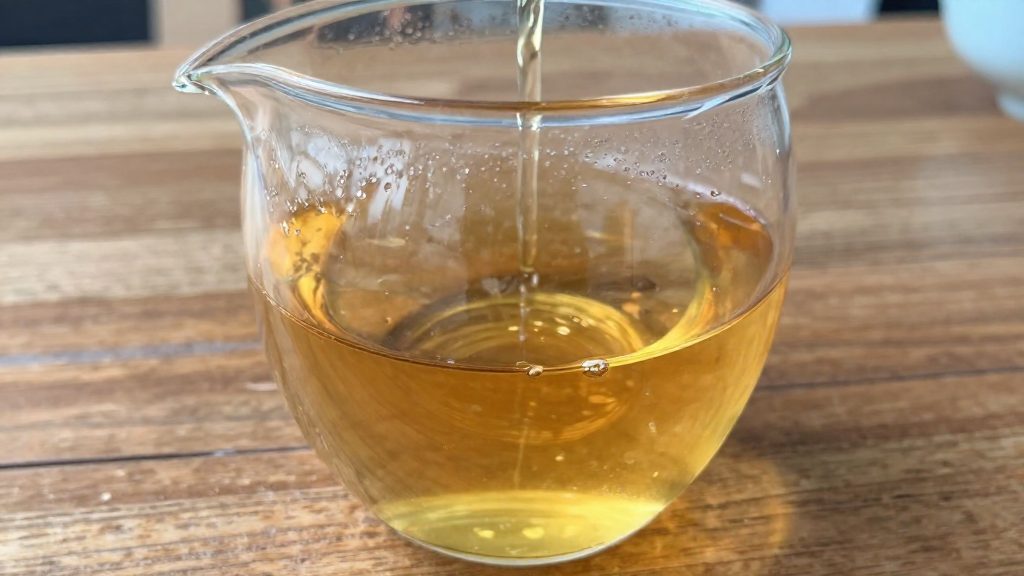
What Makes Water Hard?
Water hardness describes how much dissolved calcium and magnesium a water contains. As water moves through rock and soil, it picks up these minerals, and the more it dissolves, the harder it is. According to the U.S. Geological Survey (2026), hardness generally measures these two minerals together, so the same reading can come from calcium, magnesium, or both. Hardness is reported in milligrams per liter (mg/L), expressed as calcium carbonate, a common reference that lets different mineral mixes be compared on one scale.
USGS Hardness Bands
The U.S. Geological Survey (2026) classifies hardness, expressed as calcium carbonate, in four bands:
| Classification | Hardness (mg/L as calcium carbonate) |
|---|---|
| Soft | 0–60 |
| Moderately hard | 61–120 |
| Hard | 121–180 |
| Very hard | Above 180 |
The bands describe the concentration of dissolved minerals only.
Scale Deposits When Water Is Heated
Hard water leaves solid deposits when it is heated. The U.S. Geological Survey (2026) notes that heating hard water can cause solid calcium carbonate deposits to form. These deposits appear as white or grey scale, most often on the heating element and interior walls of a kettle, and they build up over repeated boils. The same mineral can also collect around faucets, which is why buildup is a useful visual check on how much hardness a water carries.
Green Tea Versus Black Tea
In the Cornell comparison, the tested waters produced detectable taste differences in green tea, but the comparison did not isolate hardness as the cause. In Cornell University’s green-tea tests, reported by the Cornell Chronicle (2019), consumers preferred tea brewed with the tested tap water, describing it as sweeter. Tea brewed with the tested bottled water was described as more bitter. The same research found a different result for black tea.
Green tea showed a clear preference. Tap water produced the tea described as sweeter, and bottled water produced the tea described as more bitter. Because the comparison involved waters with several compositional differences, these results do not isolate hardness as the single cause.
Black tea showed no detectable difference. In the same Cornell research, a panel of more than 100 consumers could not taste a difference between black tea brewed with the tested tap water and black tea brewed with the tested bottled water (Cornell Chronicle, Cornell University, 2019).
| Tea type | Water tested | Reported result (Cornell Chronicle, 2019) |
|---|---|---|
| Green tea | Tap water | Preferred; described as sweeter |
| Green tea | Bottled water | Described as more bitter |
| Black tea | Tap and bottled water | No difference detected by a panel of more than 100 consumers |
Hardness, TDS, and Alkalinity
Hardness and total dissolved solids (TDS) are separate measurements. According to the U.S. Geological Survey (2026), water hardness generally measures dissolved calcium and magnesium. TDS is a broader total of everything dissolved in the water, so a water can read differently on the two measures. Alkalinity and pH are also distinct values. Bruce Richardson, writing for TeaTime Magazine (2015), proposed a tea-water profile that sets targets for all four.
| Parameter | Proposed target (Richardson, TeaTime Magazine, 2015) |
|---|---|
| Total hardness | 80 ppm |
| Total dissolved solids (TDS) | 150 ppm |
| Alkalinity | 40 ppm |
| pH | 6 to 8 |
These values are specialist guidance, not a verified universal standard for brewing tea.
To compare your own supply against these targets, use the figures for your area rather than guesses. The USGS recommends getting hardness information from local sources, including the local water utility, and states that its national hardness map is unsuitable for individual household decisions.
Can a Filter Reduce Hardness?
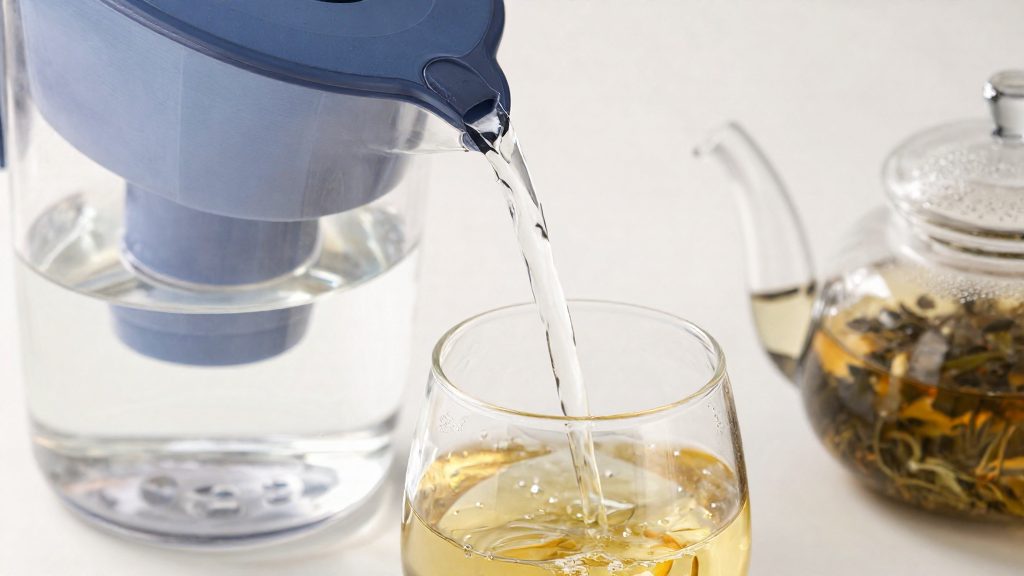
A home filter lowers hardness only if it removes dissolved calcium and magnesium, the minerals that make water hard. Carbon filtration, the type described in trade reporting, is said to retain minerals and salts while removing other substances, so a standard carbon filter should not be assumed to soften water. Whether any given pitcher or cartridge reduces hardness depends on its own rated performance.
Filter types and their effect on minerals
Only one filter type has a described mechanism in the sources. World Tea News (2019) describes carbon filtration as retaining minerals and salts while filtering other substances from water. Carbon filtration alone should not be assumed to reduce hardness; check the specific pitcher or cartridge’s rated performance, including any additional treatment media.
- Carbon filters: Retain calcium and magnesium, so hardness stays close to the tap value.
- Filters marketed as softening or reducing hardness: Verify the stated hardness reduction on the manufacturer’s specification before buying.
To check the starting point, use the water hardness figure from your local water utility. The U.S. Geological Survey (2026) recommends local sources, including the utility, over its national hardness map for household decisions. Its classes, expressed as calcium carbonate, are soft at 0–60 mg/L, moderately hard at 61–120 mg/L, hard at 121–180 mg/L, and very hard above 180 mg/L.
Kettle scale from filtered water
The U.S. Geological Survey (2026) states that heating hard water can cause solid calcium carbonate deposits to form. Scale comes from the dissolved minerals, so less hardness in the water means less material available to deposit. Whether a specific filter reduces scale enough to matter depends on its rated hardness reduction, not on filtration in general.
To judge scale in your kettle, follow Bruce Richardson’s TeaTime (2015) guidance to check appearance, smell, taste, and calcium buildup in the kettle or around faucets. Compare a kettle filled with unfiltered water against one filled with filtered water over the same period.
Flavour trade-offs for brewing
Cornell research (Cornell Chronicle, 2019) gives the clearest comparison of tap and bottled water for tea:
| Water tested | Green tea result | Black tea result |
|---|---|---|
| Tested tap water | Preferred; described as sweeter | No detectable difference from bottled water among more than 100 consumers |
| Tested bottled water | Described as more bitter | No detectable difference from tap water among more than 100 consumers |
The Cornell comparison involved waters with several compositional differences, so it does not establish that hardness alone caused the taste differences. The sources also do not show equivalent effects for oolong, white tea, pu-erh, matcha, or herbal infusions.
Stripping minerals is not automatically better. TeaTime (2015) describes distilled water as too flat for tea, but that is one author’s view, not a universal rule. Richardson’s proposed ideal tea-water profile includes 80 ppm total hardness, which is specialist guidance rather than an established standard. Test the water you can get against your own taste preference, changing one variable at a time.
Choosing Water for Home Brewing
Choosing brewing water takes three checks: get the hardness data from your local utility, run simple sensory tests on your tap water, and read the mineral figures on bottled water labels. Each check gives different evidence, so use them together.
Step 1: Ask the local water utility for hardness data
Water hardness generally measures dissolved calcium and magnesium. The U.S. Geological Survey (2026) recommends getting hardness information for a home from local sources, including the local water utility, and says its national hardness map is unsuitable for individual household decisions. Ask the utility for the most recent hardness result for your supply area and whether it was measured at the treatment plant or elsewhere in the network.
Step 2: Run sensory checks at home
These checks use only what you can see, smell and taste, plus one look at your kettle and faucets. TeaTime contributor Bruce Richardson (2015) recommends evaluating four things: appearance, smell, taste, and calcium buildup in kettles or around faucets.
| Check | How to run it | What to note |
|---|---|---|
| Appearance | Boil a glass of tap water, let it cool, and view it against a white background | Cloudiness or residue |
| Kettle and faucets | Look inside the kettle and around the tap outlet | White scale or deposits |
| Smell | Smell cold tap water and a cold bottled sample side by side | Any difference in odor |
| Taste | Taste each sample plain, at room temperature | Sweetness, bitterness, flatness |
Heating hard water can form solid calcium carbonate deposits (U.S. Geological Survey, 2026), so scale in a kettle is a visible sign of heat-related deposits, not a measurement of hardness.
For the taste check that matters most, brew the same tea leaf in two waters under identical temperature, time and leaf-to-water ratio. In Cornell’s green-tea tests (Cornell Chronicle, Cornell University, 2019), consumers preferred the tea brewed with the tested tap water, describing it as sweeter than the tea brewed with the tested bottled water, which tasted more bitter. In the same research, a panel of more than 100 consumers could not taste a difference between black teas brewed with the tested tap and bottled waters. The Cornell summary compared waters with several compositional differences, so these results cannot be attributed to hardness alone.
Step 3: Read mineral figures on bottled water labels
Bottled water labels may list calcium and magnesium separately, but total mineral content is not a hardness measurement. Look for the listed mineral content in mg/L and check whether calcium and magnesium are listed separately. Figures apply only to the specific product and bottling, so compare the label of the exact bottle you buy. If the label gives no mineral figures, contact the manufacturer and ask for them before using that water as a benchmark.
Compare Two Waters Side by Side
A side-by-side test isolates water as the only variable. Use the same tea, the same ratio, the same temperature and the same steep time for each bottle, and change nothing else. Pick two bottled waters, such as Evian and Volvic, and compare their mineral analyses on the labels. Hardness reflects dissolved calcium and magnesium, according to the U.S. Geological Survey (2026). Before tasting, compare the available mineral analyses for the two waters; if total hardness is not listed, request it from the manufacturer.
Set Up the Test
Keep these variables identical for both cups:
- Identical variables: same tea batch, same weight of leaf, same water volume, same vessel
- Brew temperature: set one target and hold it for both waters. Use the manufacturer’s instructions for your tea type.
- Steep time: use a timer and remove the leaves at the same moment for each cup
- Kettle: use one kettle and empty it fully between waters, so that no residue carries over
Rinse the teapot or gaiwan thoroughly between waters. Heating hard water can leave solid calcium carbonate deposits in a kettle, so check the kettle afterwards.
Record the Tasting
Code each cup with a letter before tasting. For a blind comparison, have someone else code and arrange the cups without telling you which water each contains, and reveal the identities only after you record your impressions. Record the same criteria for each cup:
| Criterion | What to record |
|---|---|
| Appearance | Clarity and colour of the liquor, and any cloudiness as it cools |
| Aroma | Dry-leaf and wet-leaf smell, plus the scent of the cup |
| Sweetness | Whether the sweetness is rounded or thin |
| Bitterness | Presence and duration of astringent or bitter notes |
| Body | Light, medium or full mouthfeel |
| Aftertaste | How long flavour lingers after swallowing |
Vary which cup you taste first between attempts, and repeat the comparison to check whether your impressions are consistent.
Read the Results Correctly
Hardness is only one of several mineral differences between two bottled waters. A taste difference therefore cannot be attributed to hardness alone. Record the results as observations about these two specific bottles, not as a general rule for hard or soft water.