Caffeine in Matcha: Figures, Serving Sizes and Estimates
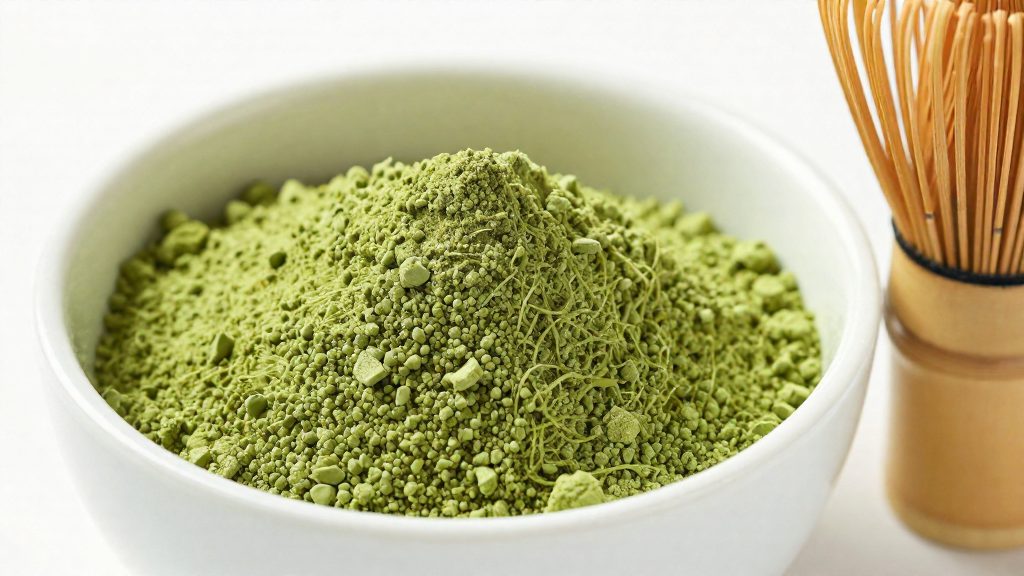
Caffeine in a cup of matcha depends on the brand and on how much powder you use. Ippodo Tea reports about 64 mg of caffeine in its standard usucha serving, made with 2 g of matcha whisked into 60 mL of water. Jade Leaf Matcha reports 16–40 mg per serving across its pure matcha powders. These are brand-specific reference points, not a universal value for a standard cup, because serving sizes and powder quantities differ between producers.
How much caffeine is in a cup of matcha?
| Brand | Reference | Powder per serving | Caffeine per serving |
|---|---|---|---|
| Ippodo Tea | Standard usucha serving | 2 g in 60 mL water | About 64 mg |
| Jade Leaf Matcha US | Pure matcha powders | 1–2 g recommended | 16–40 mg |
Why the serving weight sets the dose
Caffeine comes from the powder itself, so the serving weight determines the total. A 2 g serving contains twice the powder of a 1 g serving, so the caffeine scales accordingly.
The Ippodo figure applies only to its 2 g usucha serving. Changing the powder weight changes the estimated total caffeine. Changing only the water volume changes its concentration, assuming you consume all the powder. Keep caffeine estimates tied to the specific product and powder weight.
Caffeine per gram and teaspoon
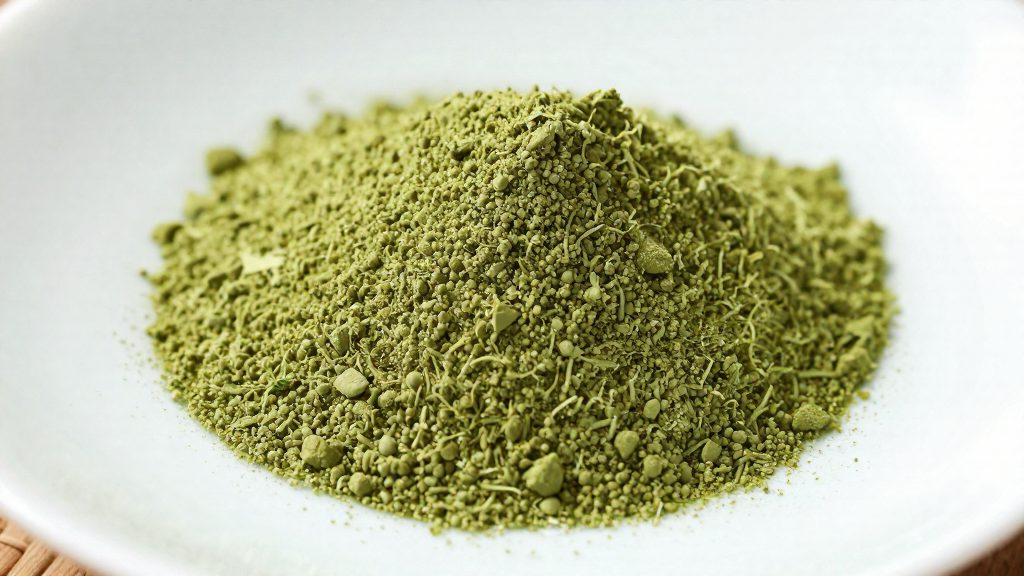
Matcha.com states that its tested superior daily and ceremonial matcha products contain 37.5 mg to over 50 mg of caffeine per gram (Matcha.com, 2026-03-11). This range applies to those tested products, not to all matcha. The same publisher gives broader per-gram ranges elsewhere, so treat the figure as a reference point and check your own tin.
To estimate a serving, multiply the powder weight by the milligrams per gram value: grams × mg per gram = mg per serving. Applying Matcha.com’s range to the 1 g and 2 g servings gives:
| Powder weight | Approximate volume (Jade Leaf) | At 37.5 mg/g | At over 50 mg/g |
|---|---|---|---|
| 1 g | ½ teaspoon | about 37.5 mg | over 50 mg |
| 2 g | 1 teaspoon | about 75 mg | over 100 mg |
A teaspoon measures volume, not weight. The same spoon can hold different masses depending on how finely the powder is ground and how firmly it is packed.
Why matcha caffeine varies between products
Matcha is made from shade-grown tea leaves that are ground into powder, so the caffeine in a cup comes from the leaf itself. Two matcha products can still differ because of the leaf grade and how the leaves were grown and processed before grinding. Ippodo Tea describes grade-related differences in caffeine as slight, which means grade is a factor to consider but not a reliable predictor of how much a cup will contain.
Production details that affect caffeine, such as harvest timing and leaf processing, are rarely reported on packaging next to caffeine figures. Because of this, the production method alone cannot tell you the caffeine in a given cup.
| Factor | What it means for caffeine | What to check |
|---|---|---|
| Leaf grade (ceremonial or culinary) | Ippodo Tea describes differences between grades as slight | The grade stated on the label or product page |
| Shade-grown leaves | The shading step defines matcha as a product | Whether the brand states its growing and shading method |
| Harvest timing and processing | Not quantified in the brand material reviewed | Whether the manufacturer publishes harvest date and processing details |
Does a matcha latte contain more caffeine?
A matcha latte gets its caffeine from the matcha, not the milk. Jade Leaf reports 20–30 mg of caffeine per serving for its Matcha Latte Mixes. Dairy milk contains no caffeine, so the figure on a latte mix reflects only the matcha powder it contains.
Pure matcha servings show a wider spread. Jade Leaf reports 16–40 mg per serving across its pure matcha powders, and Ippodo gives about 64 mg for its standard usucha serving of 2 g whisked into 60 mL of water. These figures are brand-specific and tied to their own serving sizes, so they cannot be compared directly with a latte mix’s per-serving number.
| Preparation | Caffeine per serving | Reported by |
|---|---|---|
| Pure matcha powder (Jade Leaf range) | 16–40 mg | Jade Leaf Matcha US |
| Matcha Latte Mix (Jade Leaf) | 20–30 mg | Jade Leaf Matcha US |
| Usucha, 2 g in 60 mL water (Ippodo) | About 64 mg | Ippodo Tea |
Several factors explain the gap between a latte and a bowl of usucha:
- Matcha quantity: A latte mix’s caffeine depends on how much matcha is in each serving, which varies by product.
- Drink volume: Adding water or plain milk dilutes the drink without increasing its total caffeine when the matcha powder and dose stay the same.
- Serving definition: Each brand defines “a serving” differently, so the same number can mean different amounts of powder.
Usucha and koicha use different powder amounts
Usucha and koicha are two standard matcha preparations that Ippodo Tea distinguishes, and the main difference is the amount of powder. Usucha is typically made with 2 g of matcha, while koicha uses 4 g per serving with less water. Doubling the powder while reducing the water makes koicha a more concentrated drink, so its caffeine depends on the dose as well as the powder’s content per gram.
Usucha: 2 g in 60 mL
Ippodo’s standard usucha serving is 2 g of matcha whisked into 60 mL of water, a ratio of 1 g per 30 mL.
Koicha: 4 g with less water
Koicha doubles the powder to 4 g and uses less water than usucha, so the paste is thicker and more concentrated. Ippodo publishes a separate koicha recipe specifying both the powder dose and water quantity. Follow that recipe or the preparation instructions from your matcha brand. For the exact amount, follow the instructions from the brand whose matcha you are using.
| Preparation | Matcha powder | Water | Powder to water |
|---|---|---|---|
| Usucha (Ippodo) | 2 g | 60 mL | 1 g per 30 mL |
| Usucha (Jade Leaf range) | 1–2 g | 2 US fl oz (about 59 mL) | 1–2 g per about 59 mL |
| Koicha (Ippodo) | 4 g | Less than usucha | Higher powder ratio |
Estimating koicha caffeine
Matcha.com reports 37.5 mg to over 50 mg of caffeine per gram in the superior daily and ceremonial matcha products it tested (2026-03-11). Applied to a 4 g koicha dose, that gives 4 × 37.5 = 150 mg at the lower figure and more than 200 mg at 50 mg per gram. These are arithmetic results from one brand’s test figures, not measured values for a bowl of koicha. The amount of caffeine that reaches the bowl depends on preparation, and no single figure applies to every matcha.
How to estimate caffeine in your serving
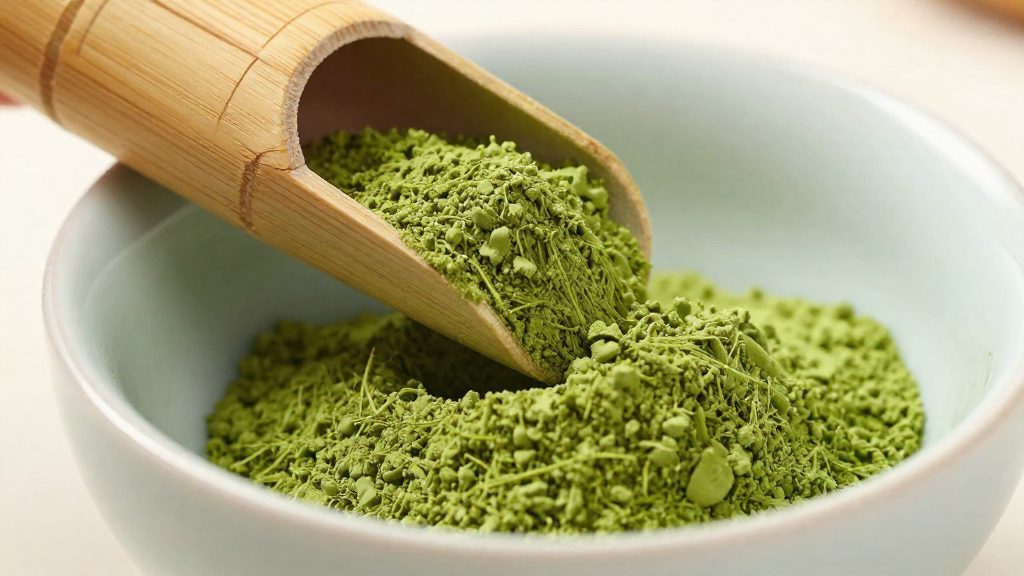
Your cup’s caffeine can be estimated from the per-serving figure printed on a product label, scaled to the grams you actually whisk. Brands publish different reference points: according to Ippodo Tea, its standard usucha serving of 2 g in 60 mL contains about 64 mg of caffeine. According to Jade Leaf Matcha US, its pure matcha powders range from 16 to 40 mg per serving.
Reading the label figure
Look for a caffeine line that states an amount per serving, and note whether it is a single value or a range.
| Reference | Stated caffeine | Basis given |
|---|---|---|
| Ippodo usucha standard | About 64 mg | 2 g whisked into 60 mL water (Ippodo Tea) |
| Jade Leaf pure matcha powders | 16–40 mg | Per serving, across products (Jade Leaf Matcha US) |
| Jade Leaf Matcha Latte Mixes | 20–30 mg | Per serving (Jade Leaf Matcha US) |
Keep each figure tied to its product. A range across a brand’s line does not tell you the value for one tin.
Checking the serving size
Compare the label’s serving size with the amount you measure. A figure printed for a 2 g serving does not describe a 1 g cup.
Ippodo’s reference uses 60 mL, so the powder weight is the variable to match.
Also check the product itself. Jade Leaf’s ceremonial stick-pack listing shows 20–40 mg in its product details but 20–30 mg per serving in its manufacturer Q&A. When two figures from one brand disagree, use the figure on the current package or the manufacturer’s written answer.
Adjusting for your preferred strength
Use a proportional estimate when your dose differs from the labelled one:
Estimated caffeine = labelled per-serving figure × (your grams ÷ labelled grams)
For example, if a label gives 64 mg at 2 g, a 1 g cup scales to about 32 mg, and a 1.5 g cup to about 48 mg. This is arithmetic, not a measurement. It assumes the powder’s caffeine content is evenly distributed across the weight, so treat the result as an approximate guide.
Preparing hot and iced matcha at home
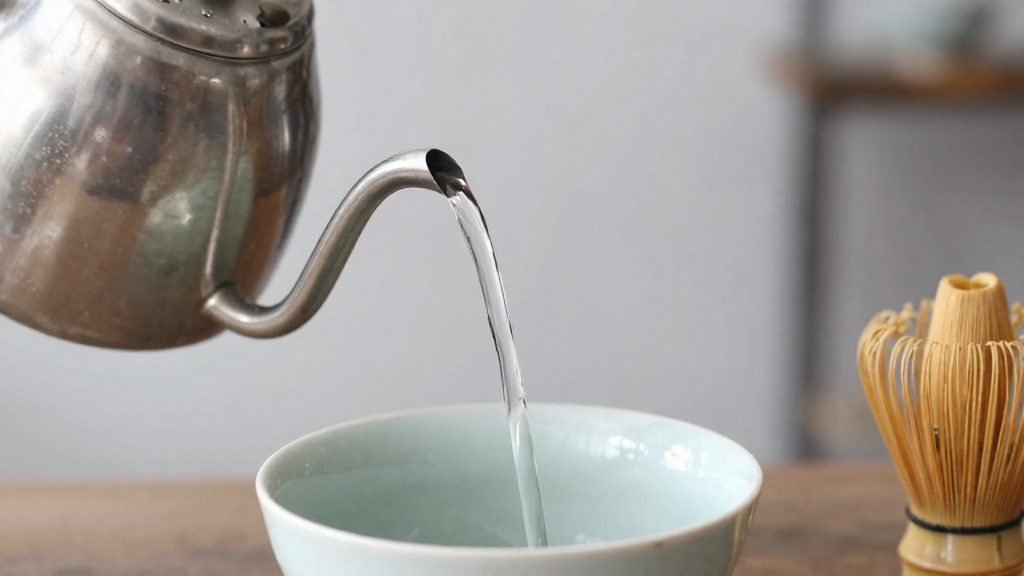
Preparing matcha at home means sifting the powder, adding water at a set temperature, and whisking until the powder is fully suspended. According to Jade Leaf Matcha US, a single serving uses 1–2 g of matcha (about ½ to 1 teaspoon, depending on the desired strength) sifted into 2 US fl oz (about 59 mL) of water heated to 140–175°F (about 60–79°C), then whisked.
Hot matcha: step by step
| Step | Action | Detail |
|---|---|---|
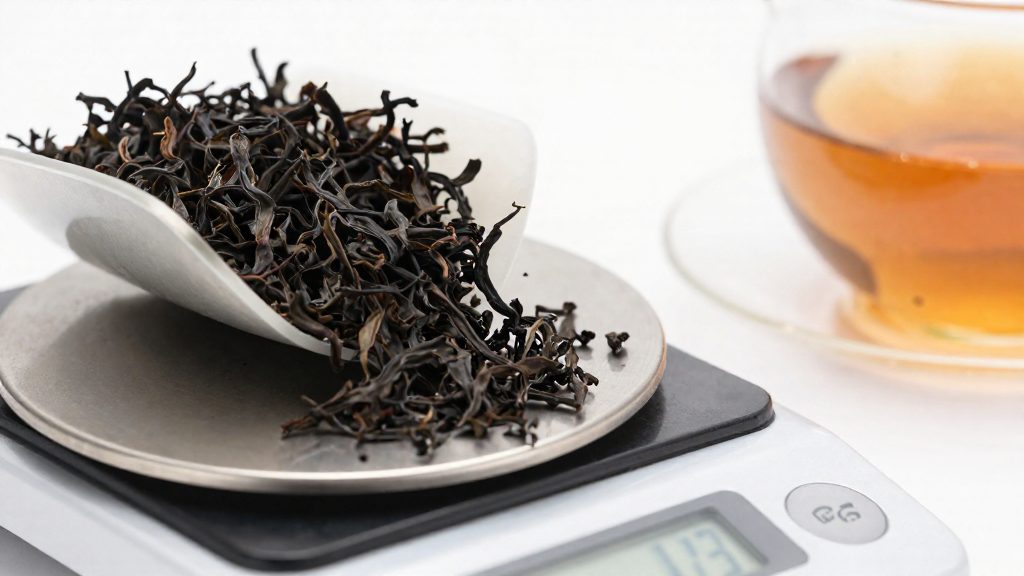
| 1 | Measure | 1–2 g of matcha per serving. Use a scale if you want consistent strength. |
| 2 | Sift | Pass the powder through a fine sieve into the bowl. This breaks up clumps before they reach the water. |
| 3 | Heat water | Bring water to 140–175°F (about 60–79°C). Let a kettle with a temperature setting or a thermometer confirm the target. |
| 4 | Add water | Pour 2 US fl oz (about 59 mL) over the sifted powder. |
| 5 | Whisk | Whisk until the surface is foamy and no powder remains at the bottom or along the sides. |
The temperature range is the main variable to control. Water near the top of the range suits a stronger, more bitter cup. Water at the lower end gives a softer, sweeter result. Lower-end water also reduces the risk of scorching the powder, which can make the cup taste harsh.
Iced matcha
For iced matcha, Jade Leaf notes that cool or room-temperature water can be used instead of heated water. The method is the same: sift the powder, add water, and whisk until smooth. Whisk the matcha into a small amount of water first to form a smooth paste, then add the rest of the water and pour over ice.