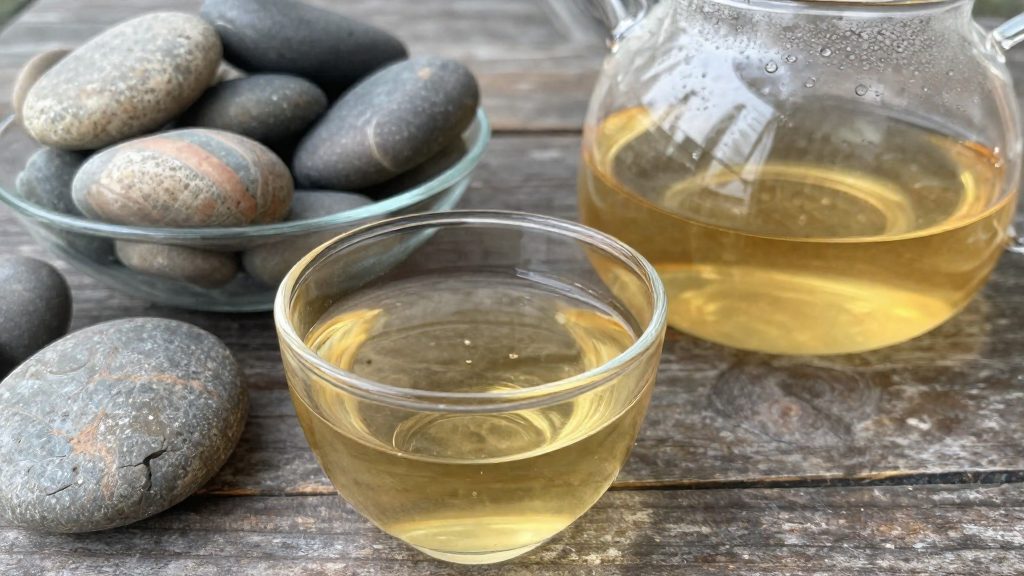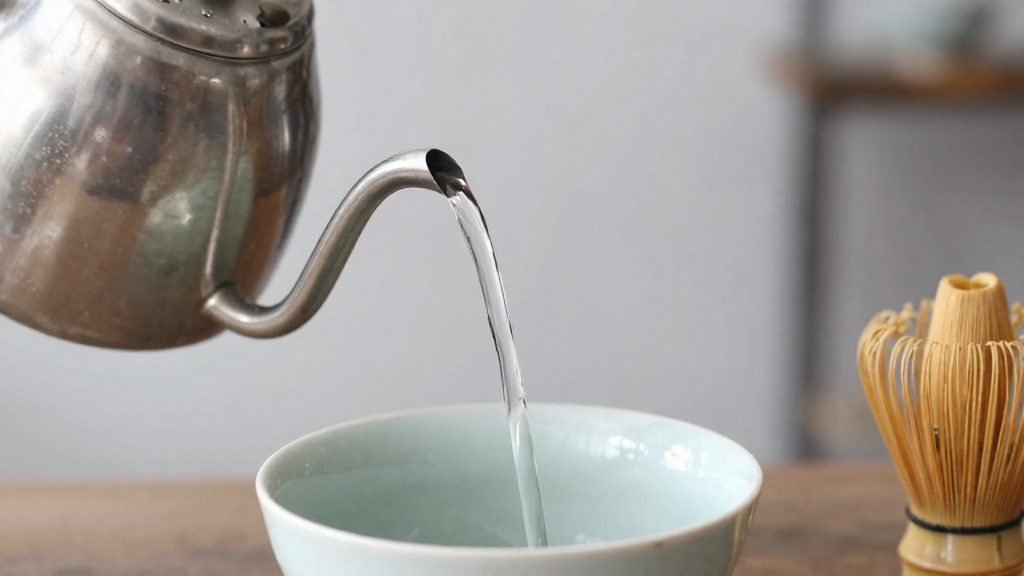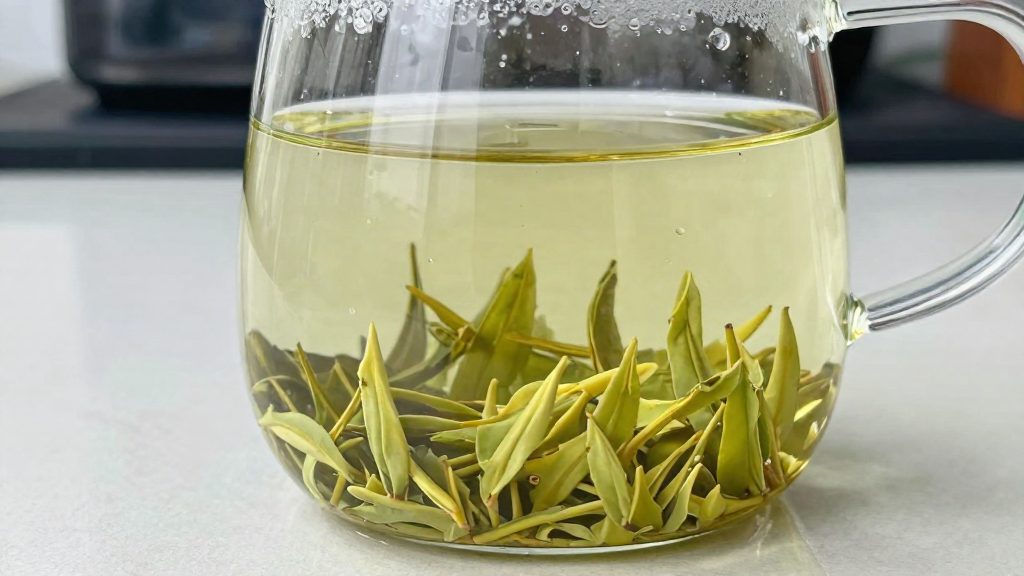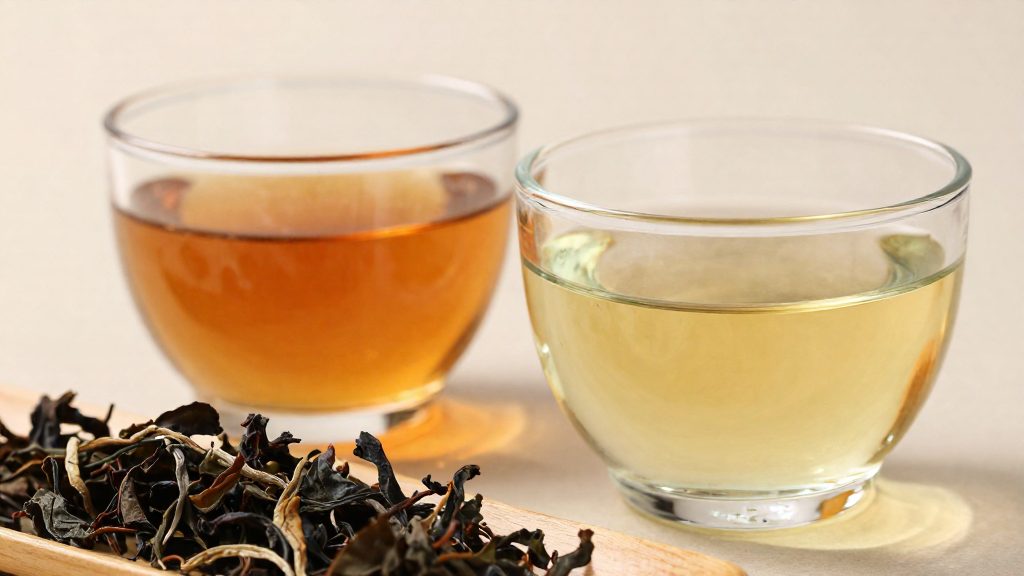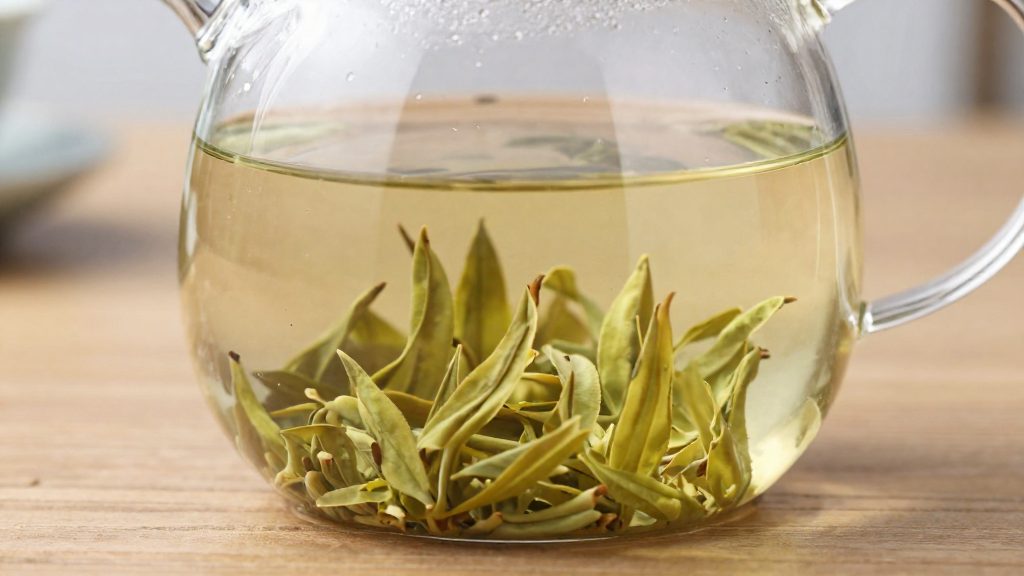
Water that tastes pleasant when drunk plain is the baseline for brewing green tea. Ippodo Tea recommends this as the first test. Judge any water by smell and taste before brewing, and use it only if it passes. This sets a practical baseline, not a universal standard for every green tea.
What Water Works Best for Green Tea?
Start with fresh cold water
Art of Tea (2018) recommends starting with fresh cold water. Draw it from the cold tap rather than using water that has been standing in an open container, and use it as your reference sample for the taste test below.
Taste the water before you brew
Sip a glass of the water at room temperature, with nothing added, and check it against the points below.
| Check | What to note | Why it matters |
|---|---|---|
| Smell | Chlorine-like or otherwise off odour | Chlorine can change water’s taste and smell compared with untreated water (CDC, 2024-02-14) |
| Plain taste | Clean and pleasant on its own | Sets the reference for the other checks |
If the water fails either check, try another source before brewing. Green tea has few strong flavours to mask an off-tasting water, so a flaw in the water is more likely to show in the cup.
Is Filtered Tap Water a Good Choice?
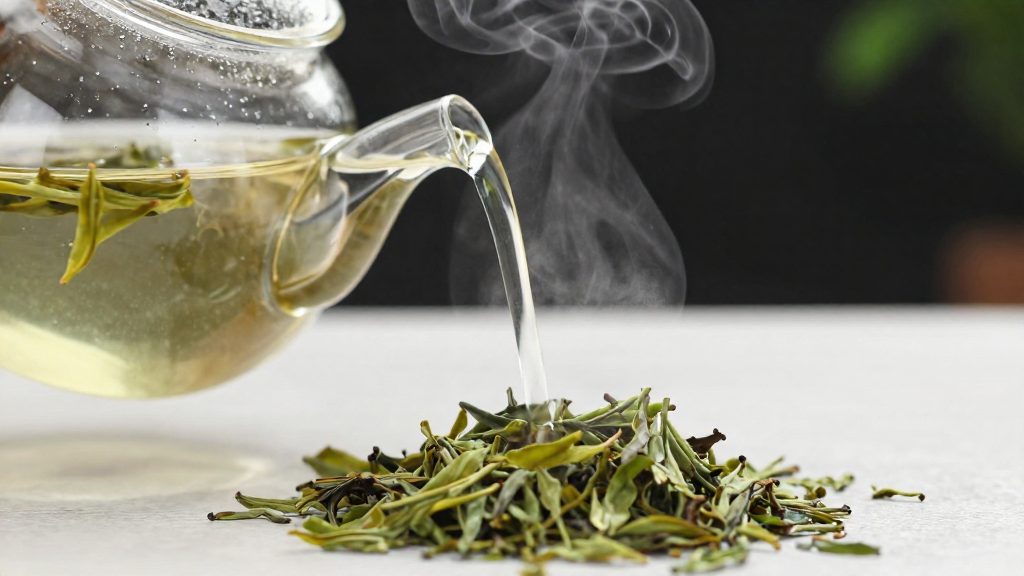
Filtered tap water is a practical default for green tea at home. Ippodo Tea reports good results with filtered tap water at its New York store. Because plain taste is a usable test, you can check your own supply before buying bottled water for brewing.
How chlorine affects the cup
Chlorine can change water’s taste and smell compared with untreated water or water containing chloramine, according to the Centers for Disease Control and Prevention (2024). Those off-notes carry into the infusion and can mask the fresh, vegetal character of green tea. To test your tap water, pour a glass of tap water and a glass of filtered water at room temperature, smell both, and taste them side by side. If the tap sample has a clear chlorine note the filtered one lacks, filtration is likely to improve your brew.
Checking your utility’s report
U.S. households served by public water systems can review their utility’s annual water quality report when deciding what filtration they need, according to the Centers for Disease Control and Prevention (2024). Find the report on your utility’s website or request a copy from the utility. It shows what the supply contains, so compare it with your taste test before choosing a filter.
How Hard Water Changes Green Tea Flavor
Water hardness, the concentration of dissolved minerals such as calcium and magnesium, changes how a green tea tastes in the cup. For Japanese green tea, Ippodo Tea states that softer water brings out umami more readily, while harder water produces a crisper character. The effect is a shift in balance rather than a fixed rule; the sources cited here do not establish a universal optimum for green-tea water hardness.
Softer Water and Umami
According to Ippodo Tea, softer water brings out umami more readily in its Japanese teas. Umami is the savory, brothy quality found in teas such as gyokuro and sencha. In practice, a softer water base tends to let the sweet and savory notes of the leaf come forward, which is why the brand’s guidance centres on water that tastes pleasant on its own.
Harder Water and Crispness
Ippodo also reports that harder water produces a crisper character, a cleaner and more brisk impression on the palate. This is a tasting description.
Hardness as a Spectrum
Water hardness is a gradient, not a binary choice between soft and hard. Most tap water falls somewhere between the two ends, so its effect on umami and crispness depends on where it sits on that scale. Ippodo’s description relates to a directional trend; it does not define threshold values, and no hardness, total dissolved solids, or pH figures for green tea are given.
Should You Use Spring or Distilled Water?
For most home brewing, spring water is a reasonable choice. Distilled water is different: sources disagree on whether it suits green tea, so it should be tested rather than assumed.
What Art of Tea Recommends
Art of Tea’s general preference is fresh, cold spring or filtered water, which makes it the simplest starting point for a bottled-water test.
Distilled Water: Sources Disagree
| Source | Position on distilled water |
|---|---|
| Art of Tea (2018) | Permitted when local tap water is hard |
| Ippodo Tea | Advises against it for Japanese green tea |
Neither position is a universal rule for all green teas.
Spring Water for Iced Tea
Jeff Champeau, a Rishi Tea expert quoted in Imbibe (30 August 2021), recommends filtered or spring water for iced tea. The same article notes that some cities’ tap water also produces good results, so local water remains a valid option.
Reading Mineral Content on Bottle Labels
Spring water labels may list mineral content. The sources cited here do not establish a target mineral range for green tea, so treat these figures as descriptive rather than as a pass or fail test. If a label gives no mineral listing, check the manufacturer’s website or contact the manufacturer directly.
Choosing a Filter for Your Tap Water
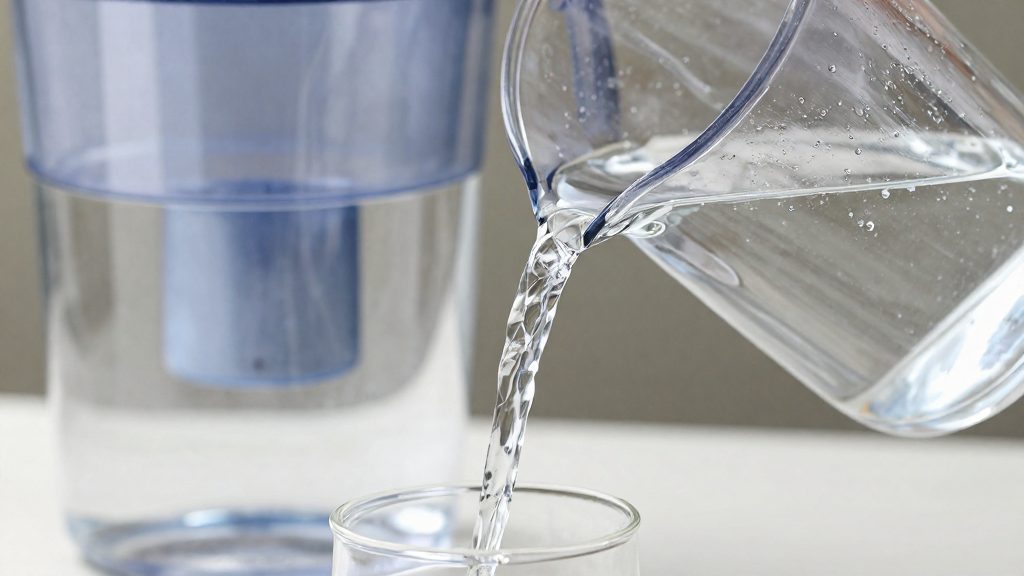
Most pitcher and refrigerator filters use carbon filtration. According to the Centers for Disease Control and Prevention (2024), most of these filters use carbon to improve taste or remove certain metals. They are generally not designed to remove germs, so a filter that improves the taste of your brew does not make the water microbiologically safer.
Match the filter to what you need it to do:
| Question | Pitcher and refrigerator filters |
|---|---|
| Main mechanism | Carbon filtration |
| Stated targets | Taste; certain metals |
| Generally not designed for | Germs |
| Water hardness or chloramine | Not assumed; verify on the specific model |
For Japanese green tea, taste is the main reason to filter. Do not assume a standard pitcher filter will soften your water or remove chloramine. If either matters for your brew, confirm the claim for the exact model before buying.
Water Temperature and Steeping Time
Art of Tea’s general green-tea guide gives a baseline of 180–185°F water, one teaspoon of leaves per 6–8 ounces of water, and a three-minute steep. These are manufacturer guidelines for green tea in general, not settings that suit every green tea, so treat them as a starting point to test before you change anything.
| Variable | Art of Tea baseline (2018) |
|---|---|
| Water temperature | 180–185°F |
| Leaf quantity | One teaspoon per 6–8 ounces of water |
| Steep time | Three minutes |
Brew the baseline once with your own kettle, teapot or infuser and note how the cup tastes. Then change one variable at a time: try a lower temperature or a shorter steep if the cup tastes harsh or bitter. If it tastes weak, try a slightly longer steep, following the brewing guidance for your particular tea. Changing two variables at once makes it impossible to tell which one caused the difference.
Compare Different Waters With the Same Tea
The simplest way to judge your own water is a side-by-side test: brew one green tea three times, once with tap water, once with filtered water and once with spring water, changing nothing else.
Set Up the Test
- Use one tea. Pick a single green tea and prepare equal portions of fresh dry leaves from the same batch, using a separate portion for each water.
- Use one dose. Use the same leaf amount for every cup.
- Use one temperature and one steep time. Choose a single value and use it for all three cups. Do not change either between cups.
- Use identical vessels. Brew in the same teapot, gaiwan or cups, and pour each cup in the same order.
- Start with cold water. Draw each water from the cold tap or bottle.
Choose and Label Your Three Waters
| Water | What to check before brewing | Notes |
|---|---|---|
| Tap | Your utility’s annual water quality report | — |
| Filtered | The filter model’s performance for your water | — |
| Spring | The label’s source and mineral information | — |
Label each cup clearly (for example, “T,” “F,” “S”) and write the key on the same sheet you use for notes, so you can match each result to its water.
Record Results With Consistent Terms
Use the same terms for all three cups and score each one on the same scale, such as 1 (absent) to 5 (strong).
| Term | What to note |
|---|---|
| Aroma | Fresh, grassy, sweet or flat, before and after the first sip |
| Umami | Savory depth, the brothy quality common in Japanese green teas |
| Sweetness | Natural sweetness, as opposed to bitterness |
| Astringency | Dryness or puckering on the tongue and cheeks |
| Vegetal | Green, marine or grassy notes |
| Body | Thin and light, or round and full |
| Finish | How long the flavor stays after swallowing, and whether it turns bitter |
Taste each cup at the same temperature, since a cooling cup will taste different. Note any cloudiness or sediment in the cup, and write down the result the same day, while the flavors are fresh in your memory.
No single water is established as the best choice for every green tea, so treat your results as findings for your own tea and your own water.