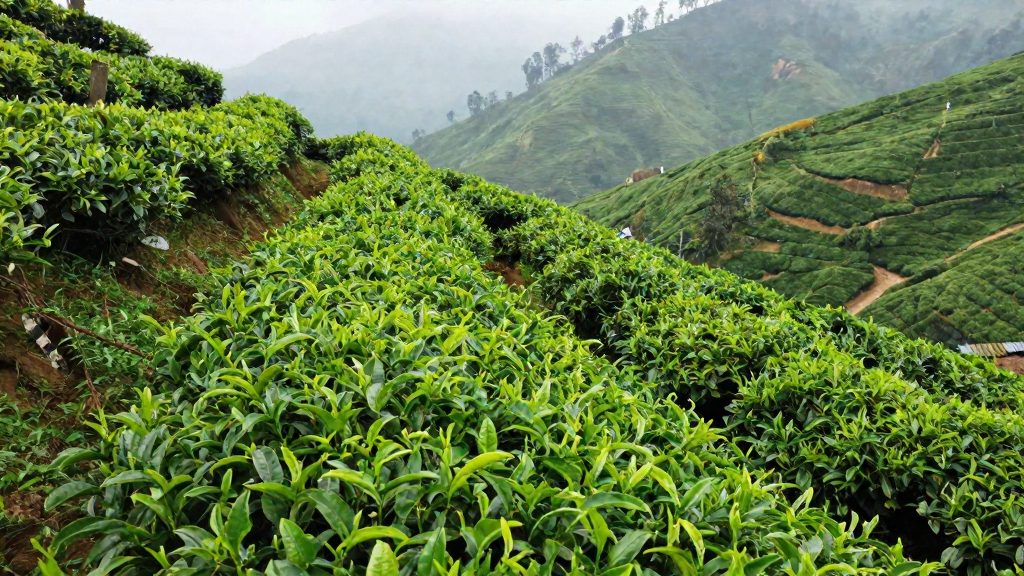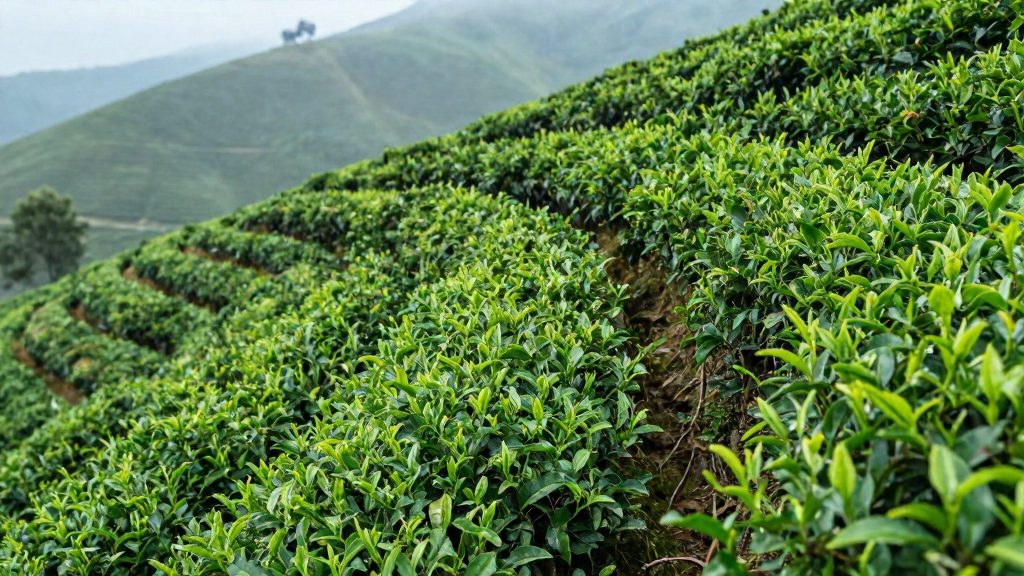
Taiwanese high mountain oolong comes from several mountain tea regions spread across Chiayi County, Nantou County and Taichung. Taiwan’s Ministry of Agriculture names the main regions, and Taichung’s agriculture bureau adds a further high mountain area. Check the named mountain region, county or city, and any garden information together when comparing a tea’s stated origin.
Where Is Taiwanese High Mountain Oolong Grown?
Named Mountain Tea Regions
The Taiwan Ministry of Agriculture, Agency of Rural Development and Soil and Water Conservation (2026-01-20) identifies the following regions as Taiwan’s mountain tea origins, with their host counties:
| Mountain tea region | County or city | Source |
|---|---|---|
| Alishan | Chiayi County | Taiwan Ministry of Agriculture, Agency of Rural Development and Soil and Water Conservation |
| Shanlinxi | Nantou County | Taiwan Ministry of Agriculture, Agency of Rural Development and Soil and Water Conservation |
| Dayuling | Nantou County | Taiwan Ministry of Agriculture, Agency of Rural Development and Soil and Water Conservation |
| Lishan | Taichung | Taiwan Ministry of Agriculture, Agency of Rural Development and Soil and Water Conservation |
| Baxian Mountain | Taichung | Taichung City Government Agriculture Bureau (2019) |
Alishan, Shanlinxi, Dayuling and Lishan are the four regions the national agency lists by name in connection with high mountain oolong. Baxian Mountain is described in Taichung’s guide as another high mountain tea area within the city.
Other Listed High Mountain Origins
The same national agency also lists these high mountain tea origins, without assigning them to a county in the material reviewed:
- Qilai Mountain
- Yushan
- Lalashan
- Fushoushan
Checking Origin on Package Labels
Mountain names are not always the same as garden locations, and a single mountain name can cover more than one area. Use the following checks:
- Look for the county or city first (for example, Chiayi County or Nantou County), since it is the most consistent origin detail.
- Confirm that the mountain name on the label matches one of the regions above or the listed origins.
- If the label gives only a general term such as “Taiwan high mountain”, ask the seller or manufacturer for the specific mountain and county.
What Counts as High Mountain Tea?
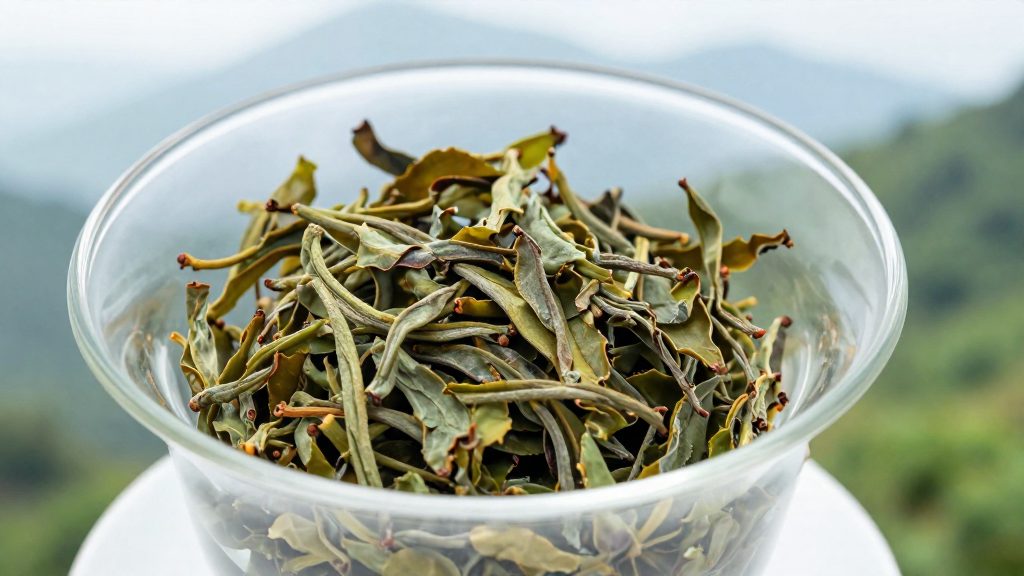
Taiwanese high mountain tea is defined by elevation. The Taiwan Ministry of Agriculture, Agency of Rural Development and Soil and Water Conservation describes high mountain tea as tea grown above 1,000 meters (approximately 3,281 feet). That elevation threshold separates the category from oolong grown in lower gardens, so an oolong sold as high mountain tea should come from a garden above that line.
Elevation figures vary within a single growing area. The Taichung City Government Agriculture Bureau (2019) gives the growing elevations of Baxian Mountain, another Taichung high mountain tea area, as 1,000–1,200 meters (approximately 3,281–3,937 feet). The lower bound of that range matches the threshold, and the upper bound shows that one area can span a band of altitudes.
| Reference | Elevation (meters) | Elevation (feet) | Source |
|---|---|---|---|
| High mountain tea threshold | Above 1,000 | Above approximately 3,281 | Taiwan Ministry of Agriculture, Agency of Rural Development and Soil and Water Conservation |
| Baxian Mountain, Taichung (growing elevations) | 1,000–1,200 | Approximately 3,281–3,937 | Taichung City Government Agriculture Bureau (2019) |
Qingxin Oolong as the Main Cultivar
Qingxin Oolong is the most common high mountain tea cultivar, according to the Taiwan Ministry of Agriculture, Agency of Rural Development and Soil and Water Conservation (2026-01-20). Jinxuan and Four Seasons Spring are also grown in high mountain gardens. The cultivar name describes the plant, not the altitude. Whether a tea qualifies as high mountain depends on the elevation of the garden where it was grown.
High Mountain and Lowland Gardens
The practical difference between the two is the elevation line. A garden below 1,000 meters falls outside the high mountain category, while a garden above that line falls inside it. The same ministry (2026-01-20) describes high mountain tea gardens as having cool conditions, clouds and mist, and substantial differences between daytime and nighttime temperatures. These conditions are part of how the category is described, and they distinguish high mountain gardens from the lower gardens that fall outside it.
Alishan: Tea Gardens in Chiayi
Alishan sits in Chiayi County, in southern-central Taiwan, and is one of the four high mountain tea regions the Taiwan Ministry of Agriculture’s Agency of Rural Development and Soil and Water Conservation names as growing Taiwanese high mountain oolong. The other three named in the same listing are Shanlinxi in Nantou County, Lishan in Taichung and Dayuling in Nantou County. Because Alishan is a mountain area rather than a lowland plain, its gardens sit on slopes where the altitude, not only the latitude, shapes how the tea grows.
What the Location Implies
The official description of high mountain tea gardens notes cool conditions, clouds and mist, and a substantial gap between daytime and nighttime temperatures. These are the conditions that define the category as a whole. Alishan gardens fall within that category, so they share the same growing character as the other named mountain regions.
An Alishan label identifies the stated origin; check the garden’s elevation separately to establish whether the tea meets the high mountain definition. Check the packaging or the seller’s product page for the named origin and, where given, the elevation band.
Cultivars Grown in the Alishan Gardens
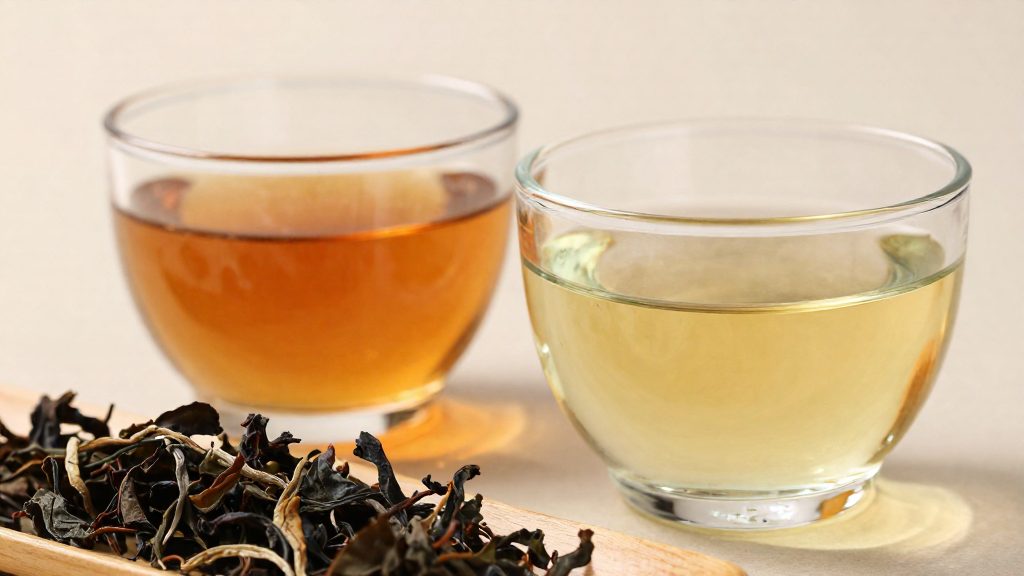
Taiwan’s agricultural tourism authority identifies Qingxin Oolong as the most common high mountain tea cultivar, with Jinxuan and Four Seasons Spring also grown in the high mountain gardens. The same source describes Alishan high mountain tea as producing a bright golden infusion with a lasting aftertaste and suitability for multiple infusions.
| Cultivar | Status in high mountain gardens |
|---|---|
| Qingxin Oolong | Most common high mountain cultivar |
| Jinxuan | Also grown |
| Four Seasons Spring | Also grown |
Shanlinxi: Nantou’s Mountain Tea
Shanlinxi is a high mountain tea origin in Nantou County, central Taiwan. Taiwan’s Ministry of Agriculture lists it among the mountain tea regions where Taiwanese high mountain oolong is grown, alongside Alishan in Chiayi County, Lishan in Taichung, and Dayuling, also in Nantou County.
How Shanlinxi fits the high mountain category
Taiwan’s agricultural tourism authority, part of the Ministry of Agriculture’s Agency of Rural Development and Soil and Water Conservation (2026), defines high mountain tea as tea grown above 1,000 meters (approximately 3,281 feet). Shanlinxi is classed under this category, but this source does not give a garden-level elevation range for Shanlinxi. For the altitude of a specific Shanlinxi garden, check the seller’s product listing or the producer’s information.
Growing conditions and cultivars
The same authority describes high mountain tea gardens generally as cool, frequently covered by clouds and mist, and marked by large differences between daytime and nighttime temperatures (2026). These conditions apply to the high mountain gardens as a group; this section does not extend them to Shanlinxi specifically.
| Cultivar | Status in high mountain tea gardens |
|---|---|
| Qingxin Oolong | Most common cultivar |
| Jinxuan | Also grown |
| Four Seasons Spring | Also grown |
Lishan: Taichung’s High Elevation Gardens
Lishan is one of Taichung’s high mountain tea areas. According to the Taichung City Government Agriculture Bureau (2019), the Lishan tea-growing area sits at 1,800–2,500 meters (approximately 5,906–8,202 feet), well above the 1,000-meter threshold that Taiwan’s Ministry of Agriculture uses to define high mountain tea.
Elevation Compared With Other Taichung Tea Areas
| Reference point | Elevation (meters) | Elevation (feet, approximate) | Source |
|---|---|---|---|
| High mountain tea (general definition) | Above 1,000 | Above 3,281 | Taiwan Ministry of Agriculture, Agency of Rural Development and Soil and Water Conservation |
| Lishan tea-growing area | 1,800–2,500 | 5,906–8,202 | Taichung City Government Agriculture Bureau (2019) |
| Baxian Mountain | 1,000–1,200 | 3,281–3,937 | Taichung City Government Agriculture Bureau (2019) |
Taiwan’s Ministry of Agriculture (2026-01-20) describes high mountain tea gardens as cool, often cloud- and mist-covered, with a day-night temperature difference that is substantial. These descriptions apply to high mountain gardens in general.
The same source identifies Qingxin Oolong as the most common high mountain tea cultivar, with Jinxuan and Four Seasons Spring also grown in these gardens.
Dayuling and Other Mountain Origins
Besides the main Alishan, Shanlinxi and Lishan areas, Taiwan’s high mountain oolong also comes from Dayuling, in Nantou County, and from Baxian Mountain, a high mountain tea area in Taichung. Qilai Mountain, Yushan, Lalashan and Fushoushan are also named as high mountain tea origins.
Dayuling (Nantou County)
- Location: Nantou County.
- Elevation: no official range has been confirmed. Ask the seller for the garden’s altitude and its source.
- Claims that Dayuling grows the world’s highest-grown oolong are not corroborated by an authoritative source.
Baxian Mountain’s Lower Band
Baxian Mountain sits at the lower end of the high mountain range. Taiwan’s agricultural tourism authority defines high mountain tea as tea grown above a certain elevation, and Baxian’s growing band falls close to that threshold.
| Area | Growing elevation | Source |
|---|---|---|
| High mountain tea (general definition) | Above 1,000 m (about 3,281 ft) | Taiwan Ministry of Agriculture, Agency of Rural Development and Soil and Water Conservation |
| Baxian Mountain, Taichung | 1,000–1,200 m (about 3,281–3,937 ft) | Taichung City Government Agriculture Bureau (2019) |
Qilai, Yushan, Lalashan and Fushoushan
These four mountains are named as other high mountain tea origins by Taiwan’s Ministry of Agriculture, Agency of Rural Development and Soil and Water Conservation (2026). Specific garden elevations for each are not given in that source, so check the seller’s label or product page for the mountain name before relying on it.
Mountain Growing Conditions and Alishan Tasting Characteristics
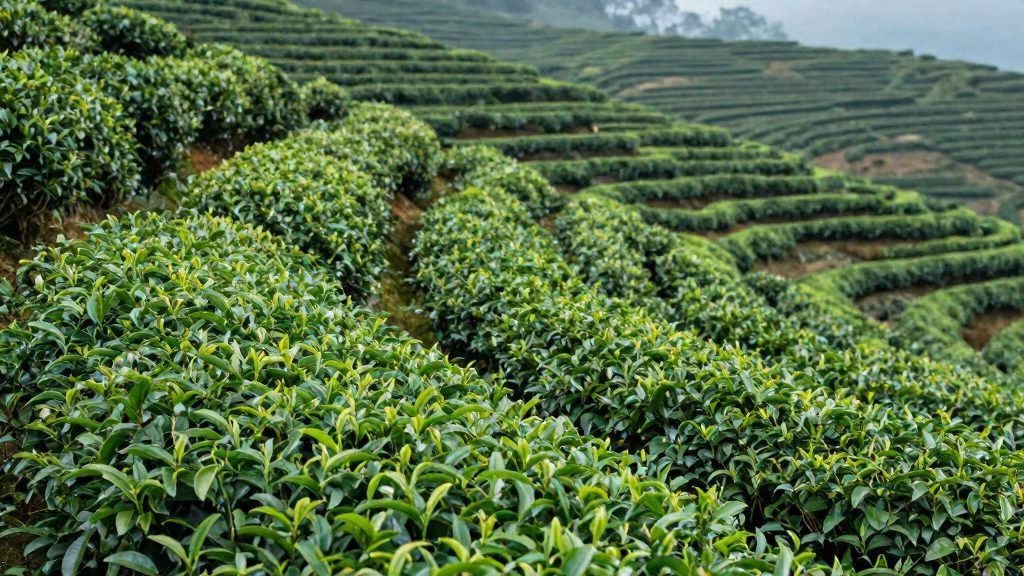
Taiwan’s Agency of Rural Development and Soil and Water Conservation, part of the Ministry of Agriculture, describes the climate of high mountain tea gardens through three traits. Each one shapes the leaf during growth, and together they set the conditions that the Taiwanese high mountain oolong style grows under (Taiwan Ministry of Agriculture, Agency of Rural Development and Soil and Water Conservation, 2026).
- Cool conditions: the gardens experience cool temperatures as a standing feature of the growing environment.
- Clouds and mist: cloud cover and mist surround the gardens, so the leaves are regularly exposed to moisture in the air.
- Day-night temperature swings: daytime and nighttime temperatures differ substantially, a gap that is stated as a defining feature rather than an occasional event.
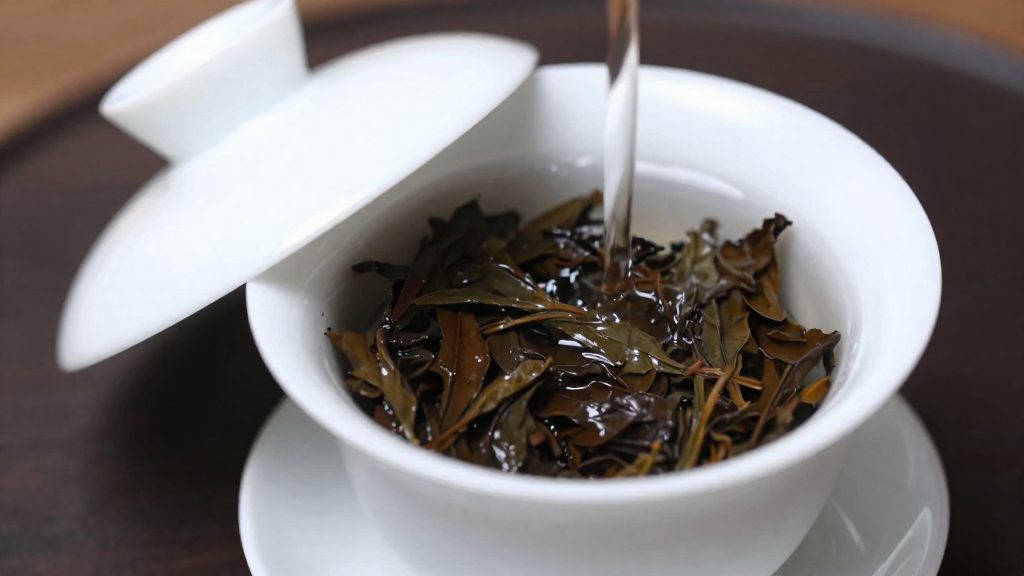
The same authority describes Alishan high mountain tea as producing a bright golden infusion with a lasting aftertaste, and as suitable for multiple infusions. These are the sensory markers to check in your own cups, so use them as a reference rather than a guarantee: the same label can taste different from batch to batch.