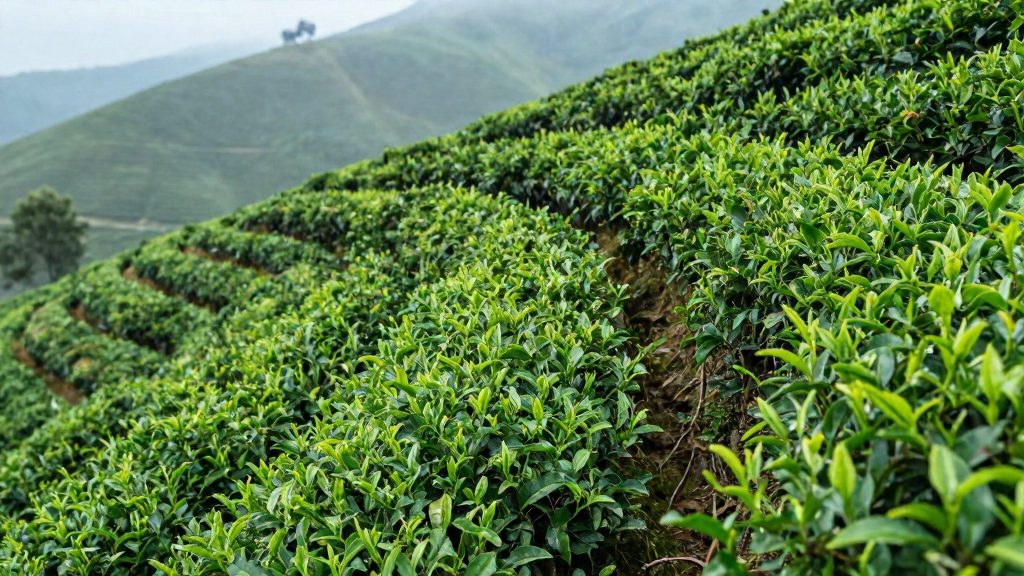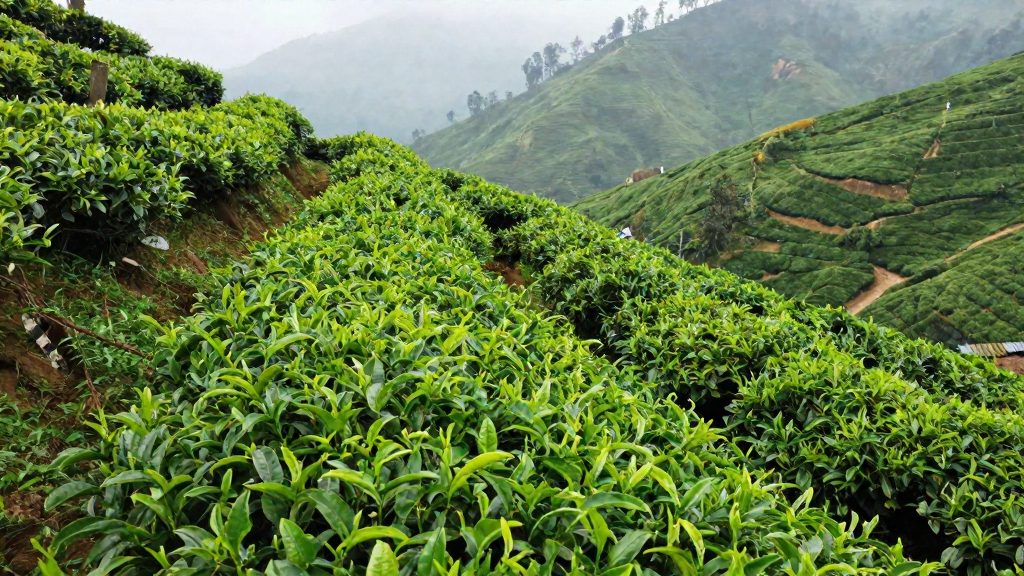
Darjeeling tea is grown in the Himalayan hills of West Bengal, India.
Where is Darjeeling tea grown?
Darjeeling tea comes from the Himalayan hills of West Bengal, the Indian state where the designated growing area lies. Tea Board India identifies 87 tea gardens in this region, so when a package names a specific garden, you can look for that name among the gardens the Tea Board recognizes.
The designated-origin rule
Darjeeling is a geographic origin, not only a style of tea. Authentic Darjeeling must be:
- Grown in the designated region
- Manufactured (processed into finished tea) in the designated region
Tea grown elsewhere, even in the Himalayas, does not meet this rule and cannot be authentic Darjeeling. Both steps count: a garden inside the region still falls short if its leaves are processed outside it.
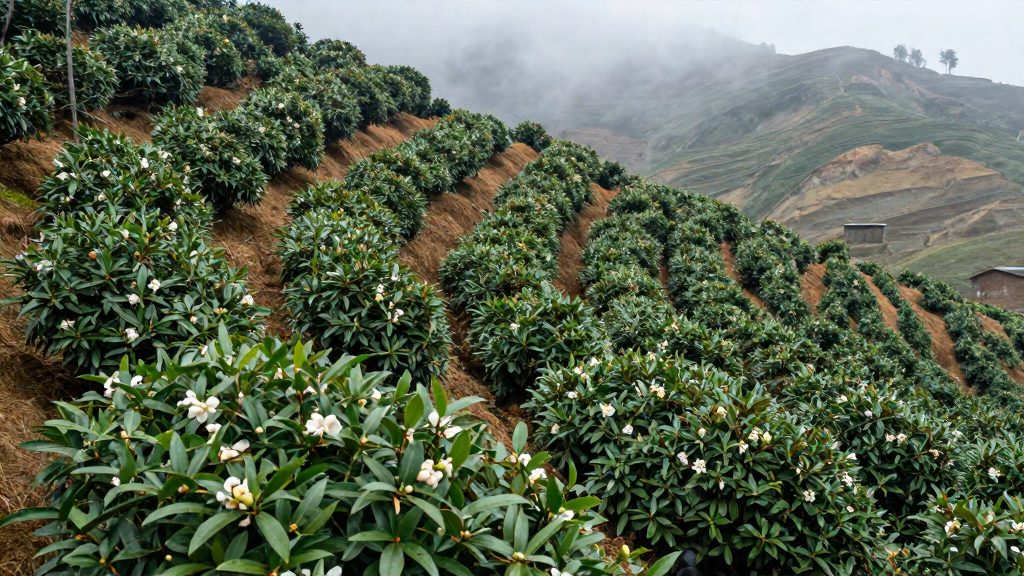
Why the Himalayan setting matters
Darjeeling tea is grown on hillsides in the Himalayan foothills of West Bengal, India. According to Tea Board India’s current webpage, the growing elevation is listed as 600–2,000 meters (about 1,970–6,560 feet). Altitude, slope and drainage are the three physical factors that distinguish the setting from lowland tea regions.
The 600 to 2,000 meter range
Elevation is one of several factors that can influence differences between gardens. The Tea Board’s current page gives 600–2,000 meters, while its 2003 presentation gives 700–2,000 meters, so the lower limit should be treated as a reference point rather than a fixed boundary. Gardens at the lower end sit in warmer, more humid conditions, while gardens near the upper limit experience cooler air and a shorter growing period each day.
Slope drainage and mountain climate
Gardens are planted on steep hillsides, which lets excess rain run off rather than pooling around the roots. The slope also creates varied microclimates within a single estate: sun-facing slopes warm faster than shaded ones, and cloud and mist move through the valleys at different times of day.
How altitude shapes the leaf and cup
Cooler temperatures slow shoot growth, so the leaf develops more slowly and accumulates more aromatic compounds before plucking. This slower development is the reason the sources describe Darjeeling as a light, bright, brisk infusion in the first flush and a rounder, copper-colored infusion in the autumn flush (Tea Board India, 2003).
When is Darjeeling tea harvested?
Darjeeling is picked in separate flushes across the year rather than in one harvest. The Tea Board of India’s seasonal calendar places the first flush from late February to mid-April, the second flush in May and June, the monsoon flush in July to September, and the autumn flush in October and November.
Harvest sequence at a glance
| Flush | Period | Described as |
|---|---|---|
| First flush | Late February to mid-April | Light, bright infusion with a brisk flavor (Tea Board India) |
| Second flush | May and June | Fruitier and less astringent than first flush (UK Tea & Infusions Association) |
| Monsoon flush | July to September | Infusion becomes stronger (Tea Board India) |
| Autumn flush | October and November | Rounded taste and copper-colored infusion (Tea Board India) |
The start and end dates of the first flush differ between sources. The Tea Board’s 2003 calendar gives late February to mid-April, while Smith Teamaker describes a narrower late-March to early-April window. No single date range applies to every garden or every year.
Weather-driven shifts in timing
Weather moves the calendar windows. Smith Teamaker’s 2026 report anticipated a later-than-usual start to the second flush following drought. A dry spell can therefore push a flush back relative to its usual month, and the same flush can start at different points in different seasons.
Flush naming and why flushes stay separate
Each flush is named for the period in which its leaves were picked. Every flush comes from new shoots that grow after the previous plucking, so each one is a distinct crop with its own character. Producers and sellers may identify a tea by its flush to indicate the season in which its leaves were harvested. A first flush and a second flush from the same estate are identified by their period, not treated as one product.
First flush: the spring harvest
The first flush is the season’s earliest Darjeeling picking.
Picking window
Sources give different windows for the same flush:
| Source | Window | Note |
|---|---|---|
| Tea Board India (2003 calendar, hosted by WIPO) | Late February to mid-April | Seasonal calendar |
| Smith Teamaker (2026 report) | Late March to early April | Narrower window |
| UK Tea & Infusions Association | Emphasizes April | No start or end date given |
The light, brisk cup
The Tea Board describes the first-flush infusion as light and bright, with a brisk flavor. To bring out that character without sharpness, use a shorter steep than you would for a full-bodied black tea, then taste at intervals until the brisk edge is balanced.
Why the first-flush cup reads brisk
“Brisk” is the Tea Board’s own descriptor for this flush.
Second flush: summer and muscatel
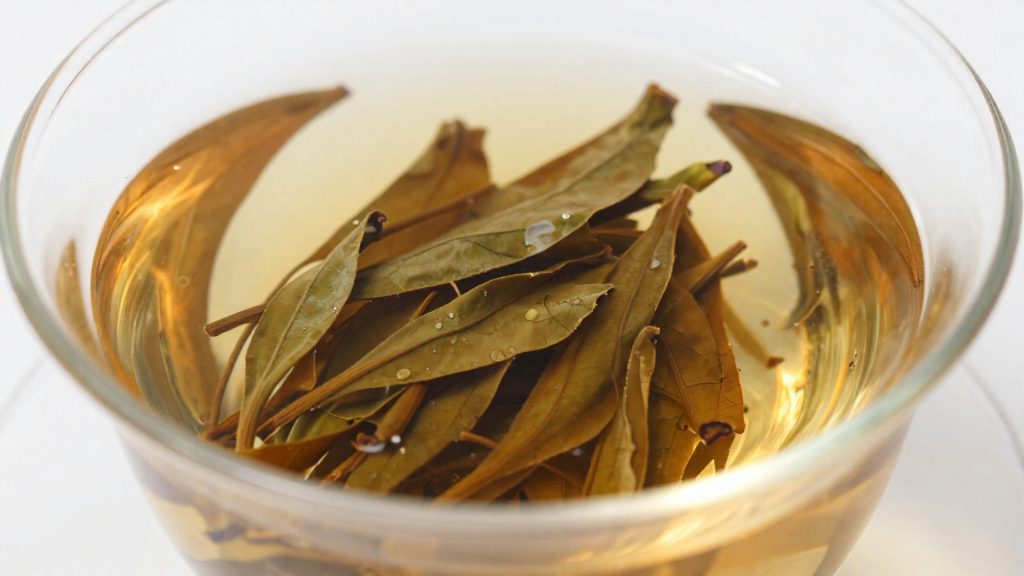
Second-flush Darjeeling is picked in May and June, according to the UK Tea & Infusions Association. That source describes it as fruitier and less astringent than first flush, with some examples showing muscatel flavor. The picking month is the most reliable way to identify a second flush, since the flavour alone varies from garden to garden.
- Picking window: May to June
- Compared with first flush: fruitier and less astringent, meaning it has a softer drying sensation on the palate
- Flavour note: muscatel, found in some examples but not all
Monsoon and autumn harvests
The Tea Board’s seasonal calendar places the monsoon flush in July to September and the autumn flush in October to November. Both fall outside the spring and early-summer harvests that most buyers associate with Darjeeling, and the two flushes produce noticeably different infusions.
Monsoon flush (July to September)
According to the Tea Board India (2003, presented via the World Intellectual Property Organization), the monsoon flush gives an infusion that becomes stronger than the spring flushes. In practice, this means:
- Start with the producer’s brewing instructions, then adjust the leaf amount or steep time to taste.
- Expect a fuller body and deeper colour in the cup.
- Because the flavour is more assertive, it suits drinkers who prefer a robust cup, especially with milk.
Autumn flush (October to November)
The same Tea Board calendar describes the autumn flush as having a rounded taste and a copper-coloured infusion. Compared with the monsoon flush, the cup is smoother and less sharp, and the colour is the easiest visual cue for identifying autumn leaf.
Which flush suits your taste?
A flush is the harvest of a given season, and each one produces a distinct cup. Darjeeling tea is commonly sorted by flush, so the name on the package is a practical guide to the brightness, body and fruitiness you can expect. Each flush has a typical profile, but the sources describe these profiles as tendencies, not rankings. Which flush you prefer is a matter of taste.
| Flush | Typical profile | Source |
|---|---|---|
| First flush | Light, bright, brisk | Tea Board India (2003 seasonal calendar, hosted by WIPO) |
| Second flush | Fruitier and less astringent than first flush | UK Tea & Infusions Association |
| Monsoon flush | Stronger infusion | Tea Board India (2003 seasonal calendar, hosted by WIPO) |
| Autumn flush | Rounded taste, copper-colored infusion | Tea Board India (2003 seasonal calendar, hosted by WIPO) |
Matching the flush to your preference
- Brisk and bright: A first flush suits drinkers who want a crisp, lively cup with a light body.
- Fruity and softer: A second flush suits drinkers who want more fruit and less astringency than first flush offers.
- Full and rounded: An autumn flush suits drinkers who want a smoother, rounder cup. The monsoon flush is described as producing a stronger infusion, which suits drinkers who want more body.
If you are unsure, compare different flushes from the same producer side by side. Change one variable at a time so the difference you taste comes from the leaf.